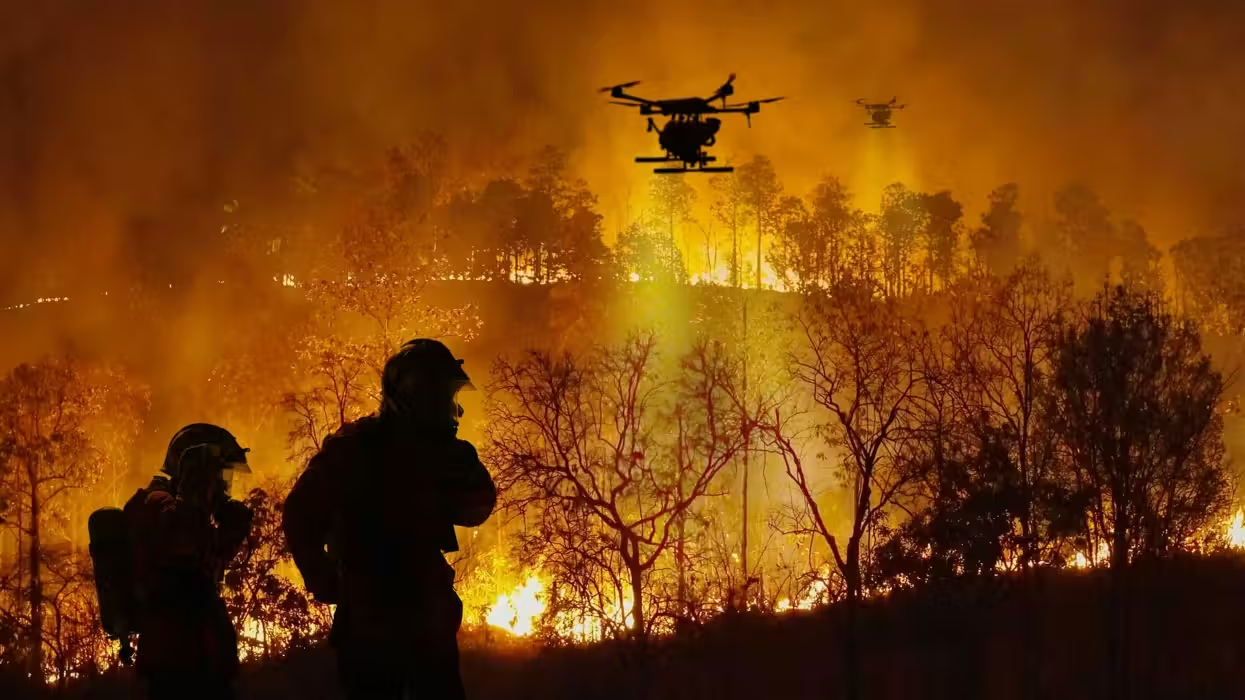
There are rumors that biblical apocalyptic prophecy will be fulfilled on Sept. 23. But is it true? What does Jesus say? How does that fit into the narrative of Revelation? (Image source: Getty Creative)
Will the world come to an end on Saturday as part of biblical prophecy being fulfilled? Some Christians believe it will.
Christian numerologist David Meade said that recent natural disasters and an upcoming astrological event fulfill Scriptures allegedly pointing to the end of the world:
Jesus is clear about the end of the world and who knows when that time will come. In his own words in Matthew 24:36-39:
But of that day and hour no one knows, not even the angels of heaven, nor the Son, but the Father alone. For the coming of the Son of Man will be just like the days of Noah. For as in those days before the flood they were eating and drinking, marrying and giving in marriage, until the day that Noah entered the ark, and they did not understand until the flood came and took them all away; so will the coming of the Son of Man be.
There’s a misconception in the general public about what the Bible is and the purpose it serves. For example, most people believe in some way or another that the Bible’s final book — Revelation — tells of how the world will end. People also believe the book can be used to “decode” and predict the future.
On the surface, those things could be true. Revelation ends with Jesus reigning as heaven and Earth are rejoined — God’s original intent for the world (see Genesis 1 & 2). So from that angle, we do know how the world ends.
However, Revelation, like every other book of the Bible, is extremely complex. In fact, it’s so complex that outside of years of meditation and study, the average person, yet alone follower of Jesus, likely doesn’t fully understand the book’s purpose or its message.
The book of Revelation is ancient Jewish apocalyptic, prophetic literature. Apocalyptic literature in the Old Testament and other popular ancient Jewish literature (Ezekiel, Danial, 1 Enoch) always detail the dreams and visions of prophets. They tell of God’s perspective on history, so the present can be viewed in the light of the final outcome, which in this case is Jesus reigning for good.
Further, Jewish apocalyptic literature uses imagery, symbols and numbers to communicate meaning, something ancient Jews and Christians would have been well-accustomed to. That means the book isn’t a secret predictive code. Instead, by using symbols, John forces his readers to refer back to the source of the symbols in the Old Testament.
What’s even more: Revelation is a circular letter — it begins with letters to seven churches in Asia Minor and ends by telling those churches of the new creation and the re-marriage of heaven and Earth. So, to be able to understand Revelation, it’s imperative the book is examined in its historical context of John’s time, place, and audience.
This type of literature doesn’t exist in our society, so it’s hard to understand it or grasp its purpose. Do you understand political cartoons? Most Americans would say yes. Hand that same cartoon to a Jewish Christian living in 55 AD. Would they understand it? Absolutely not, unless they study years worth of American political science. In the same way, we shouldn’t read Revelation and believe we understand it unless we, too, have spent years studying it and meditating on it. Otherwise, when we read our modern assumptions and incorrect interpretations into the text — those that aren't actually there — we are doing the Scriptures a gross disservice.
(H/T: Faithwire)