Aaron P. Bernstein/Bloomberg via Getty Images
'See you soon'
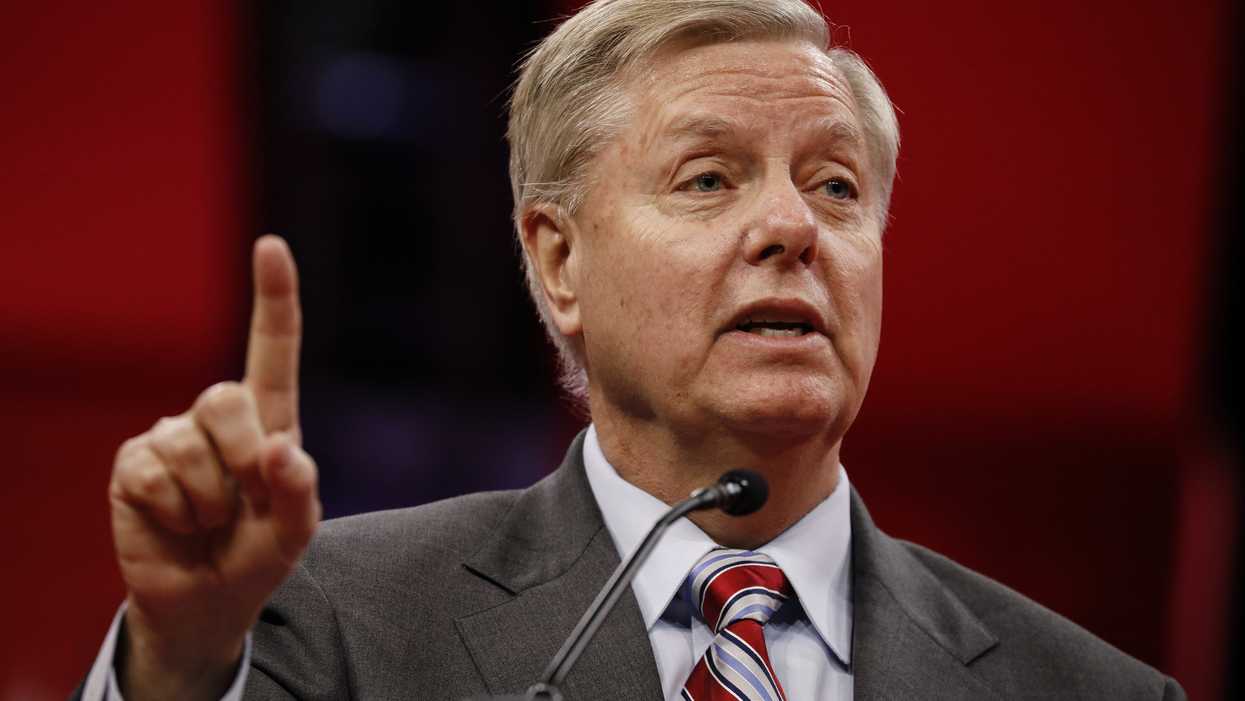
Sen. Lindsey Graham (R-S.C.), who chairs the Senate Judiciary Committee, sent an ominous message directly to former FBI Director James Comey late Sunday, hours after Attorney General William Barr informed Congress of the "principal conclusions" from special counsel Robert Mueller's investigation.
After Barr released his letter, Comey tweeted: "So many questions." Graham's message was in response to Comey's ambiguous tweet.
"Could not agree more," Graham replied. "See you soon."
While Graham did not provide additional context to his message, he later told The Hill, which reached out for clarification, that his message was related to a letter he sent the attorney general on March 7 about investigating the Foreign Intelligence Surveillance Act warrants obtained against former Trump campaign aide Carter Page "and others associated with the Trump campaign."
Republicans generally believe the government overstepped its power in obtaining the warrants, going so far as to claim there was an abuse of power.
It was revealed last year the chief evidence used to obtain the warrants against Page was the unverified intelligence document prepared by former British spy Christopher Steele.
Questions surrounding the FISA warrants are part of bigger concerns in pro-Trump circles, which strongly believe the Justice Department, during the Obama administration, operated in a partisan manner when initiating the counter-intelligence probe into Trump's campaign and Russia that later morphed into Mueller's investigation.
In a four-page letter sent to Congress Sunday afternoon, Barr said that Mueller's investigation concluded that President Donald Trump's campaign did not collude with the Russian government to undermine the 2016 presidential election, nor does any underlying evidence exist to show that Trump obstructed justice at any point during the FBI's investigation.
Barr wrote:
For two years, Democrats claimed Trump's campaign, or those associated with the campaign, were in contact with Russian officials to undermine the election. They similarly claimed Trump obstructed justice when he fired Comey as FBI chief in May 2017. At the time, Comey was leading the FBI's counter-intelligence investigation into Trump's campaign.