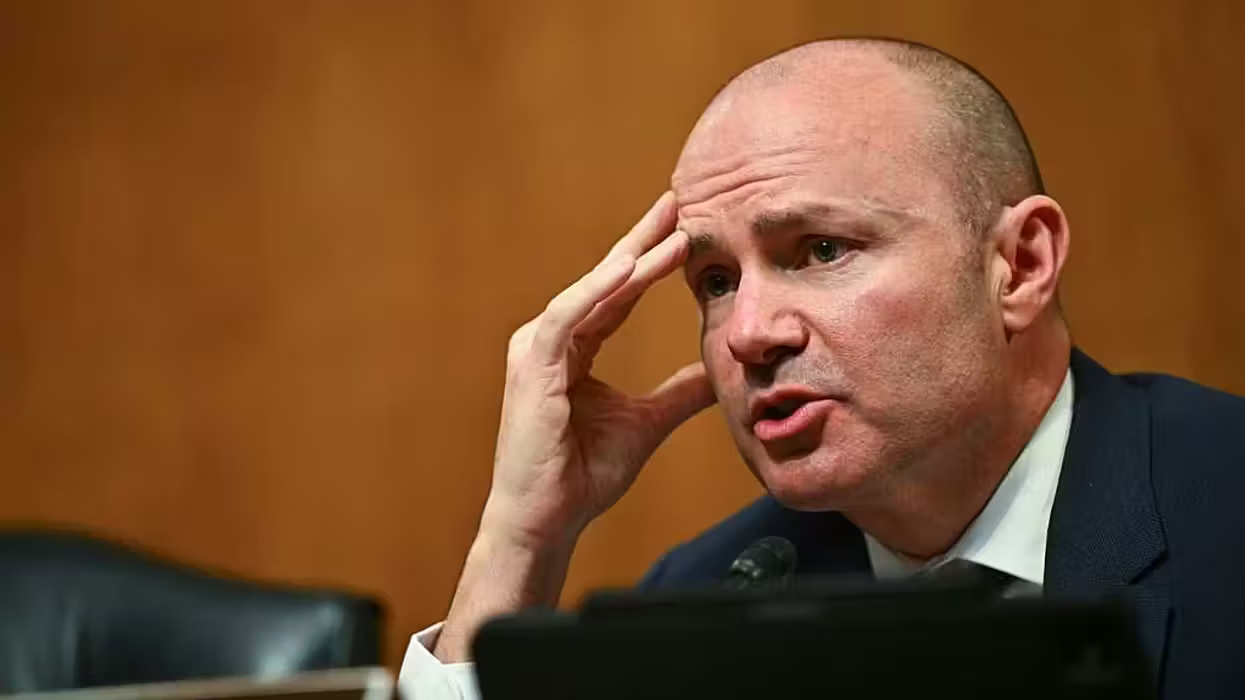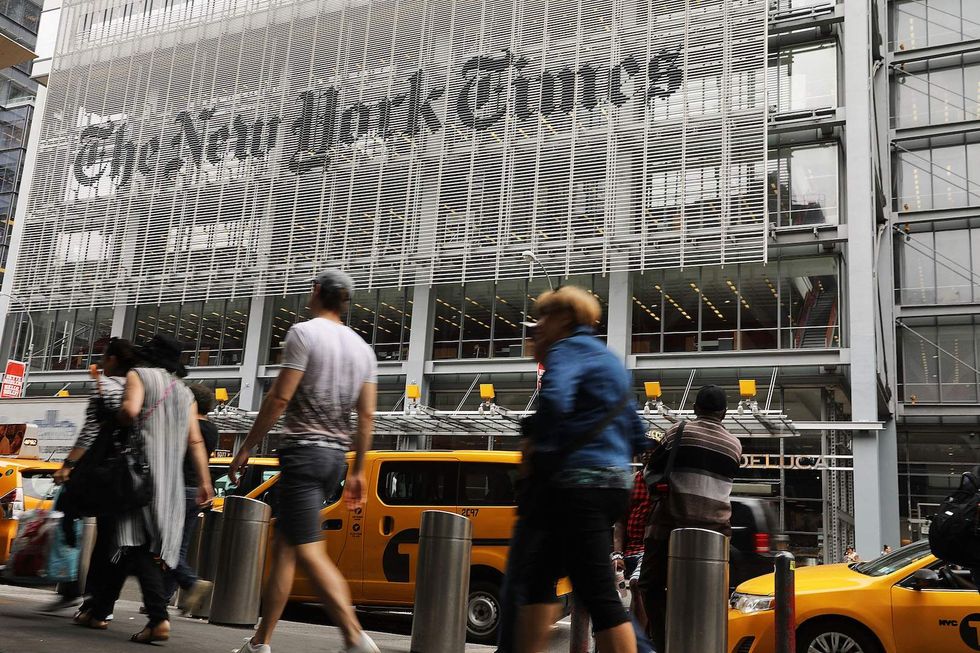
The New York Times has a new social media policy aimed at eliminating bias from online posts. (Spencer Platt/Getty Images)
The executive editor of the New York Times, Dean Baquet, has finally decided it might not be the best idea for his reporters to be openly biased on Twitter, since it undermines the supposed objectivity of their news reporting.
So, he introduced a new social media policy to his staff on Friday which directs Times staff to "take extra care to avoid expressing partisan opinions or editorializing on issues that The Times is covering."
Baquet sent this memo out to staff:
"To the newsroom:
The New York Times has been a dominant force on social media for years. Our newsroom accounts have tens of millions of followers. Many of our journalists are influential voices on Twitter, Facebook, Instagram and other platforms. The voices of our readers, listeners and viewers inform and improve our reporting.
We believe that to remain the world’s best news organization, we have to maintain a vibrant presence on social media.
But we also need to make sure that we are engaging responsibly on social media, in line with the values of our newsroom.
That’s why we’re issuing updated and expanded social media guidelines.
The guidelines were developed in a collaborative way by Cliff Levy, Phil Corbett and Cynthia Collins, and are rooted in the very experiences of our journalists.
Please read them closely, and take them to heart.
— Dean Baquet, Executive Editor"
While it isn't explicitly stated, this policy is most likely a reaction to the pushback mainstream media organizations have received from President Donald Trump and the White House since he took office. One of the comments in the policy by a New York Times writer makes allusion to this:
From Peter Baker: “It’s important to remember that tweets about President Trump by our reporters and editors are taken as a statement from The New York Times as an institution, even if posted by those who do not cover him. The White House doesn’t make a distinction. In this charged environment, we all need to be in this together.”
After years of reporters expressing their opinions freely on social media, with many of the posts this year expressing anti-Trump sentiments, it could be too late for the historic news organization to convince the masses of their full objectivity.