Dania Maxwell/Stephen Lovekin/Mark Wilson/Getty Images
The government shouldn’t be in the business of buying junk food for school children.
Of all the positions splitting Americans today, you wouldn’t expect this one to be controversial. And yet this is the plate we've been served.
Each side accuses the other of not caring about disadvantaged children — while both sides insist that no one should dictate what counts as 'healthy' food.
The Healthy SNAP Act of 2025 is currently awaiting action in the Senate Agriculture Committee, where it has sat since Sen. Mike Lee (R-Utah) introduced it in February, with no markup or vote scheduled.
Even so, the bill — now championed by Republicans — has revived a familiar argument: Who should decide what children eat, and why do voters reverse their positions depending on which party proposes the rules?
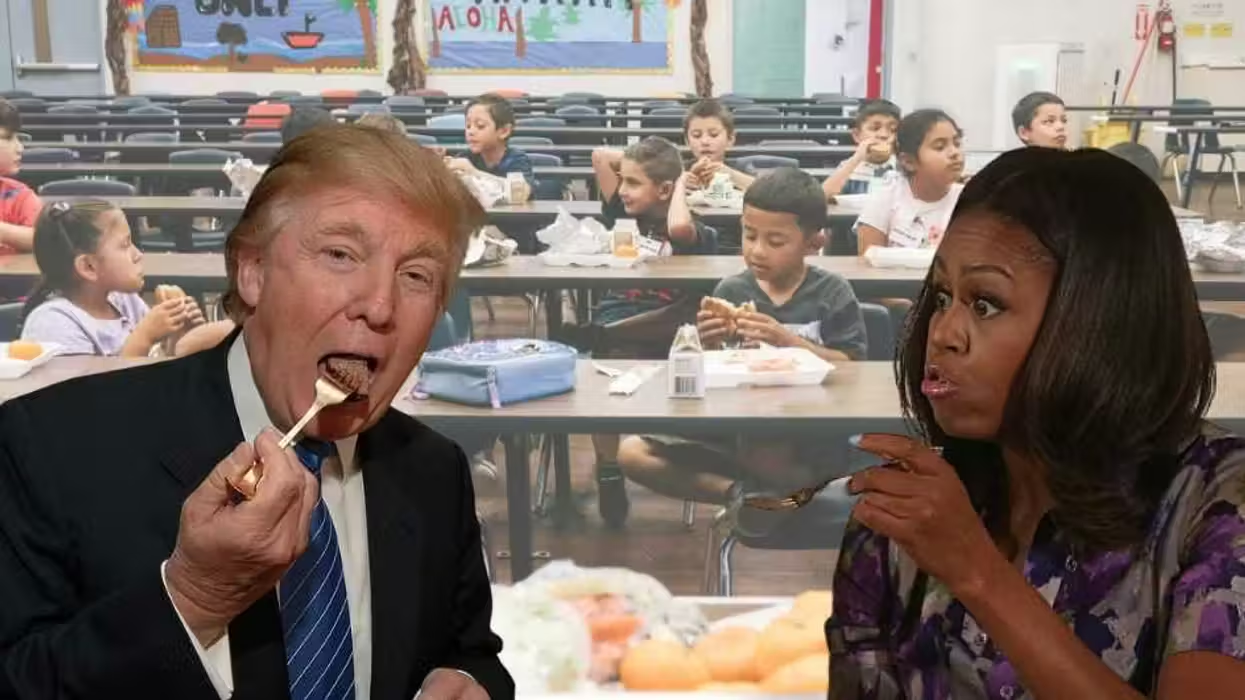
President Obama enacted his wife’s Healthy, Hunger-Free Kids Act in 2010 with the stated goal of providing USDA-approved nutritious meals to school children and combating childhood hunger and obesity. Michelle Obama advocated for children to have access to more vegetables, fruit, whole grains, and milk — and less sugary soda and junk food — which she claimed were especially hurting impoverished children.
“Think about why someone is OK with your kids eating crap,” she said at the time. “Because here is the secret — if someone is doing that, they don’t care about your kid.”
Conservatives pushed back, suspecting Mrs. Obama of ulterior motives and calling the law an instance of government overreach. Whose business was it what children ate? Surely not the first lady's.
There was a lot of fear (or hope) that when Trump got into office, he would overturn all that the Obamas had done and “simplify” the lunch menu.
The new president did not disappoint. Throughout his first term, President Trump steadily rolled back Obama-era school-nutrition standards. The USDA first relaxed rules on whole grains, sodium, and flavored milk in 2017 and finalized those changes in 2018. In early 2020, it proposed further revisions to ease fruit and vegetable requirements and expand options like pizza and burgers, drawing renewed national scrutiny.
Those efforts were partially blocked in court, and the underlying Healthy, Hunger-Free Kids Act remained intact. But the political terrain shifted over the next few years: Rising concern about obesity and chronic disease, new dietary-guideline updates, and state-level experiments with SNAP restrictions created an opening for conservatives to reframe nutrition policy as a matter of fiscal responsibility and public health rather than federal overreach.
Fast-forward to 2025, and the same movement that once dismissed “nanny-state” lunch rules now promotes the Healthy SNAP Act — an initiative that mirrors Michelle Obama’s nutrition goals almost point for point.
All that's changed is the politician behind the policy. That alone seems to be enough to flip public opinion. Voters who once said junk food was victimizing impoverished children now attack nearly identical proposals coming from the Trump administration.
The Healthy SNAP Act of 2025 would bar SNAP benefits from being used for the very same foods Michelle Obama targeted in 2010. According to Congress.gov, SNAP recipients would not be able to use benefits for “soft drinks, candy, ice cream, or prepared desserts, such as cakes, pies, cookies, or similar products.”
RELATED: $500 million in SNAP funds is reportedly spent on fast food because of state program
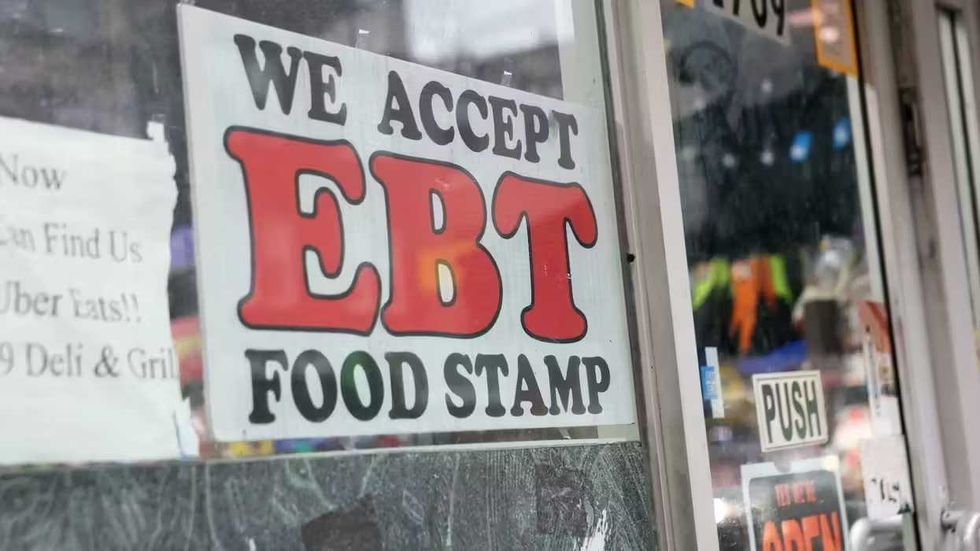 Photo by Michael M. Santiago/Getty Images
Foods purchased with SNAP would have to meet nutritional standards based on sugar, fat, and salt content. In structure, the bill is strikingly similar to the Obama-era reforms. The only real difference is whose name is on it.
The same people who supported Michelle Obama’s restrictions now vehemently oppose nearly identical measures from Trump. Meanwhile those who once denounced government interference now applaud the idea when framed as a conservative reform. Each side accuses the other of not caring about poor children — while both sides insist that no one should dictate what counts as “healthy” food, unless their politician is doing the dictating. Party comes first, safety second, liberty somewhere further down the list.
Some liberals now argue that children deserve a treat — that SNAP should not limit junk-food purchases at all. But SNAP has always been regulated. In most states, fast food, hot deli meals, vitamins, alcohol, and tobacco have long been prohibited. WIC is even more restrictive to ensure mothers receive high-quality, protein-rich foods.
Government aid will always come with rules. Whether it should include “treats” is a matter of personal philosophy. SNAP already provides incentives to buy fresh produce at farmers markets. Families can still make simple desserts within existing guidelines.
And any parent can spend a dollar on an occasional donut or soda if that is truly important to them — while still ensuring that children have reliable access to nutritious meals funded by taxpayers, who can rest easier at night knowing we are ensuring a better future for children.
Reasonable readers at this point should be asking themselves what they, as voters, really care about when it comes to policies like this. Would any of this be a discussion if voters thought less about who was in office? We all should be asking ourselves what it is we truly value and act accordingly.
Sen. Rand Paul (R-Ky.) — who in March introduced a similar, and in some respects even broader, bill of his own — put it this way:
"It makes no sense that taxpayer dollars are being used to fund an epidemic of obesity and diet-related illness in low-income communities. My bill ensures that this assistance program actually supports health and wellness, not chronic disease.”
His words sound eerily interchangeable with what Michelle Obama was saying 15 years ago. It makes one wonder if perhaps we don’t need to bicker over politics as much as we do. Maybe our differences aren't as pronounced as we think — at least when it comes to the health of American children.