
Photo by AMAURY CORNU/Hans Lucas/AFP via Getty Images
While most people are very familiar with and practice the lighthearted tradition of Advent calendars, many might be surprised by its relatively recent development as a Christian tradition.
The Advent calendar is a Christian tradition dating back only to the 19th century, making it less than 200 years old. Advent, derived from the Latin word "adventus," means
coming” or “arrival.”
'Lacking windows at first, Lang’s design is essentially the same style we have today, though war and a few subsequent alterations would change it slightly.'
The calendar counts down the days until Christmas during the Advent season, which is also the very beginning of the liturgical calendar. The Advent calendar then, in its most basic form, is a method of counting down the days until the coming of Christ on Christmas day.
RELATED: More than a countdown: Do you know the full meaning of Advent?
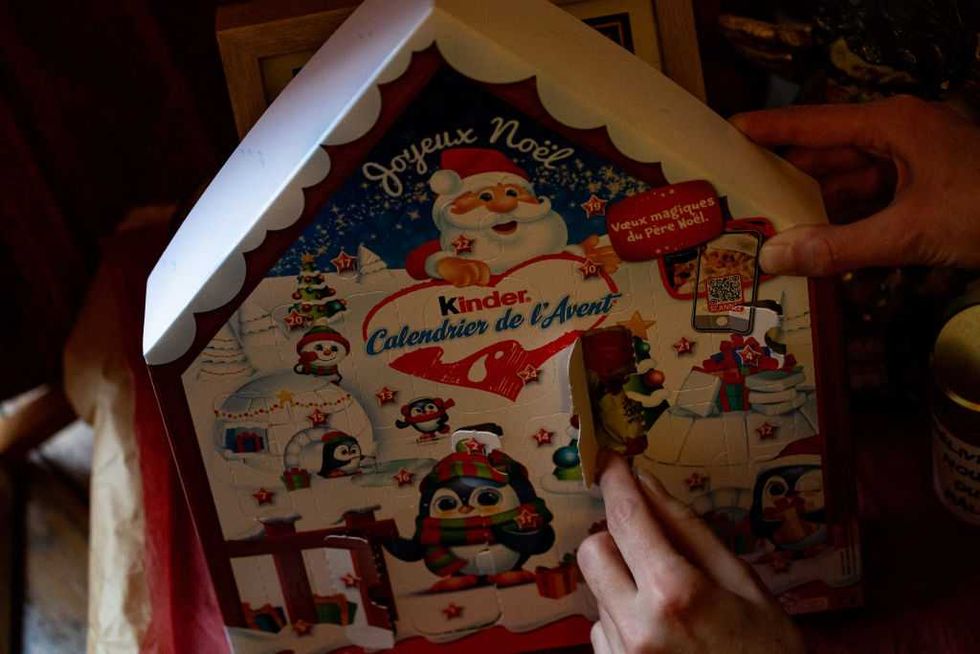 Photo by AMAURY CORNU/Hans Lucas/AFP via Getty Images
Often, in more recent iterations, small treats, gifts, and pictures are placed in the doors of the calendar, the number of which usually range between 22 and 28 days depending on the day that Christmas Day falls on. Because of the possible range, most Advent calendars simply begin on December 1 and end on December 24, Christmas Eve.
The Advent calendar has seen quite a few variations in its relatively short-lived existence, though the basic idea has always been the same.
A tradition originating among Lutheran Christians, Advent calendars first involved chalk marks that would be erased as the day approached. This practice helped believers anticipate the coming of Christ.
Originating in and around Munich, Germany, in the 19th century, Advent calendars were used to count down the days until Christmas Day.
Gerhard Lang is widely regarded as the creator of the modern Advent calendar. A partner at the lithographic institute Reichhold & Lang, Gerhard Lang is credited with printing the first Advent calendar in 1908, though some say it was some years later.
Lacking windows at first, Lang's design is essentially the same style we have today, though war and a few subsequent alterations would change it slightly.
The small, numbered doors, a staple of contemporary calendars, were introduced in 1920. They sometimes had Bible verses or little pictures behind them.
Lang produced around 30 different calendar designs up until the end of the 1930s, when paper shortages and a national ban on paper calendars forced him to shutter the popular business.
However, Advent calendars made a post-war comeback. Richard Sellmer, the founder of the Sellmer Verlag publishing house, published the first Advent calendar after the Second World War, reviving the tradition.
Eighty years later, Sellmer Verlag still sells Advent calendars.
It is believed that American soldiers brought these calendars back after the war, and the tradition spread to the United States.
According to Britannica, the tradition of chocolate behind the doors was introduced in the 1950s, presumably to keep children engaged.
In America, the Advent calendar's popularity spread quickly in the post-war era. These days, children and adults alike can enjoy counting down the days until the Lord's Nativity with a vast array of different calendar designs.