Brandon Bell/Getty Images
The Democratic Party has been wandering the wilderness for years, somehow discovering new ways to alienate large portions of the country. And it still isn't finished.
Rock bottom, it turns out, has a basement — and Texas has the keys.
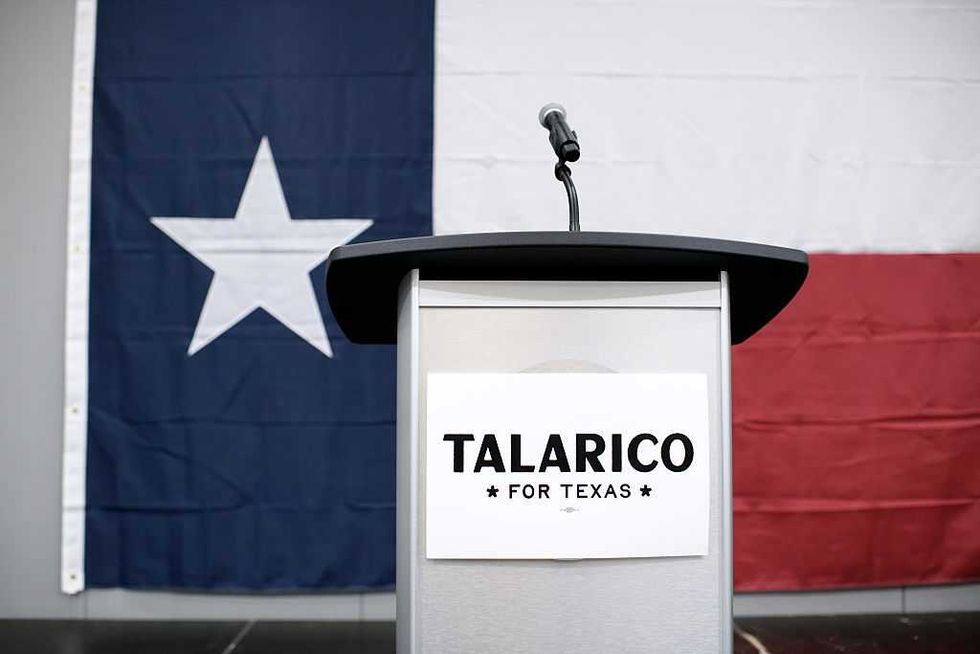
Earlier this month, Rep. Jasmine Crockett (D), a congresswoman who treats every disagreement like a full-contact sport, announced her Senate bid. Waiting for her in March is state Rep. James Talarico (D), a former teacher and pastor-in-training with a very different style.
Neither is good news. But from a Christian perspective, one is far worse.
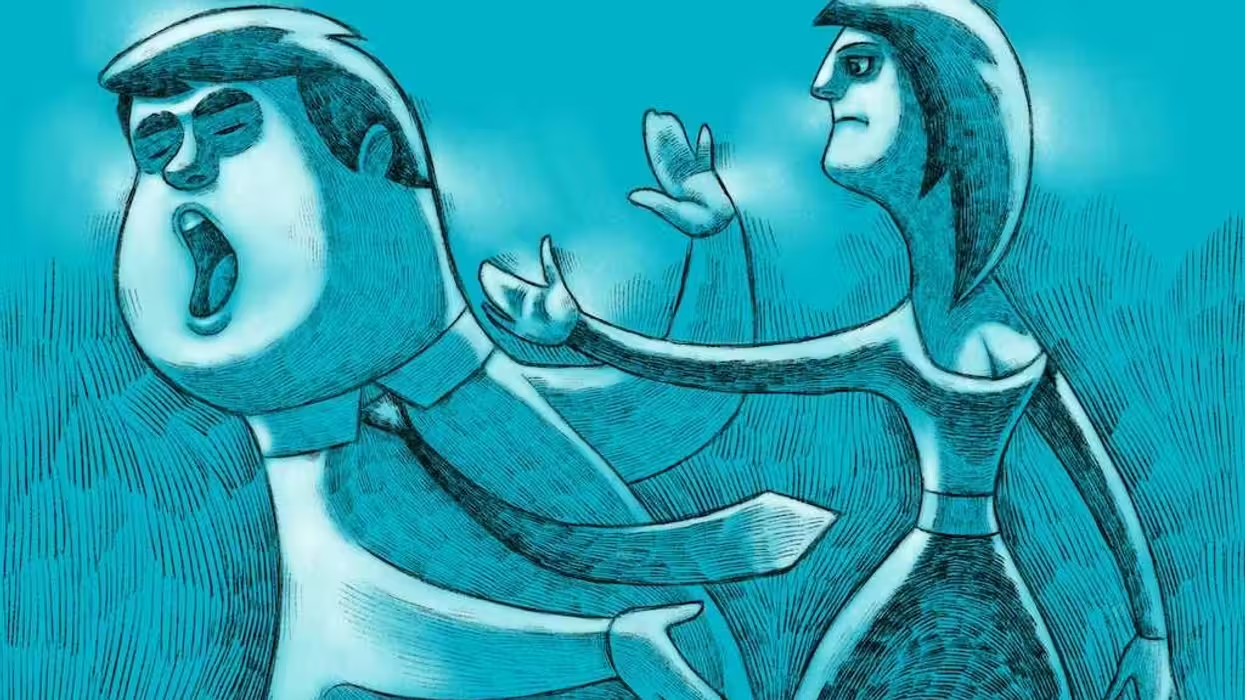
Crockett is impossible to miss. She’s volume without thought, performance without a functioning pause button. Trump derangement syndrome has long since replaced reason, and nuance never survived the encounter. She seems to measure success by how many people she can irritate before lunch. Her politics are blunt, her tone brittle, her intellectual range roughly comparable to a Roomba. You always know where she stands because she’s standing on the table, yelling.
Talarico, by contrast, operates on an entirely different frequency. He lowers his voice, quotes scripture, and speaks with the gentle cadence of a youth pastor wrapping up a weekend retreat just before the acoustic guitar comes out. He talks about compassion, dignity, and the moral duty to protect the vulnerable. He wants to heal divides, soothe tensions, and “bring people together.”
If Crockett feels like a bar fight, Talarico feels like "Kumbaya" by candlelight with everyone instructed to hold hands.
And that is precisely the problem.
Crockett’s politics are abrasive but obvious. She makes no effort to hide what she believes or where she wants to take the country. There is something almost refreshing about her lack of disguise. You may not like the message, but it’s unmistakable. She offends openly and moves on.
But Talarico offends in a very different manner. He has mastered the art of wrapping progressive politics in pastoral language. What he offers is standard Democratic doctrine: sexual ideology backed by law, borders treated as optional, and a growing state taking over matters once settled by family, church, and conscience.
RELATED: 'Progressive Christian' turns Bible into a Planned Parenthood parable — but truth fires back
 Mark Felix/Bloomberg via Getty Images
Talarico insists that faith and today’s Democratic Party can walk hand in hand. Perhaps this was plausible once, back when Democrats still shared a basic moral grammar with the rest of the country. In the 1990s, disagreement existed, but reality was still shared. Marriage meant something fixed. Biological sex wasn’t up for debate. Free speech had limits, but truth still mattered. You could argue policy without arguing over whether biology or basic reality still mattered.
That world is gone.
The modern Democratic project is built on ideas fundamentally at odds with Christian teaching: the self treated as sovereign, identity treated as sacred, desire elevated to authority, and socialism presented as the only workable future.
Sin is renamed "harm." Redemption is replaced with affirmation. Judgment is reserved only for those who dissent. Christianity, meanwhile, insists on restraint, repentance, and allegiance to something beyond the individual.
Talarico tries to solve this puzzle by watering down Christianity until it feels more like a mood than a creed. He does this because he has no other choice. In today’s Democratic Party, a Christian who speaks plainly about restraint and repentance simply cannot survive. He is summoned, sidelined, and eventually expelled. To remain welcome, faith must be dumbed down and rendered harmless.
So Talarico treats Christianity like a buffet. He keeps the language of love and mercy, the parts that flatter modern sensibilities, and quietly discards the parts that demand obedience, self-denial, or radical honesty.
This is not faith guiding politics but politics reshaping faith.
And that is where the charge sticks. This is not a good-faith disagreement or a sincere wrestling with belief but a distortion carried out for political survival. If Talarico spoke the full truth of Christianity as it has been taught for centuries, he would be politically homeless by morning. Rather than risk that, he trims the gospel until it fits the party line.
This is where the real danger lies. He speaks like a shepherd but votes like an activist, borrowing Christianity’s authority to push policies that weaken what faith seeks to strengthen — specifically the nuclear family and ordered community.
Crockett does her damage loudly, like a bull in a china shop. Talarico, on the other hand, is more woodworm than wrecking ball, smiling as he eats through the beams.
There’s something faintly comic about watching Democrats embrace Talarico. This is a party that spent decades treating Christianity like a vestigial organ, now swooning over a Sunday-school version of Pete Buttigieg.
But there’s nothing funny about what the Texan stands for.
Talarico offers a faith that never says "no," never draws lines, and never makes anyone uncomfortable except those stubborn enough to insist that limits must be imposed. Love is endlessly elastic. Compassion is permanently undefined. Everything bends; nothing breaks — except, eventually, the foundation.
Crockett, for all her theatrics, doesn’t pretend to share a Christian worldview. Talarico does. He doesn’t attack Christian beliefs outright. Instead he sands them down, slowly, patiently, until they no longer support much of anything.
For Texans, come March, both options are bad. This isn’t a choice so much as a coordinated assault: one, a knee to the groin, the other, a roundhouse to the ribs. Crockett does her damage loudly, like a bull in a china shop. Talarico, on the other hand, is more woodworm than wrecking ball, smiling as he eats through the beams.
Neither deserves trust. But only one dresses his agenda in sacred language.
Texas Democrats may think they are choosing between bedlam and bland reassurance. Christians should recognize the choice for what it is: between open hostility and sneaky subversion, between a politics that attacks faith from the outside and one that reshapes it from within.
Both are bad. But only one pretends to be good. And that, from a Christian point of view, makes all the difference.