Photo by Lev Radin/Pacific Press/LightRocket via Getty Images
Welcome to Sesame Street. The word of the day is “affordability.”
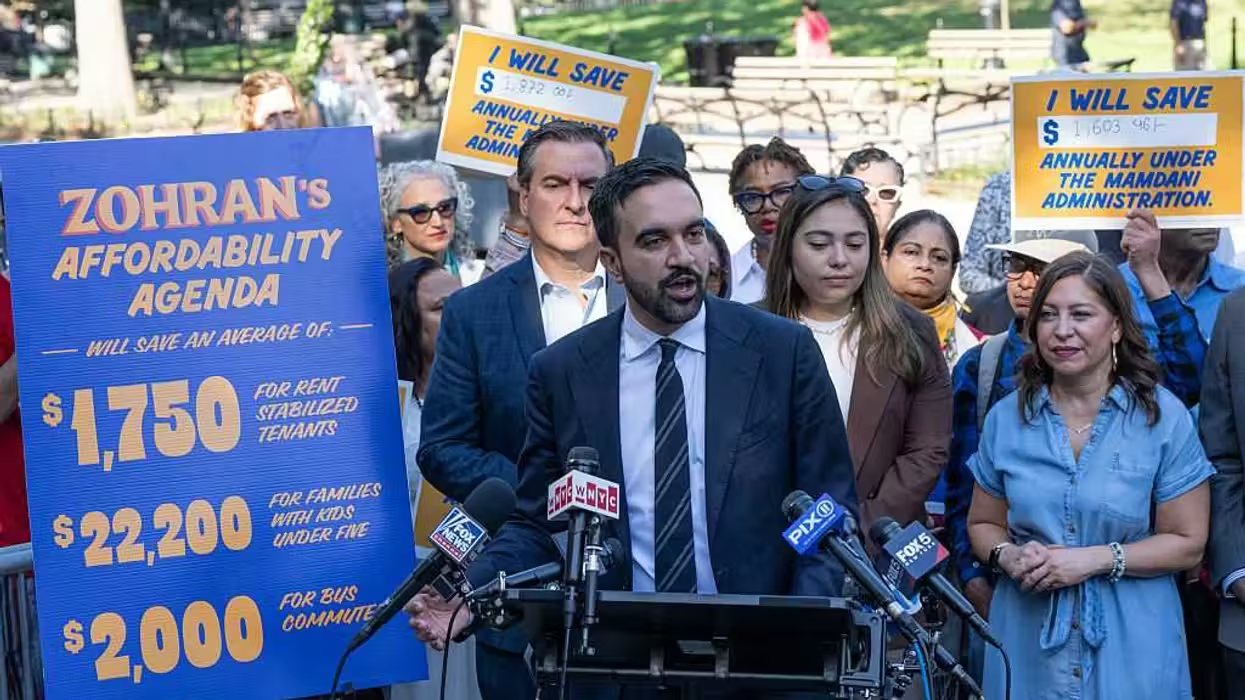
Democrats have treated it as a magic spell ever since their 2024 collapse drove the party’s approval to historic lows. New York City Mayor-elect Zohran Mamdani and governors-elect Abigail Spanberger of Virginia and Mikie Sherrill of New Jersey ran very different races, yet all credited their wins to a relentless focus on the cost of living. Mamdani in particular used the term like an incantation to bury a record full of extremist statements and friendly nods toward terrorist movements.
Turning ‘affordability’ into a political idol guarantees policies that cannibalize the future.
Democrats also see the “affordability” push as an opportunity to turn Republicans’ most effective weapon against them. Joe Biden’s low approval ratings on the economy dogged him throughout his entire term, and his constant insistence that things were improving did not cut the (suddenly expensive) mustard.
On his first day back in office, Donald Trump ordered “all executive departments and agencies to deliver emergency price relief.” But Democrats’ stronger-than-expected showing in the 2025 elections has GOP strategists wondering whether that relief is moving too slowly to blunt the message.
Trump, who dominated the 2024 campaign by hammering prices, sounds irritated that his best issue has turned into a liability. He avoids the word “affordability,” though it has begun sneaking into his teleprompter.
“We’re making incredible strides to Make America Affordable Again,” he told the U.S.-Saudi Investment Forum. “Democrats had the worst inflation in history. They had the highest prices in history. The country was going to hell. ... We’re bringing prices down.”
Both parties now talk about the cost of living as their top priority, and struggling families need the attention. But a politics built around “affordability” can easily turn into a race to the bottom — an auction of quick fixes that burn next year’s seed corn for a bump in the polls.
Plenty of shortcuts tempt politicians. Mamdani floated the most obvious one: freezing rents across one million rent-stabilized apartments in New York City. If he pulls it off — a big “if” — tenants will enjoy short-term relief. Yet the move will also choke new construction and allow existing homes to deteriorate as landlords lose the revenue needed to maintain them.
Even Republicans flirt with shortcuts. Sen. Bernie Sanders (I-Vt.) and Sen. Josh Hawley (R-Mo.) teamed up on a bill capping credit-card interest rates at 10%. Cheaper interest sounds great until you follow the consequences. A hard cap would force lenders to reject more applications, denying low-income Americans the credit they often need to escape poverty or cover emergencies.
Republicans face their own affordability temptation as well. AI data centers, which consume enormous amounts of power, are driving up electric bills faster than increased energy production can offset. Slowing or freezing data-center construction could save households money for a year or two. It would also cripple America’s position in the AI race with China and cost the country trillions of dollars in long-term economic growth.
RELATED: If conservatives will not defend capitalism, who will?
 Michael Nagle/Bloomberg via Getty Images
Trump’s tariffs have become a favorite target for Democrats claiming to champion affordability. The administration recently eased tariffs on food imports such as bananas and coffee. But gutting the entire tariff regime — if the Supreme Court allows it to remain in place — would be a profound mistake.
Tariffs have pushed some prices upward, but the Harvard Business School tariff tracker estimates that only 20% of tariff costs reach consumers. Foreign companies and foreign governments absorb the rest.
Meanwhile, tariff revenue strengthens the government’s financial footing, and trillions of dollars in investment continue to flow into new and expanded U.S. manufacturing. Reverting to the failed neoliberal free-trade dogma in the name of “affordability” might give politicians a quick approval boost. It would gut the industrial base, weaken the budget, and destroy the very blue-collar jobs voters were promised.
Blaming the other party for rising prices works because it taps into real pain. But it also encourages the kind of policymaking you would expect from the child in the famous experiment who couldn’t wait 15 minutes for a second marshmallow. He ate the first one instantly and lost the reward.
The cost of living in America (to say nothing of thriving) is far too high. Families need real relief. But turning “affordability” into a political idol guarantees policies that cannibalize the future. Prosperity demands discipline. A country that chases quick fixes will never escape its long-term economic traps.