John Moore/Getty Images
There's more than what meets the eye
The State Department announced Tuesday a new commitment of more than $10 billion in new aid programs for Mexico and Central America, a potentially controversial move given President Donald Trump's fight to acquire funding for his promised border wall, a feat he has yet to accomplish.
However, the decision to commit new resources to the economically challenged region is more nuanced than what initially meets the eye.
The State Department announced $5.8 billion in aid to strengthen the governments and economies of Central America and another $4.8 billion in developmental aid for Mexico.
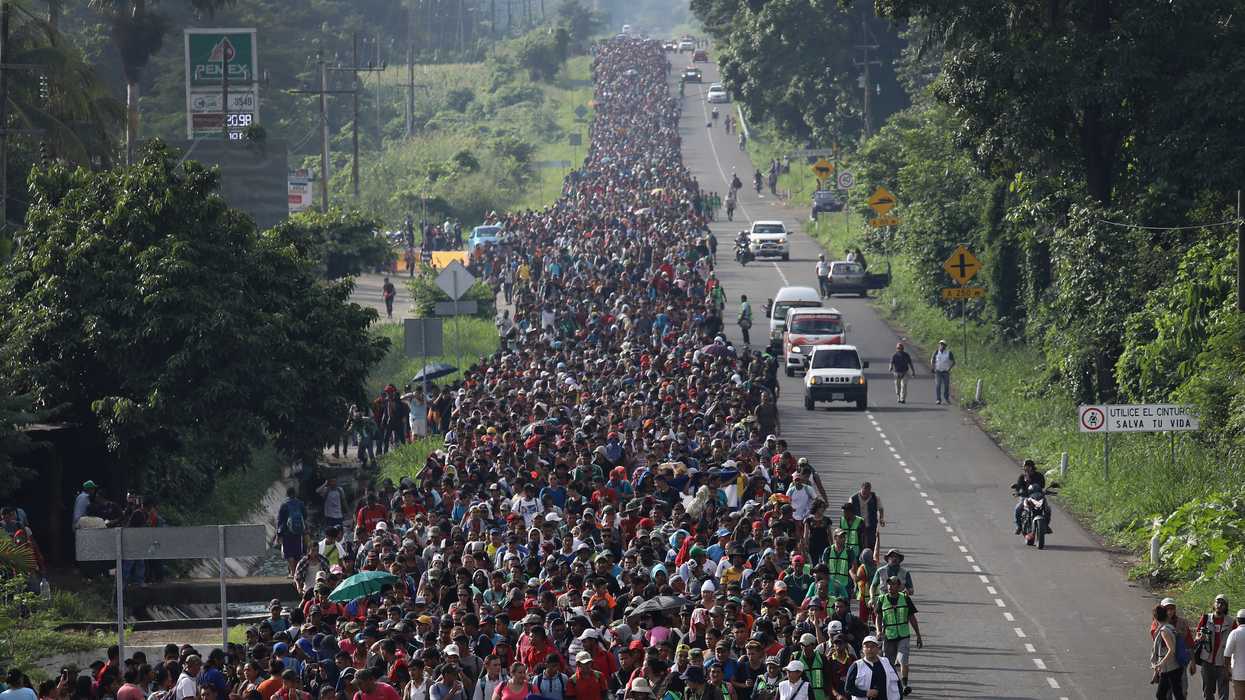
According to The Associated Press, the idea behind the aid package is to "promote better security conditions and job opportunities" in Central America and Mexico, which would, in theory, alleviate the number of migrants emigrating north to the U.S.
"The United States is committing $5.8 billion through public and private investment to promote institutional reforms and development in the Northern Triangle," the State Department said in a statement, referring to Guatemala, Honduras, and El Salvador.
The strategy has three primary areas of focus:
Regarding southern Mexico, the State Department said: "The United States recognizes that a strong, stable, and prosperous Mexico benefits the entire region. The United States is also committed to using all appropriate U.S. government trade and investment promotion and policy tools to support development in southern Mexico."
"The United States in particular will actively support the goal of leveraging public and private investment in southern Mexico to include dialogue with the Government of Mexico in early 2019," the department's statement explained.
The plan was announced in a joint statement with Mexico.
Newly inaugurated Mexican President Andres Manuel Lopez Obrador praised the commitment.
"I have a dream that I want to see become a reality ... that nobody will want to go work in the United States anymore," he said, according to the AP.