© 2026 Blaze Media LLC. All rights reserved.
The Department of War has set its sights on hypersonic weapons, vehicles that maneuver through the atmosphere at Mach 5 and beyond. The very speed of these weapons, their desirable property, raises new challenges for their use. Hypersonics move the friction of the battlefield upstream into the design, manufacturing, and test ecosystems, where failures can be expensive and hard to diagnose.
The allure of these systems is “decision-centric.” The idea, borrowed from John Boyd, is to get inside an opponent’s decision cycle, his "OODA loop," and force a state of perpetual disorientation. The wager is that speed plus maneuverability can deliver a kind of supremacy that feels, to those in the Pentagon, like control over time itself.
The history of this pursuit is a recurring military revolution of time compression. In 1968, the rocket-powered X-15 made its final flight, an engineering path the U.S. partially explored and then left dormant for decades. Now, the Department of War frames its latest tests as a return to that aerospace mastery.
To bridge this gap, the military has begun to borrow the jargon of Silicon Valley.
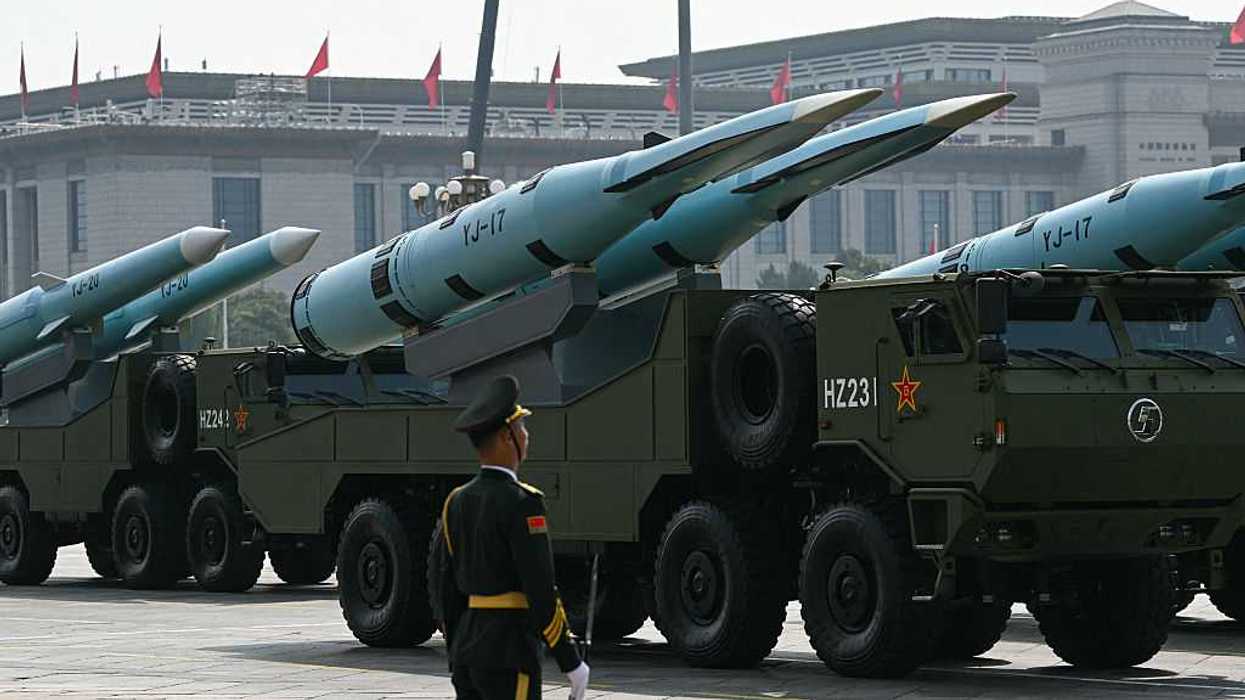
The context is different this time, and the pressure of the moment is no longer speculative. Russia has claimed the combat use of its Kinzhal and Zircon missiles in Ukraine. China, according to the Department of War’s 2025 reports, possesses the world’s “leading hypersonic missile arsenal.” These events convert the technology from a next-gen category into an “enacted reality,” a spectacle of intimidation that shapes budgets and public mythologies.
The American effort is split between two architectures: the boost-glide vehicle, which maneuvers through the upper atmosphere after being launched by a rocket, and the hypersonic cruise missile, an air-breathing vehicle powered by a scramjet. The scramjet is a particularly demanding piece of engineering, requiring supersonic combustion to occur in extremely short “residence times” at extreme temperatures. These systems make the operational promise that they can fly in the upper atmosphere, between 80,000 and 200,000 feet, effectively exploiting the altitude bands where existing sensors and interceptors struggle to maintain continuous observation.
The department’s own vocabulary reveals a more earthbound struggle. Officials describe a portfolio that is a grinding capacity contest involving aero-aerothermal science, high-temperature materials, and supply-chain fragility. The Government Accountability Office notes that the limited experience in producing these weapons makes cost prediction and schedule control unusually difficult.
RELATED: 'Painful days': Iran kills US troops as Trump threatens decapitated Iranian regime
 Photo by Daniel Torok/White House via Getty Images
The fiscal year 2026 research funding request for hypersonics was $3.9 billion, a sharp drop from the $6.9 billion requested in FY2025. As of early 2026, the department has not yet established stable “programs of record” for these weapons, implying that the mission requirements and long-term funding remain unresolved.
To bridge this gap, the military has begun to borrow the jargon of Silicon Valley. It speaks of delivering a “minimum viable product.” It aims to develop capability at the “speed of relevance,” a phrase that imports the tempo of commercial tech into the military imagination. The warfighter is reimagined as a “user” whose feedback shapes “capability increments.”
The constraints on this vision are mundane. The GAO identifies aged facilities and “insufficient sustainment” as major risks for test capacity. There are long lead times for specialized carbon-carbon materials and limited suppliers for thermal protection. To enhance the workforce, the department is spending $100 million to run a university consortium to cultivate a community of labs and curricula.
The speed of these weapons affects the attacker as well as defender. When decision time shrinks, the temptation to automate launch decisions grows. Arms control analysts warn of “flash” dynamics driven by machine interpretation and rapid escalation pathways. This concern became concrete on February 5, 2026, when the New START treaty expired. For the first time in decades, the United States and Russia have no binding bilateral framework for strategic predictability. In this vacuum, strategic stability is a contested design space in which weapons, sensors, and machine-speed doctrines interact.
Want to leave a tip?
We answer to you. Help keep our content free of advertisers and big tech censorship by leaving a tip today.
Want to join the conversation?
Already a subscriber?