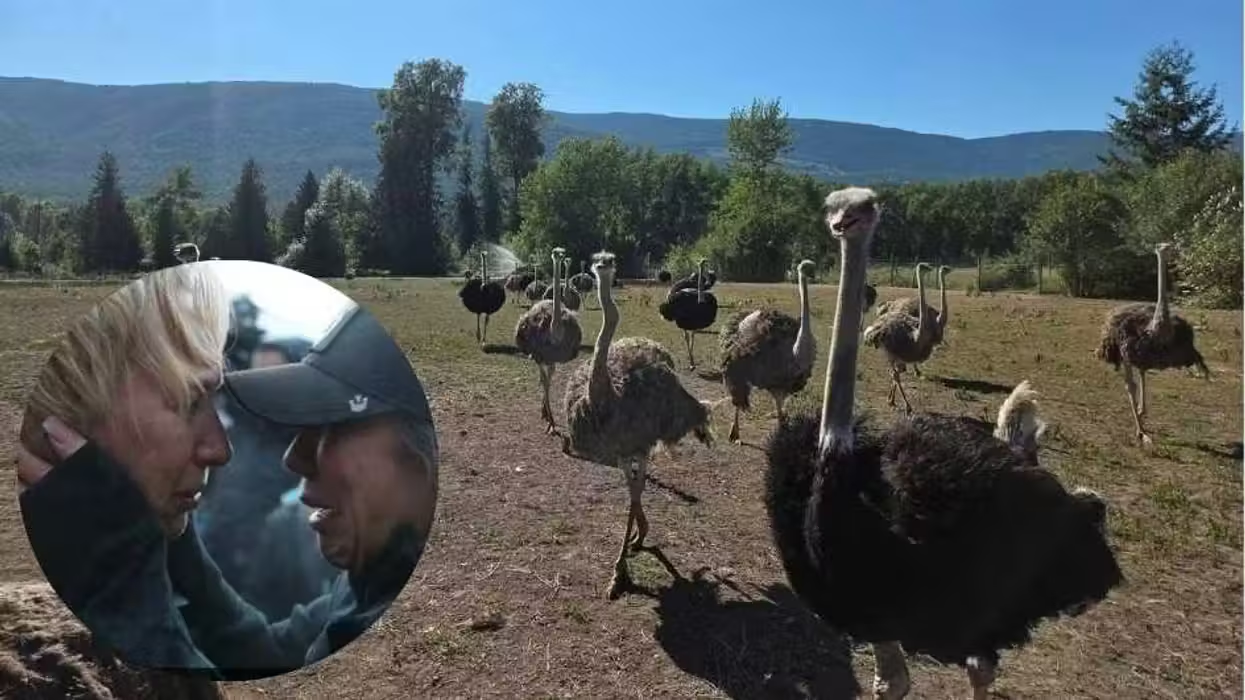
Katie Pasitney
Like many of us, Katie Pasitney entered the new year with a resolution.
Hers, however, is not personal or private, but public and political: to hold the Canadian government accountable for what it did to her family, their farm, and the more than 300 ostriches whose blood still stains their British Columbia property.
Pasitney describes the cull as 'one of the biggest heinous acts of animal cruelty probably in Canadian history.'
Pasitney recently spoke to Align after what she calls the worst Christmas season of her life — describing weeks of shock, trauma, and severe depression in the wake of the government's November 6 culling of Universal Ostrich Farms' entire herd.
The culling was the sad and brutal end to a nearly year-long legal fight — one that thrust Pasitney into the spotlight as the farm’s spokesperson, making her case in widely shared, self-produced videos.
The Canadian Food Inspection Agency ordered the birds killed under its “stamping out” policy after a possible case of avian influenza in December 2024. After a brief pause that gave the farm hope that the order might be reconsidered, the CFIA formally rejected an exemption request on January 10, 2025 — roughly a month before the federal government announced the purchase of 500,000 avian influenza vaccines.
From that point on, the walls began to close in on Pasitney and her mother, Karen Espersen, co-owner of the farm. The two spent much of the year fighting the CFIA in court, accumulating legal bills while the federal government racked up legal victories. Throughout the ordeal, the playing field appeared tilted: The government was largely permitted to advance a single argument — that the cull must proceed because it had already been ordered.
Prominent Americans including Health and Human Services Secretary Robert F. Kennedy Jr., Dr. Mehmet Oz, and businessman John Catsimatidis publicly supported the farm. Despite political pressure and repeated questions in Parliament about the CFIA’s handling of the case, federal ministers consistently deferred to the agency and the courts as the legal process unfolded.
To Pasitney and her supporters, it often seemed as if Ottawa was content to let lawfare grind the family down.
It did not matter, Pasitney argues, that the birds showed signs of herd immunity. It did not matter that there was no evidence of disease for months. The CFIA refused to conduct further testing. After the farm lost its appeal in federal court, CFIA officials arrived on Sept. 23, took control of the property, and prepared to carry out the kill.
The Supreme Court of Canada briefly intervened, agreeing to hear an appeal and issuing a temporary stay. But CFIA officials remained on site with what they described as “custody” of the ostriches. Over the next seven weeks, Pasitney and her supporters documented what they say was harassment and mistreatment of the birds by CFIA inspectors. Independent counts showed the ostrich population continuing to decline.
On November 6, the Supreme Court declined to intervene further. The execution could proceed.
That evening and into the early hours of Nov. 7, CFIA marksmen shot hundreds of ostriches while Pasitney and her supporters looked on. It took roughly 1,000 rounds to kill the herd.
Even after the slaughter, the CFIA maintained a quarantine over the property. The family was not permitted to retrieve spent shell casings or remove hay bales used to construct what Pasitney calls a “kill pen.”
I spoke with Pasitney on Jan. 3 in a video interview from the farm in Edgewood, British Columbia, which still resembles a war zone. She is seeking to have the quarantine lifted so cleanup can begin, but she is equally focused on holding the CFIA — and the Liberal government of Prime Minister Mark Carney — accountable.
The memories remain raw. Pasitney describes the cull as “one of the biggest heinous acts of animal cruelty probably in Canadian history,” saying the ostriches were forced to witness one another being shot “in fear and panic for hours,” while her family endured what she characterizes as 11 months of state-sanctioned intimidation.
RELATED: Massacre at Universal Ostrich Farms: Canada kills hundreds of birds despite no evidence of avian flu
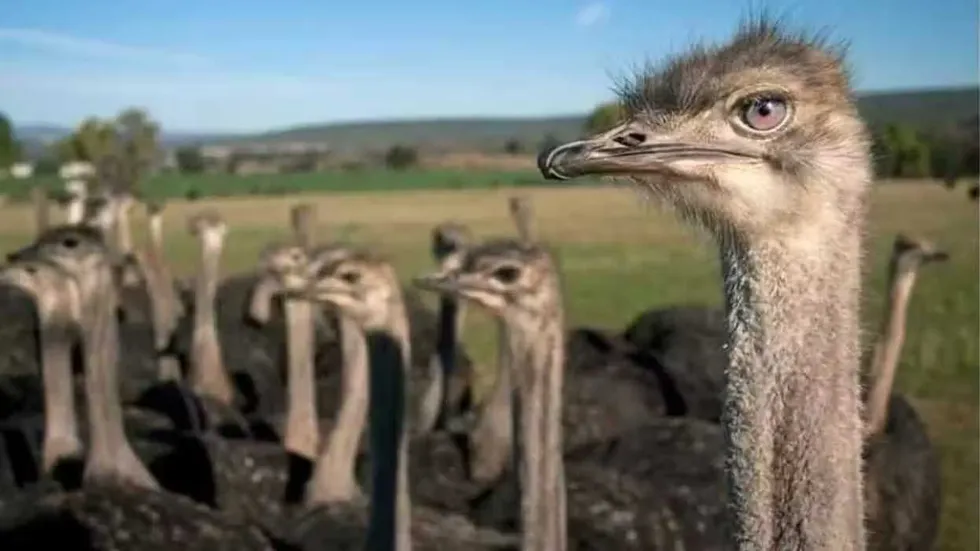 Universal Ostrich Farms
Demonstrating the science, she says, was always her goal. “They suppressed our real science,” Pasitney argues. “There was no testing for almost 300 days. There was no surveillance, no proof of active disease — and still they came in and they stripped us of our freedoms.”
She also questions how the agency handled biosecurity on the ground. CFIA officials maintained that their protocols required full protective equipment only in designated quarantine or “hot” zones, a distinction that allowed inspectors, police, and contractors outside those zones to operate without hazmat suits or full PPE. To Pasitney, that contrast — between claims of an ongoing viral threat and what she observed on site — raises serious doubts.
“There was no viral threat,” she says. “Show us proof of active illness.”
“It is clear that there was never a quarantine,” Pasitney adds. “They would have disinfected their vehicles. They would have worn consistent PPE. They would have had a certified company handling biohazardous waste. They wouldn’t have left our animals killed out in the field overnight. ... They definitely wouldn't have left this hay-bale mess out there, littered with blood, littered with shell casings. There's no quarantine. Let's just be honest. This was all a theatrical display of punishment for using our voices.”
Pasitney further alleges that not all ostriches were destroyed during the operation, claiming some birds were removed from the property. “They stole our science,” she says. “They stole ostriches.” She urges anyone with information about their whereabouts to come forward.
Pasitney insists her fight was never just about one farm.
“Our poor farmers are under attack everywhere across our country,” Pasitney says.
By accountability, she means a full reckoning: review of CFIA outbreak protocols, recognition of farmers’ rights, and an end to what she calls one-size-fits-all policies like stamping out.
She is now working to organize a national federation for farmers — one that, she says, will ask basic but urgent questions: Who protects the people who feed the country? Who holds regulators to account?
Pasitney is reluctant to talk about fundraising but says she has little choice. The quarantine, she notes, eliminated all income: no product sales, no tours, no feathers, no eggshells — nothing.
“At the end of the day,” she says, “the government still stripped us from absolutely everything. And we are fighting."