Topical Press Agency/Getty Images
Night driving used to be routine. Now for many drivers, it’s something they actively dread.
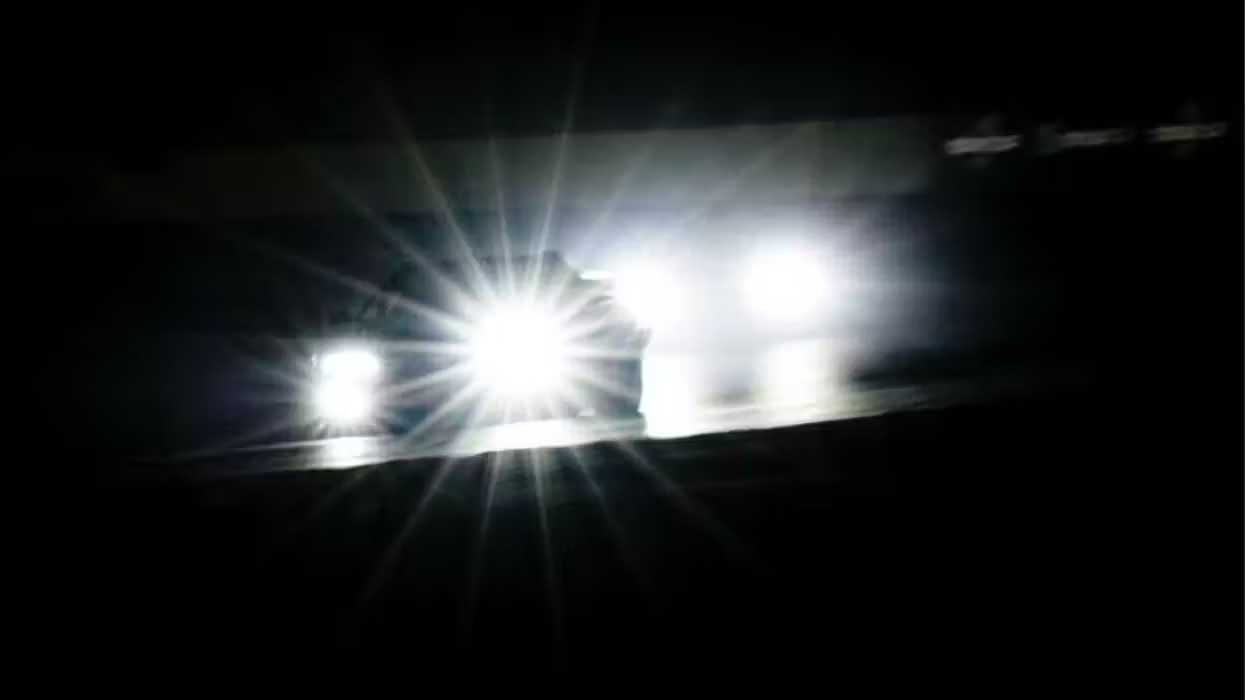
The reason is simple: Modern headlights are getting brighter — and for everyone outside the vehicle using them, that often means blinding glare. Drivers are dealing with harsh, white LED and laser lights that can overwhelm their vision in seconds. It’s not just uncomfortable. It’s a real safety issue.
Instead of flipping down a solid visor that blocks part of the windshield, the system uses a clear panel that darkens electronically.
Now Michigan-based auto tech company Gentex says it may have a solution.
Automakers have spent years pushing more powerful lighting systems in the name of safety. On paper, brighter headlights improve visibility for the driver behind the wheel.
But on real roads, the effect is more complicated.
For oncoming traffic, those same lights can reduce visibility, not improve it. Drivers report being dazzled, losing contrast, and struggling to see lane markings, pedestrians, or obstacles for several seconds after exposure.
That’s not a minor inconvenience. At highway speeds, even a brief loss of clear vision can have serious consequences.
And the data backs up what drivers already know.
A 2024 European survey found that 71% of drivers say headlight glare is intolerable or extremely annoying. More than half say they sometimes squint or briefly close their eyes to cope. A majority report difficulty seeing the road during those moments.
In the United States, the National Highway Traffic Safety Administration says glare is now the number one lighting-related complaint from drivers.
This is a classic example of a well-intentioned change creating a new problem.
Headlights have become more powerful due to advances in LED and laser technology, along with evolving safety standards. But there has been less focus on how those lights affect everyone else on the road.
The result is a trade-off drivers feel every night: One driver sees better; everyone else sees worse.
That imbalance is now drawing regulatory attention. European regulators are studying whether lighting rules need to change, and in the U.S., complaints continue to rise.
But regulatory fixes take time — and in the meantime, drivers still have to deal with the problem.
RELATED: Why are modern car headlights so blindingly bright?
 Chris Graythen/Getty Images
That’s where companies like Gentex come in.
The proposed solution is a transparent, dimmable sun visor designed to reduce glare from oncoming headlights. Instead of flipping down a solid visor that blocks part of the windshield, the system uses a clear panel that darkens electronically. You can still see through it, but the harsh light is softened.
The technology builds on something many drivers already trust: auto-dimming rearview mirrors. Sensors detect bright light, and the glass adjusts instantly to reduce glare.
Bringing that same concept to the front of the vehicle is a logical next step — and in practice, it works.
In testing and demonstration, the effect is noticeable. The glare is reduced without blocking the road ahead, which is the key difference from a traditional visor. It doesn’t feel like a work-around so much as a natural extension of a feature drivers already rely on.
For drivers who regularly deal with bright, poorly aimed headlights, this kind of technology could make a meaningful difference.
It reduces eyestrain. It makes night driving less fatiguing. And importantly, it does so without requiring drivers to change how they drive or where they refuel — something that has been a sticking point with other new automotive technologies.
That’s part of what makes this approach compelling.
Rather than waiting for a full redesign of headlight standards — or expecting perfect compliance across millions of vehicles — this is a solution that works within the reality drivers already face.
In many ways, this is how the auto industry has always evolved.
A problem emerges. Regulations lag behind. And suppliers step in with technology that improves the driving experience in the meantime.
Gentex has done this before with auto-dimming mirrors. This visor builds on that same idea — using relatively simple, proven technology to solve a very real problem.
And because it doesn’t require a complete redesign of the vehicle, it’s easier for automakers to adopt.
Like most new features, the dimmable visor will likely appear first in higher-end vehicles when it launches around 2027. Over time, as costs come down, it could move into more mainstream models.
That matters because the underlying issue isn’t going away. Headlights will likely continue getting brighter as automakers pursue better forward visibility and new lighting technologies. Which means glare will remain part of the driving experience.
Gentex’s dimmable visor doesn’t solve the root issue of headlight glare — but it doesn’t need to. What it does is something more immediate: It gives drivers a way to manage a problem they already deal with every night.
And based on early impressions, it does that in a way that feels intuitive, effective, and easy to live with. In today’s automotive landscape, that kind of practical innovation can go a long way.
Because for many drivers, the challenge isn’t seeing the road. It’s seeing clearly when the road lights up in front of them.
For more on this, check out my interview with Gentex's Craig Piersma.