Joe Raedle/Getty Images
Eight years ago this month, Norma McCorvey died in a Texas nursing home, far from the cameras and courtrooms that once made her the most famous anonymous woman in America. There were no placards, no protests, no press.
She may be gone, but her name endures. The world knew her as “Jane Roe,” the plaintiff whose case redrew the legal landscape and reshaped the conscience of a nation.
Her story reflects a familiar pattern: individuals raised to symbolic status, then discarded once the moment passes.
Her beginnings weren’t marked by power, but by poverty and disorder. Born in rural Louisiana and raised in Texas, she grew up in a home shaped by absence and anger. Her father left early. Her mother battled alcoholism. Punishment was common; tenderness was rare. By adolescence, she had run away, fallen into petty crime, and entered state custody. Order came through institutions rather than through a steady home. Survival, not stability, shaped her youth.
Adulthood brought little relief. She married at 16 and left soon after. Her first child was taken and adopted by her mother. A second was placed for adoption. By 21, she was pregnant again — alone and impoverished, with few options and little guidance.
Texas law allowed almost no abortions. Friends suggested that she claim rape to qualify. The claim failed. Through a chain of referrals, she met two young attorneys seeking a pregnant woman willing to challenge the statute. She agreed. She wanted an abortion. Instead, she became the primary figure in a legal battle she neither directed nor fully understood.
The case moved slowly. She never attended the hearings. She gave birth and placed the baby for adoption. When the Supreme Court ruled in 1973, she wasn’t celebrating. She later said the decision meant little to her at the time. The country changed. Her circumstances did not.
Yet the ruling transformed American life. Abortion became both a protected right and a permanent point of conflict. Clinics multiplied. Protest lines formed. The decision that bore her pseudonym ushered in a legal order under which millions of unborn children would be terminated. In the first half of last year alone, even after the overturn of Roe v. Wade, nearly 600,000 abortions occurred, averaging more than 3,000 each day. The scale is sobering.
In the years that followed, McCorvey worked around abortion clinics and publicly supported abortion rights. She spoke for the cause and lived within its orbit, lifted and used by larger forces.
Public relevance did not bring private peace. Her personal life remained unsettled. Addiction, loneliness, and fractured relationships followed her into middle age.
Then, in the mid-1990s, an unexpected turn.
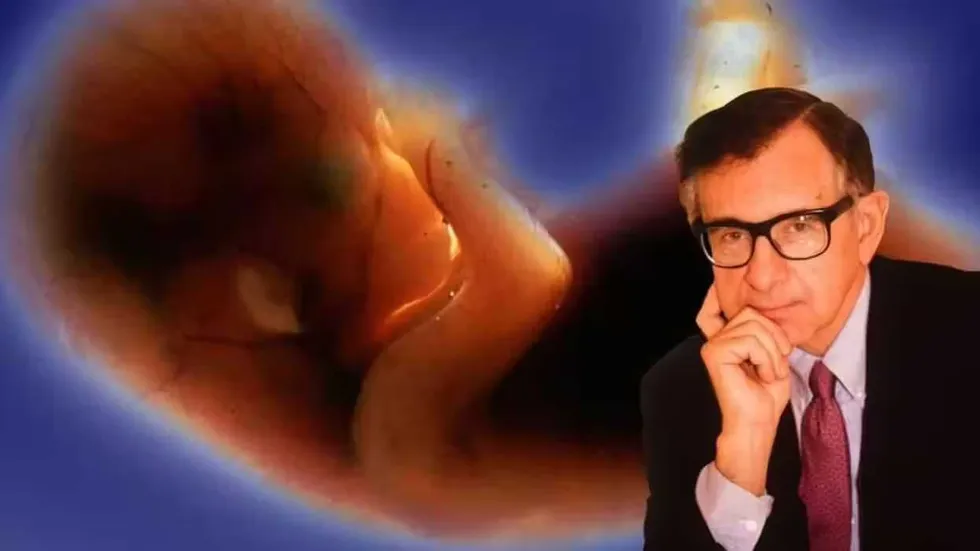
While working at a Dallas clinic, she encountered pro-life volunteers who spoke with steady kindness. They addressed her not as a symbol but as a person. Conversation replaced confrontation. One day, she paused before a poster showing fetal development. The image stayed with her.
Soon after, she left her job.
RELATED: Bernard Nathanson: Abortion architect who found mercy in Christ
 Sydney Morning Herald/Antonio Ribiero/Getty Images
In 1995, she was baptized into evangelical Christianity in a backyard swimming pool. In her 1997 memoir "Won by Love," McCorvey described the experience as a turning point, one that reshaped both her public advocacy and her private life.
Three years later, she entered the Catholic Church, a decision widely covered at the time by both secular and religious press. Her public stance changed. She described her role in Roe v. Wade as the greatest mistake of her life. She marched, protested, and testified, urging Americans to reconsider what the nation had embraced.
Her conversion drew admiration from some and skepticism from others. In a 2020 documentary, "AKA Jane Roe," previously recorded interviews surfaced in which McCorvey suggested that financial incentives had influenced aspects of her pro-life advocacy.
The claims reignited debate over the sincerity of her conversion. Friends and clergy who knew her well disputed that account, describing a woman who prayed daily and took her faith seriously. The tensions remain unresolved. Human lives rarely fit neat narratives.
What remains clear is that her life traced a restless search for belonging and forgiveness. She was not a simple figure. At times blunt and belligerent, at others wounded and weary, she carried deep contradictions. She stood at the center of a historic decision, often seeming invisible within it.
Her story reflects a familiar pattern: individuals raised to symbolic status, then discarded once the moment passes. She served as a standard-bearer and later a cautionary tale — celebrated, contested, and set aside. Rarely was she treated as a person.
For Christians, this terrain is not unfamiliar. Scripture offers no flawless heroes, only flawed men and women redirected by grace. David fell. Peter denied. Paul persecuted. Grace did not erase their past; it changed their course.
No honest telling can minimize the consequences of Roe v. Wade. The decision reshaped law, medicine, and family life. McCorvey’s participation in that moment remains a grave part of her legacy.
Yet Christian faith insists that no life lies beyond redemption. The gospel does not deny sin; it denies that sin has the final word.
In her later years, friends described a woman quieter and gentler, less concerned with public approval and more attentive to eternity. She spoke of regret. She spoke as someone who looked back on what she had represented and felt the weight of it.
Eight years on, Norma McCorvey’s life resists easy telling. History will continue to debate her. Movements will continue to claim her. In the end, judgment belongs to God, who sees what no one else can.