
NurPhoto
Stellantis is facing a financial reckoning that should send a warning across the global auto industry.
After betting that the electric vehicle transition would move faster than consumers were ready to follow, the company is now reporting a staggering $26.3 billion net loss for 2025 — driven largely by roughly $30 billion in write-downs tied to scaling back parts of its EV strategy.
As recently as 2023, some workers received nearly $14,000 in profit-sharing payouts. This year, they received nothing.
For a company that was profitable just a year earlier, the reversal is dramatic. Stellantis’ experience highlights the risks of building product strategies around aggressive electrification timelines shaped by government policy and optimistic forecasts rather than actual consumer demand.
Stellantis, the Amsterdam-based automaker formed in 2021, oversees 14 brands, including Jeep, Dodge, Ram, Chrysler, Fiat, Alfa Romeo, Maserati, Peugeot, and Citroën. With that kind of global footprint, its strategic decisions ripple across workers, suppliers, investors — and ultimately car buyers.
The company’s 2025 financial results show how quickly those bets can unravel. Net revenue totaled $181.1 billion, down 2% from the previous year. But the real damage appears on the bottom line: a $26.3 billion net loss replacing what had been a $6.5 billion profit the year before. Free cash flow turned negative by roughly $4.9 billion. Dividends were suspended, and profit-sharing checks for UAW workers disappeared.
As recently as 2023, some workers received nearly $14,000 in profit-sharing payouts. This year, they received nothing. When automakers absorb losses of this scale, the financial pressure eventually spreads through the entire system — from employees and suppliers to vehicle pricing and investment decisions.
Chief Executive Officer Antonio Filosa acknowledged the miscalculation directly, saying the results reflect “the cost of over-estimating the pace of the energy transition.” That unusually candid admission reflects a broader reality across the auto sector: Automakers, regulators, and investors collectively assumed EV adoption would accelerate faster than consumers, charging infrastructure, affordability, and political support would allow.
The roots of the problem trace back to Stellantis’ “Dare Forward 2030” strategy under former CEO Carlos Tavares. The company set ambitious goals: 100% EV sales in Europe and 50% EV sales in the United States by 2030. To reach those targets, Stellantis invested billions in EV platforms, battery supply chains, and factory conversions.
Those investments were encouraged — and in some cases effectively required — by government mandates and regulatory timelines. But the strategy assumed that consumers would move to EVs at roughly the same pace as policymakers hoped.
That assumption proved overly optimistic.
EV adoption has grown, but not at the pace many projections predicted during the peak of electric vehicle enthusiasm. High vehicle prices, uneven charging infrastructure, rising insurance costs, and concerns about resale value have slowed adoption. As those concerns mounted, both Europe and the United States began easing some regulatory pressure tied to EV mandates.
When policy expectations change, automakers are left adjusting billions of dollars in investments that were made under very different assumptions.
Stellantis was not alone in this miscalculation. Across the industry, automakers have announced more than $55 billion in EV-related write-offs. Reporting from the Financial Times estimates the broader financial toll of scaling back electrification plans — including restructuring costs and canceled programs — has reached roughly $65 billion. Ford alone has taken about $19 billion in charges connected to its EV reset, while General Motors and Volkswagen have also booked major write-downs.
Even in that context, Stellantis’ losses stand out. The company recorded about $25.9 billion in one-time charges, including nearly $20 billion tied directly to electric-vehicle programs, along with roughly $4.8 billion in warranty costs and other restructuring expenses. Those charges reflect a broad reset of the company’s strategy as Stellantis scrapped certain electric and plug-in hybrid models, revised production plans, and shifted investment back toward internal combustion and hybrid vehicles.
For consumers, these strategic resets matter because powertrain choices shape vehicle availability and pricing.
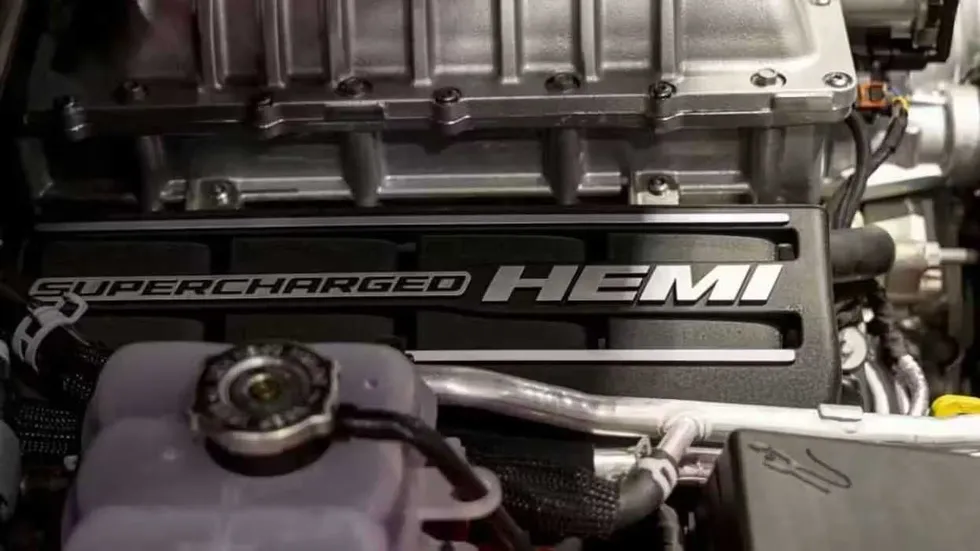
In North America, one of the clearest signals of Stellantis’ shift is the return of the 5.7-liter HEMI V8 engine. That move reflects continued demand for traditional powertrains, especially in high-margin truck and performance segments where buyers prioritize capability, reliability, and price over electrification targets.
In Europe, Stellantis is folding diesel and mild-hybrid gasoline options back into several models. Instead of betting exclusively on battery electric vehicles, the company is moving toward a broader powertrain strategy that includes EVs, hybrids, gasoline, and diesel options.
That shift reflects what many consumers have been saying throughout the transition: They want choices that fit their budgets, driving habits, and infrastructure realities.
RELATED: Hemi tough: Stellantis chooses power over tired EV mandate
 Chicago Tribune/Getty Images
Despite the enormous write-downs, there are early signs of stabilization. During the second half of 2025, after Filosa began unwinding elements of the prior strategy, Stellantis reported approximately $93.3 billion in revenue for the July-December period, a 10% increase year over year. Vehicle shipments rose 11% during that timeframe.
The company still reported an adjusted operating loss of roughly $1.6 billion during that period, but improved shipment volumes suggest the recalibrated strategy may be gaining traction.
The crisis did not develop overnight. It grew from several assumptions: that EV demand would rise steadily, that battery costs would fall fast enough to make EVs profitable, and that regulatory pressure would remain constant.
Instead, the transition has proven far more uneven. EV sales remain heavily dependent on subsidies, battery supply chains still rely heavily on China, and charging infrastructure remains inconsistent across many markets. When incentives shrink or economic conditions tighten, EV demand can slow quickly.
For workers, the consequences are immediate. Because Stellantis posted a loss, UAW employees will not receive profit-sharing payouts this year. Across the Detroit Three, the average payout is about $6,200 — roughly 40% lower than prior averages near $10,000. For Stellantis workers, the payout is zero.
The broader lesson is not that electric vehicles have no role in the future. They do, and EV technology will continue to evolve.
But the assumption that internal combustion engines would disappear rapidly now looks unrealistic. Consumers ultimately determine the pace of change, and their priorities remain clear: price, reliability, convenience, charging access, and resale value.
Filosa has framed Stellantis’ reset around restoring “freedom to choose” across electric, hybrid, gasoline, and diesel technologies. That message reflects a shift toward building vehicles that align with real-world consumer demand rather than political timelines.
The cost of the earlier miscalculation is now measured in tens of billions of dollars. Whether the reset ultimately strengthens Stellantis or simply marks the beginning of a smaller product lineup will depend on how effectively the company balances innovation with consumer priorities.
In the end, the lesson is simple. Automakers can design new technologies and governments can set policy goals, but consumers still decide what succeeds in the marketplace.