
David Paul Morris/Bloomberg via Getty Images
When I find myself agreeing with Democrats more than Republicans on a core liberty issue, I know something has gone badly wrong on the right.
That is where we are.
Sen. Ed Markey (D-Mass.) has shown more urgency about protecting privacy from Big Tech than most Republicans. Republicans, meanwhile, keep covering for companies like Meta in the name of innovation or “anti-regulation.”
Privacy is not a boutique concern for cranks. It protects freedom of movement, assembly, association, and speech. A country that abandons privacy invites tyranny.
If the biomedical security state pushed during COVID looked sinister, wait until Big Tech deploys smart glasses with AI facial recognition.
In February, the New York Times reported, based on internal Meta documents, that the company had revived a 2021 plan to add facial recognition to its Ray-Ban smart glasses. The feature, internally code-named “Name Tag,” would let wearers identify people in real time without their knowledge and pull up information through Meta’s built-in AI assistant. “Dystopian” hardly covers it.
The privacy threat gets worse. According to the Times, an internal Reality Labs memo from May 2025 discussed launching the feature during a “dynamic political environment” to reduce scrutiny from privacy groups. In other words, Meta appears to know exactly how toxic this is and hopes to slip it into public life while the country is distracted by a war.
Meta already has access to billions of personal profiles and a long record of treating privacy as a nuisance. Facial recognition in covert wearable cameras would not be a harmless upgrade. It would breach a boundary that should never be breached.
For most of modern life, stepping into public did not mean surrendering your identity to every stranger around you. A person outside his home still retained some anonymity. He could walk, speak, assemble, worship, or attend an event without assuming that every passerby could identify him and connect him to a digital dossier.
Meta’s glasses would end that.
This is how the surveillance state grows: one device, one platform, one “convenience” at a time. The goal is obvious enough — surveil Americans continuously, gather every available scrap of data, and make it available for private exploitation or government abuse.
Republicans should lead the fight against that future. Instead, Democrats have taken the lead. Markey, joined by Oregon Senators Ron Wyden and Jeff Merkley, sent Mark Zuckerberg a letter laying out the civil-liberties threat.
“Embedding facial recognition into consumer wearables would vastly expand this surveillance infrastructure, enabling continuous, decentralized identification of members of the public without their knowledge or consent,” the senators wrote. “The deployment of facial recognition technology in smart glasses risks entrenching a system in which Americans are routinely scanned, catalogued, and analyzed as they move through daily life — an outcome fundamentally incompatible with a democracy.”
For once, the Democrats are right.
A wearer could blend into a crowd and scan thousands of faces in a single afternoon. The people being scanned would never know. No practical mechanism for consent exists. No opt-out exists. Your privacy would depend on strangers’ self-restraint and Meta’s internal rules.
That is no protection at all.
Now add politics. America is already divided along political, social, cultural, and religious lines. These glasses would function as a doxxing machine — a gift to activists, harassers, and anyone who wants to expose, blacklist, or intimidate another person.
Imagine someone wearing them at a protest, church, synagogue, school-board meeting, rally, or conference. A passing glance could tie a face to a name, employer, relationship status, online history, and web of personal associations. The line between public presence and forced disclosure would disappear.
Markey asked whether Meta had evaluated “the potential for stalking, harassment, doxxing, or government misuse.”
That question answers itself. Those are not side effects. They are among the most obvious uses.
The data pipeline should alarm people just as much. Anyone who wants to use the AI functions on these glasses will likely have to run them through Meta’s app. That means Meta and its contractors will receive the footage and other user data and can use the data to train models and refine the system.
A Swedish newspaper already found that workers for Meta contractors had access to shockingly intimate moments from users’ lives. One Kenyan subcontractor put it this way: “We see everything — from living rooms to naked bodies. Meta has that type of content in its databases. People can record themselves in the wrong way and not even know what they are recording. They are real people like you and me.”
Defenders will say smartphones already allow people to spy on one another. That misses the point. Phones are conspicuous. They require effort. Smart glasses make surveillance ambient, easy, and nearly invisible.
RELATED: Your smart thermostat is watching you — it knows your routine and when your house is empty
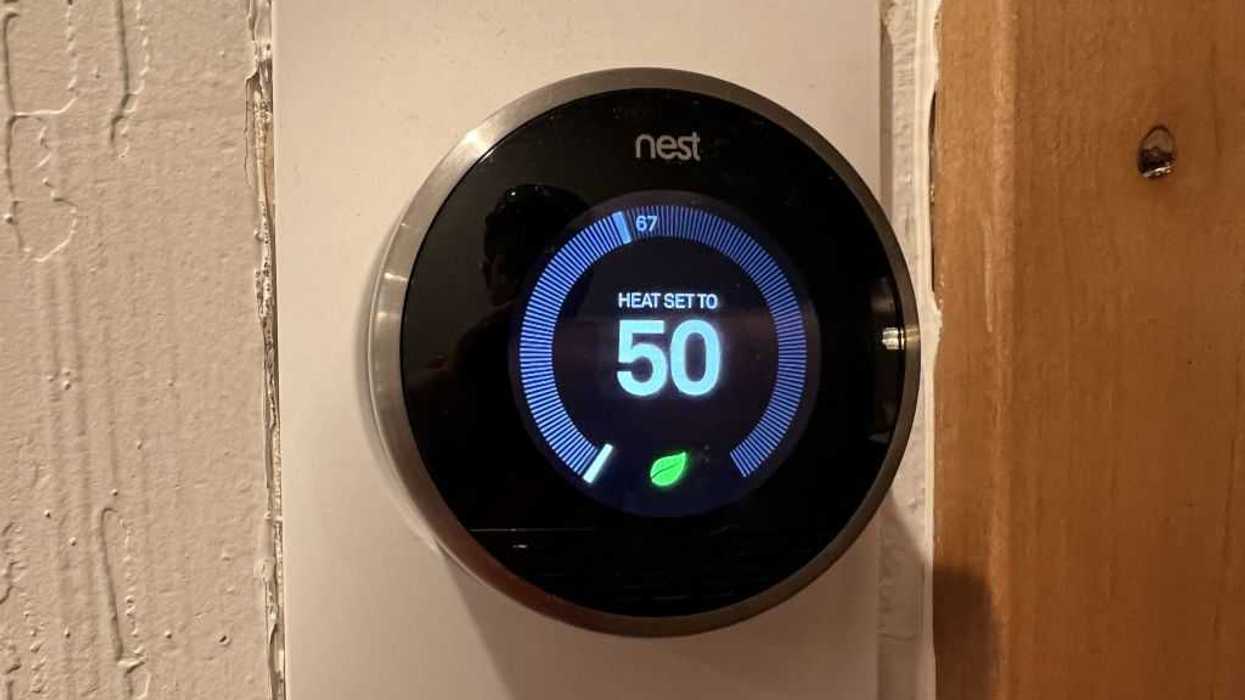 Photo by Gado/Getty Images
Republicans should grasp the politics as well as the principle. Getting outflanked by Democrats on privacy, Big Tech, and the surveillance state is malpractice. Young voters already distrust AI. Fighting biometric surveillance and warrantless data abuse should be easy territory for a party that claims to care about liberty.
Instead, Trump has called on House Republicans to pass a clean reauthorization of FISA Section 702 without requiring warrants when federal agencies query Americans’ communications swept up in foreign surveillance. He has also pushed legislation to preempt many state regulations on data centers and AI deployment.
That is the wrong instinct at the wrong moment.
Privacy is not a boutique concern for cranks. It protects freedom of movement, assembly, association, and speech. A country that abandons privacy invites tyranny.
Americans do not want data centers imposed on their communities, fentanyl zombies defecating in the street, chemicals in their food, and camera networks tracking their movements. They certainly do not want strangers stripping away their anonymity with a glance through AI-powered glasses.
If Republicans cannot draw the line here, on a bedrock question of liberty and human dignity, they deserve to lose.