© 2026 Blaze Media LLC. All rights reserved.
My fiancée is from Kathmandu. I was there when the riots started. I saw children gunned down in the streets, homes set ablaze, and politicians beaten senseless by the crowds they once ruled. It felt surreal at the time. But the impact was painfully real, and it’s still unfolding.
The riots became a revolution. Nepal recently toppled its government and an interim administration is now in place. Elections are expected in early 2026. The streets are calm for now. But it’s a nervous calm, the kind that could shatter at any moment.
We spend a few months each year in Nepal, a fascinating country unlike any other. I’ve sat in tea houses in Lalitpur, watched the dawn roll over the Himalayas, and heard the steady hum of monks chanting through the valley mist. It’s a country that transcends clichés like Everest, stoic Sherpas, and fluttering prayer flags. Nepal is deeply spiritual yet politically volatile, economically poor yet impossibly rich in natural resources, and yes small, yet somehow central to the ambitions of much larger powers.
What happened on the streets of Kathmandu and other cities—the blood, the bullets, the horror—was a stark reminder that Nepal is no longer a sleepy mountain nation but a front line in a far greater struggle. What unfolds here will ripple across South Asia and far beyond.
Between Giants
 Adobe
Adobe
To the north lies China, eyeing Nepal as its natural gateway into South Asia. Beijing’s ambitions are hardly subtle. Through the Belt and Road Initiative (BRI), it has poured billions into dams, roads, airports, and railways. And the rail line from Lhasa to the Nepalese capital, once a distant goal, is already complete, with trains running back and forth every day.
That single fact changes everything. A functioning rail link means China can move goods, people, and influence at a speed Nepal has never been able to match. Now that the final stretch to Kathmandu is complete, Nepal’s economy will drift toward China as surely as metal answers a magnet. Trade will change. Tourism will tilt. And the politics will follow the money.
Their motives differ, but their influence adds up. In a country this small, every new arrival leaves a mark.
A working rail line gives China a permanent artery into the Himalayas, one that can move far more than cargo. Beijing suddenly has daily access to a country whose institutions are already fragile. Chinese influence now runs through Nepal’s universities, media houses, and even monasteries. To the south, India watches with mounting unease. For decades, Nepal sat comfortably within India’s informal sphere of influence. The two countries share more than geography—an open border, overlapping languages, and families scattered across the Terai plains. Yet, like Ireland and Britain, neighbors bound by history but soured by grievance, affection sits uneasily beside resentment.
The warmth has faded. Trade blockades, border disputes, and political interference have strained what was once a somewhat familial relationship. Delhi’s posture has grown increasingly possessive, even indulging the revisionist claim that Buddha was “actually Indian,” a provocation that lands in Nepal like a slap to the face. And unlike Ireland, Nepal was never colonized, a point of national pride. But both of its giant neighbors, India and China, act as though that detail is minor, negotiable. Each, in its own way, would be more than happy to change it.
Wedged between the dragon and the elephant, Nepal has been inching along a diplomatic tightrope that was never built to hold this much weight. China’s money buys influence; India’s pressure breeds defiance. Every government that rises in Kathmandu faces the same impossible equation: lean too far north, and Delhi growls; lean too far south, and Beijing bares its teeth.
Thin Air
 Adobe
Adobe
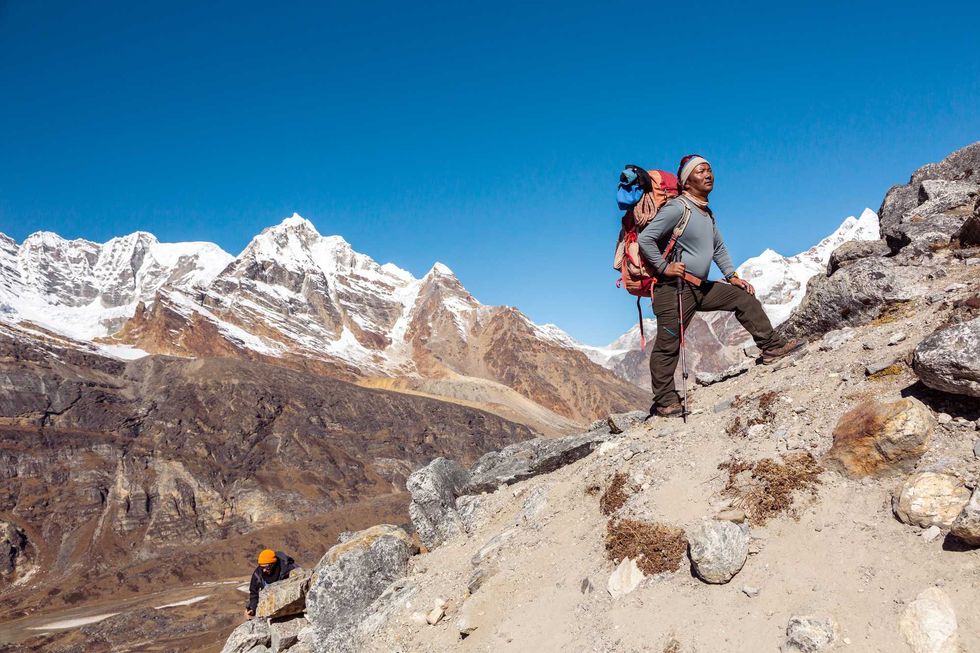
I hear this frustration every week from Nepalis themselves—mostly from the guys I hike with, men who work hard, say little, and carry a quiet pride in their country. Not one of them has anything good to say about Chinese or Indian influence. The average Nepali detests both. But with corruption baked so deeply into the political class, they have little choice but to live with whichever neighbor is leaning on them that month.
The latest uprising wasn’t born of ideology but exhaustion. To understand why, you have to understand what came before. For centuries, Nepal’s monarchy held the country together. Imperfectly, sometimes harshly, but with enough authority to keep the political tribes from tearing each other apart. When the crown fell in 2008, all hell broke loose. Parties fractured along ethnic, regional, and caste lines. Politics became less about vision and more about carving the state into pieces small enough for each group to claim.
Into that vacuum walked the Maoists. What began as an insurgency promising justice for the forgotten turned into another power bloc, indistinguishable from the elites they once fought. The war ended, but the methods remained—intimidation, patronage, and a talent for turning paralysis into leverage. Coalition politics here is driven not by conviction but survival, a revolving door of deals struck at midnight and broken by morning.
Big promises from new leaders dissolve with predictable speed, swallowed by the machinery of cronyism and factional bargaining. And so the streets fill again with anger and fatigue. Protest, crackdown, negotiation, collapse—the cycle repeats. Power shifts hands. A few faces change on the posters, but nothing meaningful reaches the people living day to day on a few dollars.
In that space between dreams of a better tomorrow and daily struggle, America’s presence quietly expands.
Walk through Kathmandu and you feel it immediately—American voices in coffee shops. Missionaries and NGO workers heading off to classrooms, clinics, and hillside villages. Over the past decade, the number of Americans here has swelled—digital nomads chasing cheap rent, aid workers chasing purpose, and religious groups chasing souls. Their motives differ, but their influence adds up. In a country this small, every new arrival leaves a mark.
The United States sees Nepal as more than a mountain kingdom. It’s a potential bulwark against Chinese expansion, an ostensibly democratic outpost in an increasingly authoritarian region. Washington’s Millennium Challenge Corporation (MCC) agreement, signed in 2017 and finally ratified in 2022, was worth half a billion dollars and marketed as a simple infrastructure boost: roads, electricity, transmission lines. But Beijing saw it as a Trojan horse for American influence. The backlash was immediate. Protests filled Kathmandu, party leaders split, and coalition partners threatened to walk. The controversy nearly brought the government down. It became one of the most divisive episodes in modern Nepali politics. And in the end, the MCC didn’t topple the government—the Nepali people did, when they lost patience with a political class that couldn’t deliver clean water, let alone geopolitical balance.
American officials deny any geopolitical motive. But diplomacy is rarely innocent. For Washington, Nepal is part of a broader chessboard stretching from the South China Sea to the Indo-Pacific. A stable Nepal strengthens the U.S. position against Chinese expansion. A captured Nepal weakens it.
Holy Mountains
 Adobe
Adobe
There’s also a moral dimension. Many American missionaries here see themselves not as agents of influence but of salvation. Yet their presence carries political implications. In a Hindu-majority nation already wary of outside interference, Christianity’s growth is viewed with suspicion by some and hostility by others. Several incidents of churches being burned or pastors harassed have gone underreported. As American influence increases, so does the perception that Western influence is not purely benevolent.
The coming election is more than a fight for political power. In many ways, it’s a battle for Nepal’s soul. Will the next government deepen ties with China, accepting more loans that will almost certainly become chains? Or will it reaffirm the fragile democracy that’s held, against the odds, since the end of monarchy in 2008?
A free and stable Nepal matters to the U.S. for reasons both moral and strategic. It’s a democratic buffer between the two most populous nations on Earth. And it’s one of the few places left where the struggle between freedom and control, faith and fear, still unfolds in unmistakably human form.
For all its unrest, Nepal remains among the most deeply human places I’ve ever known. There’s a strange beauty in its brokenness. After the uprising, I watched neighbors share rice with strangers stranded by curfews. I saw shopkeepers sweeping shards of glass from the road. Not because anyone told them to, but because dignity demanded it.
The world too often romanticizes Nepal—all temples and treks—without realizing how much pressure this small nation bears. Each promise of foreign aid comes with conditions. Each alliance demands allegiance. And each election becomes a referendum not just on who leads Nepal, but on who owns its future.
CAPTIONS:
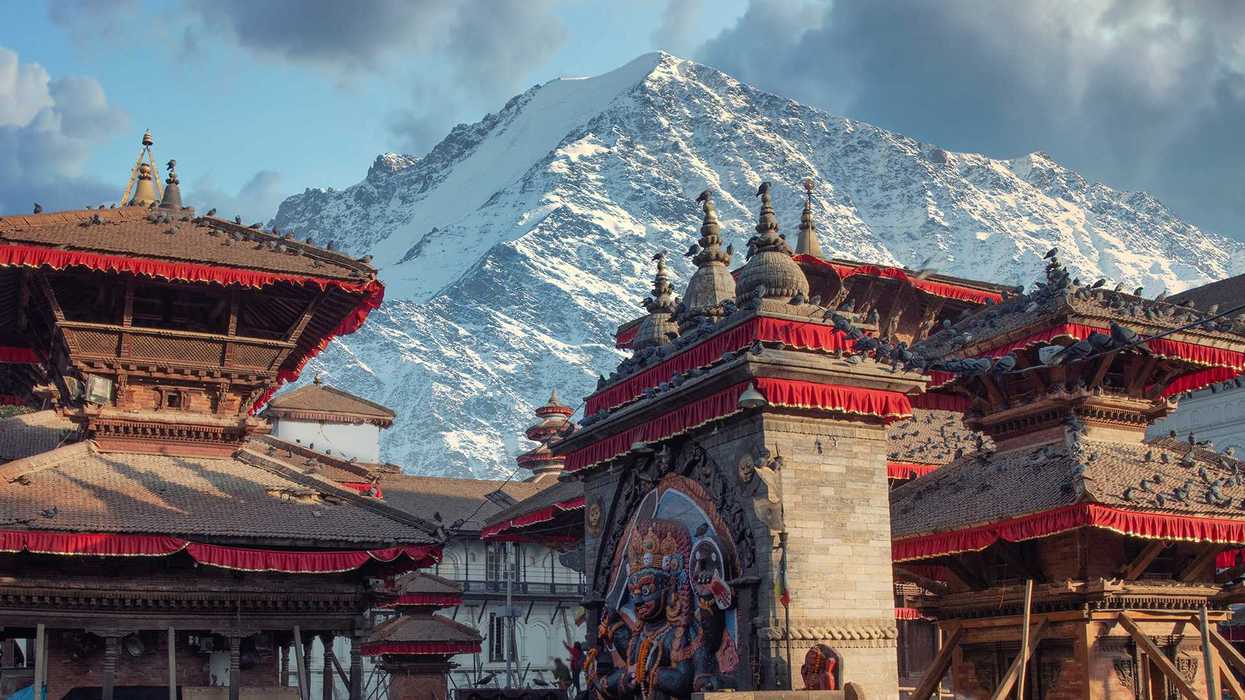
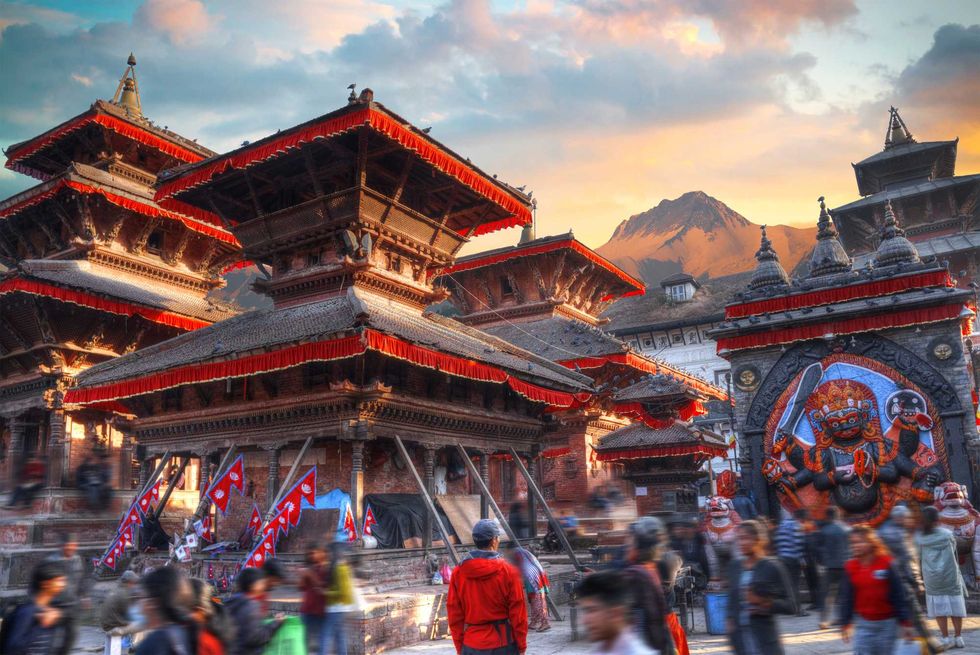
The ancient splendor of Nepal is awe-inspiring.
A sherpa guides a trailing group up the mountain.
Want to leave a tip?
We answer to you. Help keep our content free of advertisers and big tech censorship by leaving a tip today.
Want to join the conversation?
Already a subscriber?