© 2026 Blaze Media LLC. All rights reserved.
I had never been to the park surrounding Mahatma Gandhi Memorial Plaza in a Dallas suburb until I stepped into it one cold afternoon.
I disturbed a large flock of pigeons as I stepped onto the path. It was an unusually cold and windy day for North Texas. The biting wind ripped down the path snaking around the large pond in the center of the park. Because it was so cold, I was planning on turning right at the first fork in the path to go straight to the plaza, but a couple of benches to my left caught my eye.
The benches themselves were unremarkable, but their inscriptions gave me a clue about the type of place I was entering. The plaques, dedicated and placed there by loved ones in memoriam, bore unmistakably alien-sounding foreign names, likely from the same origin as the plaza’s namesake.
As I moved on around the lake, I crossed paths with a few runners and walkers moving in the opposite direction. I caught a few less-than-friendly side-eye glances, and nobody returned my “hello.”
I moved down here for school in 2020, so I guess this plaza is more Texan than I’ll ever be, if we’re counting by years.
I wouldn’t have been surprised if they had similar names to those on the benches, but nobody seemed keen to talk and give me any answers.
Cultural Collision
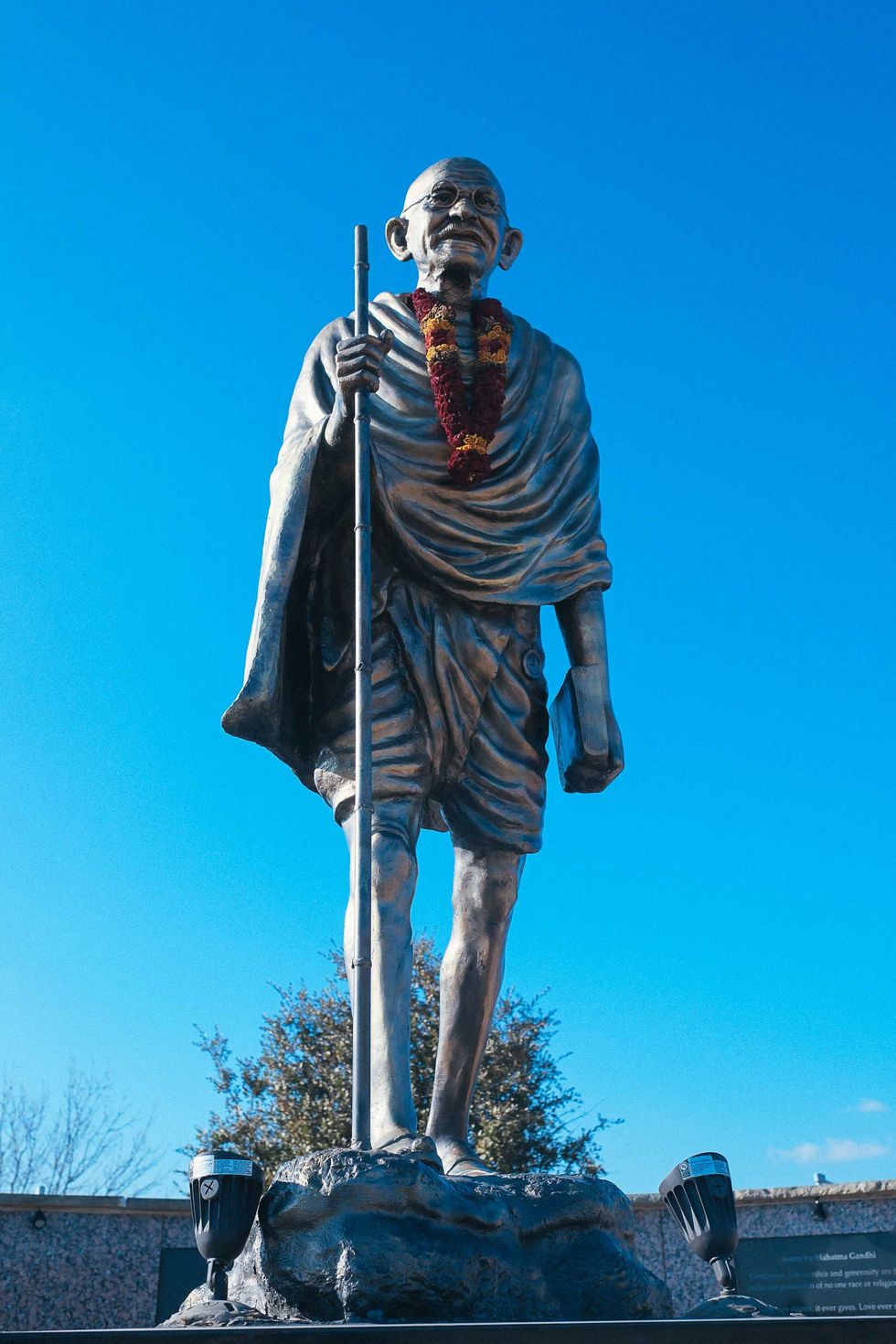 Striding toward the visitor, a man who never set foot in the United States.Frontier Staff
As it happens, it’s easy to tell if someone is new to America and whether they are making any effort to assimilate into our culture. And you don’t even need to talk to them. Just observe how they walk.
In America, we customarily walk on the right side of the path. There is nothing moral or objectively better about traveling on the right side rather than the left side. You could even say it’s arbitrary. But that’s how we do things here, and once that’s established, it’s imperative to “stay to the right.”
Foreigners, however, seem to have the opposite instinct and, further, seem to be intent on imposing their customs upon us: cutting me off on my right rather than passing smoothly on my left. I think it’s worth not conceding this simple custom.
I didn’t collide with anyone on that cold day in the park, but I certainly thought about all of the incidents in the past as I circled the long, narrow lake and finally made it to the main attraction: the Mahatma Gandhi Memorial Plaza.
Memorial Monkeybusiness
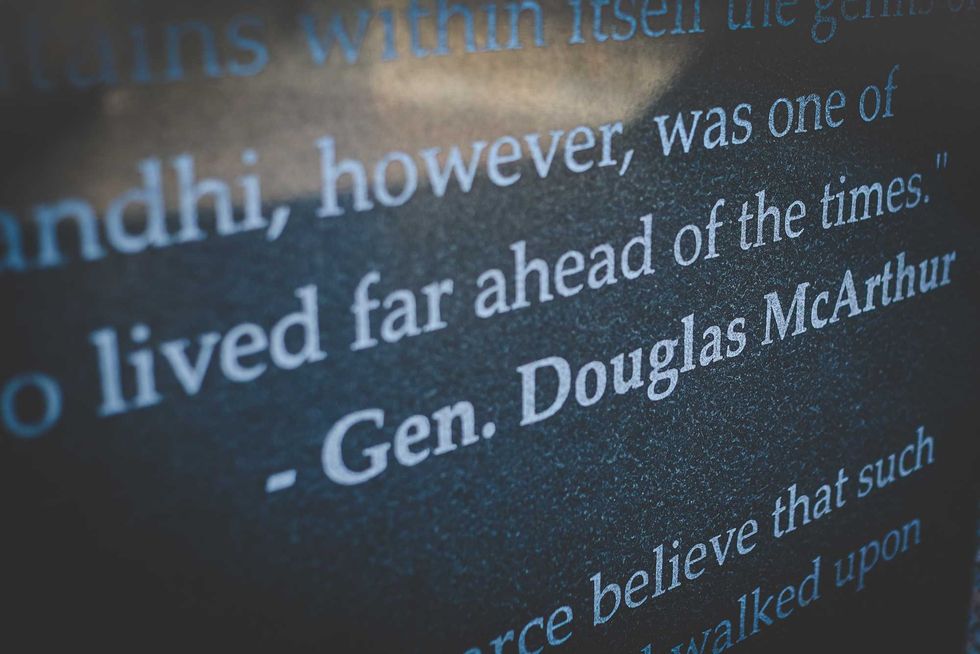 MacArthur misspelled, and soon, it seems, misremembered.Frontier Staff
I walked up the winding pathway to the elevated plaza. There were security cameras everywhere, accompanied by signs warning visitors that the area is under 24-hour surveillance.
A large sign with both the American flag and the Indian flag told me where I was and how long it had been there. “MAHATMA GANDHI MEMORIAL PLAZA CITY OF IRVING PARKS AND RECREATION: GROUNDBREAKING MAY 3, 2014.”
I moved down here for school in 2020, so I guess this plaza is more Texan than I’ll ever be, if we’re counting by years.
I looked up at the main attraction.
Gandhi’s gilded head sat atop the 1,500-pound, seven-foot statue, the highest point in the entire park.
Only seven feet? That’s nothing compared to some of the foreign idols raised in Texas recently—the most famous example being, of course, the 90-foot abomination, euphemistically called the Statue of Union, dedicated to the foreign monkey demon Hanuman, just outside Houston.
Fun fact: the statue of the half-man, half-monkey is now one of the tallest statues in the United States, tied with, but by some estimates slightly taller than, the statue of Our Lady of the Rockies overlooking the Continental Divide in Butte, Montana.
I examined many of the signs and plaques at Mahatma Gandhi’s memorial.
Gandhi was born two centuries ago, halfway across the world in a place many people have never heard of nor would ever care to visit.
Gandhi spoke English with an Irish accent.
Though he knew both, Gandhi preferred his mother tongue, Gujarati, over English, which is why his books are in translation.
More interestingly, by some estimates, Nikki Randhawa Haley and Tulsi Gabbard, along with a couple of Democratic politicians and members of the Indian government, were present at the 2014 groundbreaking ceremony.
It’s funny how things and people change, and how they don’t.
While the walls of the memorial were covered in foreign names and shallow quotations that presented as profundity, one pair stood out to me more than any other.
In the back left of the display, the great General Douglas MacArthur had a quotation attributed to him about Gandhi. I looked more closely at the plaque, but it wasn’t the statement that affected me—it was his name.
“Douglas McArthur.”
They couldn’t even bother to check that they were spelling his name correctly in their haste to raise a memorial to someone who had nothing to do with Texas or its history.
General Douglas MacArthur was a highly decorated five-star general in the Army who served in both World Wars and the Korean War. He is known, among other accomplishments, for accepting Japan’s surrender aboard the USS Missouri in World War II. His active United States military service spanned half a century, and he is held in extremely high esteem to this day.
And Mahatma Gandhi never even visited America, so dedicated was he to his country’s independence movement.
But whose statue in whose memorial plaza under whose flag was I staring up at that day?
New Texas
 Frontier Staff
Texas has a centuries-old provision in the Joint Resolution of Annexation, as old as the state itself, that explicitly allows the state to split into up to five states if its people ever decide to pursue such a course.
But that will never happen, people say, because no one is willing to part with the Alamo and its incredible story.
But Texas also has a not-so-well-kept secret: the red state is a glutton for legal immigration, and not just from across the Rio Grande.
This cultural flashpoint has kept the people of Texas together for nearly two centuries, and it has never stopped being a deep point of pride for everyone living in the state.
The fact that that story still pulls its weight after all these years shows that Old Texas is still out there, but also why the rise of New Texas is so concerning.
While people can make all of the theoretical arguments about immigration policy and the visa programs that facilitate it, the facts on the ground are rapidly changing, and things aren’t getting any better.
Texas politicians often complain, understandably so given the large southern border with Mexico, that the Lone Star State bears a disproportionate burden when it comes to illegal immigration. The illegals, they say, place a great deal of stress on the state’s infrastructure, medical institutions, and the rest.
But Texas also has a not-so-well-kept secret: the red state is a glutton for legal immigration, and not just from across the Rio Grande. Like a drug addict, Texas is hooked on bringing in H-1B visas, which draw overwhelmingly from India.
In the last three years alone, which is also the standard length of an H-1B visa, Texas has admitted just under a quarter million H-1B visa immigrants, more than 15 percent of the 1.6 million H-1Bs granted during that period. For all our Great Replacement readers out there, that number is remarkably close to Irving, Texas’s current population.
Just as Texas is a standout state in America for these visas, so too is Irving a remarkable city. This little suburb of Dallas, which a lifelong Irvingite recently told me is definitely not named after Washington Irving, took in over 11 percent of Texas’ H-1B visa workforce over the past three years.
Indeed, Irving brought in nearly 27,400 legal immigrants over the last three years, yet many of them list apartment addresses as their primary place of work! Why, if these migrants are working remotely, are they all being dumped into this town near the airport between Dallas and Fort Worth?
I remember walking around the Las Colinas area of Irving with a friend a few years ago. Las Colinas was an experiment years ago to create a city within a city, a true hotspot of business and leisure in a walkable area. Anyone familiar with Dallas knows that insane people designed the highway system, so the prospect of not having to drive is attractive to many people looking for something closer than downtown.
Las Colinas was always meant to be a cultural hub for gatherings. And on that particular night years ago, there was a music festival along the canal system. The area was packed with people, and for a moment, I took it all in and enjoyed it.
But the next moment, the illusion came crashing down. I found myself surrounded by foreigners. They spoke different languages and wore different clothes. The women wore coverings, and the men cast suspicious looks in my direction, as if I, the native American, were the one out of place.
And in that moment, I almost believed it.
Contrary to appearances, I was not walking the streets of Istanbul, Medina, or Hyderabad, yet the people glared at me as if I were an outsider.
This experience, though years ago now, stuck with me, probably because it was my first, and definitely not my last, taste of New Texas.
Old Texas
 The English reader is left to infer a translation.Frontier Staff
Suspended in the relative bubble of the Catholic oasis known as the University of Dallas for the better part of five years, my experience with New Texas was generally quite limited. And to the contrary, I got a good taste of Old Texas during that time.
There is something so unique about the food, clothing, and dance of Texas that it would be out of place to take them elsewhere. Maybe that’s true for any culture. But Old Texas is the place where people eat barbeque and dance at honkytonks in their cowboy boots, hats, and belt buckles.
Hard Eight BBQ in Coppell, Texas, was always my favorite spot to take people when they visited. They needed to experience Texas, the Old Texas, and this was the perfect spot in which to immerse them.
Texas barbeque is always a treat. But I haven’t been back to that spot in quite some time. In a way, it has receded from the forefront of what Texas means, as something new has begun to replace it.
Barbeque isn’t the only institution of Old Texas that’s slowly receding. One of my friends’ favorite honkytonks was recently moved from its prime spot in Las Colinas.
I remember spending many a night at the honkytonk playing pool, talking with friends, and listening to live country music. The bar was spacious, with plenty of room for a full band and a dance floor.
After the move, it’s in a more cramped space and shares the building with an unmistakably Indian hangout.
Peace or Submission?
On the other side of town, near the ever-expanding Islamic Center of Irving, lies what could accurately be called the Muslim quarter of Irving. One might assume that Texas isn’t actively splitting into various ethnic enclaves, but that assumption is flat wrong as we enter 2026.
Even so, that reality may escape notice for many, but it can sneak up and slap you in the face if you look at certain parts of the city wrong or too closely.
The Muslim part of Irving has some unique traits. First, many of the houses look like futuristic mansions, far more expensive and nicer than the older parts of Irving. It’s hard to know where all this money came from, though the large-scale fraud under investigation in other states’ immigrant communities lends these wonderings to vivid speculation.
I drove through a couple of these neighborhoods to see the cultural diversity and multiculturalism that have been brought into North Texas.
To no one’s surprise, diversity looks a lot more like an ethnic enclave in the neighborhoods near the Islamic Center of Irving. And by ethnic enclave, I mean exactly what it sounds like: a homogenous bloc of people among whom outsiders would be entirely out of place.
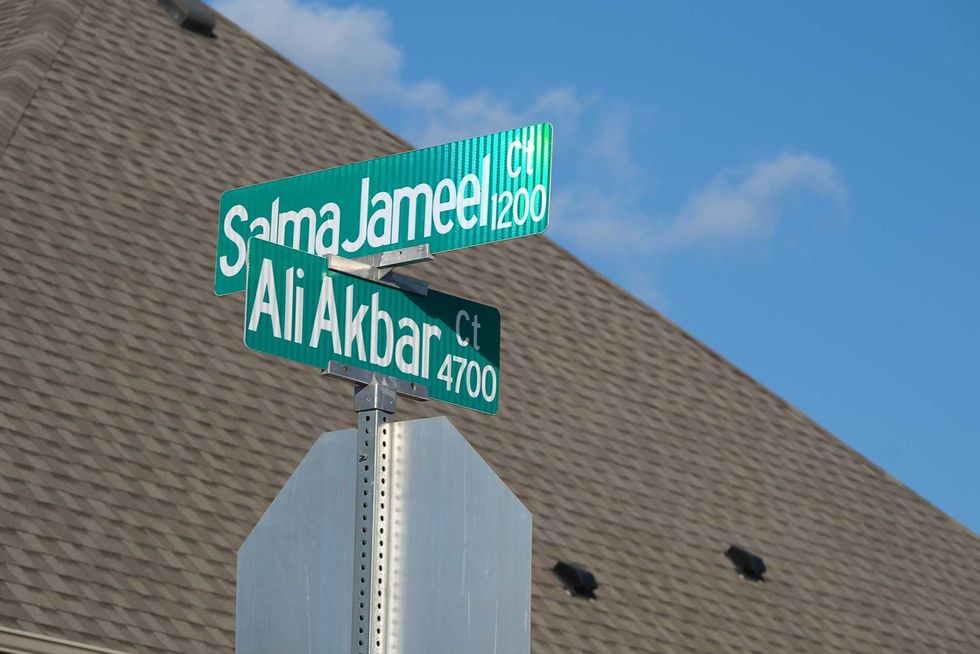
I drove through one of these neighborhoods and looked at the road signs. Mahmoud Egal Drive. Salma Jameel Drive. Hafeela Drive. Many of them are Quranic names used for Muslim girls. And my personal favorite, in the middle of Irving, Texas, is Ali Akbar Court, named in honor of the grandson of Muhammad, Ali Akbar ibn Husayn.
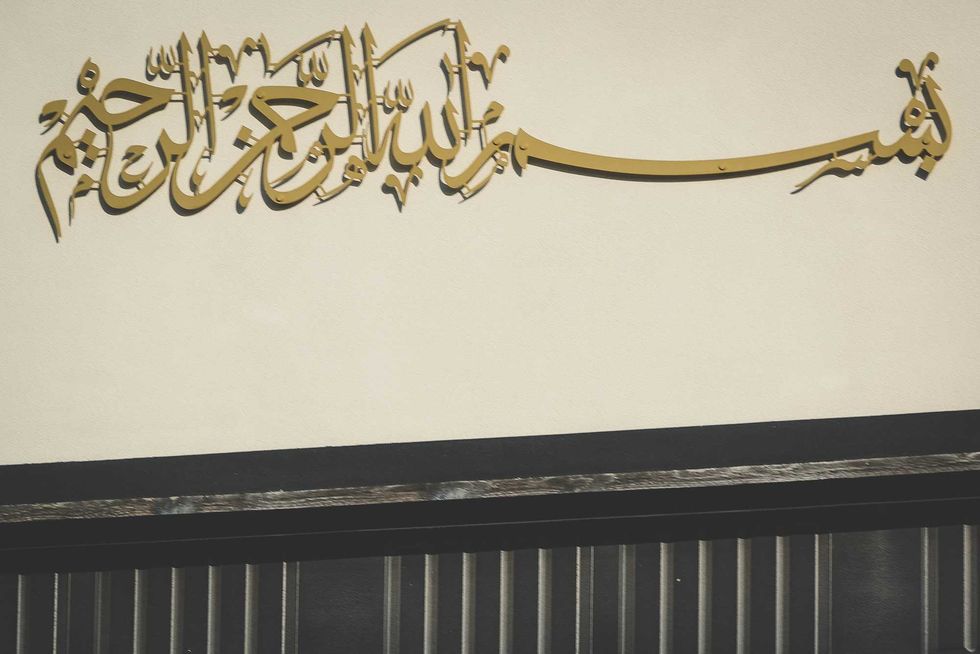
I went to what looked like a community center in the neighborhood. But, to my genuine surprise, the building was marked “Salaam” on the outside. At the time, I thought that this might be the name of the building. I learned later that “salaam” is a common greeting in Islamic spaces, often used as a “religious identity marker,” as ChatGPT told me.
I watched a video about that neighborhood before my visit that showed the inside of the building. Unlike the gym, pool table, and coffee machine one comes to expect at a community center in a residential complex, the interior, the video showed, was covered with red floor mats, presumably for Muslim prayer.
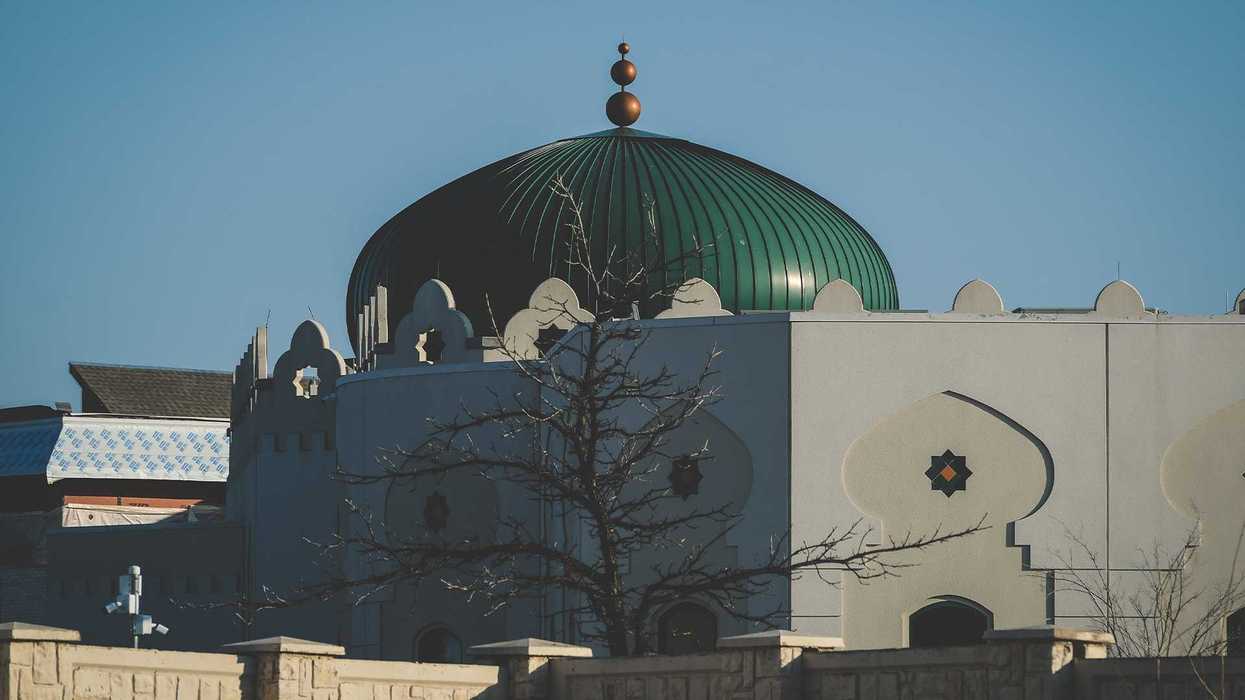
At the end of my visit, I went to the Islamic Center of Irving, which has ten to fifteen cars in the parking lot whenever I drive by, no matter the time of day. The Islamic Center, with its hulking dome and uninspired, blocky architecture, dwarfs the surrounding neighborhoods and buildings, including the Catholic Church just across the street
Which Way, Western Diner?
It’s time for dinner by the time I finish my Tour de Irving, and I decide to treat myself to an American meal after my brush with the Third World. What’s more American than a burger and fries from In-N-Out?
I’ve always enjoyed In-N-Out, and it’s always been a special restaurant to visit, probably because we didn’t have them where I grew up. I therefore associated them with the places in which they could be found, particularly the West Coast. Now, I don’t know which association came first, but when I think of America, the West Coast and In-N-Out both come to mind.
It’s too crowded in the restaurant—places are always too crowded these days—so I loop around into the drive-thru.
I look around while I wait to place my order. To my left, I see one of my favorite fast food chains, neon lights, palm trees, and the familiar smell of burgers and fries. To my right, I see a less familiar sight: Bombay Sizzler Bar and Grill.
Bombay Sizzler Bar and Grill sits under a dentist’s office at the end of the building, occupying the parking lot next to the In-N-Out. I peer into the large windows from my car and see strobe lights flashing everywhere. On the wall opposite the window, an RGB sign the size of the wall overlooks the room: “MUMBAI.”
How brilliantly the Lone Star shines in its final stages of life!
A healthy civilization naturally seeks to expand. Recently, I’ve gotten the distinct impression that not only do civilizations ebb and flow like the tide, but that one will fill the vacuum when another recedes. I wonder if Old Texas is receding like a wave that has come and gone, or if, like the meeting of oceans, it will violently clash in its refusal to mix with dissimilar elements.
Only time will tell, and although I’m relatively new here, I can still tell that Texas belongs to the Old Texans.
Want to leave a tip?
We answer to you. Help keep our content free of advertisers and big tech censorship by leaving a tip today.