© 2026 Blaze Media LLC. All rights reserved.
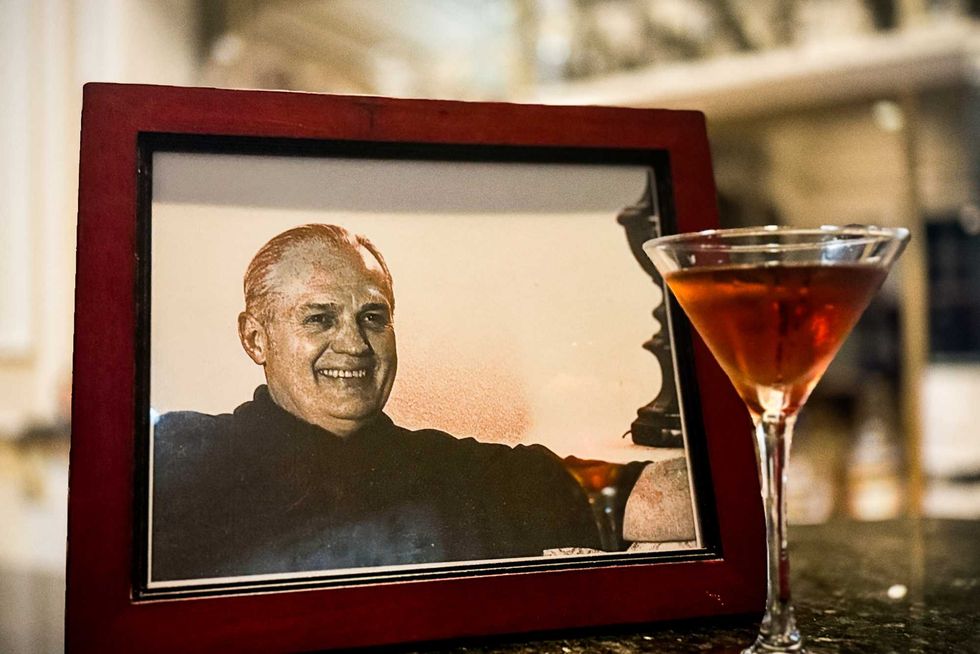
There are drinks you order, and drinks you inherit. The Manhattan belongs to the latter category. Before you ever lift the glass, the drink has already made a promise: strength without vulgarity, elegance without pretense. It was the preferred cocktail of the best man I ever knew, my grandfather, Ed Gietl.
The story most often told begins in New York in the 1870s, in the orbit of the Manhattan Club, where a banquet allegedly hosted by Jennie Jerome, Winston Churchill’s American-born mother, introduced the drink to society. It is also almost certainly apocryphal. Like many origin myths, the anecdote survives because it feels right, not because it is provably true. Whiskey cocktails combining spirit, sugar, bitters, and vermouth were circulating well before the Manhattan acquired its proper name.
By the 1880s, the drink appears plainly in print. O.H. Byron’s Modern Bartender’s Guide (1884) lists a Manhattan Cocktail built on whiskey, vermouth, and bitters. The formula was direct, almost austere. Rye whiskey provided the backbone, Italian sweet vermouth the softened edge, bitters the aromatic punctuation.
Rye whiskey, it must be said, is central to the drink’s identity. Bourbon would later intrude, bringing its rounder sweetness, but rye defined the Manhattan’s original temperament. Rye is sharper, drier, possessed of a certain flinty confidence. When paired with vermouth, something curious happens: severity relaxes into balance.
The Manhattan emerged during the Gilded Age, a period intoxicated by spectacle yet desperate for refinement. Industrial fortunes rose overnight. Dining rooms grew ornate. It was a drink for polished wood bars and low conversation, for deals struck without shouting, for evenings that valued discretion.
My grandfather was born in 1916 and grew up just outside Chicago. He saw the Great Depression up close and would recount, without drama, how the family ate vegetable soup six days a week. He scrounged for odd jobs, anything that might help keep the table set. Hardship did not embitter him. It sharpened him.
 Adobe
Adobe
When Prohibition ended in late 1933, America drank with the enthusiasm of a man who had been lost at sea and rediscovered the shore. The Manhattan never vanished, but it ceded ground to the Martini’s icy minimalism and, later, to the sugary excesses of the 1970s.
By then my grandfather was already moving through history with quiet resolve. He attended graduate school for mechanical engineering, and when war arrived he answered in the way his generation did, without theatrics. He proposed to my grandmother on December 7, 1941. Soon after, he was assigned to help manage a self-propelled howitzer factory in Fort Wayne, Indiana. The “Arsenal of Democracy” was not built by slogans. It was built by men like him, sleeves rolled, responsibility accepted.
After the war, he built a beautiful home in Highland Park, Illinois, and raised four children. He was beloved by everyone he met. His parties became local legend: generous, exuberant, fueled by laughter and meticulously made cocktails. He also helped people quietly, without announcement, and was always the first to volunteer when someone needed a meal, a favor, a steady hand.
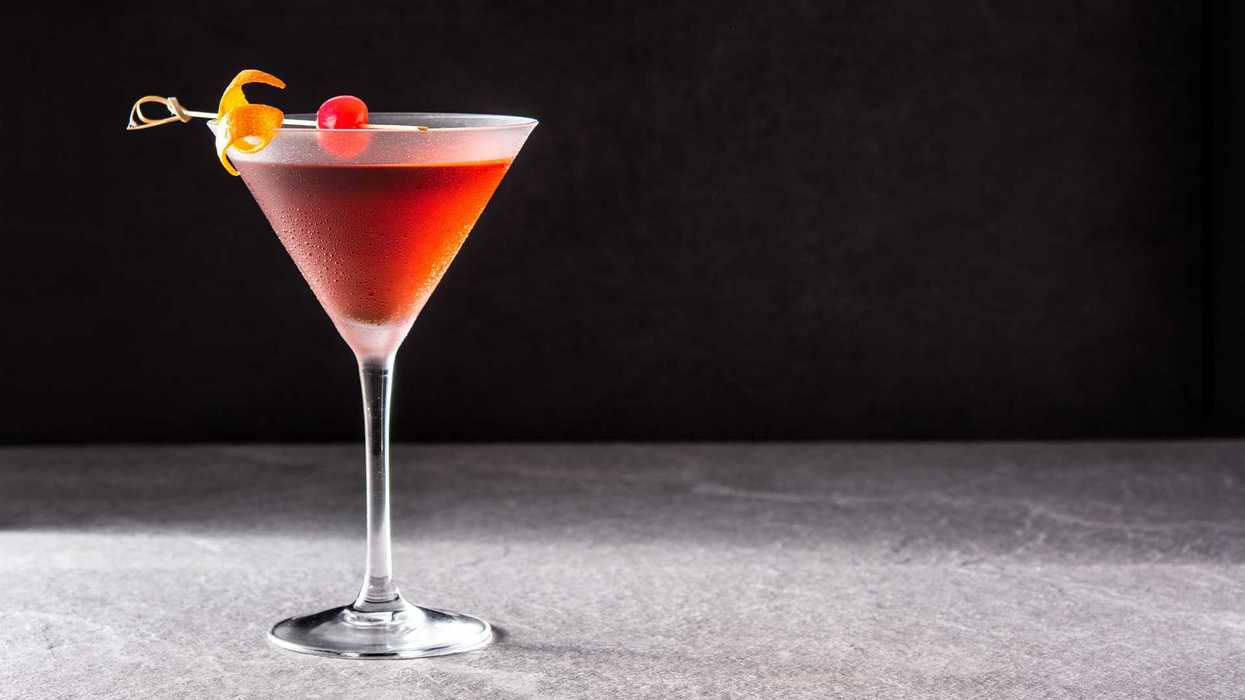
What gives the Manhattan its staying power is not nostalgia but architecture. Three principal elements, each essential, each visible. Whiskey for force, vermouth for grace, bitters for complexity. Remove one and the drink collapses. Alter proportions carelessly and the intricate balance evaporates.
The same might be said of men like my grandfather.
He had a distinguished career as a plant manager, running several Chicago-area factories producing everything from X-ray machines to air cleaner housings for Ford Thunderbirds, power tools, electric blankets, Sunbeam toasters, and irons. He retired in 1979 at the age of sixty-three as Director of Engineering for Beatrice Foods, a sprawling Chicago-based conglomerate. It was a career defined not by glamour but by competence, steadiness, and the respect of those who worked beside him.
In retirement, he reinvented himself as a professional photographer. He traveled the world with his devoted wife, from Rome to Jerusalem, and often back to his beloved Germany. The engineer became an artist, though in truth he had always been both: attentive to structure, sensitive to light.
 Peter Gietl
There will be no books written about Edward Gietl. I feel his memory fading at the edges of my mind, details dissolving the way old photographs slowly surrender their contrast. But he was kind to me. When he took me fishing, he made me feel as though I could do anything. That is no small inheritance.
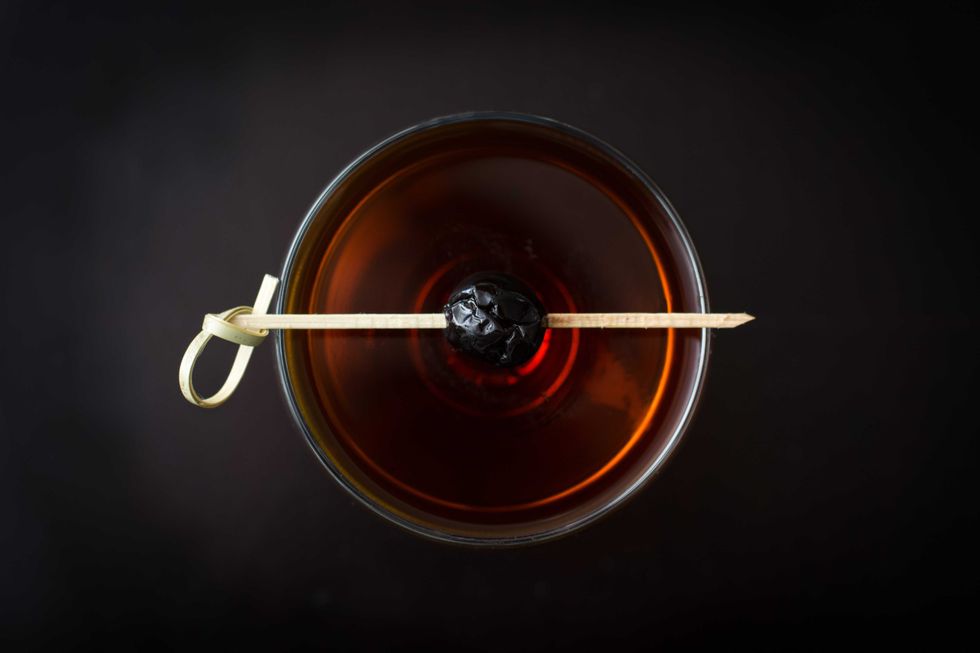
There is also the matter of ritual. A Manhattan asks to be stirred, not shaken, the dilution measured, the temperature respected. Ice clean. Vermouth fresh. Glassware properly chilled. The preparation itself becomes part of the pleasure, a brief ceremony affirming that details still matter.
To drink a Manhattan is to participate in a lineage stretching from nineteenth-century hotel bars to modern dining rooms, from polished mahogany counters to dim corners where the night unfolds slowly. It is to accept that some combinations achieve permanence not because they resist change, but because they embody balance so completely that fashion eventually circles back.
My grandfather understood this intuitively.
At restaurants, he would smile at the waitress, warm, unfailingly courteous, and place his order with a line I can still hear perfectly:
“One Manhattan, extra sweet. Copacetic, my dear.”
And for a moment, whenever I lift the glass, he is here again.
How to Make It
Method:
Fill a mixing glass with solid ice.
Add rye whiskey, sweet vermouth, and bitters.
Stir calmly for about 25–30 seconds, until properly chilled and diluted.
Strain into a chilled coupe or a Nick & Nora glass.
Garnish
Lemon twist or cocktail cherry
Notes
Rye vs. Bourbon: Rye keeps the drink lean and precise. Bourbon rounds it out if you prefer softness.
Fresh vermouth: Vermouth is wine. Treat it accordingly. Refrigerate after opening.
Stirring matters: This drink wants silk, not froth
CAPTIONS:
Engineering and artistry combine in a man as well as a cocktail.
Want to leave a tip?
We answer to you. Help keep our content free of advertisers and big tech censorship by leaving a tip today.
Want to join the conversation?
Already a subscriber?