Ian Davis
Chad Hillard has a penchant for discovering stars. Lorde, Macklemore, Billie Eilish, and LANY can all trace their big breaks to his blog, HillyDilly, in the 2010s. But his latest breakout is proving to be a different beast altogether.
SLOE JACK and I met at The Eighth Room, a bar and music venue that is becoming the epicenter of a sort of Nashville Dimes Square. I had seen him on Instagram before; his bombastic, off-the-cuff reaction videos are hard to miss if you live in Nashville. “There are two sorts of white people in this world. The whites, and the crackers. That’s right, I said the ‘C word,’ and we’re taking it back . . .” That sort of thing. And despite being named Cracker of the Year by his over 700k followers, Jack’s complaints are not one-note.
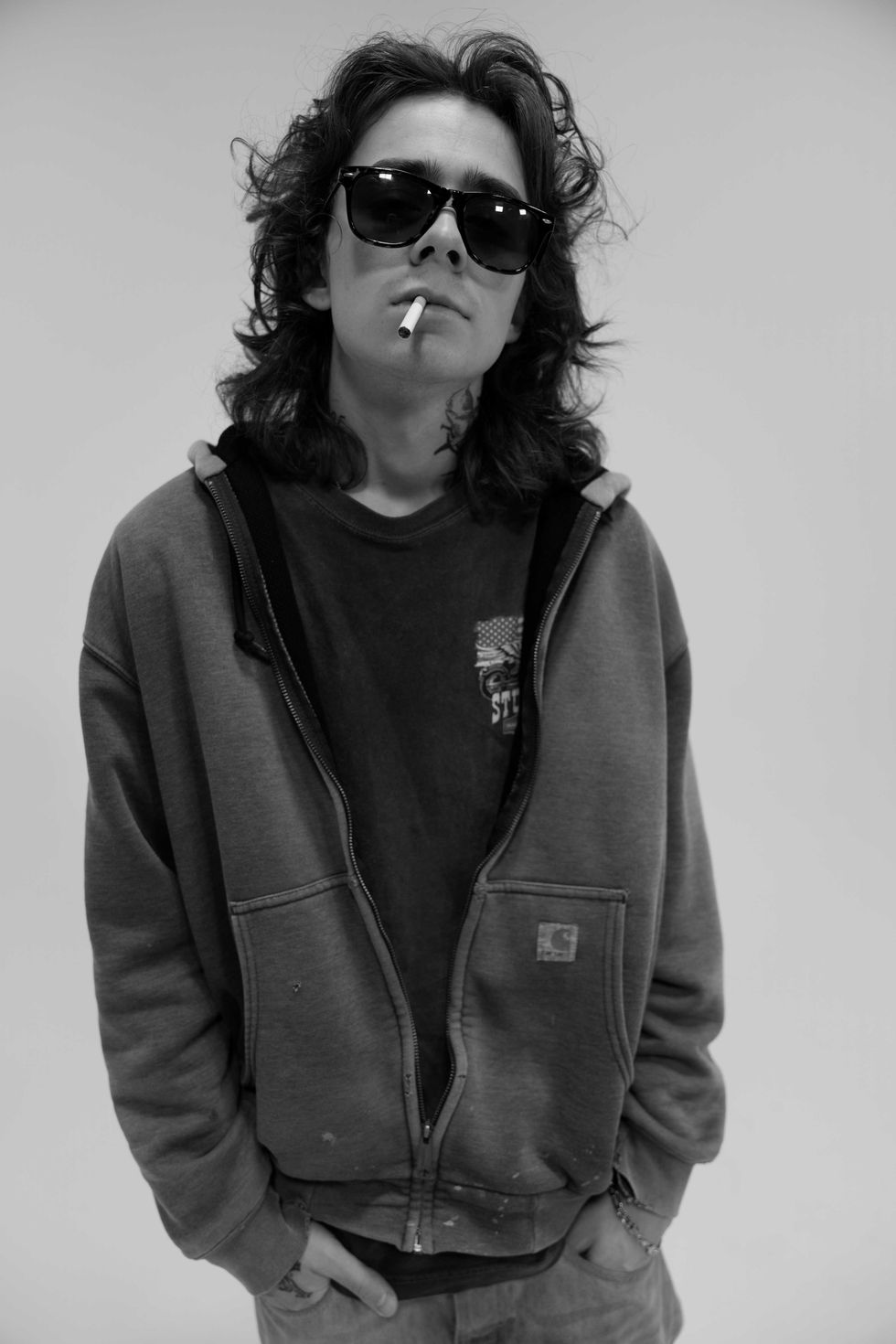 Telling the truth is never easy, but it’s the surest path towards creating art.Ian Davis
He does poke some fun at woke, white women and anti-American sentiment and the latest outrage, but in a majority of his videos, he is just talking common sense. “You know what I’ve noticed lately? People no longer have respect for their surroundings. I went to Walmart and there’s fucking shopping carts everywhere, fucking shit all over the place man . . . people don’t have respect for the very systems that keep this place running.” Part of his success lies in his quintessentially Aussie delivery—the accent, the profanity, the energy. Several times during our conversation, he uses the word “bombastic” to describe himself.
SLOE JACK and those like him are the necessary transition from a hyper self-conscious celebrity culture to whatever the future looks like for artists who don’t want to be propagandists.
I’m intrigued by the seeming incongruity between his larger-than-life social media persona and his sincerity about making music. SLOE JACK’s dilemma is a distillation of every artist’s dilemma in 2026, of the tension between social media content, activism, and true creativity. Art has been reduced to an ideological tool, and listeners view musicians as a means to signal their own beliefs. Jack Garrity (his government name) is quickly finding out that to share a personal opinion of any sort is to give the public permission to place you in a box.
Jack offers me some black coffee and we sit in his living room. For a 23-year-old guy, the place is surprisingly well furnished and very cozy. He explains to me that his hometown of Bendigo, Australia, is not much different from the Nashville neighborhood he is in now, where there was a lot of meth and amphetamine use. Many kids he knew in high school have since lost their lives to overdoses. When his manager, Chad Hillard, discovered his music, Jack was deep into a cocaine addiction.
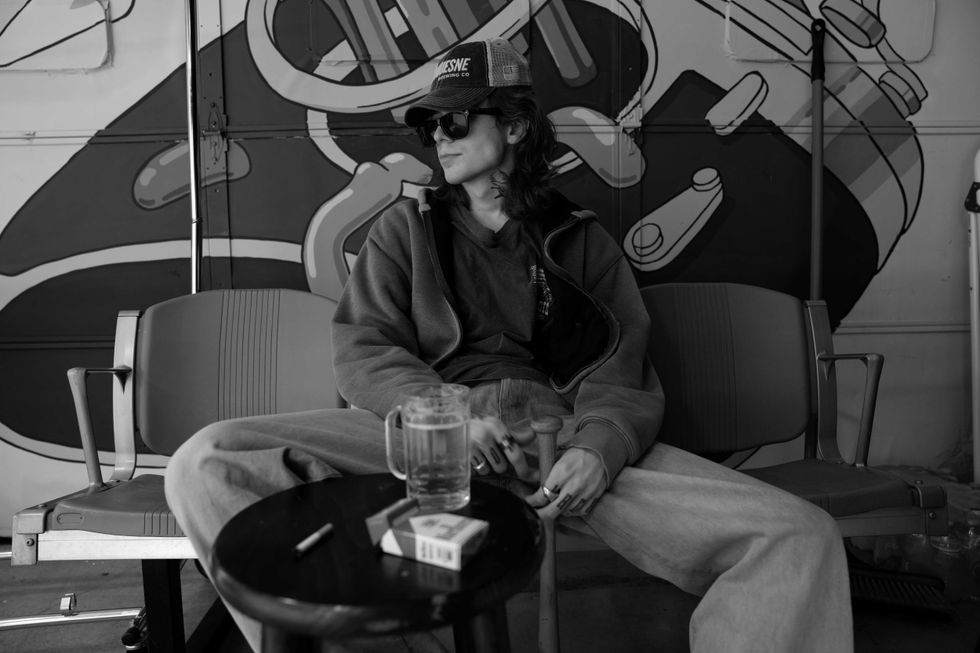 In an era of boring, corporate opinions, the outlaw persona of a rock star is definitely different in 2026.Ian Davis
Growing up with his mom, who struggled with mental illness and addiction, Jack says he was ashamed of his family. As a child, he knew that his mother subsisted on government handouts won through fraudulent claims. “I never wanted to be a loser. I was always ashamed of being a mooch, always wanting to break the chain.” By making music? “I’ve always been delusional as fuck,” he laughs.
At 12, Jack started making electronic music on his laptop because his mom couldn’t afford to buy him a guitar (to this day, he says he is a mediocre instrumentalist, but he’s always produced his own music). I ask him if scrolling social media was a factor in his life at this point, and he shakes his head. “I never liked wasting time. Social media has always been business to me.”
Around the age of 18, he became more interested in rock music and started sampling it to change his sound. He began uploading demos on Triple J Unearthed, an Australian music discovery platform for independent artists. That was where Chad Hillard first found him in 2021. At that point, he would fly from Melbourne to Los Angeles and back to work on an album. He was signed to Interscope Records and released BACKSTAB in 2023. But after a while, his money ran out.
Frustrated with the amount of artistic agency he was given in the studio in Los Angeles (“you just sit on a couch at the back of a room and the producer plays you things he made”) and completely broke, he moved to Nashville, Tennessee. “It’s hard to create from this place of external control and existential stress.” The result is that he feels like the music released during this time period was forced.
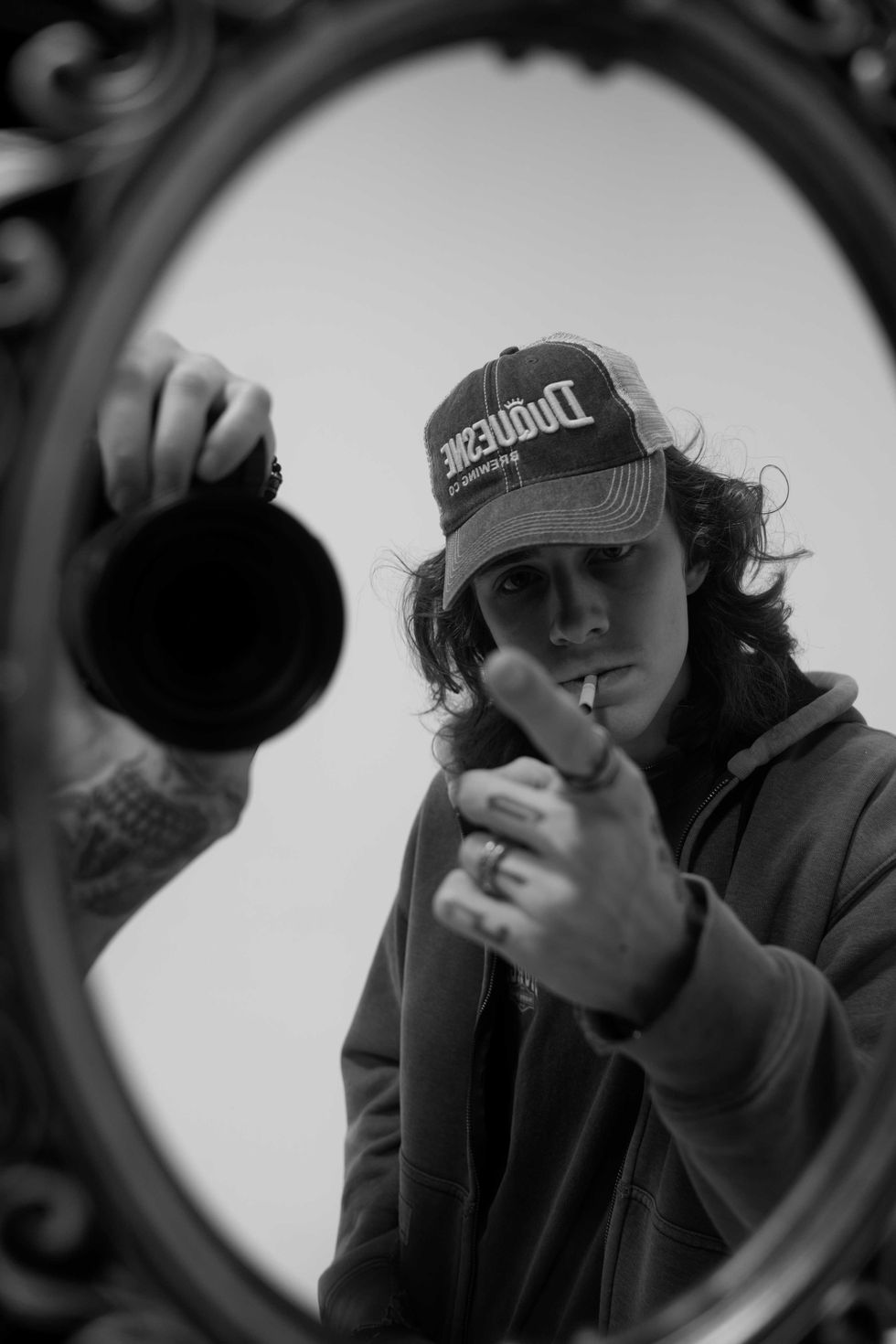 The artist through the lens of the audience is sometimes blurry.Ian Davis
SLOE JACK started posting his Instagram videos in the spring of 2025 on a whim. He says he has never written a script; he just sees something, puts on his sunglasses, and takes a video. He explains that none of it is ideologically driven and that, while his original opinions once won him trouble from the music industry, he is now having to push back against those who would pigeonhole him as a conservative musician. “Nothing wrong with conservatives, mate. I just didn’t choose to be in this pocket. I don’t want to be the conservative artist, I want to be THE artist.”
But the reality is that sharing any opinion adjacent to Jack’s rather realistic outlook on life does make you seem like a conservative. The things Jack values and advocates for in his videos are as simple as law and order, common sense, biological sex, family first, patriotism, and the like. But Jack tells me that to be palatable to the music industry, “you have to be so docile. The bar is so low for provocation now because all it takes to be provocative is just sharing your opinion.”
Nashville’s culture, in many ways, was an antidote to the enforced docility Jack experienced in Los Angeles. He explains to me that music in Nashville is a writer-centric industry that thrives on personal connections, where people expect you to get to know them first to foster genuine collaboration. “All you need to make it in Nashville is the ability to have a good chat and share a beer,” Jack says. He expresses admiration for the Southern tendency to “clock out,” explaining that many collaborators work nine to five, and afterwards, they don’t want to talk business. They want to get to know you, take their wife out to dinner, or hang out with their kids.
His move to Nashville, which coincided with the explosion of his social media, has taught him that artistic success requires “maximum, daily effort.” This required work ethic contradicts the Southern stereotype of laziness. In reality, Jack has discovered that the American South is a place where loyalty and mutual trust thrive. He even sells a T-shirt that reads “CALIFORNIA IS GAY,” the result of a sort of Instagram feud with his former adopted state.
SLOE JACK’s music has changed with his surroundings, taking on a more country-inspired sound. It is in part this melding of a more Scotch-Irish folk sound—not at all foreign to a native-born Aussie—with the black roots of blues and rock & roll that won him the affectionate title of “Cracker of the Year.” A cracker, he tells me, is a white person who has the courage to form their own taste and opinions, despite the overwhelming social pressure to conform to the current puritanical sensibility.
You cannot truly create good art if your ability to apprehend and critique reality is blocked. Jack says that to process reality— which, within our technological society, is ever more abstract—you have to start from objective truth. “Having an objective truth is what allows you to process reality so that you can make good art. That is the individual creative essence in its purity.” I ask him how he would articulate his artistic project as a musician, and he reiterates: “my music is not political. My music is about my life. It’s an expression of my humanity, and I’m really trying to do justice to my individual creative essence.”
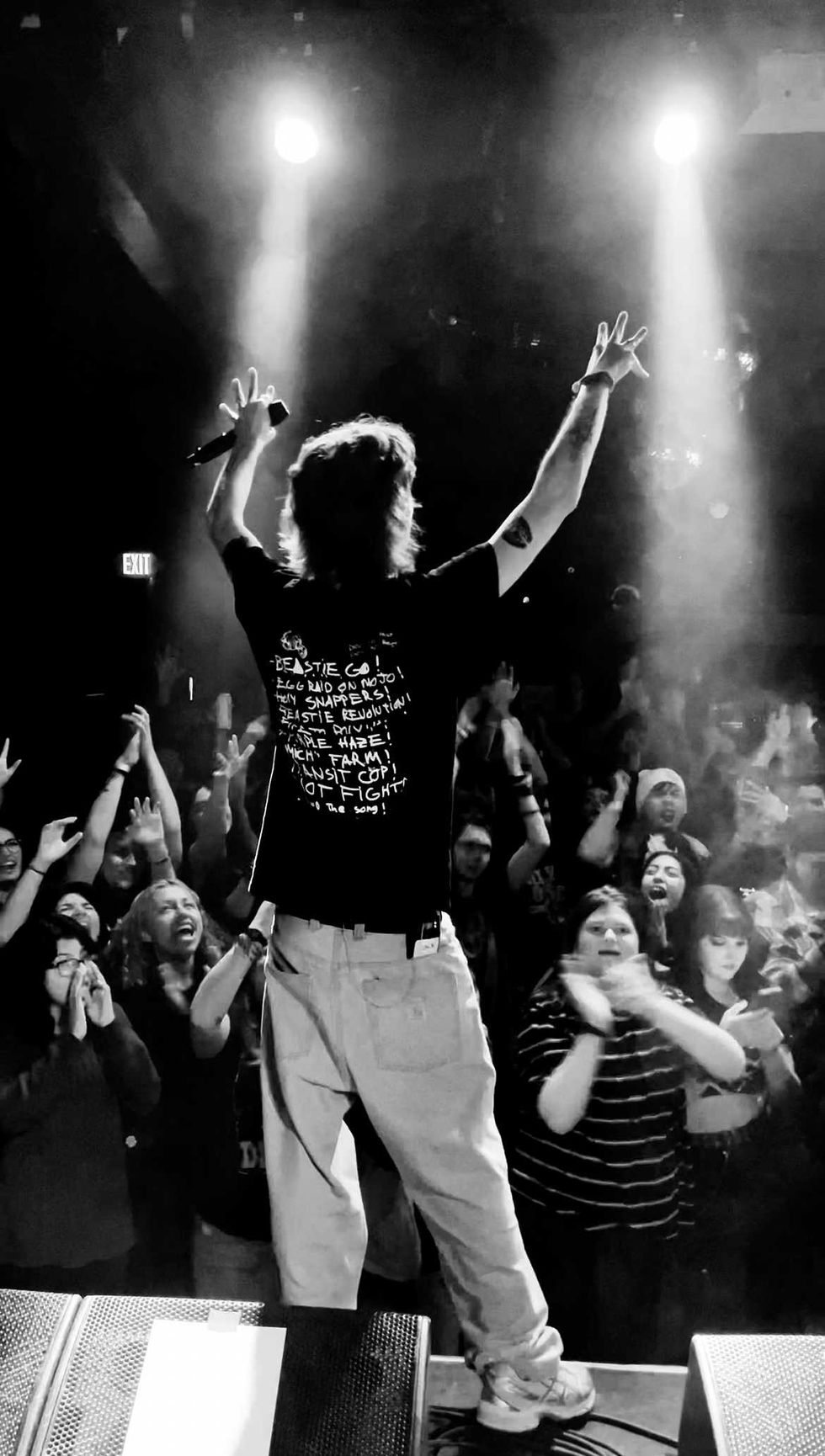 SLOEJACK fans experience the show in Nashville.Ian Davis
As a young artist who has found his fan base through social media, Jack is the perfect case study for the next generation of would-be rock stars. Many young artists would like to know just how they can go about creating and collaborating when everyone is so damn touchy, when the slightest expressed opinion places you in this camp or that. Artists know that it is incredibly difficult to create when you have to maintain such scrupulosity. Jack voiced frustration that he has been coded as a political figure but, in this sense, he is a casualty of our social environment. The Left has controlled expression to such an extent that to say anything ambiguous is to risk association with the Right.
Nashville’s culture, in many ways, was an antidote to the enforced docility Jack experienced in Los Angeles.
Chad Hillard and SLOE JACK are uniquely positioned to pioneer a new countercultural movement within the music industry. One where the freedom Jack found in Nashville to express himself and therefore connect with other musicians and a massive grassroots audience becomes the model by which other musicians can climb out of the Southern California ethos of docility to the label and to popular thought. Reflecting on his viral 2025 experience, Jack says, “It’s clear that tolerance is not the answer. Because when I was being tolerant, I couldn’t say shit.”
He is convinced that people are looking for artists to support just as they would their friends—in spite of an occasional bad take or even a bad song. The risk of being labeled conservative comes with the freedom to be truly punk rock. The idea that politics is an objective metric by which to judge anyone’s artistic work needs to be scorned universally. That’s how the new rebels are born.
To demonstrate just how tongue-in-cheek this movement is, in a video titled, “White Boys Need to Make a Comeback in 2026,” SLOE JACK declares, “we’re going back to our roots, boys. And by our roots I mean Alice In Chains.” But this is where I—and Jack, despite all the laughs—see the problem. To be a conservative provocateur is a contradiction in terms.
Conservatism, by definition, resists change and preserves taboos relative to its time. It is an adaptive ideology that, in part, functions by clinging to the recent past. This is why SLOE JACK’s fans are correct in labeling him a conservative, and he is correct in resisting the label.
He embodies the paradox of our current political climate. He is only coincidentally conservative because conservatism happens to be coincidental with traditional values. Alice In Chains was a cornerstone of the 90s’ grunge movement, a counterculture that was fundamentally anti-conservative and held no reverence for any so-called roots. But the irony is not lost on the youth of 2026 that, to live now with the provocative freedom of a Layne Staley or Kurt Cobain, is to be associated with conservatism.
SLOE JACK and those like him are the necessary transition from a hyper self-conscious celebrity culture to whatever the future looks like for artists who don’t want to be propagandists. It isn’t sustainable to create from this liminal space, where artists are head-hunted for a lack of show in activism. Jack is optimistic that his fans are looking for the freedom of expression that shedding both the woke and the anti-woke offers.
But he did say he was delusional as fuck.