Peter Gietl
Dallas is a city on the rise. It is not a city that begs to be loved. It doesn’t do the easy seductions of a waterfront skyline or the self-conscious charm of old brick. Dallas is glass, frontage roads, and private ambition. It is a city that looks you in the eye and asks what you’re building, and if the answer is “a vibe,” it points you toward Austin and keeps walking.
Dallas is the capital of traction. Things happen here. And in a decade when America’s elite institutions have become allergic to their own customers, Dallas has been taking in the refugees: companies, families, founders, and the sort of competent strivers who used to believe the system would reward discipline, only to watch it elevate the highly performative over the high performance.
The story is familiar by now: companies and blue city refugees fleeing to make their last stand in Texas. My wife and I are among these new arrivals, escaping Denver that, in a decade, devolved from one of the best cities in the country to one of the worst. But what’s less discussed is the cultural gravity that follows money. When enough people with resources and confidence gather in one place, they stop importing culture and start exporting it. They create institutions, media, schools, charities, and the soft power that turns a regional city into a national capital. Dallas, with its mix of evangelical earnestness, oil-and-real-estate swagger, and deals made in country clubs over cocktails, has been building that kind of capital for decades. The rest of the country is only now catching up.
A purely lone-gunman narrative has a particular weakness in the American mind: it offends the sense of proportion.
But Dallas’s deeper claim to conservative cultural capital is not merely that it is attracting money. It is normalizing a certain kind of American confidence that has been treated elsewhere with suspicion. Ambition here is not something you hide behind jokes. Wealth is not a confession. Religion is not a private kink. Family is not an embarrassing hobby. The city contains multitudes, of course. But it does not demand that its successful citizens engage in self-loathing as the price of entry into polite society. It is why Dallas feels, to a certain class of transplant, like oxygen. It rewards competence. It rewards risk that is paired with hard work. It champions patriotism, sometimes loudly, often quietly, but almost always as a default. And it rewards a kind of masculinity and femininity that other cities spend a lot of time deconstructing, and Dallas spends a lot of time living. That alone makes it culturally distinct.
And yet the city’s most famous export is not confidence or cash. It is doubt. Dallas is where modern America’s most enduring, corrosive question mark was burned into the national story: the assassination of President John F. Kennedy.
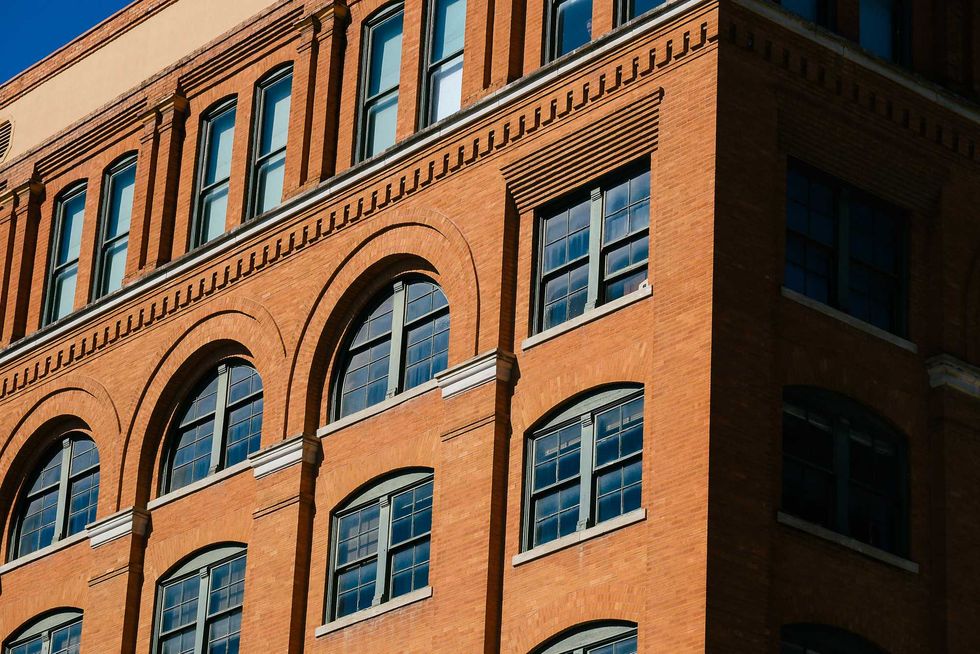 Oswald is long gone, but his ghost still prowls the city.Peter Gietl
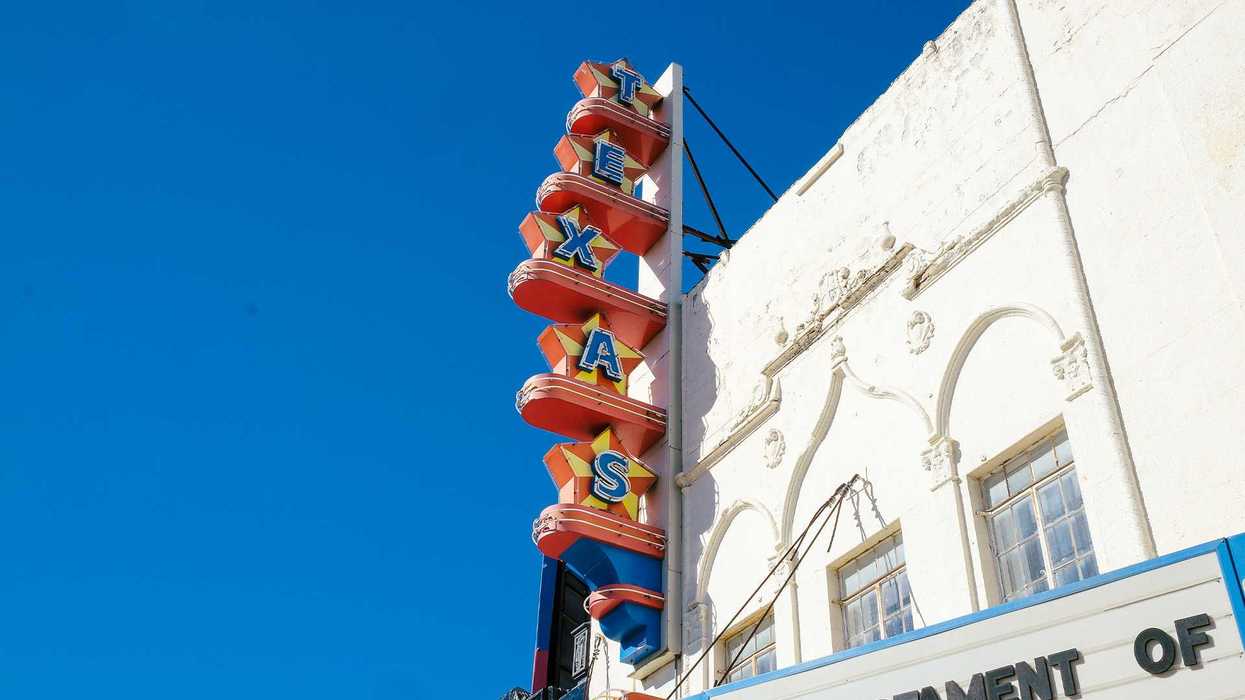
Dealey Plaza is tidy in a way that feels almost obscene, given what it represents. It is small, almost domestic. If you didn’t know, you could drive past and miss it. The buildings are ordinary. The famous grassy knoll is just a sloped patch of municipal green. And yet the place hums with the sort of invisible electricity that only historical trauma can generate. Tourists stand in the middle of the street looking for the perfect selfie, while dubious guides sell tours to the gullible.
Dallas has lived with the assassination like a family who inherited a scandal it did not commit. The city has never been able to fully shake the insinuation that it is guilty by geography. It is one of the reasons Dallas developed its peculiar relationship with the outside gaze. It learned that a story can be written about you with or without your consent.
And because the assassination happened here, Dallas became the physical home of America’s most persistent suspicion: that the official story is not the whole story.
The official story, as every schoolchild could recite, is clean and clinical. Lee Harvey Oswald, a troubled former Marine with Marxist sympathies, acted alone. He shot the president from the sixth floor of the Texas School Book Depository. He fled. He was arrested. Two days later, he was killed by Jack Ruby. Case closed, in the sense that the Warren Commission said it was closed. Of course, anyone who deeply studies the assassination leaves with more questions than answers. Why was a communist defector who worked on the U-2 spy plane immediately given back his citizenship that he renounced? Why was a broke mechanic able to travel nearly every weekend to Mexico City, New Orleans, and Miami in the years leading up to the assassination? Why did this “nobody” socialize in elite circles of Dallas, made up of people tied to the CIA?
Patrick Nolan, author of CIA Rogues and the Killing of the Kennedys, frames the matter in generational terms when I chatted with him: “We knew something terrible was going on when you have three major assassinations . . . all within four and a half years.” In that sentence sits a larger thesis. The Kennedy assassination was not, in this view, an isolated burst of madness. It was part of a pattern, a political age of violence, and the “lone nut” explanation was too tidy for the scale of the rupture. Nolan puts it plainly: “These ‘lone nut’ scenarios had too many contradictions.”
What makes the assassination “conspiratorial,” in the cultural sense, is not merely the possibility that more than one person was involved. It is the way the event rhymed with power. Kennedy had enemies. He had institutions around him that were not merely political opponents but bureaucratic empires. He had angered elements of the national security state with his behavior around Cuba and the CIA. He had angered organized crime figures, depending on which accounts you trust, through his brother’s Justice Department. Whether one agrees with every contour of Nolan’s case, his language captures what has haunted Dallas all these years: the sense that the official story explained the event procedurally while leaving it spiritually untouched.
Dallas offers a respite: not a utopia, not a paradise, but a place where the basic bargain of American life still seems intact.
A purely lone-gunman narrative has a particular weakness in the American mind: it offends the sense of proportion. Great events, we feel, should have great causes. It is not an argument of logic so much as an argument of aesthetics. The assassination of a young, charismatic president in broad daylight feels too consequential to be the work of one disordered man with a cheap rifle and a lucky day.
Dallas, then, is not just the site of the assassination. It is the training ground for the modern American suspicion that elites will lie when the truth threatens the system. That suspicion is now mainstream. It informs how millions of Americans interpret everything from public health to foreign wars to the behavior of tech companies. The Kennedy assassination is the origin story of the postwar American distrust of its own rulers. It was the moment when the country’s relationship with official truth snapped.
Nolan’s interpretation places the motive not in local hatred alone but in a factional struggle inside the national security state. “When I say ‘hard right,’ I’m talking about people like Angleton. . . people in the CIA, the military, weapons manufacturers, and a lot of Wall Street,” he says. The claim is sweeping, and to establishment ears, inflammatory. Yet it also explains why so many people, including many otherwise sober citizens, have never been satisfied by the official account. If the murder was political, and if the politics ran through Washington, intelligence, and Cold War power centers, then Dallas was the scene, not the source.
“That’s why I called them ‘rogues,’” Nolan says. “They weren’t the whole government, they were a rogue element within the government.” That distinction is crucial for understanding the city’s burden. Dallas has long been cast as the home of extremism in this story, as if the violence rose organically from local temperament. The “rogues” thesis shifts the center of gravity. It argues that the machinery was national, even if the smoke drifted over Elm Street.
It’s all a very surreal experience for an outsider. I found myself wandering the museum, which seems dedicated to telling everyone there is no conspiracy and nothing to see here. Looking down from the same vantage as Lee Harvey Oswald’s alleged view provided no ‘aha’ moment of clarity. Afterwards I stopped by a dive bar called Lee Harvey’s to soak in the vibes, which were mostly midday drunks pontificating. Something died in this country when JFK was killed, but in many ways, the entire story has receded into myth.
And here is the strange twist that ties the plaza to Dallas’s new role as a conservative capital: conservatism today, whatever else it is, is steeped in that distrust. Not always wisely, not always with evidence, sometimes with excess. But the animating emotion is the same: the belief that the people who run the big institutions are not telling the whole truth, and that ordinary citizens are expected to swallow the official line for the sake of “stability.” Dallas lives with the physical monument to that fracture. It is part of the city’s atmosphere, like the humidity. You cannot breathe here without inhaling a little of the national doubt.
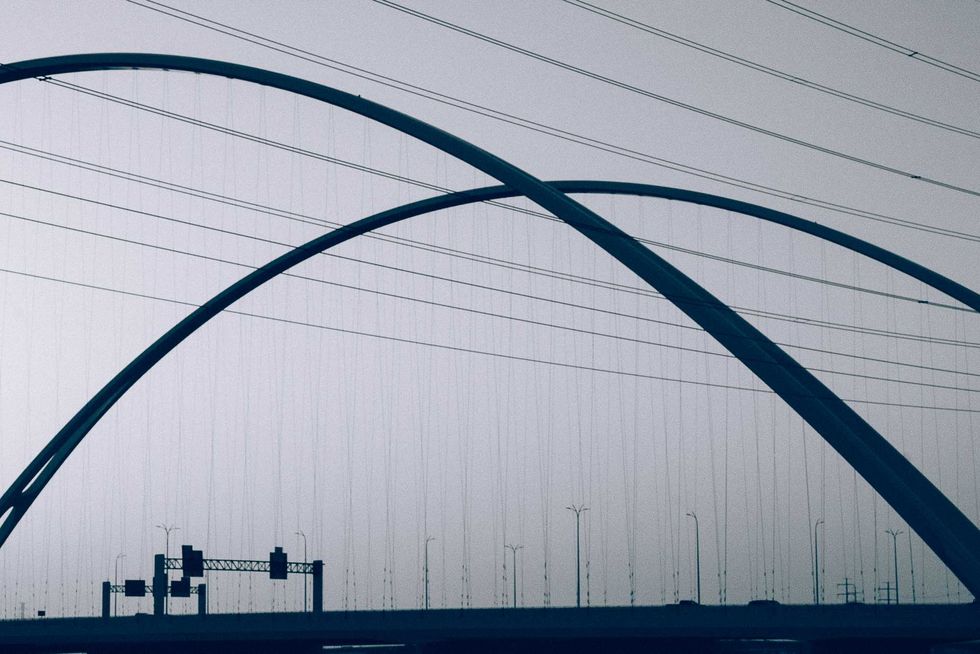 The city at sunrise.Peter Gietl
Caroline Wilder, a Dallas native who works in web design and consulting for small businesses and only reluctantly accepts the label “influencer,” describes Dallas’s conservative rise in practical terms. She spent most of her career online and says she was not especially political for much of it, but after Elon Musk’s purchase of Twitter, she found herself in right-wing circles and saw where the energy was gathering.
“Definitely,” Wilder says when asked whether Dallas is now one of the cultural and political capitals of conservative America. “I’ve met so many people from X who either live here or have recently moved here, and there’s a real sense of community. It’s refreshing not to have to wait for a TPUSA conference or CPAC to have that face time.”
That is the shift. Conferences are temporary. Cities are where people build a life. Wilder says she has been “quietly hosting happy hours for influencers for the past year or so,” and that “there’s definitely an appetite for more time together." The network is no longer visiting. It is settling.
She sees Dallas and Nashville as the two main hubs. “It seems like there are two main cities where conservatives are naturally gathering: Dallas and Nashville,” she says. “Both have vibrant food scenes, strong faith communities, no state income tax, and growing media infrastructure. Dallas is obviously home to Blaze Media, and Nashville has The Daily Wire. There’s an energy here. People want to build, connect, and be part of something.”
So why Dallas, and why now?
Because the American right no longer wants to be only a voting bloc. It wants a ruling class. And ruling classes need capitals, places where money, culture, and institutions reinforce one another. Washington is the seat of government, but not a cultural home. New York remains the seat of finance, but is hostile to conservative life. Los Angeles is powerful, but few on the right imagine it as a place to build a durable civic order. Dallas offers something rarer: a city where conservative-leaning people can build wealth, families, businesses, and, increasingly, culture.
Dallas does not want to be forgiven. It wants to win.
Wilder makes the same point from her experience. “Dallas offers balance,” she says. “It’s vibrant but livable, ambitious but grounded. It’s more affordable than coastal cities, and there’s room to really build a life.” Some moved for work. Others came during COVID looking for “more freedom and space.” But social gravity does the rest. “Once a community forms, it tends to grow. I think we’ll see more of that,” she says. “There’s already great infrastructure here for influencers and that makes it easy for others to follow.”
 Peter Gietl
This is where Dallas becomes more than a refuge. It becomes a cultural engine. People who are not constantly fighting their own city have the energy to create. They start magazines, fund journalism, build venues, sponsor festivals, and back art that still values beauty. The result is a conservative culture that is not merely defensive, but affirmative.
Wilder is optimistic, but not sentimental. “The Metroplex will continue to grow, both in population and influence,” she says. But what happens in Dallas proper, she adds, “will depend on how well local leaders address public safety and maintain a business-friendly environment.” Growth alone is not enough. A capital has to govern itself.
Her most important point is the local one. “I’d love to see the people who’ve built these incredible platforms use more of their influence to advocate for thoughtful change locally,” she says. “We’re always tied up in national conversations, and those matter, but there’s something special about seeing that you can effect change in the city you call home. I think if we worked together, we could accomplish a lot.”
That is the test. Dallas has the money, confidence, and social infrastructure to host a conservative renaissance. The question is whether the people arriving want only a friendlier place to live, or whether they intend to build institutions worthy of a capital. They are not just moving for tax advantages. They are moving because Dallas now looks like a place where culture and power can be built in the same room.
 Peter Gietl
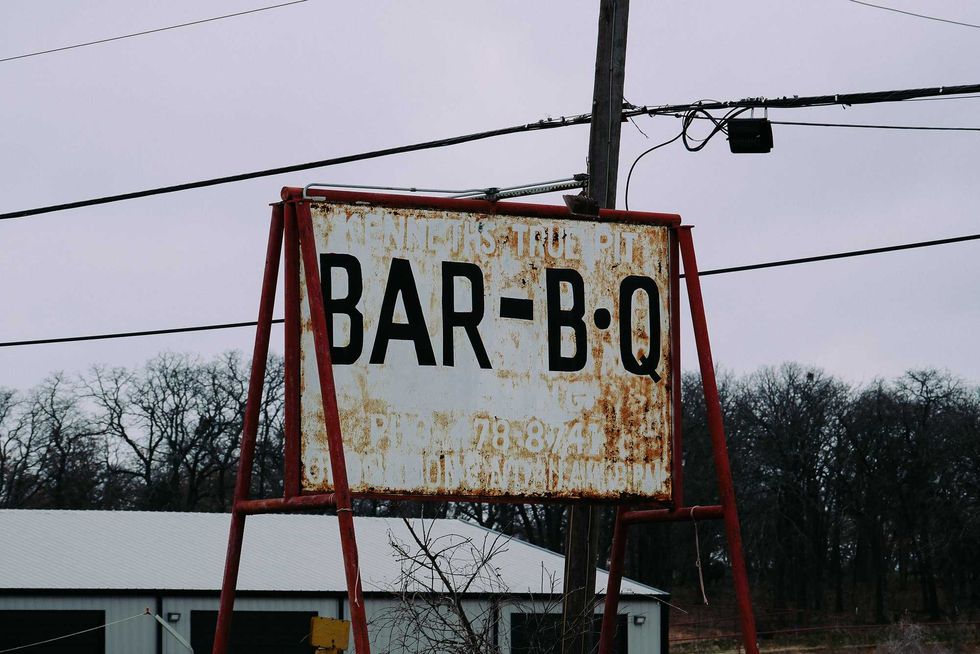
If you want a single sensory proof of Dallas-Fort Worth’s new cultural seriousness, skip the think-tank panels and go eat barbecue.
Goldee’s Bar-B-Q, on the southeastern edge of Fort Worth, is the sort of place that should not exist in a country addicted to shortcuts. It is, in its own way, a conservative institution, though it would probably laugh at the label. It represents the older virtues: patience, craft, repetition, humility before the work. Barbecue is not fast food. It is time made edible. It is meat disciplined by smoke and heat, overseen by people who understand that you can’t bully reality into tasting better. In many ways, great American barbecue is a purely ingredient- and technique-based process that great French or Japanese chefs would instantly appreciate.
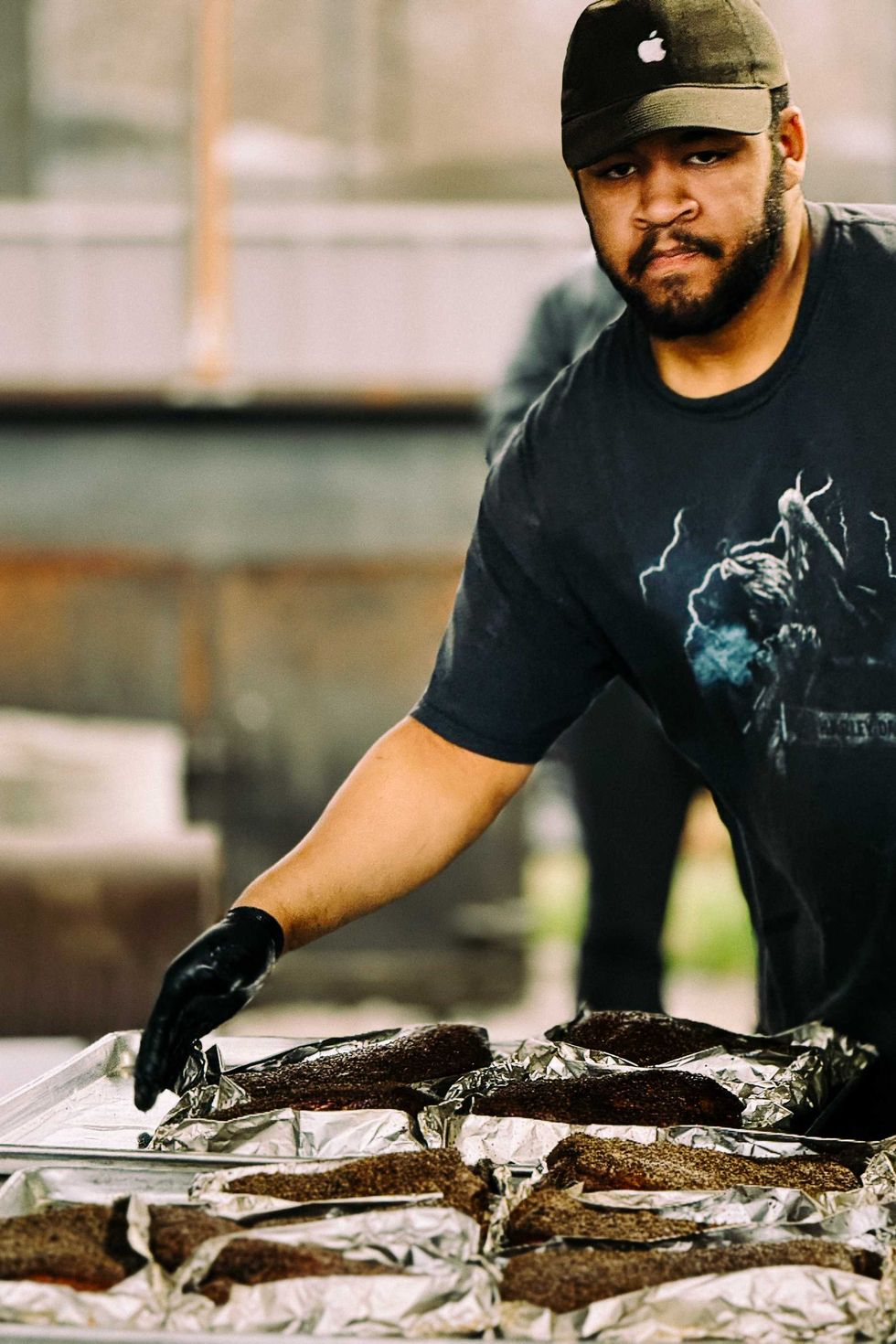 Barbeque rises to artform at Goldee's in Fort Worth.Peter Gietl
The line at Goldee’s is part of the point. I arrived with my infant in tow three hours before opening, and there were already at least fifty people ahead of me in line. Usually, I would balk at waiting in a long food line, but every once in a while, things live up to the hype. Goldee’s is an outlier where many of the vaunted shrines to slow-cooked meat have lore and histories that go back decades or even centuries. Instead, this spot was started by a group of childhood friends who, in five years, have ascended to the heights of Texas culinary legend. The pork belly and turkey were the best versions of those meats I’ve ever tried, and the sides and homemade bread were clearly not left as afterthoughts but made with an extremely high level of craft. The brisket and beef ribs were as good as anything at Terry Black’s Barbeque or la Barbeque in Austin. The best part of the day was how kind and friendly the staff were. You can’t fake passion. Simple things done exceptionally well.
That normality, which the cultural class often dismisses as boring, is now a competitive advantage because the country is tired. Tired of lectures, tired of instability, tired of being told that obvious realities are controversial. Dallas offers a respite: not a utopia, not a paradise, but a place where the basic bargain of American life still seems intact. Work should matter. Families should matter. Safety should matter. Growth should be welcomed. Pride in one’s city should not require an apology.
 Peter Gietl
Dallas does not want to be forgiven. It wants to win. That is why it is becoming the place where the American right, with all its flaws and ferocities, is gathering to do something more than complain. It is gathering to build institutions that can outlast a news cycle.
The Kennedy assassination will always haunt the city; it is a permanent reminder that power can be opaque and that official stories can be incomplete. But the more surprising Dallas story is what has happened since: a city once defined in the national mind by a gunshot has remade itself into a capital of prosperity and conservative confidence.
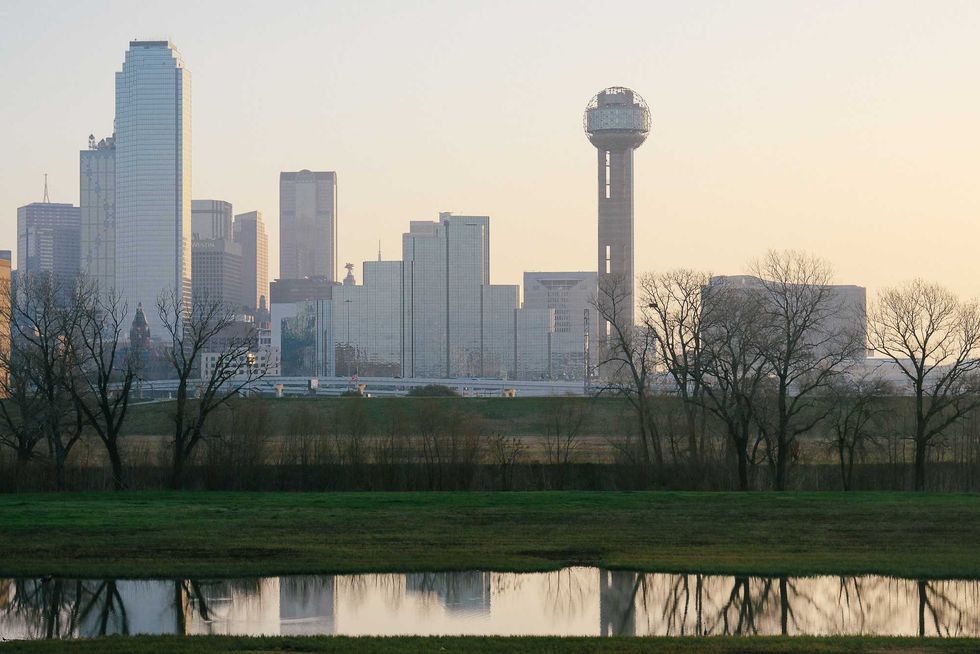
You can see it in the skyline and the suburbs, in the boardrooms and the churches, in the private schools and the new headquarters, in the way the city carries itself. And you can taste it, if you’re lucky, in a slice of brisket that took all night to become what it is.
Dallas is not trying to be the future in the fashionable sense. It is trying to be the future in the only sense that matters: a place where people who believe in the old American bargain can still make it work.