Getty Images
Thirty years ago, The Larry Sanders Show became one of the biggest comedy hits HBO had ever produced and, to this day, remains one of the best parodies of the television industry, inspiring countless shows like 30 Rock and The Thick of It. Its influence is long-standing and came at a time when Late Night television was at its zenith in popularity and viewership. One can see numerous celebrity cameos, with younger celebrities still recognizable to this day. It was at a time when American culture was thoroughly shaped and created by film, television, and music, the three primary mediums that gave us the 80s and 90s, from Star Wars, The Matrix, MTV, and countless others.
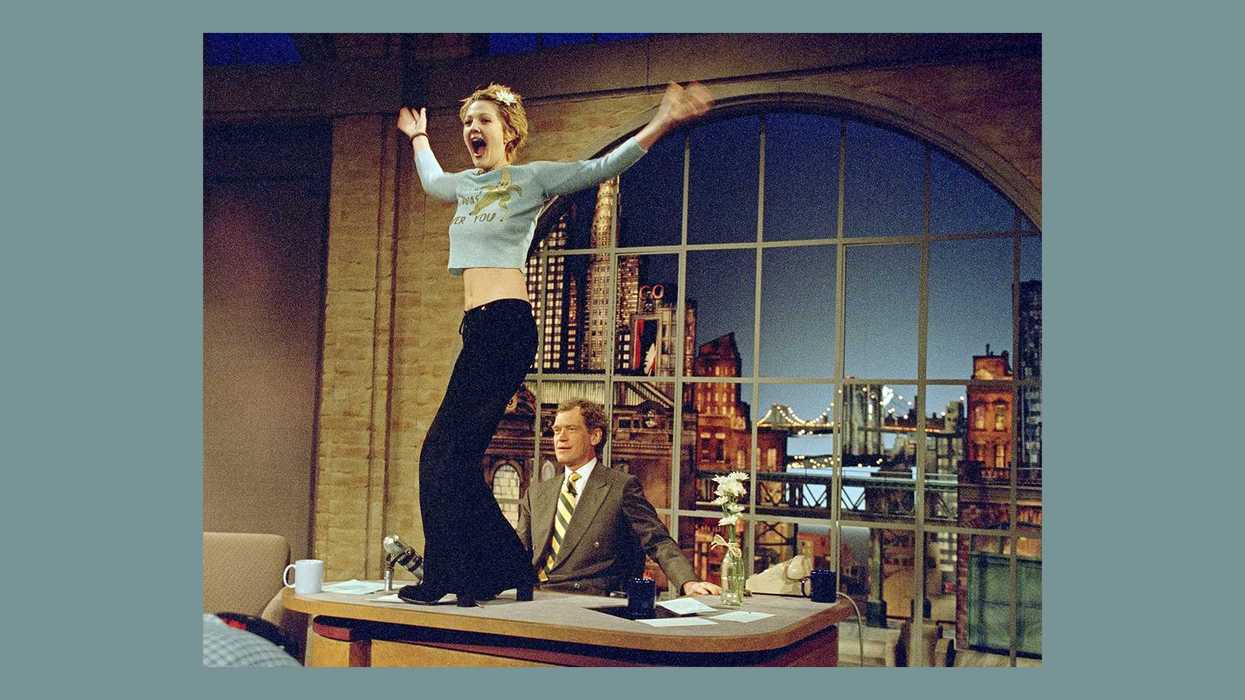
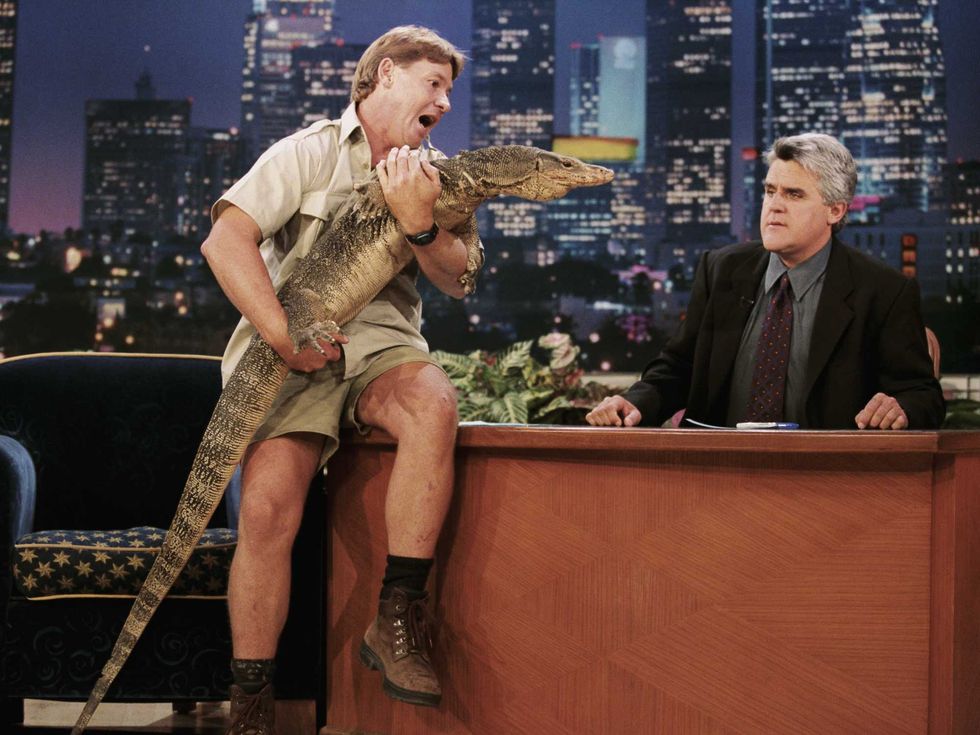
Once upon a time, Americans would ask each other the next morning, “Did you see Johnny last night?” in reference to The Tonight Show, which would later be succeeded by Jay Leno and countless other Late Night shows with David Letterman, Conan O’Brien, and many more. Before the rise of the smartphone and social media, American culture, despite its burgeoning fragmentation into numerous online subcultures and celebrities, was unified by what you could find and see on television.
In 2026, that certainly isn’t the case, and, as Conan O’Brien noted last August, “Yes, late night television, as we have known it since around 1950, is going to disappear.” He continued, somewhat humorously, “And for those of you under 40, Late Night television was a service designed to distract college students until science would perfect the internet and online pornography. Boy, did they get that right.”
Television has undergone a radical transformation over the last 30 years; what’s on TV doesn’t carry the same weight or importance as it did before the internet, forum culture, YouTube, and later streaming services became ubiquitous. As The Hollywood Reporter noted on September 12, 2024, every Late Night show on the air was tightening its belt and cutting back:
Earlier this year, NBC's Late Night with Seth Meyers had to drop its house band as part of budget cuts. And last year CBS opted to end its Late Late Show after James Corden left, opting to replace it with the less expensive After Midnight comedy game show.
The cultural cache and cash cow that was Late Night television has certainly seen Jon Stewart and Stephen Colbert (two men who would shape political opinions of millennials for years) lose relevance and, for many younger viewers, be traded out for a more online and younger talent, such as Hasan Piker or Steven Bonnell, better known as Destiny, on various online platforms spouting left-wing political talking points while streaming the news or video games. As YouTube took off, the nature of celebrity changed, and so did American culture.
 Getty
Getty
Now more than ever, we are less reliant on Hollywood for the correct opinions or commentary on cultural issues and watching more entertainment and voices that fit our particular fancy or political leaning. Since anyone could, as the old YouTube motto suggested, broadcast themselves, a new market for ad revenue, sponsorships, and celebrity arose as younger generations moved towards on-demand services and more “online” personalities.
The rise of social media and the content creator archetype has not only fractured our attention spans but also our culture. Depending on what you or even your child is watching, you two can inhabit the same space physically, but culturally you are functionally on two different planets. We lack commonality, or even some kind of broad cultural unity, among the various flavors of Late Night TV hosts. The Late Night Wars of the ‘90s and the aughts seem quaint, a small piece of entertainment history just like The Larry Sanders Show. But as Late Night continues to cut back and lose younger eyes, one has to look at the monoculture that still exists within broadcast television. From CNN to Stephen Colbert’s last episode, slated for May 2026, we see that television, as we once knew it, has become a mainstay for an older, mainly white audience, whose viewers were best seen at the boomer “No Kings” protests in 2025.
These generations were raised by television—people who can remember a country where millions gathered around television sets to watch the M*A*S*H series finale, which, in 1983, drew over 100 million viewers as they said goodbye. Nowadays in America, the only thing that can get that kind of viewership is the Super Bowl halftime show, to which even the NFL isn’t immune, from its selection of performances to the social justice messaging in the end zones. Americans are fractured and divided, not just at the ballot box but by entertainment. The last “cult TV show” that had everyone talking was Game of Thrones, and just like with other cult classic HBO programs, it failed to stick the landing (Sopranos fans know what I’m talking about). Now viewership is driven by clips, commentary videos, reviews, shock value, and the transgressive nature of the show or interview. When Colbert announced his cancellation, Late Night hosts and dozens of older viewers protested and came to Colbert’s defense for “free speech” in an age of Trump. It was like visiting a museum, seeing how old and out of touch these hosts and professional progressives looked, while ignoring the obvious trend of declining viewership.
The rise of social media and the content creator archetype has not only fractured our attention spans but our culture as well.
It’s a stark decline as well. Per ScreenRant, the second quarter of 2025 showed us that The Late Show led with an average of 2.42 million viewers, followed by Kimmel at 1.77 million and Fallon at 1.19 million. However, in the coveted 18–49 demographic, Kimmel just edged out Colbert with 220,000 viewers versus Colbert’s 219,000. This isn’t to say that they’re totally done for, as their clips on their respective YouTube channels garner millions of views. But the question of money remains. Millions are spent on talent, writing staff, and production crews, and the monetization from YouTube isn’t going to make up for that. So, while Colbert placed his bets on the anti-Trump sentiment of the mainstream media, it quintessentially came down to a show with dwindling viewership in a medium that can’t keep up with the media consumption habits of the 2020s.
Despite the decline in viewership over the decades, the Late Night model has perhaps found new life in the arena of political affairs. Jay Leno may have been the last Late Night host to swing even moderately to the right, with every host since then ignoring half the country and being more open about being a safe platform for Democrats and other progressives. During the 2016 election cycle, Jimmy Fallon faced calls for cancellation from the Left for interviewing Trump in a way that appeared to treat him like he was a human being. In 2025, conservative commentators led by Benny Johnson and Auron MacIntyre tried to cancel Jimmy Kimmel for openly lying to millions of people about the assassination of Charlie Kirk. While Kimmel faced a slap on the wrist, he saw a surge in viewership when he returned to television after a week off the air.
Politics, it seems, more than Hollywood, more than quality television (a rare thing to find these days), becomes the one thing that can get Americans to come together to talk about media more than the media itself, despite it making Americans more polarized than ever. And if people like Jimmy Kimmel are surprised at the backlash he may have received, wait until he sees what the average political Instagram reel is like these days. Late Night television is indeed dying, and its death isn’t so strange in the grand scheme of things. Its putrefaction has shown us the death of American monoculture, stuck in the cycle of nostalgia, reboots, and sequels, because the era of Late Night television, from the 1960s to the early 2000s, was the last era of shared pop culture, where it didn’t matter if you were voting for Reagan or Mondale, you and your kids probably saw Jaws, Star Wars, and Johnny Carson. Even later, you probably heard of The Matrix, and saw somewhere that Jay Leno was screwing Conan O’Brien over the question of who got to host The Tonight Show. That era of American pop culture is gone, but it has cast a long shadow. Despite Sydney Sweeney and Timothée Chalamet coming to the forefront, we’re still living in the dying gasps of the same people who played and dressed up as themselves on The Larry Sanders Show all those years ago. It’s no longer interesting, just boring gasps of what was.