Photo by Brandon Bell/Getty Images
Oil and gas prices spiked globally amid the escalating conflict in the Middle East. Americans aren't immune, having to shell out significantly more at the pump.
Since Saturday morning, the U.S. and Israel have executed multiple waves of military strikes against Iran. The Shiite nation has, in turn, launched a series of attacks on American installations, personnel, and allies in the region.
'We'll likely see both of those rolling over $3/$4 respectively quite soon.'
Violence has spread to Bahrain, Cyprus, Iraq, Israel, Jordan, Kuwait, Oman, Pakistan, Qatar, Saudi Arabia, and the United Arab Emirates. Fighting is also heating up in southern Lebanon, where Israel has endeavored to seize more "strategic positions."
Related attacks and threats of attacks have slowed and in some cases halted regional energy production and transportation, choking global supply.
Aramco ceased operations at Saudi Arabia's biggest oil refinery on Monday following a nearby drone attack. Sources told Reuters that, as of Tuesday, the Saudi oil giant was working on rerouting some of its crude exports to the Red Sea to bypass the Strait of Hormuz, where several ships have been attacked in recent days.
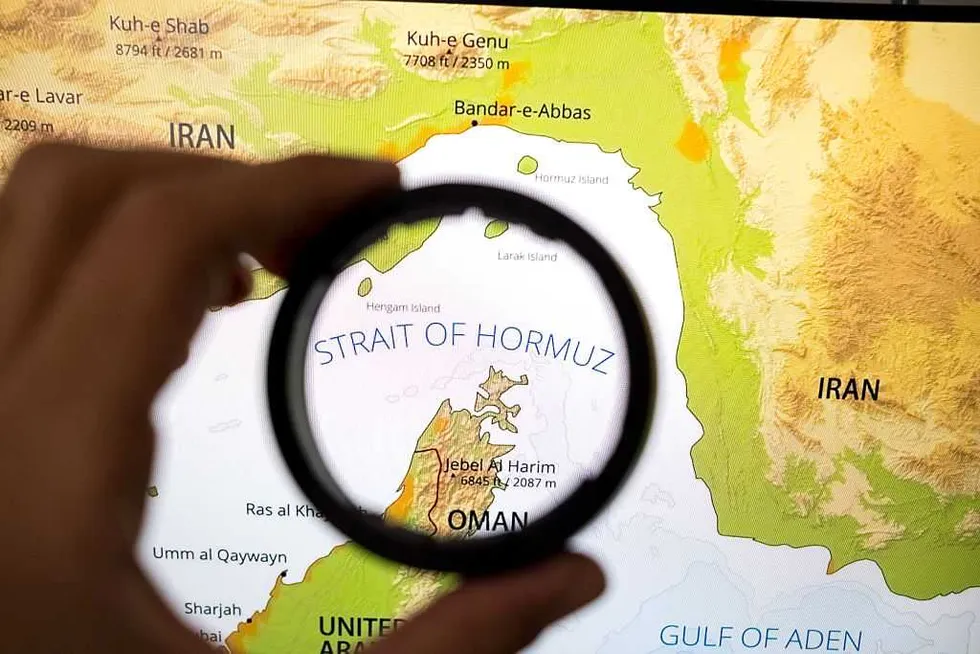
Roughly one-fifth of the world's oil normally transits the Strait of Hormuz, a stretch of water between Oman and Iran that links the Persian Gulf with the Gulf of Oman. Shipping through the strait has, however, virtually stopped amid Iranian threats and attacks on vessels attempting to pass.
Ebrahim Jabari, a senior official with the Iranian Revolutionary Guards, reportedly stated on Monday that "the strait (of Hormuz) is closed. If anyone tries to pass, the heroes of the Revolutionary Guards and the regular navy will set those ships ablaze."
RELATED: Netanyahu denies forcing US into war after mixed messages from Rubio, Johnson
 Nikolas Kokovlis/NurPhoto via Getty Images
Citing a shortage of tankers, overloaded export terminals, and navigation disruptions resultant of the "closure of the Strait of Hormuz," Iraqi authorities have announced major production reductions, reported OilPrice.com.
Following military attacks on two of its facilities, the world's largest liquid natural gas producer, Qatar's state-run QatarEnergy, also announced on Monday that it was halting LNG production, then revealed on Tuesday it was arresting the production of downstream products including urea, polymers, methanol, and aluminum.
In the wake of QatarEnergy's initial announcement on Monday, benchmark British and Dutch wholesale gas prices reportedly spiked by nearly 50%, while benchmark Asian LNG prices shot up 39%.
As of Tuesday, Brent crude oil prices were reportedly climbing toward $84 a barrel — the highest level since July 2024.
JP Morgan analysts indicated a day earlier that "if vessel passage through the SoH [Strait of Hormuz] is restricted for 3 to 4 weeks," Brent oil prices could exceed $100 per barrel, reported Yahoo! Finance.
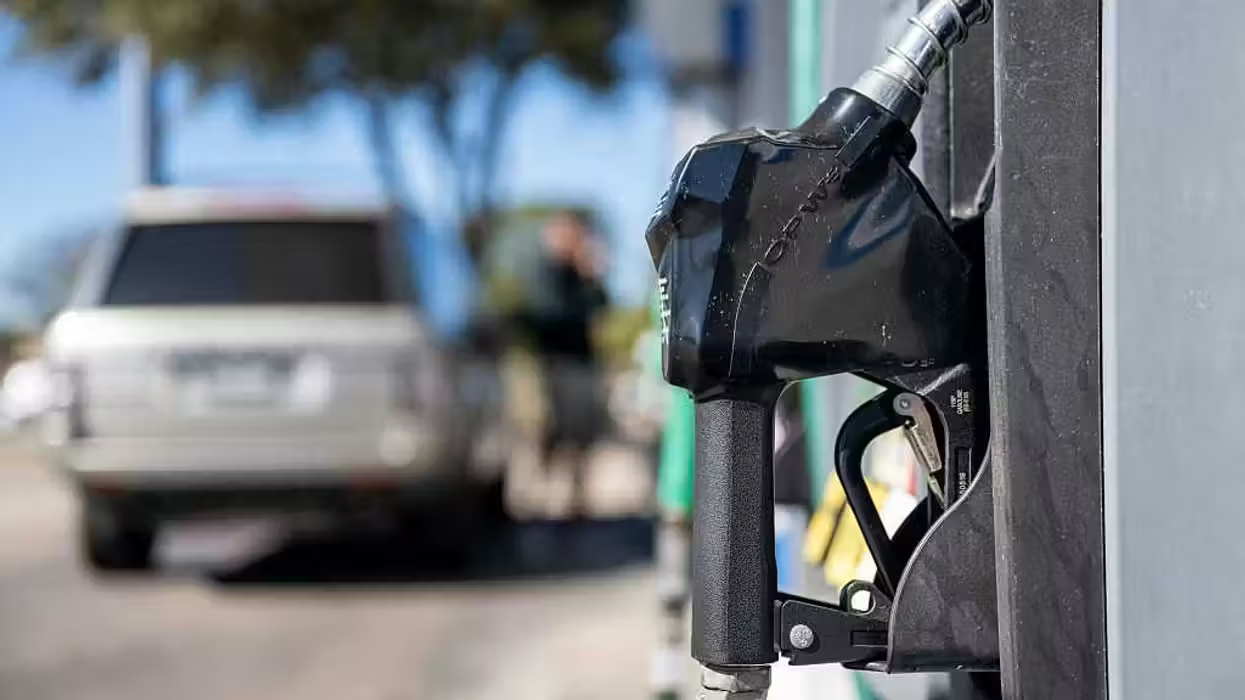
Patrick De Haan, head of petroleum analysis at the price-tracking service GasBuddy, noted on Tuesday morning, "The most commonly encountered gas price today in the US is $2.99/gal, while the most common diesel price is $3.99/gal. We'll likely see both of those rolling over $3/$4 respectively quite soon."
"Based on the numbers at this moment (3/3/26, 945am ET), the average price of gasoline would likely climb to about $3.30-$3.35/gal in time," added De Haan. "Any further changes in markets will change this, but if everything held still, that's where we'd likely be. Diesel closer to $4.25-$4.45."
The analyst indicated that the 12-cent rise is the "largest since Russia's invasion of Ukraine boosted prices 15.0c/gal on 3/4/22."
When asked about spiking oil prices on Monday, Secretary of State Marco Rubio told reporters, "We knew that going in would be a factor. And so we have a program in place that will begin to be implemented by [Energy] Secretary [Chris] Wright, Secretary [Scott] Bessent."
"We talked about it last night, again, about this program. We talked this morning," continued Rubio. "And starting tomorrow, you will see us rolling out those phases to try to mitigate against that."
Like Blaze News? Bypass the censors, sign up for our newsletters, and get stories like this direct to your inbox. Sign up here!