Wirestock/Getty Images
In March, NV Energy told a small California utility to find electricity elsewhere. By May, the rest of the country noticed. The reason? NV Energy needs the power for data centers.
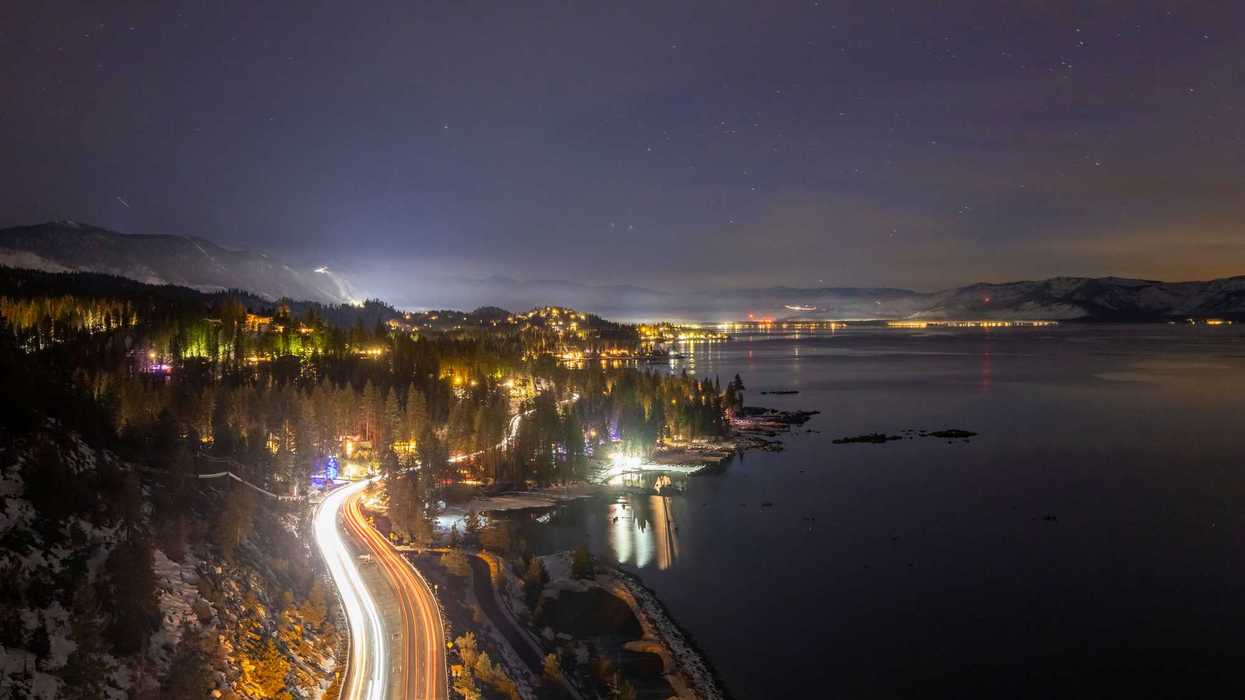
Roughly 49,000 Lake Tahoe residents are about to lose 75% of their electricity supply. Their utility, Liberty Utilities, gets the other 75% from NV Energy under a decades-old arrangement. That contract expires in May 2027. NV Energy is not renewing it.
NV Energy spokesperson Katie Jo Collier says this was "a planned transition for many years, not a reaction to recent developments." NV Energy sold its California electric assets to CalPeco (now Liberty Utilities) in 2011, after announcing the deal in 2009. It kept supplying power on a temporary basis. Extensions followed in 2015, 2020, and late 2025. Each time, Liberty had not yet lined up its own supply.
'It's like we don't exist.'
The timing is not a coincidence. Northern Nevada has become one of the fastest-growing data-center corridors in the country. Google, Apple, and Microsoft have either built or are planning facilities around the Tahoe-Reno Industrial Center east of Reno. The Desert Research Institute, using NV Energy's own 2024 Integrated Resource Plan data, found that the 12 data-center projects in Northern Nevada could drive 5,900 megawatts of new demand by 2033. Data centers already consumed 22% of Nevada's electricity in 2024, and that share could hit 35% by 2030.
At a regional business event last September, NV Energy Director of Business Development Jeff Brigger said, "These are unprecedented times." He added that the company was eager to serve the new industrial load but that it could not "impact our existing customer base." Except it is.
NV Energy pushed back last week, saying customers "will not lose power" and that the arrangement was always temporary. The company also denied that data centers influenced the decision, claiming the transition was planned more than a decade ago. But Liberty's March filing specifically cited data centers in the Tahoe-Reno Industrial Center as one of the reasons NV Energy gave for ending the agreement.
What makes this crisis so difficult is that no single regulator oversees the whole chain from generation to customer bills.
Liberty is a California investor-owned utility. Its customers live in California and pay rates approved by the California Public Utilities Commission. But Liberty's grid sits inside NV Energy's balancing authority, connects at 38 points, and relies entirely on Nevada transmission lines. Liberty's territory is a narrow slice along California's eastern border, inside NV Energy's zone rather than the California Independent System Operator that coordinates the rest of the state's grid.
RELATED: Commencement speaker praises AI and globalism — graduates crush her with boos
 Phelan M. Ebenhack/Getty Images
Building a direct connection to California's grid would mean a new transmission line west over the Sierra. Liberty President Eric Schwarzrock put the cost at "hundreds of millions of dollars" with significant land impacts.
The CPUC approves Liberty's rates and procurement requests. It cannot order NV Energy to keep selling wholesale power or tell Nevada how to plan for data centers. The Federal Energy Regulatory Commission regulates interstate transmission and wholesale electricity sales. California sets the rules, Nevada runs the wires, federal jurisdiction applies to the wholesale market, and nobody is accountable for the outcome.
In March 2026, Liberty asked the CPUC to authorize an expedited request for proposals for replacement energy beginning June 1, 2027. Liberty's filing said NV Energy cited data centers in the Tahoe-Reno Industrial Center area and northern Nevada transmission constraints among the reasons for ending the arrangement.
Danielle Hughes, a North Lake Tahoe resident, CEO of the nonprofit Tahoe Spark, and a supervisor at the California Energy Commission's Efficiency Division, put it plainly to Fortune: "It's like we don't exist."
The supply crisis lands on top of an existing affordability fight. In its 2025 general rate case, Liberty originally asked for a 19.1% revenue increase, which would have meant about $37.51 more per month for the average residential customer. The CPUC approved an 11.4% increase instead. The rate case highlighted wildfire costs, insurance premiums, and infrastructure spending in a high-risk mountain region. The CPUC noted Liberty's wildfire exposure and its exclusion from California's AB 1054 Wildfire Fund, suggesting that rising insurance costs (quoted at $31.7 million alone) for small utilities could warrant future rulemaking. Tahoe Spark opposed the rate-case settlement, arguing that it failed to examine the interstate wholesale power structure underlying the costs paid by California ratepayers.
Hughes says Tahoe is treated as a wealthy vacation-home market even though year-round residents include low-income workers and people who staff the ski lifts, hotels, and restaurants that keep the place running. The basin's demand pattern illustrates how different this territory is from the rest of California: While most regional utilities peak in summer, Liberty's demand crests around Christmas, when second-home owners arrive for ski season. Year-round residents bear the infrastructure costs driven by visitors.
NV Energy is building Greenlink West, a 525-kilovolt transmission line from Las Vegas to Yerington, as part of its $4.2 billion combined Greenlink program. Greenlink West is expected online in May 2027. Schwarzrock said Liberty would be "first in the waiting line" when Greenlink opens, giving it access to a wider pool of energy providers.
That timeline matches the contract deadline exactly, leaving almost no margin for error. About 70% of the combined Greenlink program's costs will be borne by Southern Nevada customers.
Hughes and the Sierra Club's Tahoe Area Group want the CPUC to reject Liberty's expedited approach and instead open a full proceeding. In an April 1, 2026, letter to CPUC commissioners, Sierra Club Vice Chair Tobi Tyler argued that the scale of the procurement, affecting 49,000 ratepayers in a high wildfire risk area, demands the transparency of a formal process.
Hughes is not optimistic about what comes after any short-term replacement. "Short term, you can commonly get good deals, but it's unstable," she told Fortune. "The short-term deal gets you through. But then you're in the western market, competing against PG&E, Southern California Edison, data centers, and mining companies. We're 49,000 customers. We have no leverage."
She's also worried that as California and Nevada move toward a more integrated western electricity market, Tahoe's small customer base will be increasingly exposed to competition from larger utilities and industrial buyers with far more purchasing power.
"We have no representation," Hughes said. "It's resource extraction."