Steve Marcus/Getty Images
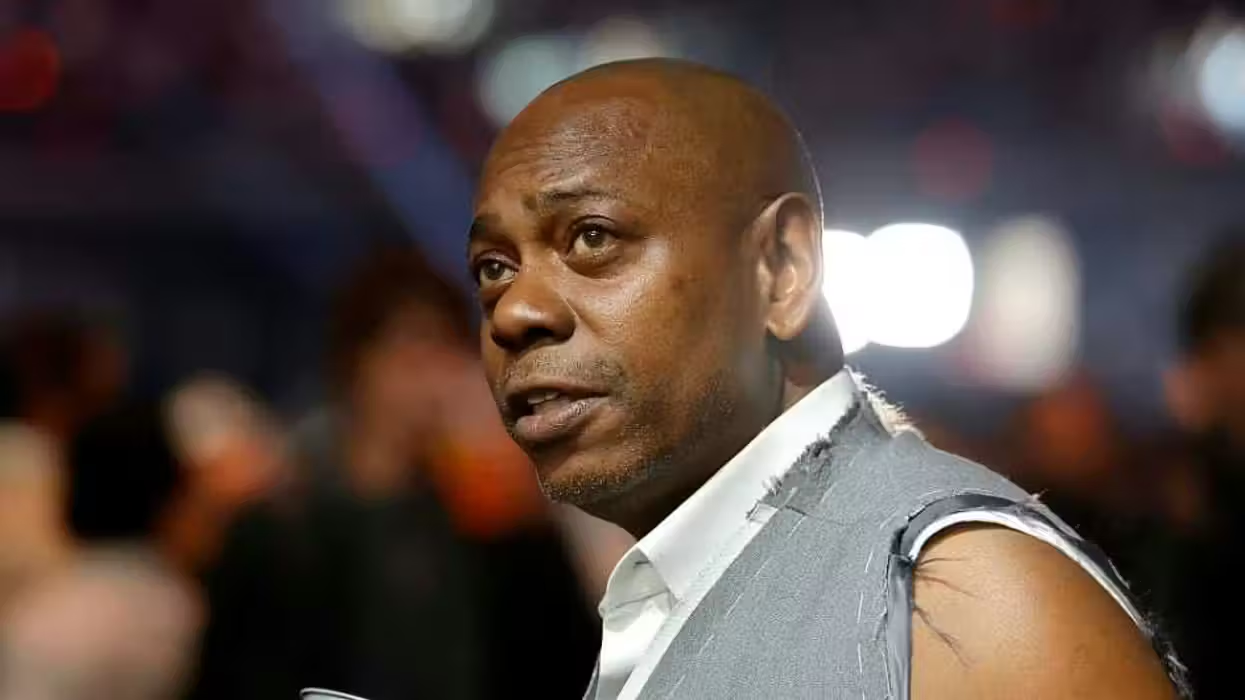
For years, Dave Chappelle has been treated as a kind of honorary dissident on the right. Not because he ever pledged allegiance, but because he irritated the correct people. He mocked pronouns, needled sanctimony, and refused to bow. That was enough. In a culture addicted to easy binaries, irritation became endorsement. Chappelle was recast as the anti-woke jester, the last free man in a room full of rules.
"The Unstoppable..." puts an end to that fantasy.
The right’s long flirtation with Chappelle rested on a misunderstanding. He was never an ally. He was a contrarian whose targets briefly overlapped with conservative concerns.
As the Netflix special begins, Chappelle emerges on stage wearing a jacket emblazoned with Colin Kaepernick’s name across the back, a symbol doing more work than most monologues. It is declarative. Kaepernick, a distinctly mediocre quarterback who parlayed a declining football career into a lucrative role as a full-time political brand, has long functioned more as an abstraction than as an athlete. His protest became performative, his grievance a commodity, his kneel a credential. Before a word is spoken, the audience is told where power, sympathy, and grievance will be placed. Identity is not the backdrop. Quite the opposite. It’s the billboard.
From there, the special settles into a familiar groove. Race becomes the organizing principle, the master key, the lens through which every topic is filtered and fixed. America is again framed as a racist hellscape, a uniquely cruel experiment, a place where whiteness looms as a near-mythical menace.
This is not observation so much as obsession. The fixation risks alienating white viewers almost immediately. Some in the audience likely sense it. Others — liberal self-flagellators by instinct — laugh along anyway, even as they become the punch line of nearly every joke.
Chappelle takes aim at Elon Musk, at Trump, at the culture of DOGE-era absurdity, but the jokes rarely travel. They circle. Musk becomes less a human eccentric and more a symbol of tech-bro whiteness run amok. Trump is reduced to a prop, wheeled on whenever the set needs a familiar villain. That might be forgivable — useful, even — if the material pushed somewhere unexpected. It doesn’t. For a comedian of Chappelle’s ability, too much of the set feels curiously unambitious.
The most telling moment comes in Chappelle’s account of Jack Johnson. Johnson, the first black heavyweight champion, endured explicit racism. That history is real. That is not in dispute. What is striking is how Chappelle treats that history. Johnson becomes less a man of his time and more a stand-in for black people in the present, besieged by the same “demonic white man.”
And so Chappelle conflates Johnson's struggles with with the lives of rappers T.I. and the late Nipsey Hussle — and celebrates all three heroes for opposing white America.
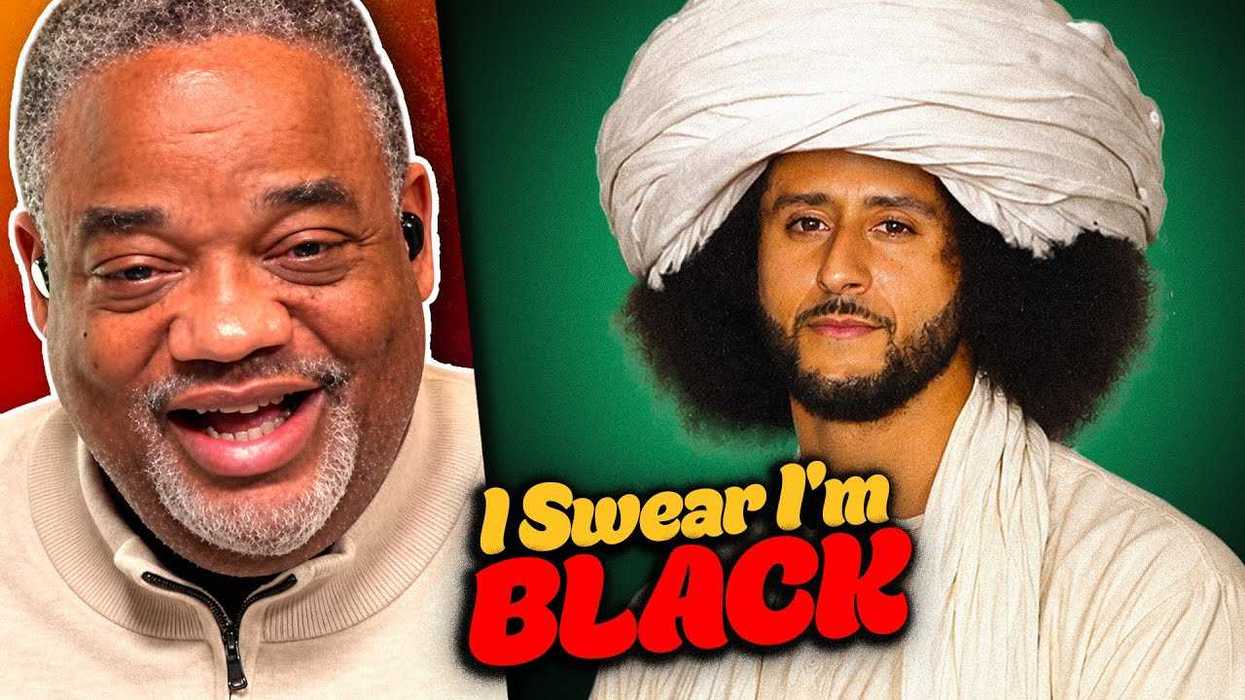
As BlazeTV host Jason Whitlock recently posted on X:
This comedy special exposes [Chappelle] as highly controlled opposition, the ultimate plant, a fraud. He pretends to be a fearless speaker of truth to power. It's laughable. No one with a brain can witness the Charlie Kirk assassination and then argue/suggest that Nipsey Hussle, T.I., and Jack Johnson were/are the real rebels, the real threats to American hegemony. Dave quoted Jack Johnson as saying his life was dedicated to the pursuit of pleasure. He was a boxer with the worldview of a modern gangsta rapper.
And then comes Chappelle’s praise of Saudi Arabia.
Not cautiously. Not ironically. He recounts performing at a comedy festival in Riyadh, openly boasting about the size of the paycheck. He describes feeling freer speaking there than in the United States. Freer. In a society where speech is monitored, dissent is criminalized, and punishment still includes public canings and amputations.
The audience laughs on schedule, applauding with the enthusiasm of trained sea lions. I found myself wondering why.
There is something almost surreal about hearing a man who has spent years describing America as uniquely oppressive extol the virtues of a monarchy where speech is tolerated only when it is toothless. The contradiction is never addressed. It simply floats past, buoyed by bravado and bank balance.
This isn’t hypocrisy in the cheap sense. It is something more revealing — and easier to miss because Chappelle is such a gifted orator. His moral compass isn’t anchored to freedom, but to grievance. America is condemned because it fails to live up to an ideal. Saudi Arabia is praised because it pays well and demands little beyond discretion.
It would be easier if "The Unstoppable..." were simply bad. It is not. Chappelle remains a master of timing. His cadence still carries. The problem is less talent than trajectory.
RELATED: Dave Chappelle faces fierce backlash over criticism of US while performing in Saudi Arabia
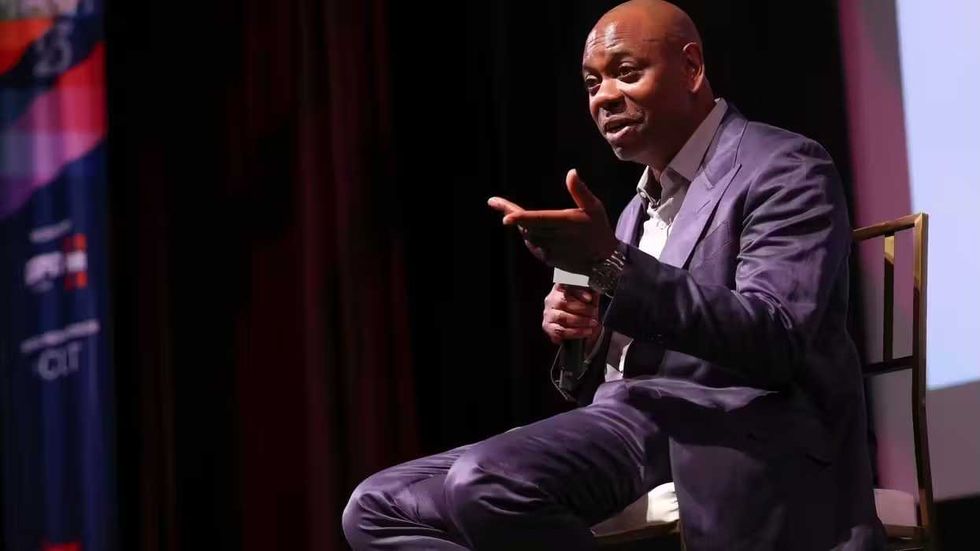 Photo by Arturo Holmes/Getty Images
What once felt dangerous now feels dutiful. What once cut across power now reinforces a different orthodoxy. Chappelle no longer punches up or down so much as inward, tightening his world until everything is interpreted through race alone.
The right’s long flirtation with Chappelle rested on a misunderstanding. He was never an ally. He was a contrarian whose targets briefly overlapped with conservative concerns. When he mocked trans men in women’s sports, it landed during a moment of peak absurdity, when the subject was everywhere and ripe for satire. It was easy. It was funny. But it was never a statement of allegiance.
"The Unstoppable..." makes that clear. The jacket, the Johnson parable, the Saudi sermon, the relentless racial framing — all of it points in the same direction.
Comedy, at its best, unsettles everyone. It exposes what our certainties conceal. In this special, Chappelle appears more interested in confirming his own.
Unstoppable, perhaps. But no longer subversive.