Thomas O'Neill/NurPhoto/Getty Images
Roxanne Brown, the head of the United Steelworkers, must recognize the reality of her members and consider the recent history of the steel industry. If she remembers what happened when steel mills closed and factory towns devolved into ghost towns, she must distinguish herself from her predecessor, David McCall, whose intransigence during his tenure was neither shrewd nor productive. To set her union on a renewed path forward, Brown must distance herself from McCall’s troubling legacy and avoid jeopardizing the very workers she claims to represent.
Brown has reportedly rejected U.S. Steel’s initial contract offer, setting the stage for the next round of negotiations beginning July. If talks go south again this summer, workers could face lost wages, disrupted health benefits, and uncertainty over retirement security. Their families would feel the pressure through tighter household budgets, delayed bills, strained child care and health care decisions, and the emotional toll that comes with prolonged economic uncertainty.
Steelworkers deserve leadership focused on jobs, wages, benefits, and retirement security — not reputation management or corporate alliances.
In steel towns and surrounding communities, the impact would ripple through local businesses, schools, churches, charities, and public services that depend on steady paychecks and a stable industrial base. A lockout would not just pause production; it would threaten livelihoods, family stability, and the economic backbone of communities built around American steel.
McCall's reckless efforts to tank the Nippon-U.S. Steel merger led to a revolt among steelworkers, and his alliance with competitor Cleveland-Cliffs’ CEO Lourenco Goncalves showed he prioritizes his own reputation and corporate alliances over his members. In the next round of contract talks, McCall should not be allowed anywhere near the negotiating table from the union side.
For decades, steelworkers have been heavily affected by market swings and fluctuating steel production demands. 2026 has been a welcome relief of slow but steady growth, aided by investments like those from Nippon, shifts toward modernization, and economic tailwinds, but history shows this tide can turn anytime.
When the steel industry turns down, it faces facility idling, facility closures, layoffs, and industry upheaval. Despite recent upturn, this volatility has contributed to a public perception that blue-collar jobs like those of steelworkers are unstable, making the upcoming contract negotiations in July that much more significant.
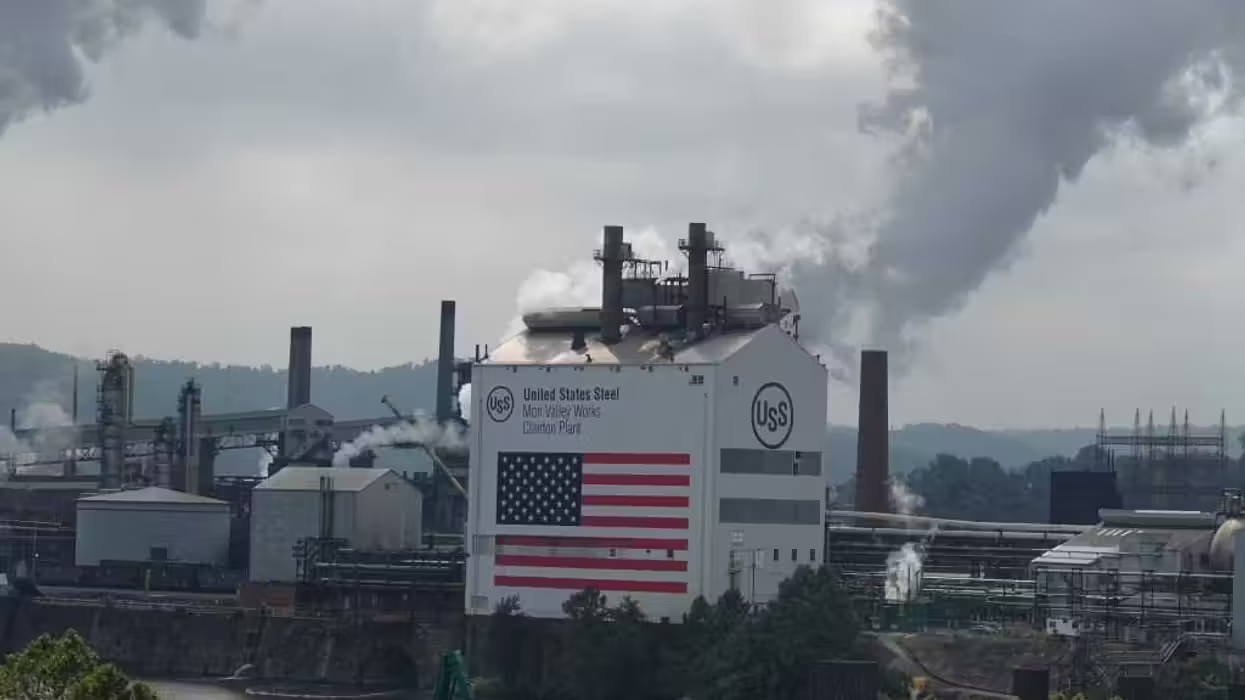
The past tells us quite a bit about what could be ahead for steelworkers. Last year’s high-profile Nippon-U.S. Steel merger carried major consequences for American steel production and steelworkers’ jobs. Yet as the deal progressed through the approval process, McCall chose to advance his own interests rather than champion union members’ security and prosperity, revealing deeply troubling behavior.
In 2023, when the merger was proposed, U.S. mills produced about 89.7 million net tons of raw steel, supporting 70,000 workers in iron and steel manufacturing. The deal promised substantial benefits to American steelworkers, including: $2.7 billion in capital investments exclusively dedicated to USW facilities; a 10-year commitment to maintain steel production levels at existing facilities, protecting union jobs; a $5,000 signing bonus for union workers and eligible nonunion employees below the senior-manager level upon deal closure; and written, enforceable commitments to honor existing union contracts and labor agreements.
RELATED: The AI bubble is about to pop. Here’s how to prepare yourself.
 Just_Super/Getty Images
Despite clear support among many rank-and-file members for the merger’s approval, McCall staked out firm personal opposition that did not reflect union workers’ input. In a February 2024 phone interview, McCall stated bluntly: “I want to kill this deal.”
McCall also took advantage of the Biden administration’s likely politically partisan, election-driven opposition to the merger. A lawsuit alleged that Biden sought to kill the deal to “curry favor with the USW leadership in [Pennsylvania] in his bid for re-election ... motivated by ‘purely political reasons.’”
Perhaps most damning is that McCall’s opposition clashed with the interests of steelworkers.
This is a pivotal time for the future of the American steel industry. The industry can only thrive if USW and the companies that employ its members can reach a commonsense agreement that both protects workers and allows companies to continue operating.
Brown must capitalize on this unique opportunity to move the union past the destructiveness of McCall’s leadership by participating in good faith in the upcoming negotiations and avoiding prolonging the contract talks at the expense of her members’ well-being. America’s steelworkers deserve better than their fate still being in the shadows of David McCall.