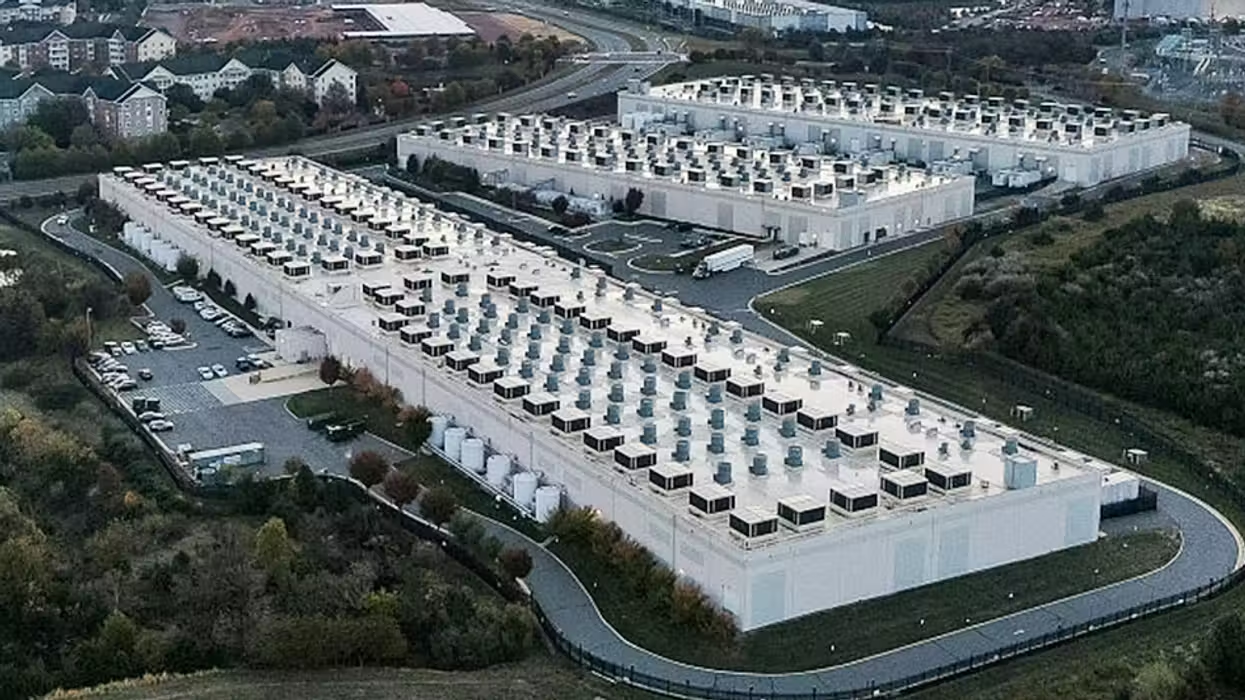
Photo by Lexi Critchett/Bloomberg via Getty Images
An Oregon cattle rancher did his own research into an apparent rise in obscure medical conditions after the opening of an Amazon data center.
The facility, which requires enormous amounts of water to cool its infrastructure, stands accused of adding wastewater — laden with nitrates — to an already struggling filtration system.
'Our data centers draw water from the same supply as other community members.'
Jim Doherty from Morrow, Oregon, sought out to investigate the alleged increase in health problems stemming from toxins in the local water supply. Doherty has since performed tests, worked alongside his county, and knocked on doors to try to solve the equation. He spoke with Rolling Stone about his findings.
The rancher said he surveyed 70 local wells and shockingly found that 68 of them violated federal limits for the allowable levels of nitrates in drinking water. In the same report, Doherty detailed that of the first 30 homes he visited in his area, 25 residents had recently suffered miscarriages.
The report alleged a number of illnesses related to the water supply — which included different forms of cancer — and pointed the finger at pollution exacerbated by an Amazon data center that popped up in 2011. The square-footage of the data center ranges in estimates from 120,000 to 200,000 but comes with a 15-year tax abatement worth nearly $200 million.
The cost of this, allegedly, is a slew of health problems.
RELATED: Apple to invest $500 billion in US including new AI server factory in Texas
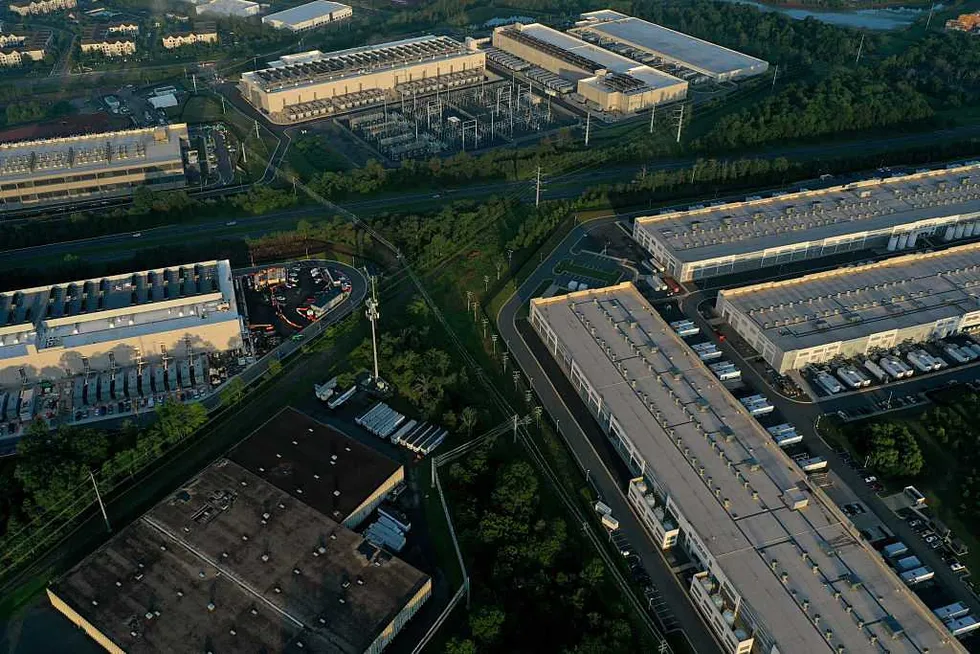 Amazon Web Services and Iron Mountain data centers in Manassas, Virginia, on July 9, 2025. Photographer: Nathan Howard/Bloomberg via Getty Images
"One man about 60 years old had his voice box taken out because of a cancer that only smokers get, but that guy hadn’t smoked a day of his life," Doherty told Rolling Stone.
Another woman reportedly wrote Doherty to tell him her husband got "kidney cancer in his early 40s. His doctor thought it was due to exposure to herbicides and pesticides. He lost a kidney, but he lived."
"We had acceptable levels of [toxins in our] drinking water when we first moved there," the woman claimed. "After my husband's cancer, we realized they went up and up through the years. It's very sad."
Doherty's wife, Kelly, also claimed that out of the 14 people that live on their road, "I think nine of them have cancer right now."
On the contrary, Amazon spokesman Lisa Levandowski told Rolling Stone that "the apparent narrative" about the 45,000-person county is "misleading and inaccurate."
"The truth is that this region has long-documented groundwater quality challenges that significantly predate AWS' presence, and federal, state, and local agencies have spent years working to address nitrates from agricultural fertilizer, manure, septic systems, and wastewater from food processing plants," Levandowski explained.
She went on, "Our data centers draw water from the same supply as other community members; nitrates are not an additive we use in any of our processes, and the volume of water our facilities use and return represents only a very small fraction of the overall water system — not enough to have any meaningful impact on water quality."
RELATED: Zuckerberg to dump hundreds of billions into new Manhattan-size projects
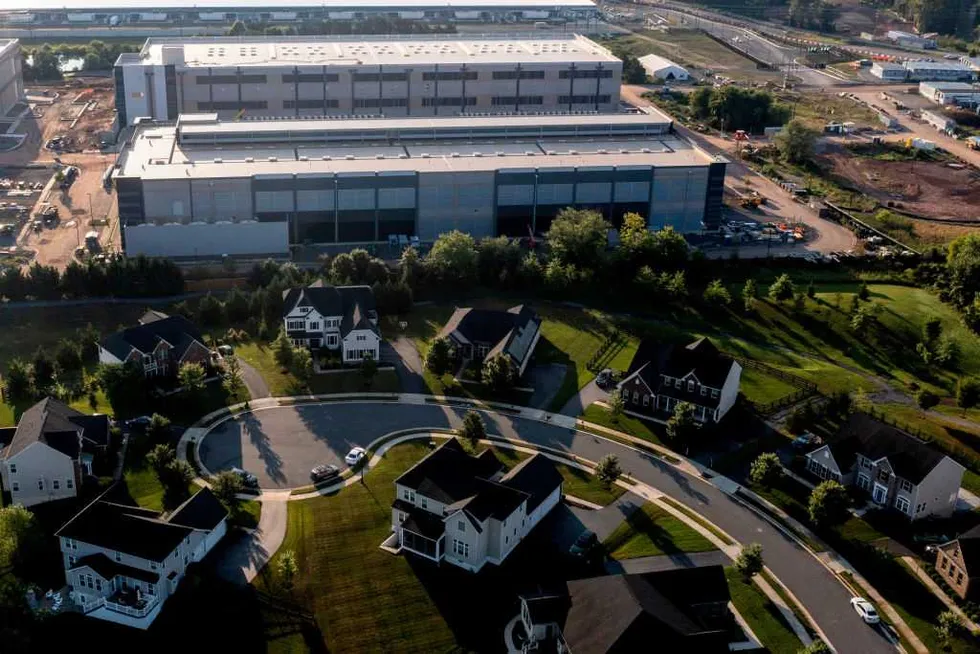 Photographer: Nathan Howard/Bloomberg via Getty Images
Oregon Rural Action, an activist group focused on preserving water, compared the situation to the "historical precedent" of Flint, Michigan.
"In part because of how slow the response to the crisis has been, and in part because of who's affected. These are people who have no political or economic power and very little knowledge of the risk," executive director Kristin Ostrom told Rolling Stone.
The argument that Amazon has increased the amount of toxins in the water is indeed a complex one as there exist arguments on both sides that require investigation to prove.
As the Department of Energy explains, the process of cooling with water typically includes water softening to remove harmful toxins, but that does not mean there aren't additives involved in the process.
Possible additives include phosphates to prevent corrosion, acids to adjust pH levels, and anti-foaming agents, to name a few. Nitrates can also be used to prevent corrosion in cooling systems.
The DOE also notes that when water evaporates from cooling towers, dissolved solids or toxins become more highly concentrated. This is typically solved by removing a portion of the highly concentrated water and replacing it with "fresh make-up water."
Like Blaze News? Bypass the censors, sign up for our newsletters, and get stories like this direct to your inbox. Sign up here!