Photo by Arturo Holmes/Getty Images
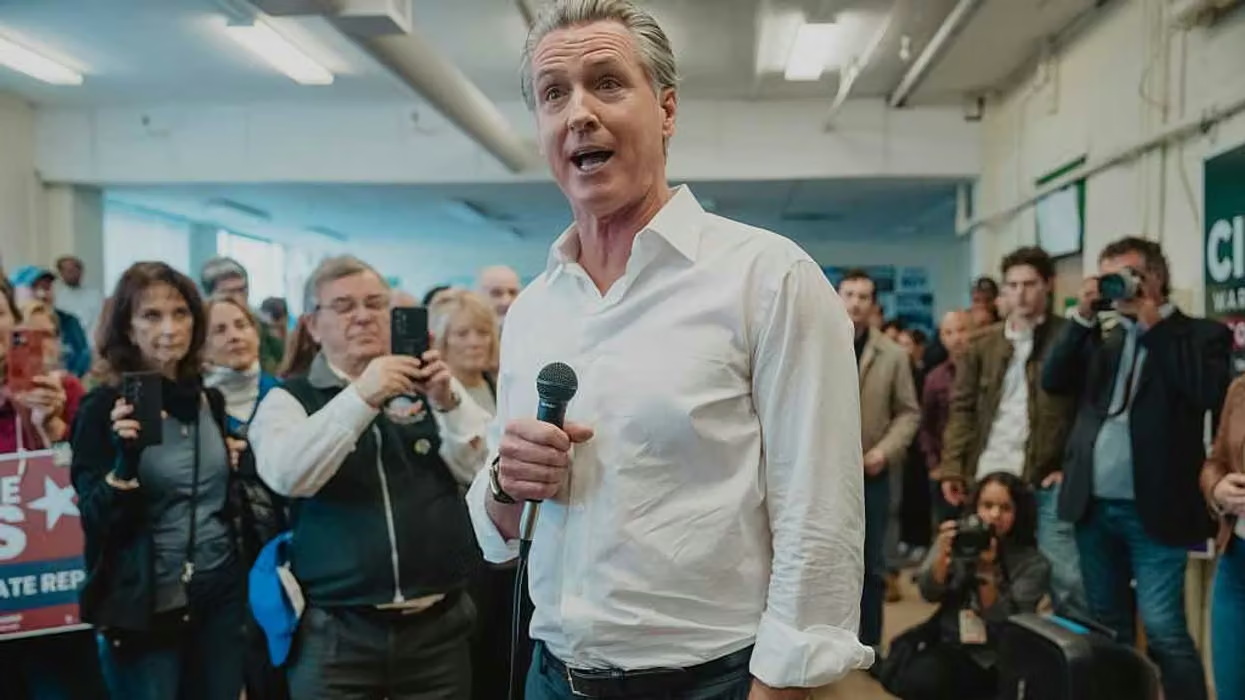
What should have been a peaceful Sunday service at Cities Church in St. Paul, Minnesota, turned into a political ambush. Roughly 30 anti-ICE protesters pushed into the sanctuary mid-worship, chanting slogans and confronting church leaders as families tried to pray.
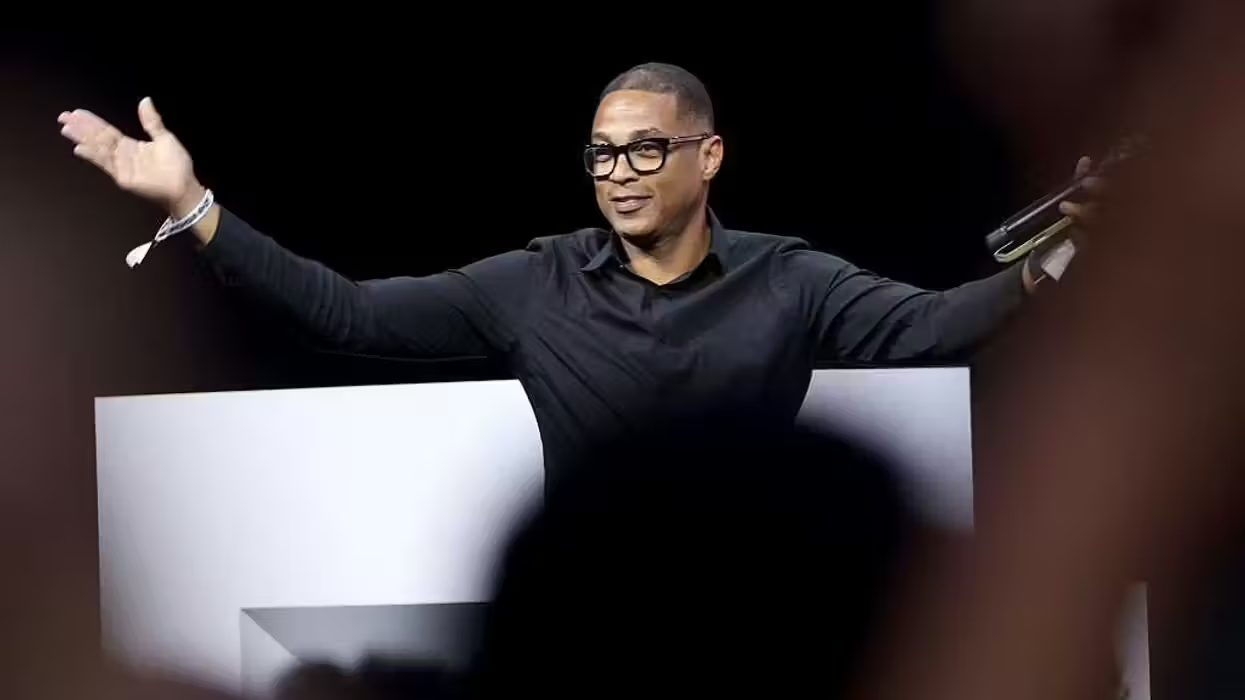
Disgraced former CNN anchor Don Lemon was there, too, livestreaming the chaos.
If activists can storm a church mid-service, scream at families, and then hide behind the First Amendment, the standard becomes simple: The loudest mob sets the rules.
The Department of Justice has opened a formal investigation and signaled that federal protections for houses of worship may apply. Assistant Attorney General Harmeet Dhillon noted on the “Glenn Beck Program” that the activists’ conduct could implicate the Freedom of Access to Clinic Entrances Act, which bars intimidation, obstruction, and interference with the free exercise of religion in places of worship. The protesters may have also violated the Ku Klux Klan Act, a post-Civil War law that makes it illegal to terrorize and violate the civil rights of citizens.
According to multiple reports, the demonstrators were tied to the Racial Justice Network and aimed their protest at a church leader they accused of working with Immigration and Customs Enforcement. The protest followed rising tensions in Minnesota after the fatal shooting of anti-ICE activist Renee Nicole Good during a confrontation with federal agents.
Lemon framed the entire spectacle as civic virtue. He insisted he was “not an activist, but a journalist” and argued that protest inside a church remains constitutionally protected speech.
The footage tells a messier story.
Video released after the incident shows Lemon interacting with the group beforehand, appearing familiar with organizers and the plan. One outlet described the operation as “Operation Pull-Up.” That undercuts the narrative Lemon later pushed — that he simply arrived to document an event that unexpectedly “spilled” into a worship service.
Intent matters. So does outcome. The outcome looked like this: a sanctuary overrun, a service derailed, congregants shaken, and children crying while activists shouted and gestured at the pews.
That is far from “peaceful assembly.” It is targeted disruption.
The First Amendment protects speech. It does not grant a roaming license to invade private spaces and commandeer them for political theater. Rights have edges because other people have rights too. Worshippers do not lose their liberty because activists feel righteous.
That basic distinction keeps a free society from collapsing into a contest of intimidation.
RELATED: Americans aren’t arguing any more — we’re speaking different languages
 Photo by Heather Diehl/Getty Images
This case matters because it tests whether the country still draws that line. If activists can storm a church mid-service, scream at families, and then hide behind the First Amendment, the standard becomes simple: The loudest mob sets the rules. Next week it will be another church. Then a synagogue. Then any gathering that activists decide deserves punishment.
The Justice Department is right to examine the FACE Act here. Congress passed it to stop coercion dressed up as protest — the use of obstruction and intimidation to prevent Americans from exercising basic freedoms. That principle doesn’t change because the target shifts from an abortion clinic to a church sanctuary.
The press corps’ selective outrage makes the problem worse. Cultural elites demand “safety” and “inclusion” in every other arena, but many of them treat Christian worship as an acceptable target. They police speech in classrooms and boardrooms, then shrug when activists shout down prayer.
That double standard signals something deeper than hypocrisy. It signals permission.
Lemon’s defense captured the rot in one sentence: Making people uncomfortable, he said, is “what protests are about.” Fine. Protest often makes people uncomfortable. But discomfort does not justify trespass. It does not excuse intimidation. It does not cancel someone else’s right to worship in peace.
A society that cannot protect sacred spaces will not protect much else for long. If the law refuses to punish conduct like this, the lesson will spread fast: Invade, disrupt, harass — then claim virtue and dare anyone to stop you.
America does not need a new normal where mobs treat churches like political stages. It needs consequences.