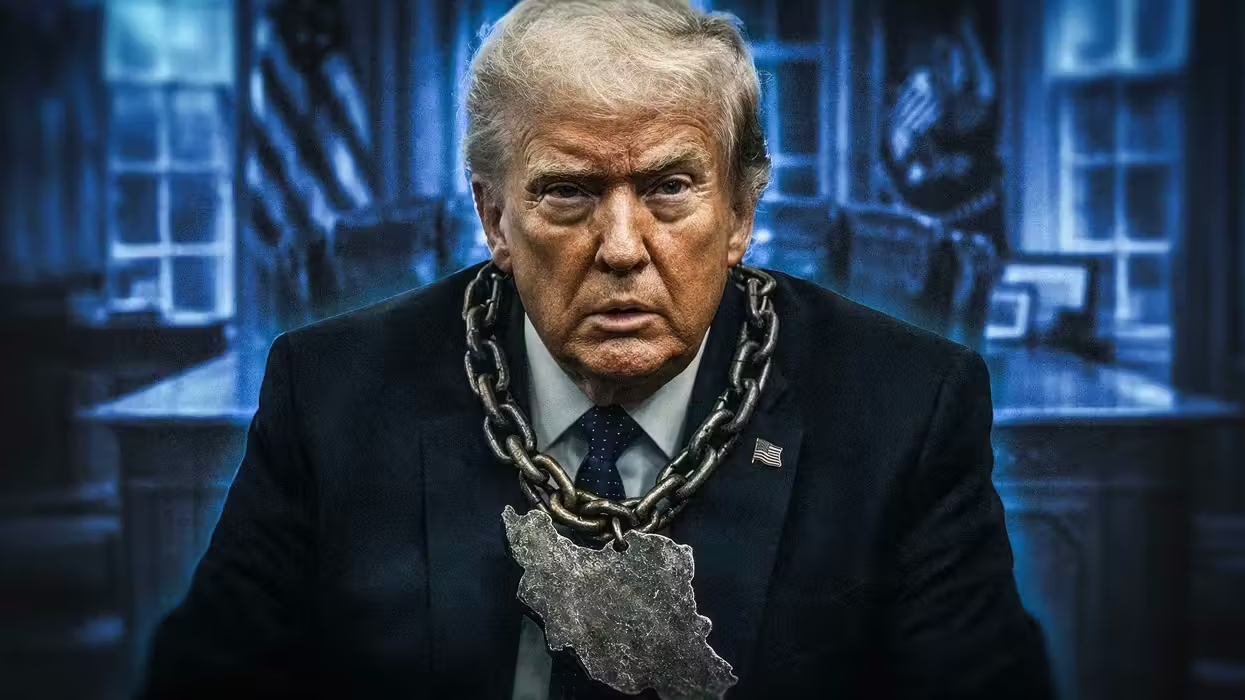
Blaze Media Illustration
The Iran war risks becoming the classic Washington trap: Trade concrete domestic wins for an open-ended foreign project, then discover the home front slipped away while everyone watched the fireworks.
Over the weekend, the United States joined Israel in the opening salvo of what looked like an increasingly inevitable fight with Iran. Plenty of ink has already spilled over whether Donald Trump should pursue regime change abroad. The larger stakes sit at home. Trump began his second term with an all-out assault on the left and the permanent bureaucracy. Agencies were closed, and budgets were slashed. The border was secured, and deportations began. The early blitz of executive orders stunned progressives, but activist judges soon started tying the administration down. That reality demanded legislative victories
A successful Iran campaign could reshape the region. A failed or prolonged one could reshape American politics by handing Democrats a narrative of chaos and betrayal.
Congress has not delivered. Rather than spend months trying to whip spineless Republicans into motion, the White House shifted toward what it could do without them. Foreign policy offers that outlet. The result includes some impressive operations, including the capture of Nicolás Maduro in Venezuela. Iran, however, threatens to consume time, attention, and political capital that the domestic fight cannot spare.
Curtis Yarvin argues that the most valuable political win makes the next win easier. Power has momentum. Winning in the right order matters more than checking items off an ideological list. Trump’s best early moves fit that logic. They did not merely satisfy the base. They changed the battlefield.
The point is not isolation. America has enemies, and presidents sometimes must use force. The point is sequencing. Domestic consolidation makes foreign action cheaper and safer. A secure border, a disciplined bureaucracy, and election rules that prevent the left from gaming turnout strengthen deterrence.
They also insulate a president from war-party sabotage: leaks, lawsuits, and hearings meant to break public support. The same activists who file injunctions against deportations will file injunctions again against anything that smells like emergency authority. The same media class that demanded escalation yesterday will demand trials and timelines tomorrow. A president who has not locked down the home front fights with one hand tied, then gets blamed when the knot tightens.
Cutting the staff and budget of outfits like USAID and the Department of Education did more than signal hostility to the progressive project. It reduced the flow of money to Democratic patronage networks and throttled the institutions that launder liberal ideology into “expertise.” Closing the border and restarting deportations did more than satisfy a campaign promise. It slowed the importation of new dependents and future Democratic Party supporters. Even the executive order on birthright citizenship, whatever the courts decide, aims at the same long-term terrain: electoral math.
RELATED: The West’s forbidden truth: Ethnic cleansing is now official policy
 Blaze Media Illustration
Those moves carried moral clarity and tactical advantage. Each win reduced the opposition’s resources and increased the odds of winning the next fight.
That strategy always faced a limit. Flooding the zone with executive action could only last until the legal system and the administrative state regrouped. Trump is not a dictator, no matter what progressive media claims. He needs laws. Without legislation, judges can block him, bureaucrats can slow-walk him, and the next president can reverse him with a pen.
Once the domestic agenda hit those constraints, the administration pivoted abroad to keep momentum. The question becomes whether momentum abroad strengthens the home front or drains it.
War burns political capital. Trump already took hits from the Epstein files mess and sloppy messaging around deportations. Governing by polls is foolish, but political victories still require public attention and pressure. A president can spend capital only if he has it. People love a winner. They also sour on leaders who appear distracted, trapped, or inconsistent.
Iran poses a special risk because it collides with Trump’s signature advantage: his break with Republican foreign adventurism. He rose by mocking George W. Bush’s regime-change fantasies as disaster. That stance enraged conservative orthodoxies, then remade them. Many pundits who cheered the Iraq War now treat regime change as a punchline largely because Trump made it respectable to say so.
Now Trump bets that the problem was not regime change itself, only its execution. Maybe he wins that bet. He deserves credit for successful strikes and bold operations. Yet the odds do not favor quick, clean wars, and Iran has a long history of swallowing neat plans.
Meanwhile, the domestic agenda needs hard wins that only Congress can supply. The SAVE Act offers the perfect example of a victory that makes the next victory easier. Voter ID is moral and common sense. It enjoys broad support. It constrains the fraud Democrats exploit. It makes every future election easier for Republicans to win. Yet GOP legislators cannot push it across the finish line. The Senate wastes time on performative votes and pageant nonsense. Caligula’s horse starts to look like a personnel upgrade.
RELATED: The commonsense case for nationalizing US elections
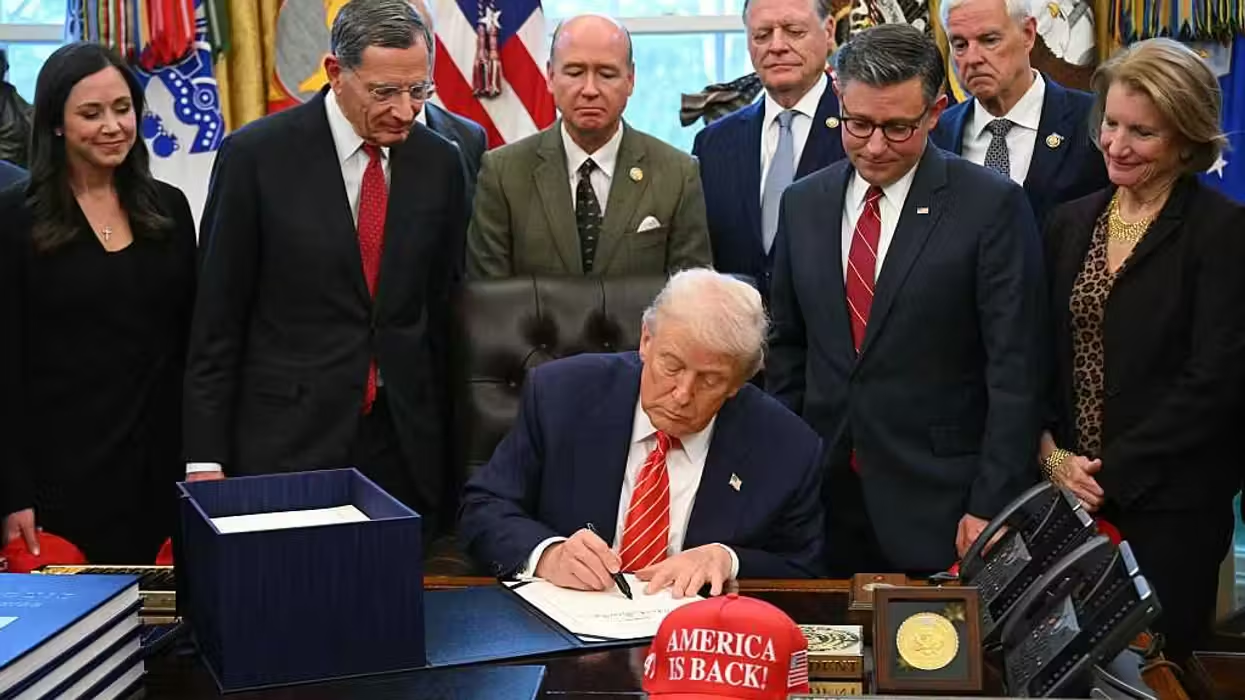 Photo by SAUL LOEB/AFP via Getty Images
This imbalance matters because foreign policy creates durable facts, while executive-only domestic wins remain reversible. A successful Iran campaign could reshape the region. A failed or prolonged one could reshape American politics by handing Democrats a narrative of chaos and betrayal. Either way, the clock keeps ticking at home.
If Democrats win the midterms, impeachment and investigations begin immediately. If progressives win the next presidential election, the border reopens, amnesty returns, and the Department of Education fills up again with ideological enforcers. Iran is a brutal regime, but its nuclear program took a major blow last summer. Breathing room existed. The administration should have used it to lock in domestic gains.
Now Trump is committed. That makes speed decisive. A timely victory abroad could preserve the president’s image as a winner while he pressures Congress to codify the domestic agenda. A drawn-out war will do the opposite: sap attention, fracture the coalition, and leave the home front legally vulnerable.
America First cannot survive as a permanent posture if domestic reforms remain temporary. The administration must stop letting foreign battles substitute for unfinished work at home. Win fast abroad if you must. Then come back, and finish the job in Washington.