Photo by Brendan SMIALOWSKI/AFP via Getty Images
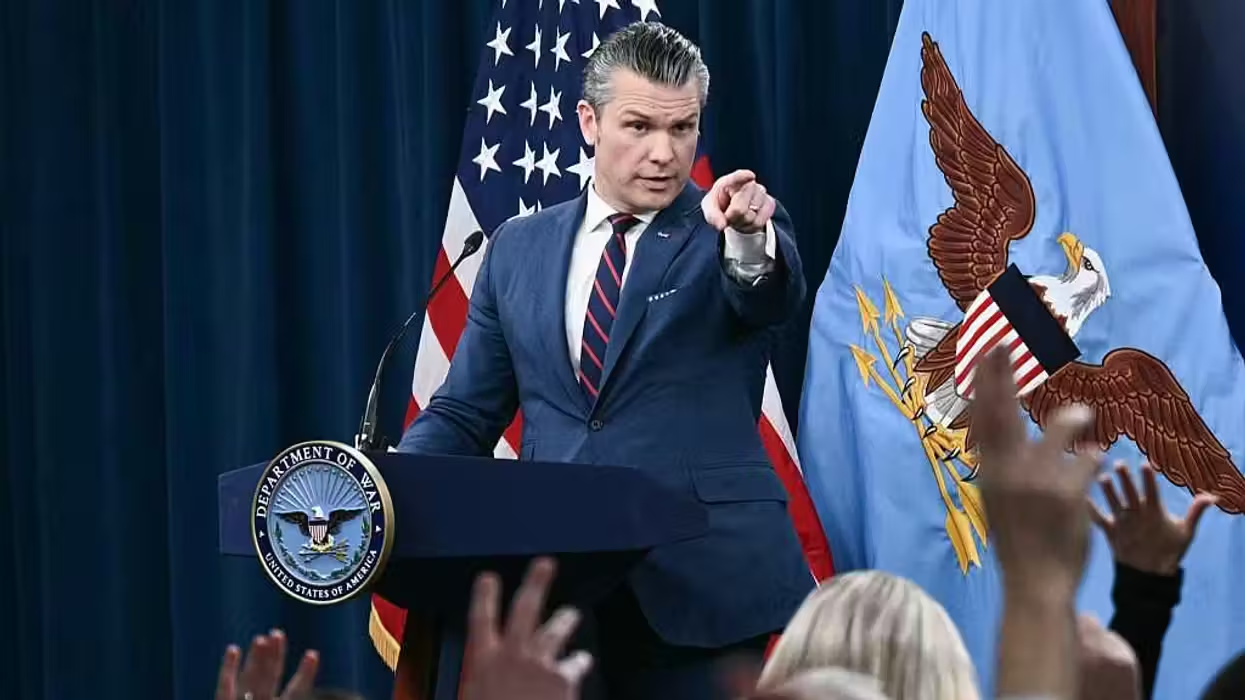
They used to mock him as a talking head. They said he wasn’t “serious.” On Monday at the Pentagon podium, Pete Hegseth looked deadly serious — a war secretary in command, unapologetic and unbowed, taking the fight to Iran and to the Beltway class that never wanted him there in the first place.
For half a century, American wars have been fought on two fronts: the enemy overseas and the narrative at home. Presidents have lost the second front before they lost the first. Hegseth made clear that he has no intention of repeating that mistake.
Hegseth is treating the media as terrain, not as background. He understands how quickly a negative narrative can harden into conventional wisdom, and he intends to contest it.
Joined by Joint Chiefs Chairman Gen. Dan Caine, he gave a comprehensive rundown of the opening days of Operation Epic Fury. The unprecedented multinational campaign against the Islamic Republic of Iran has already removed Ayatollah Ali Khamenei and much of the top layer of government and military leadership.
Hegseth delivered a no-nonsense overview in his pugnacious style, while Caine smoothly supplied operational detail. The language was blunt and steeped in the Pentagon’s effects-based, systems-focused lexicon of war: synchronized, focused, deliberate, precise, lethal.
The real show came during the Q&A. Hegseth demonstrated the value of national media experience. He understands that journalists don’t just observe war. They shape it. Reporters like to cast themselves as neutral, hovering above the battlefield rather than operating inside it. But they are players, whether they admit it or not.
That tendency showed up in the very first question: “What is our exit strategy here, and when will it be deployed?” “Exit strategy” carries baggage — Clinton after Mogadishu, then the quagmire in Iraq. Hegseth said he would “never hang a time frame” on U.S. operations and stressed that the commander in chief sets policy and timelines.
The administration’s priority is victory — not optics, not schedules, not narrative management. Victory.
Hegseth also dismantled what he called a “typical NBC sort of gotcha-type question” about expected troop levels. Preset troop limits, timetables, acceptable loss benchmarks — these become anchors for the press and handholds for the enemy.
Vietnam offers a cautionary tale. President Lyndon Johnson’s arbitrary troop “ceiling” boxed him in. Even when communist forces were shattered during Tet and opportunities opened, Johnson’s self-imposed limits narrowed his options. When the moment came, he could not move quickly enough.
RELATED: Trump’s Iran week: The hidden wins you didn’t hear about
 Photo by Mandel NGAN/AFP via Getty Images
That history explains Hegseth’s refusal to get pinned down on numbers and metrics. Say too much publicly, and the enemy listens. Say too much, and the press locks you into a storyline you can’t escape.
President Trump has made the same point by refusing to rule out “boots on the ground,” preserving options if contingencies arise. Reporters hate ambiguity. In wartime, ambiguity keeps the enemy guessing.
Hegseth also grasps what some journalists rarely admit: Many in legacy media treat war coverage as opposition work. They question plans and policies as a default posture, amplify anonymous critics, hunt for classified information, and publish it.
This tension is as old as the republic. During the Civil War, General William Tecumseh Sherman called reporters “gossips” and “paid spies” and court-martialed Thomas Knox of the Cincinnati Commercial. In Vietnam, the conflict was fought as much in headlines as in the field. Today, reporters chasing clicks can manufacture controversies — real or imagined — that distract from the mission.
Hegseth is treating the media as terrain, not as background. He understands how quickly a negative narrative can harden into conventional wisdom, and he intends to contest it. The battlefield stretches from Tehran to the briefing room — and Hegseth just signaled that he plans to dominate both.