Photo by Samuel Corum/Getty Images
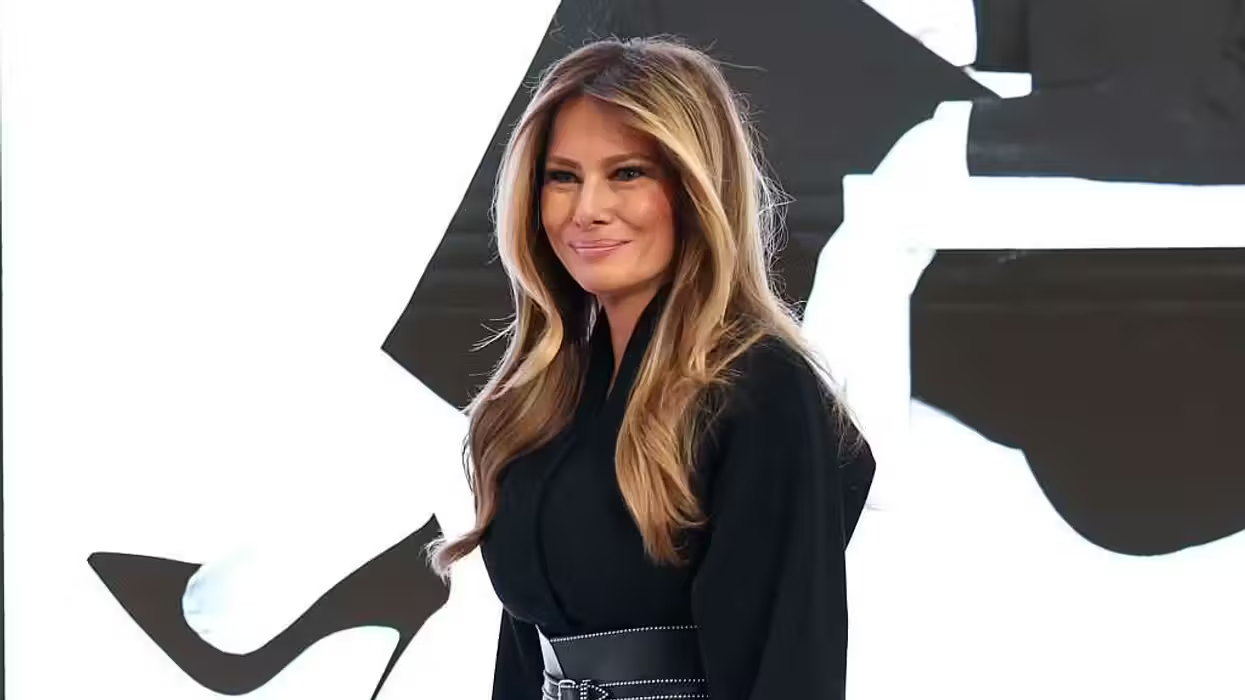
There are films that chronicle history, and then there are films that expose the private architecture behind it. “Melania,” the historic new feature film, belongs to the latter category. It is not a campaign film or a political gloss. It is a deeply human account of transition, responsibility, and resolve, told during the most compressed and emotionally demanding stretch of Melania Trump’s life, as she prepared to assume her second term as first lady of the United States.
The film shows the complexity of moving from private life back into one of the most scrutinized public roles in the world.
The film focuses on a narrow but consequential window from January 1 through January 20, 2025, a period that is usually flattened into ceremony and symbolism. Instead, “Melania” lingers in the quiet moments that precede power. It shows a woman balancing the private obligations of motherhood and family with the public demands of leadership. Navigating grief within her own family while preparing to re-enter a national spotlight that rarely affords empathy.
What distinguishes the film immediately is its intimacy. The camera follows Melania Trump through the ordinary and the extraordinary: checking in on her son, caring for her father after the loss of his wife, and preparing to return to public life after years away from the East Wing. These scenes are not dramatized. They are observed. The result is a portrayal that feels restrained, grounded, and unmistakably human.
“Melania” also offers access that has never before been granted to a media project. Viewers are brought into high-level meetings with the Secret Service, detailed White House walk-throughs, and internal discussions about staffing, security, and protocol. The level of access surpasses any prior film or documentary involving the modern presidency, and it does so without compromising the seriousness of the subject.
The film captures the lingering tension in Washington following the failed Kamala Harris presidential campaign. Without editorializing, it documents the complicated interpersonal dynamics and unspoken friction that accompany transitions of power. These moments are subtle, conveyed through body language and silence rather than confrontation, lending the film an unusual credibility.
International diplomacy threads its way into the story as well, most notably through an appearance by Queen Rania of Jordan. Their interaction reflects Melania Trump’s long-standing engagement with global humanitarian issues and underscores the often unseen role first ladies play in shaping state relationships
At its core, “Melania” is about transition. It chronicles how Melania Trump rebuilt her East Wing operation from scratch, assembling a team and setting a tone that was disciplined and intentional. The film shows the complexity of moving from private life back into one of the most scrutinized public roles in the world.
That same precision defined how the film itself came to life.
From the moment the project was introduced to the entertainment industry, it triggered a highly competitive bidding war. Netflix, MGM, Disney, and Paramount all pursued the project intensely, recognizing the rarity of the access and the global interest surrounding Melania Trump’s return to the White House.
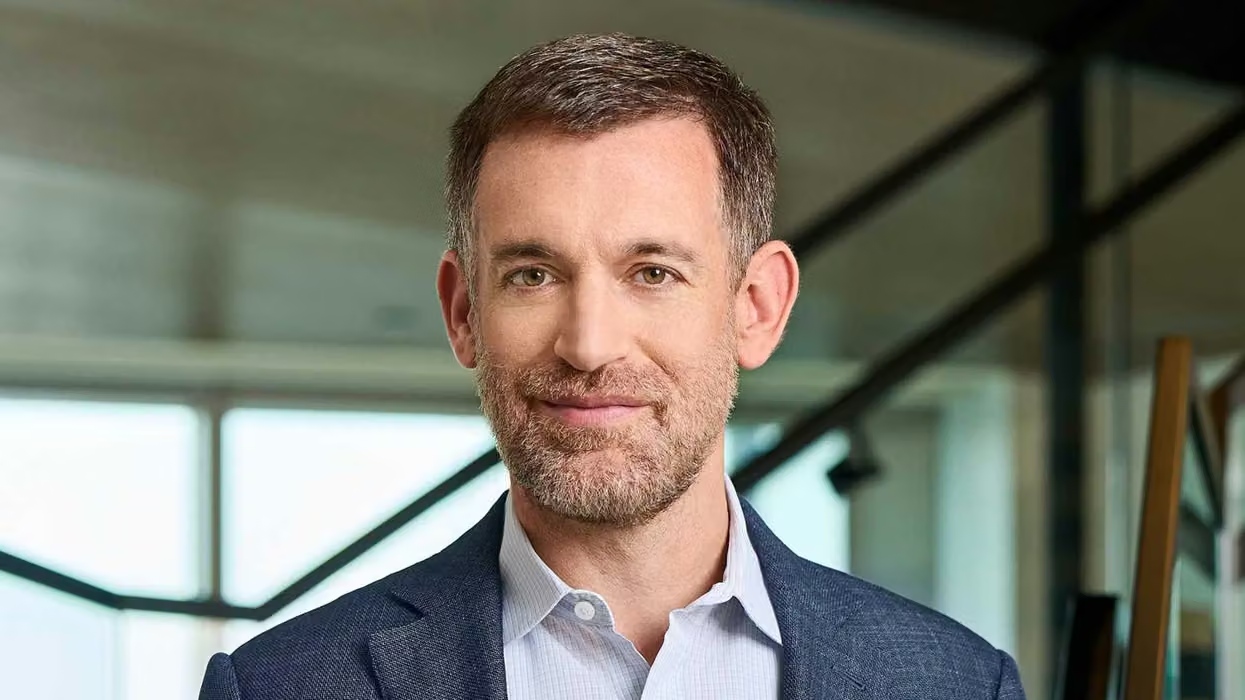
Navigating that landscape was Marc Beckman, who has served as Melania Trump’s senior adviser for 25 years. For decades, he has worked closely with her to secure major commercial deals, advance humanitarian initiatives, and shape her public voice. His understanding of media, culture, and negotiation proved critical in steering the project through a crowded field without compromising its integrity.
Beckman brought a long-term, cross-sector perspective to the process. His experience executing campaigns for major global brands and institutions gave him the leverage and insight necessary to evaluate the various competing offers. Together, Beckman and Melania Trump prioritized control, authenticity, and global reach over spectacle.
RELATED: Matt Damon: Netflix dumbs down movies for attention-impaired phone addicts
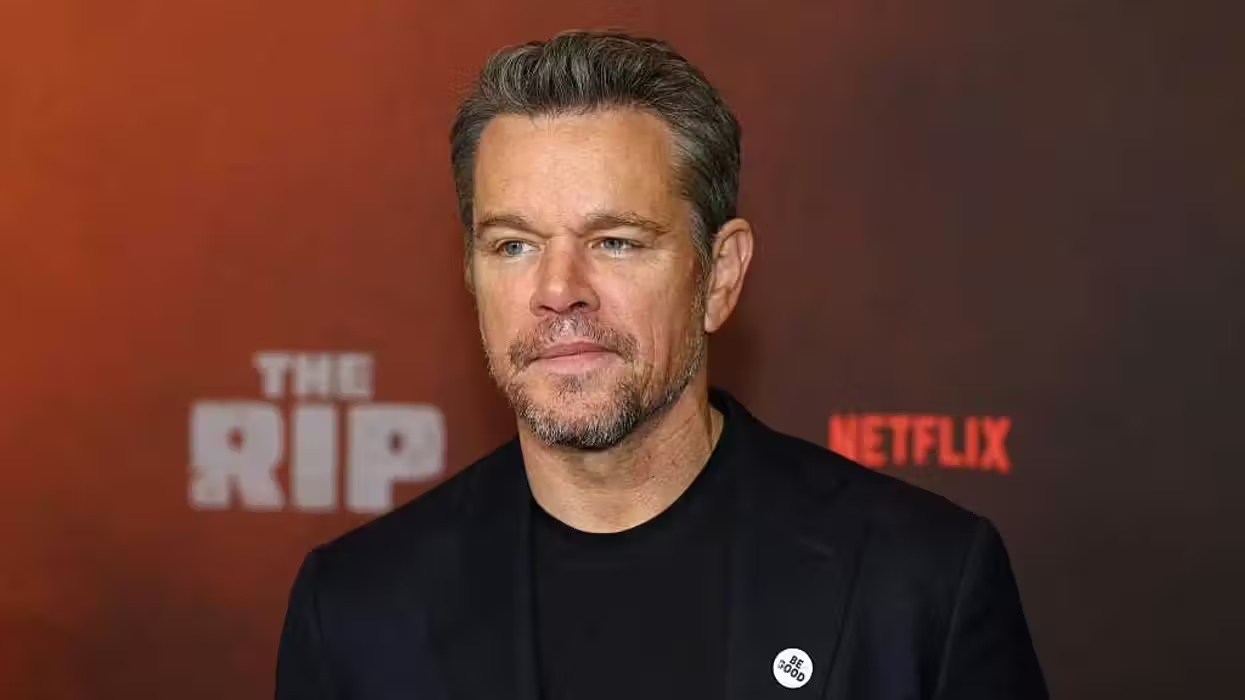 Photo by Arturo Holmes/WireImage
Ultimately, Amazon was selected as the studio partner. The deal was not the result of any back-channel negotiations involving Donald Trump or Jeff Bezos. It was a strategic choice by a first lady determined to protect her story and ensure that it reached a worldwide audience on her terms.
While “Melania” remains focused on the human dimensions of leadership, it arrives at a time when the first lady has increasingly asserted herself as a force within the East Wing. Her recent efforts to encourage America’s children to pursue curiosity and ambition, including through responsible engagement with emerging technologies like AI, reflect the broader leadership philosophy that underpins the film.
A two-part docuseries, set for release this summer, will expand on the filmmaking process itself, offering behind-the-scenes insight into how unprecedented access was negotiated and maintained and how a project of this magnitude was executed without losing its soul.
In an era of political noise and cultural oversaturation, “Melania” stands apart. It is quiet without being passive and powerful without being performative. More than a film, it is a record of how leadership looks before the world is watching — and why that unseen work matters.