Jordon R. Beesley/US Navy/Getty Images
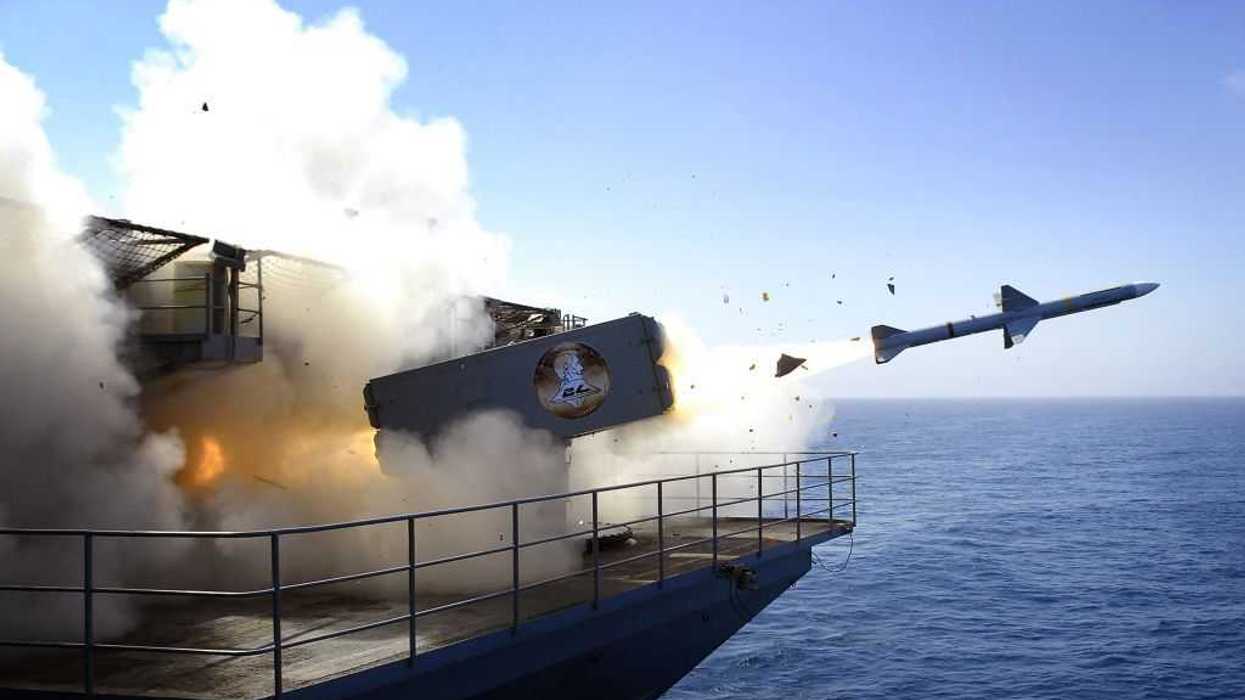
For the past two years, one image has circulated among defense analysts: a U.S. Navy destroyer firing a Standard Missile-2, which costs about $2.1 million, to intercept a Houthi drone that likely cost $2,000.
Nobody in that chain made a bad decision. The ship had to be defended. But the Navy has now fired more than 200 such missiles in the Red Sea since late 2023 at a cost of hundreds of millions of dollars. Project that math onto future conflicts — Taiwan, the Baltics, the Persian Gulf — and the picture gets alarming fast.
Sophistication matters. Volume matters more. Flexibility may matter most of all.
The standard answer is to demand better technology: lasers, interceptor drones, smarter jamming. But that misses what Ukraine has shown over three years of the largest sustained drone war in history. Much of the technology needed to defeat cheap drones at reasonable cost already exists. What America lacks is the doctrine, procurement flexibility, and industrial base to field it at scale.
What defenders need is simpler: distributed sensors, disciplined targeting, and layered defenses that match the cheapest effective response to each threat.
Ukraine now produces about 1,500 interceptor drones per day. They cost $1,200 and $4,700 apiece, a fraction of the $29,100 to $46,520 Shahed drones they destroy. One in three Russian aerial threats over Ukraine is now brought down by an interceptor drone rather than a missile. Ukraine’s overall interception rate sits around 80%, achieved not through Patriot batteries alone but through layers of cheap, rapidly iterated hardware built by 450 domestic manufacturers.
Ukraine’s advantage is not just volume. It is decentralization. Units, volunteers, and defense-tech firms operate in a flexible ecosystem that lets them adapt systems to terrain, weather, and enemy tactics as conditions change.
The American model moves the other way: centralized requirements, standardized programs, and long acquisition cycles. That system can produce extraordinary weapons. It cannot adapt when the battlefield changes faster than the program office. The United States faces different constraints, especially at sea and across global commitments, but the underlying economics do not change.
As of 2022, the United States was producing roughly 500 to 600 Patriot missiles per year. That stock can be burned through in weeks during a high-intensity conflict. This is not a missile-design flaw. It is the result of three decades of underinvestment in manufacturing capacity and a procurement system optimized for sophistication over volume. America still buys platforms better than it buys kill chains — the linked system of sensors, decisions, and interceptors — and counter-drone defense demands the reverse.
Meanwhile, Russia, working from Iranian Shahed blueprints, scaled launches to more than 44,000 in the first 10 months of 2025, four times the previous year’s rate. The United States is now in an industrial competition and, on current trajectory, losing it on volume.
RELATED: The combination that can renew America’s defense industry
 Sean Gallup/Getty Images
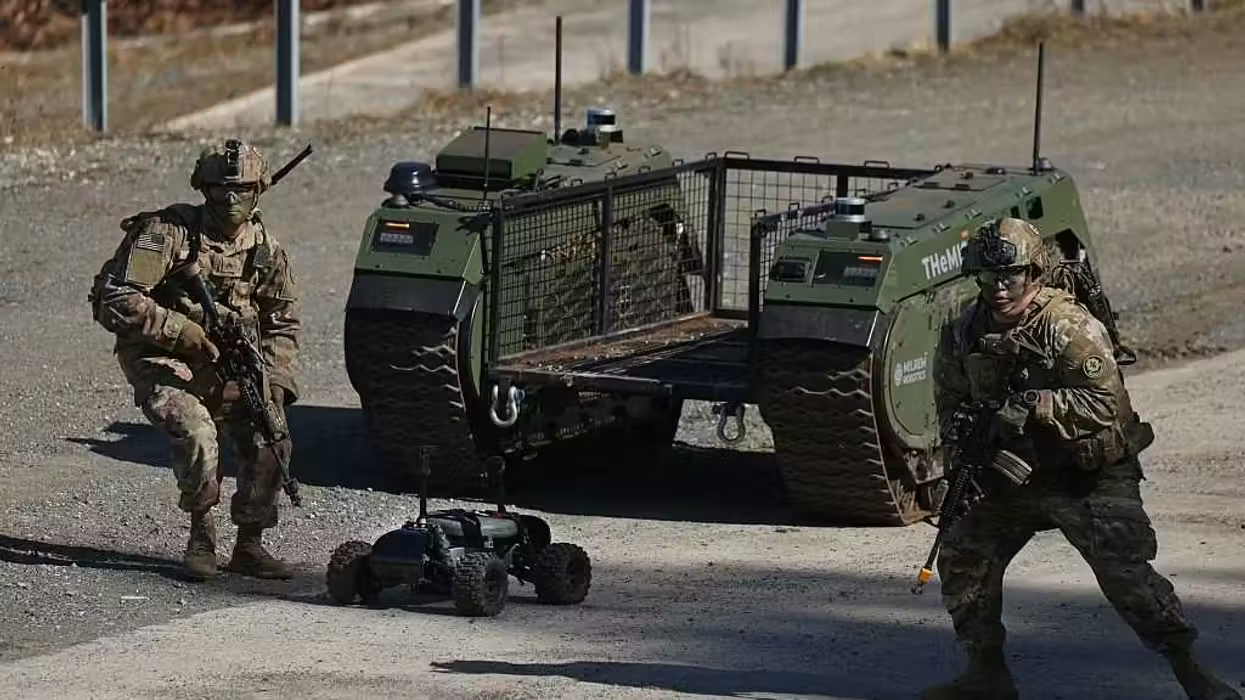
The tactical lessons from Ukraine are hardly mysterious. Detect early, match the weapon to the threat, and keep defenses mobile. Ukraine’s mobile fire groups — pickup trucks with machine guns and thermal imagers — proved effective enough that Russia rushed to copy them, with limited success. Israel’s Iron Beam laser intercepts threats at roughly $2 to $5 per shot. These systems work.
The problem is that “works in Ukraine” and “enters U.S. inventory at scale” are separated by an acquisition process that takes years, prizes exquisite performance over adequate volume, and was never designed for six-week innovation cycles.
The 2020 war in Nagorno-Karabakh offers another warning. Armenia’s air defenses collapsed not because drones are invincible, but because Armenia lacked modern, layered defenses. Institutional neglect, not technological inevitability, proved decisive.
None of this means expensive interceptors are obsolete. Advanced threats still require advanced interceptors. And as CSIS has noted, a $2 million missile protecting a $2 billion ship and its crew is rational. The point is not to abandon high-end systems. It is to stop treating them as the first and only answer to every aerial threat and to build the lower tiers of the defense stack with the same urgency we bring to the top.
That means procurement reform that many defense insiders regard as somewhere between very hard and politically impossible. It means accepting lower unit performance in exchange for higher production volume, a trade the Pentagon’s acquisition culture instinctively resists. It means pressuring major defense contractors to share production with smaller, faster manufacturers.
Sophistication matters. Volume matters more. Flexibility may matter most of all.
Ukraine learned that lesson under bombardment, because it had no choice. The United States still has the luxury of learning it in advance.
The danger is that luxury breeds delay.