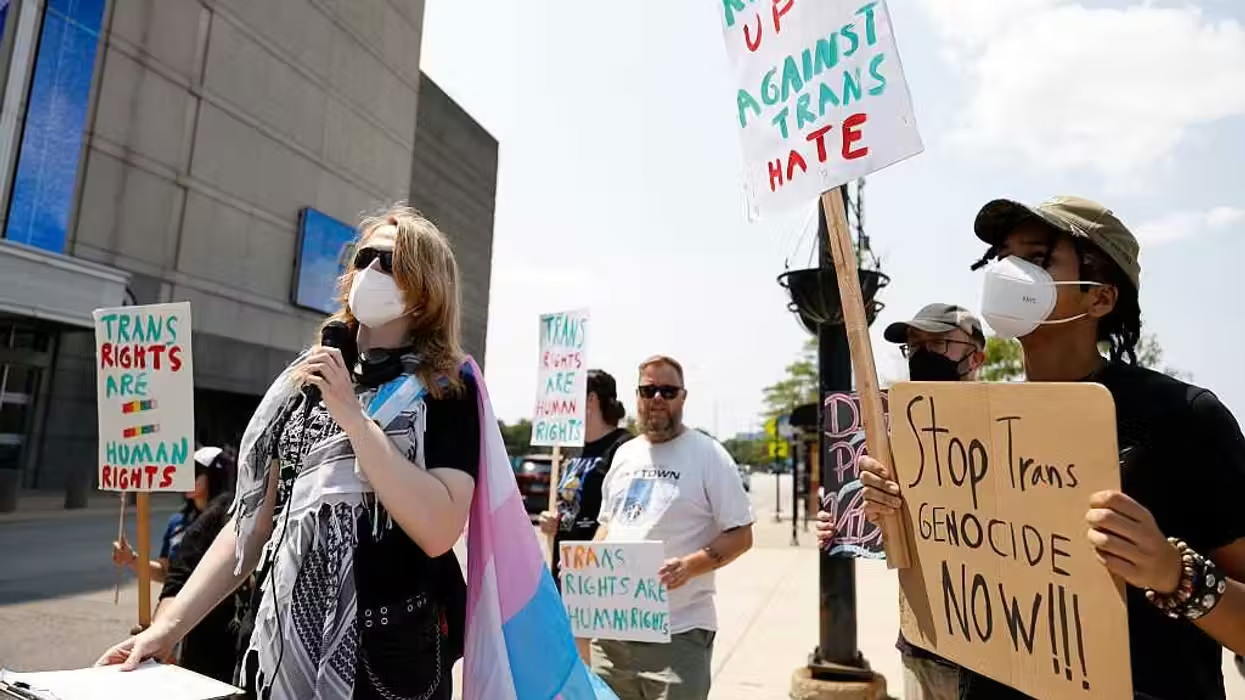
Michael Reaves/Getty Images
With the “Women’s” NBA twisting itself into knots rather than plainly defining woman, gender ideology is back in the news.
The first problem is linguistic. Using “gender” when one means sex invites confusion. Jay Richards has explained gender ideology as the view that the sex binary does not fully describe human identity and that a person may possess an internal “gender identity” incongruent with sex.
‘The issue is never the issue. The issue is always the revolution.’
That framework helps explain a related question: Why can stating ordinary biological distinctions provoke such extraordinary hostility — even death threats — when the dispute concerns women’s sports and other sex-separated spaces?
One answer is that the argument is not only about biology. It also draws on an older revolutionary tradition that treats inherited institutions and categories as instruments of domination. Hence the old line: “The issue is never the issue. The issue is always the revolution.”
Start with Marx and Engels. In “The Communist Manifesto,” they called for “the most radical rupture with traditional relations” and “traditional ideas,” while attacking private property, religion, and the bourgeois family. Paul Kengor has written that later leftist movements continued this attack on traditional marriage and family.
The intellectual path from Marx to contemporary gender theory is not a straight line, however. Antonio Gramsci did not simply replace economics with culture; he broadened Marxist analysis by emphasizing culture, institutions, and “hegemony” as sources of social power. What is commonly called cultural Marxism grew from this shift in emphasis.
Herbert Marcuse likewise looked beyond the industrial working class to marginalized groups as possible agents of radical change. Rudi Dutschke popularized the idea of a “long march through the institutions,” while Mike Gonzalez has noted the Gramscian strategy of a long-term “war of position” aimed at reshaping culture before political victory.
Critical theory pushed the analysis further. Frankfurt School thinkers such as Marcuse and Max Horkheimer examined capitalism, authority, culture, and repression through a Marxist-Freudian lens. Other Frankfurt School theorists treated social structures — including family and sexuality — as possible mechanisms of domination.
Postmodern and deconstructionist thinkers such as Michel Foucault and Jacques Derrida came from different traditions, but their work converged with critical theory on one crucial point: suspicion toward claims of neutral, universal truth. In this intellectual climate, truth itself was dismissed by some theorists as inseparable from power.
RELATED: Enes Kanter Freedom said the quiet part out loud
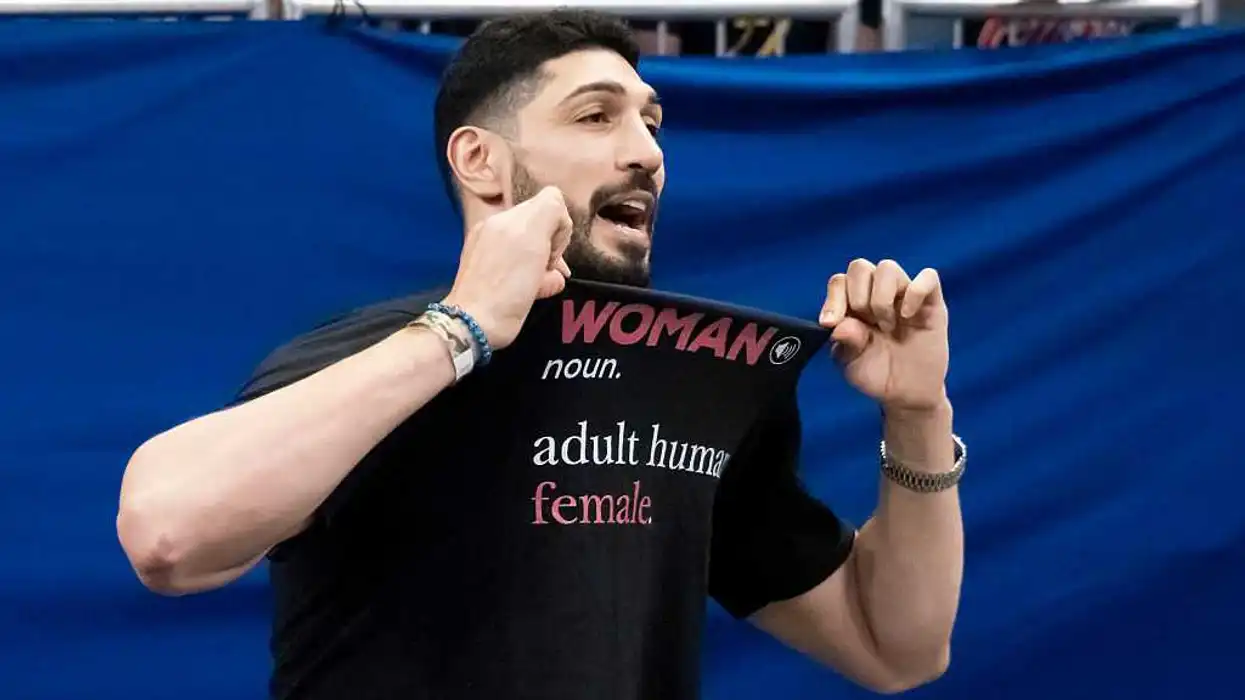 Joseph Weiser/Icon Sportswire/Getty Images
As Bishop Robert Barron has written in a related discussion of deconstruction, “There is no final truth, no ultimate settling of a question. There is always something new.” Once inherited categories are treated principally as products of power, even apparently basic questions — “What is a woman?” — become open to endless renegotiation.
Judith Butler’s 1990 book “Gender Trouble” brought these currents directly into gender theory. Butler argued that gender is performative and challenged the stability of the sex/gender distinction and traditional sex roles.
This does not prove that every person who supports transgender rights is a Marxist, or that modern gender theory can be reduced to a single ideological source. It does show why the rhetoric so often sounds revolutionary rather than merely therapeutic.
When transgender discrimination is called the “civil rights issue of our time,” the claim places gender identity within a familiar oppressor-oppressed framework. Christopher Rufo has said that some trans activists explicitly describe their movement as a successor to Marxism, with transgender people cast as a new revolutionary vanguard.
That is the more defensible connection. Gender ideology did not simply fall out of “The Communist Manifesto.” It developed amid intellectual traditions that increasingly interpreted social categories through power, oppression, liberation, and the deconstruction of inherited norms.
Its political alliances reinforce the point. Gender politics routinely appears among the current things the activist left leverage as part of its war on capitalism and Western civilization generally. Jonathan Butcher has noted how intersectionality explicitly links “identity movements based on gender and racial liberation” through a common theory of social domination.
From Black Lives Matter co-founder Patrisse Cullors describing herself as a “trained Marxist” to the pro-Hamas red-green alliance that includes Queers for Palestine, the coalition repeatedly joins causes that appear unrelated on the surface but share a politics of oppression and liberation.
The issue is not always literally the issue. Increasingly, the issue is the revolution.