Wwing/Getty Images
After a week like this one, many Americans arrive at Sunday carrying more than they can easily name.
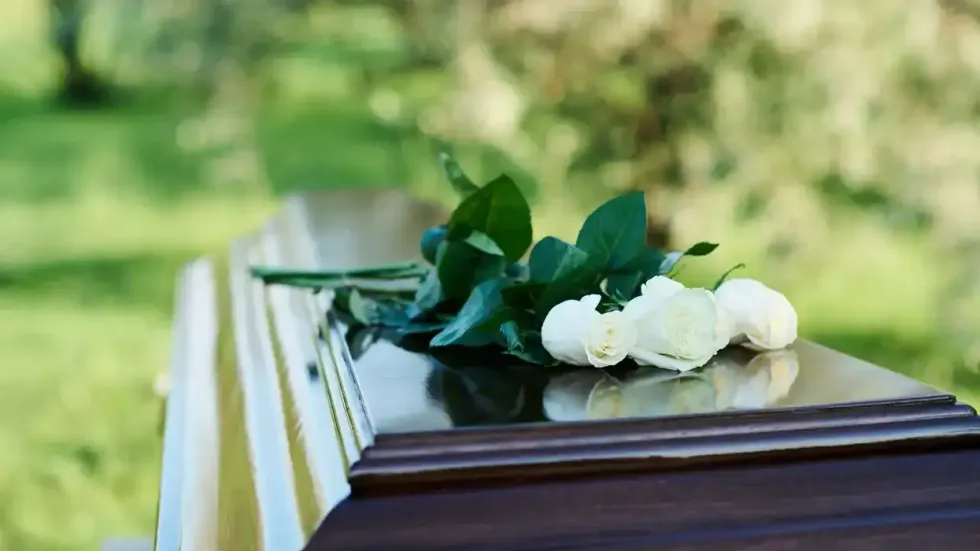
This past week marked one year since Charlie Kirk was assassinated while speaking to students at Utah Valley University. The following day, our nation observed the 25th anniversary of the September 11 terrorist attacks, when 2,977 people were murdered in New York, at the Pentagon, and near Shanksville, Pennsylvania.
May we draw as near as circumstances allow, sit with them in their sorrow, speak the names of those they love, and remind them that grief does not have to be carried alone.
Though different in scale and circumstance, both remind us that evil never remains theoretical. Eventually, it enters a crowd, a cockpit, an office, a home, leaving behind blood, unanswered questions, and an empty chair.
Public trauma always becomes private sorrow, one household at a time.
We understandably respond with investigations, arguments, and demands for accountability. We should seek truth and justice. Evil should be named without apology. But grief should not have to pass an ideological examination before we treat it as grief.
In 1903, a Presbyterian minister named Cleland McAfee faced a brutal week of grief when his brother lost two young daughters to diphtheria within 24 hours. Because the disease was highly contagious, the family’s home was quarantined.
McAfee was a preacher, theologian, musician, and choir director. He stayed up late, considering what he could possibly say or sing the following Sunday.
From his own sorrow, he wrote the words and music to a hymn:
There is a place of quiet rest,
Near to the heart of God,
A place where sin cannot molest,
Near to the heart of God.
The modern ear catches on the word “molest.” Today, it almost always refers to sexual abuse. McAfee used the word in its older and broader sense: to harass, disturb, persecute, or injure with hostile intent.
RELATED: Why I played ‘Zip-a-Dee-Doo-Dah’ at a funeral
 Pressmaster/Getty Images
It is a jarring word, but it is the right one.
Sin does indeed molest. It does not knock politely before entering. It intrudes, violates, and corrupts. It turns passenger planes into weapons and political disagreement into bloodshed. Then it continues its work by tempting us to mock the dead, exploit the bereaved, turn suffering into content, and answer hatred with still more hatred.
McAfee did not write his hymn because sorrow had passed his family by. He wrote it because sorrow had come through the door. His nieces were dead, his brother’s home was darkened, and the family remained isolated by disease.
He did not attempt to explain why the children died. Instead, he pointed his brother toward the only refuge death could not breach:
O Jesus, blest Redeemer,
Sent from the heart of God,
Hold us who wait before Thee,
Near to the heart of God.
The choir learned the hymn at its Saturday evening rehearsal. Because the home remained quarantined, they could not go inside to embrace the family or sit beside them.
So they came as close as they could.
Standing on the lawn beneath the night sky, the choir sang through the walls. They did not repair the loss or answer the family’s questions. They simply placed themselves as near to the grieving family as the quarantine allowed, and they sang.
That image has stayed with me for years: a grieving family inside, the church outside, darkness surrounding them, and a hymn passing through the walls.
Twenty-five years after September 11, families still gather to read the names of those who died. One year after Charlie Kirk’s murder, his wife, children, friends, and colleagues continue living with the chair he no longer fills.
Their persistent grief is not weakness. It is the continuing cost of love.
McAfee’s hymn does not promise that sin cannot reach our bodies, families, or country. The circumstances that produced it would disprove such a claim. The place near to the heart of God is not where Christians become immune to suffering. It is where we find refuge when suffering comes and assurance that evil does not possess ultimate authority.
RELATED: The oldest cure for doomscrolling in one lyric
 CorbalanStudio/Getty Images
Christ stepped into this broken world and took its worst. The cross shows us what sin does; the empty tomb shows us that sin does not get the last word.
Most of us will never address a grieving country, but nearly all of us know someone living inside a darkened house.
The lawn may be literal, or it may be a kitchen table, a church pew, a telephone call, or a quiet visit where very little is said.
After such a solemn week, and as battles rage within and beyond our borders, may we enter the coming days looking for the brokenhearted. May we draw as near as circumstances allow, sit with them in their sorrow, speak the names of those they love, and remind them that grief does not have to be carried alone.
And when words fail, perhaps we too can stand on the lawn and sing.