Photo by Jeremy Weine/Getty Images
Like a highly contagious mind virus, democratic socialism is spreading fast among young Americans. The numbers, the polls, and the election results all point in the same direction: A growing share of the next generation is not just flirting with socialism — it is warming to it.
One poll from late 2025 found that nearly 60% of Americans ages 18 to 24 — and well north of 50% ages 25 to 29 — said they would support a democratic socialist for president in 2028. That support even included about a quarter of self-identified Republicans and 42% of moderates.
America needs a return to proper free-market economic policies — and a cultural renewal that treats liberty not as a slogan, but as a birthright worth defending.
Recent local elections reinforce the point. Democratic socialist mayors on both coasts — Zohran Mamdani in New York City and Katie Wilson in Seattle — won close to 80% of the youth vote in their respective races.
Plenty of institutions deserve blame for this trend. Public schools. Teacher unions. Academia. Legacy media. Social media. Hollywood. Parents too. Each has played a role in shaping how young Americans see the country and what they think “fairness” requires.
But focusing on those inputs misses the deeper driver.
A troubling share of young Americans believes the economy is rigged against them.
In late 2025, the Heartland Institute and Rasmussen Reports conducted polls on how young Americans view the U.S. economy and the American dream. The results were bleak. Only about 2 in 10 young Americans said they expect their economic future and personal happiness to be better than their parents’. Roughly three-quarters said housing costs have reached a “crisis level,” and they believe their odds of owning a home are shrinking by the day.
That despair didn’t come from nowhere.
This generation came of age in the aftermath of the Great Recession. They watched corporate bailouts become routine and “crony capitalism” harden into a feature of the system. They watched politicians arrive in Washington broke and leave rich, often by playing stock-market games that would end careers in the private sector.
They grew up under the shadow of foreign wars that burned trillions on “nation-building” while much of America decayed. They watched the dollar lose value as Washington normalized out-of-control spending, money printing, and debt accumulation. They watched manufacturing shrivel while leaders prioritized globalism over domestic production, dimming the prospects for secure, high-paying jobs.
RELATED: The party that made life more expensive wants credit for noticing
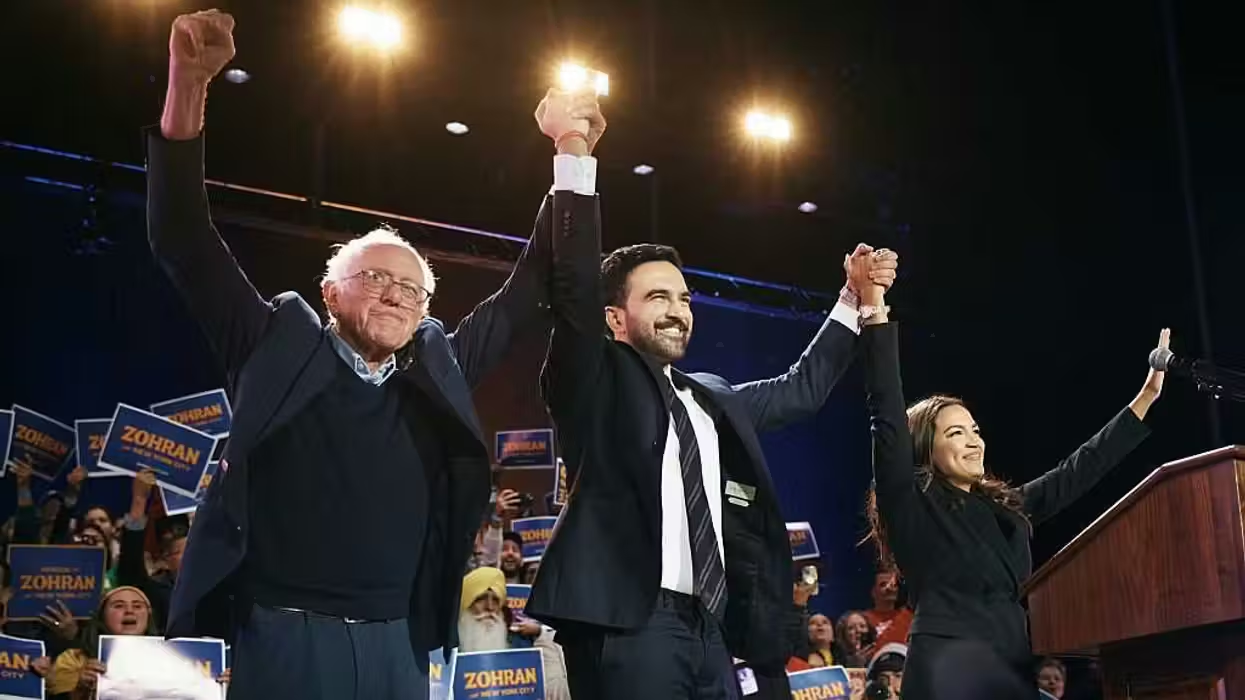 Photo by Andres Kudacki/Getty Images
Put it together, and you get a generation primed to reject the system — and open to any ideology that promises to punish the winners and rewrite the rules.
Layer on the post-9/11 surveillance state, and the picture darkens further. Many young Americans have never lived in a country where privacy and liberty felt secure. They’ve grown numb to constant monitoring and to platforms that decide what they see, share, and believe. It should not surprise anyone if their commitment to free speech, property rights, and personal liberty weakens under that pressure.
That is why diagnosing the rise of democratic socialism requires more than blaming schools or Hollywood. Those are symptoms and accelerants. The cause is deeper: America has drifted away from too many of the principles that made it a beacon of freedom and a land of opportunity.
If that is true, the remedy won’t come from scolding young Americans for their politics. It will come from proving, again, that free markets can build a stable life, that honest work can buy a home, and that the rules apply to the powerful as well as the weak.
To reduce the appeal of democratic socialism, America needs a return to proper free-market economic policies — and a cultural renewal that treats liberty not as a slogan, but as a birthright worth defending.