
© 2026 Blaze Media LLC. All rights reserved.
Bugonia (2025)
Aliens, conspiracy theories, corporate power, and a kidnapping gone spectacularly wrong. In the hands of director Yorgos Lanthimos, paranoia becomes dark comedy.

Director: Yorgos Lanthimos
Writers: Will Tracy, Jang Joon-hwan
Stars: Emma Stone, Jesse Plemons, Aidan Delbis
Lanthimos has spent the better Part of a decade making movies for people who describe hotel lobbies as “liminal spaces.” Bugonia finally gives him a premise bulletproof enough to transcend his own ironic detachment. Two conspiracy-mind ed men kidnap a pharmaceutical executive because they believe she’s an alien bent on destroying mankind. In older Hollywood, this would have been a paranoid thriller. In modern Hollywood, it becomes almost a satire about the sort of people who still believe corporations might be telling them the truth.
There’s something admirable in the film’s willingness to let the insanity breathe. The picture understands that modern life has become so synthetic and managerial that even lunatics often sound sane. Lanthimos shoots everything with the antiseptic chill of a fertility clinic waiting room. The performances are detached, funny, and vaguely horrifying, and Emma Stone and Jesse Plemons are electric on screen. They are both chameleon actors who can create nuanced and remarkable characters.
Lanthimos is an extraordinary talent who makes very strange movies about the modern condition. From The Favourite to The Lobster to Poor Things (two of those movies also starring Emma Stone), he has established himself as one of the greatest working directors. Those movies also have very smart things to say about the current era, but something of their Lynchian characteristics felt just short of true genius. This film feels like he was able to marshal his talents into a movie that works on numerous levels and isn’t strange just for the sake of art.
It’s a movie about a civilization that no longer trusts reality but also no longer trusts itself enough to revolt. The strangest thing about Bugonia is not the conspiracy, it’s how plausible the conspiracy now feels.
Project Hail Mary (2026)
A middle-school science teacher wakes up alone in deep space with no memory, one impossible mission, and the fate of two civilizations resting on his shoulders.
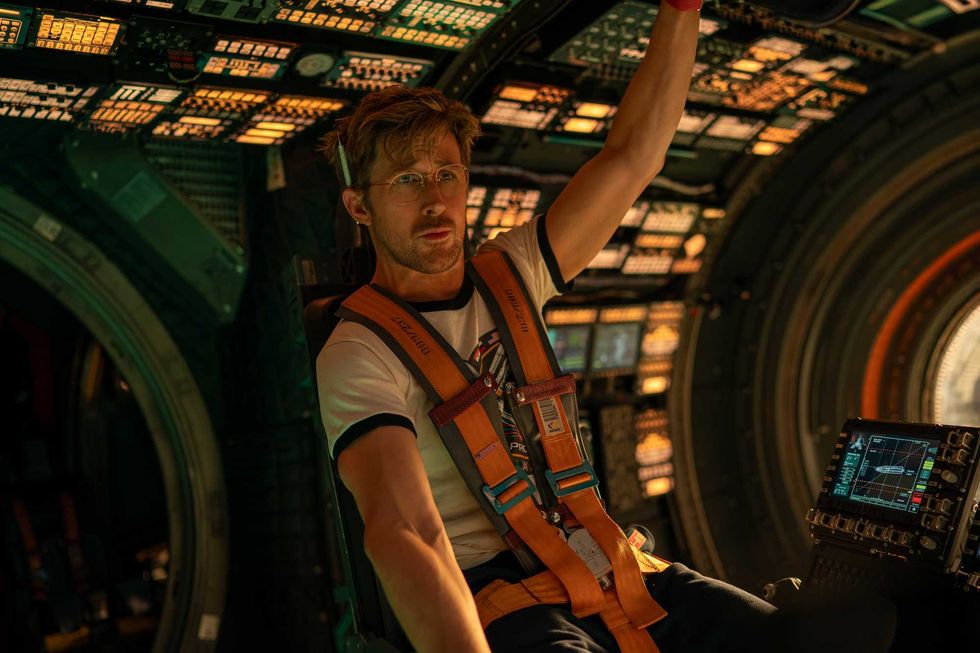
Directors: Phil Lord, Christopher Miller
Writers: Drew Goddard, Andy Weir
Stars: Ryan Gosling, Sandra Hüller, James Ortiz
Hollywood rarely makes films about competence anymore. Most modern heroes are either broken antiheroes or sarcastic adolescents trapped in adult bodies. Project Hail Mary remembers the old pleasure of watching an intelligent man solve difficult problems under impossible pressure. Modern films have lost touch with a key component of storytelling; characters need to be either highly competent or charismatic. The litany of losers Holly wood has shoved on us for years is quite tedious and causes the audience to never care about them.
The original book written by Andy Weir, who wrote The Martian, is a rip-roaring sci-fi adventure worth reading. However, I was curious if the film could pull off the alien, who becomes the emotional heart of the film as he races to save his own civilization. The directors wisely ditched the CGI to use puppets and practical effects to create a highly original, yet very endearing, alien creature.
Ryan Gosling plays a schoolteacher-turned-astronaut tasked with saving Earth from extinction. The premise sounds absurd until the film’s engineering precision wins you over. This is unapologetic hard science fiction in the tradition of The Right Stuff and Apollo 13, stories where intelligence, courage, and technical mastery are treated as virtues.
Lord and Miller wisely restrain their usual impulse toward irony. The movie works because it treats human ingenuity with sincerity. Even the extraterrestrial friendship at the center of the story avoids the sentimentality that infects so much modern entertainment. Instead, the movie is allowed to deepen, and by the end, we deeply care for the characters.
A reminder that civilization survives because somewhere a capable man is still doing math.
Good Luck, Have Fun, Don't Die (2025)
An ordinary man discovers the fate of humanity may depend on him, then reacts exactly as most people would: with confusion, panic, and growing suspicion.
Director: Gore Verbinski
Writer: Matthew Robinson
Stars: Sam Rockwell, Juno Temple, Haley Lu Richardson
Lifting from Ezra Pound (“artists are the antennae of the race”), Marshall McLuhan referred to culture’s creatives as society’s “early warning systems”—akin to the frontier monitors that bleep out an alarm a few minutes before the incoming tactical nukes do their business. It’s a metaphor with especially sharp teeth in what we’re told is, like it or not, the dawning AI age: if we don’t reassert ourselves over our future, it won’t be long before we’ll need, well, the only technology that we can imagine is even more powerful . . .
Yes, Verbinski—of Pirates of the Caribbean fame—delivers us into the hands of Sam Rockwell’s post-apocalyptic Jack Sparrow, via time-travel tech deployed by our unhoused-looking hero to once and for all beat the AI at its own game. This being a pirate-out-of-water story, Rockwell—wearing a getup that rivals Bruce Willis’s 12 Monkeys time-travel suit—seems condemned, like a digital Flying Dutchman, to endlessly fine-tune his world-saving efforts. Yet he’s sure that with just a few more teleports to one strangely significant diner, he’ll finally hit on the perfect AI-slaying crew.
Suffice it to say, trouble, surprises, laughs, tears—and a slyly devastating sub plot involving the extremes of parental grieving—ensue. But the crescendo is compromised by the same irony-poisoned, fantasy-loving secularism that plagues so much contemporary cautionary sci-fi. There’s much to chuckle grimly about, but little to hope for, and nothing, in the end, to trust.
“A pirate’s life for me,” sing the “beggars and blighters and ne’er do-well cads” of the source material ride; “aye, but we’re loved by our mommies and dads.” Verbinski slams the door on that easy exit, pointing all of humanity toward the Dutchman’s fate. Cautionary tale, or curse? At least he’s got us asking.
The Animal Kingdom (2023)
A mysterious mutation is transforming ordinary people into animals, but the real story is what happens to love, family, and civilization between human and beast.
Director: Thomas Cailley
Writers: Thomas Cailley, Pauline Munier
Stars: Romain Duris, Paul Kircher, Adèle Exarchopoulos
French cinema has always understood that the line between man and beast is thinner than civilized people prefer to admit. The Animal Kingdom takes that old European anxiety and turns it into a surprisingly moving piece of speculative fiction. French movies are incredible when they mix the absurd with the mundane to tell a story about who we are as people. The film imagines a society where human beings slowly mutate into animals. Some sprout feathers. Others develop claws or fur. The government treats them as medical problems to be managed and hidden away. The transformations are frightening not only because they are grotesque but also because they strip away the illusion that modern life has conquered nature. When faced with the raw power of the natural world, we’re forced to reckon with how illusory our seeming dominance is. The terror of the creatures and the overall strangeness of the story is grounded by a beautiful father-son story. As they journey to find their lost wife and mother, they form a bond that is both surprising and endearing. The creature effects are wonderfully executed, both disconcerting and stunning, and really help to keep the tension ramped up. What elevates the film above metaphor is its emotional seriousness. The father-son relationship at its center grounds the story in something recognizably human: the terror of watching a loved one become unreachable. Cailley avoids the usual activist sermonizing and instead asks an older, sadder question. What obligations do we owe people once they cease to remember us? What is left of a human soul when they’re no longer recognizable? There is an obvious Alzheimer’s motif but it asks this question in a way that stays with you long after watching it. A beautiful, melancholy film about the fragility of civilization and the animal waiting patiently beneath it.
The Substance (2024)
Youth is wasted on the young, but beauty may be wasted on everyone. This savage body-horror sensation turns Hollywood’s obsession with aging into the grotesque.

Director: Coralie Fargeat
Writer: Coralie Fargeat
Stars: Demi Moore, Margaret Qualley, Dennis Quaid
If sci-fi tells of what’s coming, horror reveals what already happened—the nightmarish reality of the irreversible. What draws many to faith is the promise of forgiveness through repentance, not retconning, but in Fargeat’s all-consuming feminine rejoinder to Cronenberg, Lynch, and the twenty-first century American dream, revenge—against yourself, against your audience, against the flesh—is all that remains to serve up against the irretrievability of the younger, happier, more foolish past.
Margaret Qualley bewitches as the on-again, off-again hyperreal substitute for the implosive Demi Moore, a TV fitness celeb forced into somewhat early retirement by a reptilian Dennis Quaid. Desperate to claw a Pyrrhic victory from the jaws of defeat, Moore succumbs to the temptations of the titular serum—the peptide stack from hell—and as the fur begins to fly, no one— least of all you, the viewer, who, Fargeat mercilessly insists, also wants to have it both ways—is spared.
By the time we part ways with what’s left of Moore, nary a sacred cow—our cults of fame, entertainment, youth, beauty, age lessness, and objectification—is left standing. Melted down under the deceptively sexy and deeply brutal assault of Fargeat’s audiovisual flamethrower, the film suddenly seems to be less about the imaginary substance of our body hackers’ desire, and more about the unholy ooze our society’s many failed experiments in modern living have become.
Bereft of all materialistic strategies to distract from the void within, stardom stops being a role a human being can fill, and ascends to an abstract and beatific form romanticizing the inhuman cosmic. With a barbaric, blood-spitting yawp, Fargeat re visits Baudrillard’s tale of the overcopied symbol unglued from its once living, breathing referent. When the monstrous third act hits, you’ll be sorely tempted to look away. Peek!
28 Years Later (2025)
Nearly three decades after civilization collapsed, humanity has learned to survive the infected. What it has not learned is how to remain human.
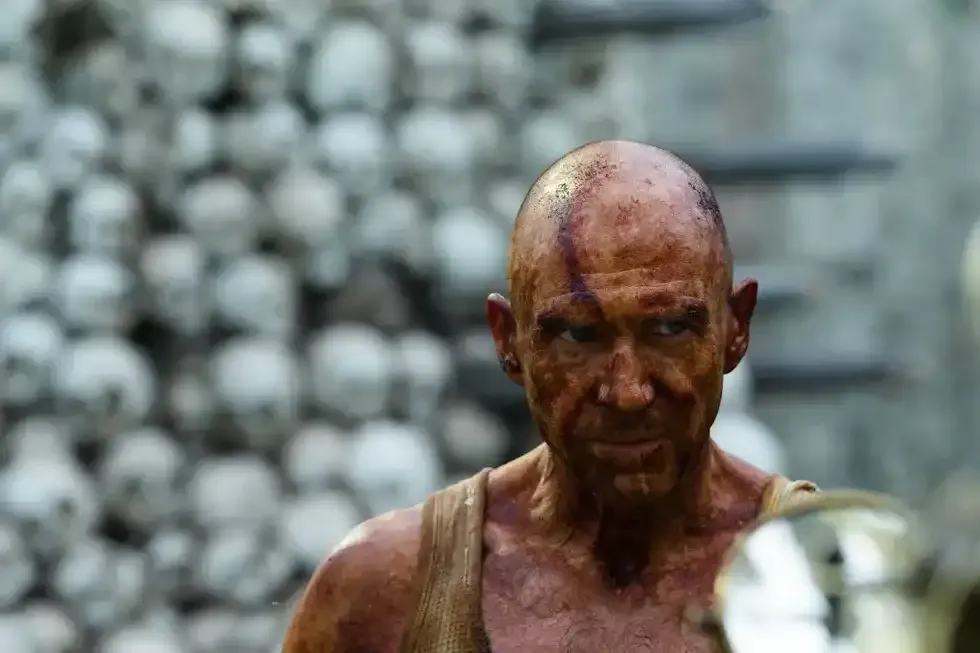
Director: Danny Boyle
Writer: Alex Garland
Stars: Ralph Fiennes, Jodie Comer, Aaron Taylor-Johnson
Bone deep into a depopulated, disillusioned, and defeated decade, the beleaguered Yookay’s veteran director Danny Boyle does once again what he did nearly 28 years ago: obliterate your expectations of what a zombie movie can be.
Those scrambling, slavering revenants are back in all their wretched and repulsive unglory, as are the heart-pounding set pieces that, in spite of themselves, leave both the film and you, the viewer, with gas in the tank, enough, somehow, to just keep going. This time, however, Boyle maintains a pure, high signal of hope even in pitch-blackest moments, which come at the hands of the human survivors, not the raging dead.
True to series lore, these loping monsters aren’t reanimated, they’re infected, a fact that implies the possibility of a cure, which is where Ralph Fiennes’s heartrending mad doctor comes in, patiently turning the tide of apocalypse, one body, compound, and blow-dart at a time. Until, of course, the heroes and villains beyond the pale of his hermitage begin to converge . . .
It is hard to wrap one’s head around the technical feats Boyle musters in this, strangely his life’s work. But it’s all in ser vice of laying bare the futile ways we de fend ourselves against the deepening sense of untenability infecting western civilization. Wounded and mourning children of all ages struggle to carry on, not so unlike the starving infected shown dragging themselves toward the occasional grub twisting in a mossy hole or atop ruined stonework.
It’s territory that plunges deep into spiritual seas, plumbing the realms of ancestral memory, familial archetypes, and the ultimate questions. At the heart of it all is self-sacrifice, our mysterious and paradoxical answer to mortality’s chilling call.
Want to leave a tip?
We answer to you. Help keep our content free of advertisers and big tech censorship by leaving a tip today.