© 2026 Blaze Media LLC. All rights reserved.
Americans are obsessed with their health. Virtually overnight, micro plastics, endocrine disruptors, and seed oils have entered the mainstream.
But some have been fighting this battle long before Secretary of Health and Human Services Robert F. Kennedy Jr. became the public face of the “Make America Healthy Again” movement, which ushered in an era of widespread skepticism toward Big Food.
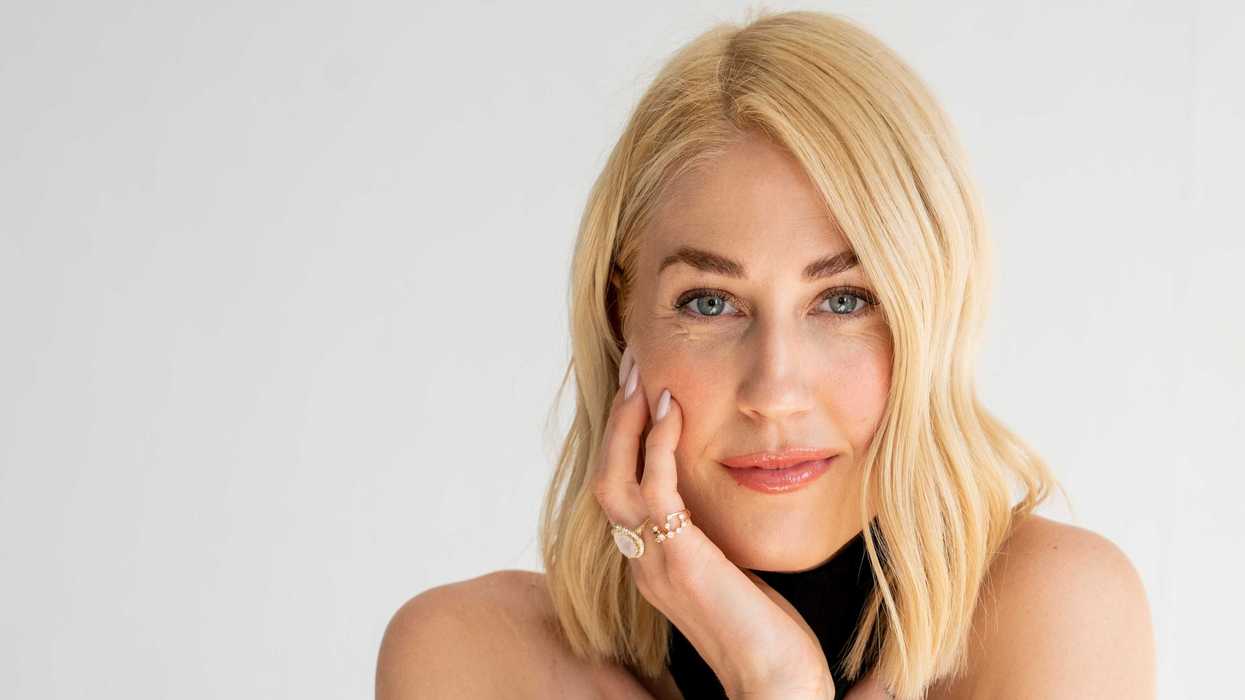
I recently spoke with one of the pioneers of the movement: Courtney Swan, a Texas native who has been on the front lines of food and health long before most Ameri cans knew the battle existed.
Raised during the peak crunchy wave of the 1970s by her mother in Boulder, Colorado, with some time also spent in Italy, Courtney’s childhood diet was a far cry from the processed, convenient junk that dominated most kids’ plates. Much to her dismay at the time, her mother set a table with organic, made-from-scratch meals.
“My mom made everything from scratch, bought all organic, shopped at natural grocery stores—and she did this from the time she had me until she passed away recently,” Courtney told me. “She was a pioneer in holistic eating.”
“I didn’t understand how good I had it as a kid, and I admittedly was mad at my mom a lot. I grew up in the generation of Dunkaroos, and I wanted McDonald’s and Burger King, but my mom said, ‘Absolutely not,’” she laughed.
When Courtney eventually left for college, she said goodbye to her mother’s health standards and adopted the stereo typical college kid fare. The detrimental effects on both her body and mind were swift.
“I found myself gaining weight, I had acne that I’d never had before, I was lethargic, I couldn’t focus in school,” she recounted.
This sudden health crash sparked her passion for the nutrition her mother had long prioritized. She had no idea that this newfound interest would ultimately take her to the heights of what would become one of the most impactful grassroots health movements in American history.
Whole Food
After working in the music industry as a tour manager, Courtney returned to school with the intention of becoming a registered dietitian. Early in the program at Texas State University, however, she realized that the world of mainstream dietetics had been corrupted by powers that did not care about the health of everyday Americans.
“What I saw made me so uncomfortable,” she said. “I was really starting to see just how much Big Food infiltrates everything.”
Deeply disturbed by the deception, Courtney dropped out of the program and, a year later, enrolled at the Maryland University of Integrative Health, where she earned her Master of Science in Nutrition and Integrative Health.
“It really helped me learn how to treat people from the inside out with food first,” she recalled.
Courtney then returned to the music world as a tour manager/nutritionist, touring with Third Eye Blind and Swedish pop star Tove Lo, where she guided the artists and crew on staying healthy and properly fueled during long and grueling tours.
When she was touring with Tove Lo, Courtney got to see the reality of America’s food system up close for the first time.
“The band came to America for a tour, and they all started getting sick and gaining weight rapidly,” Courtney said. “It was severe enough where it was affecting the way they were able to perform. They were all so confused because they were eating the same foods they had eaten in Sweden.”
With Courtney’s knowledge and guidance, the band recovered and regained the good health they had known in Sweden.
“After that very first tour, Tove Lo’s par ents came up to me and said, ‘Oh my gosh, whatever you’re doing, keep doing it! The band looks so much better,’” she shared.
For four years, Courtney toured with the band, but eventually she was beckoned by an even deeper calling: RealFoodology.
Right before the COVID-19 pandemic struck, she walked away from the music industry to pour everything into the website she started in 2011. What began as a mod est personal blog has since ballooned into a powerful multimedia platform, featuring a chart-topping podcast that regularly ranks in the top nutrition shows, a vibrant Instagram community, a robust website with recipes and resources, and even its own “Make Food Real Again” merchandise line.
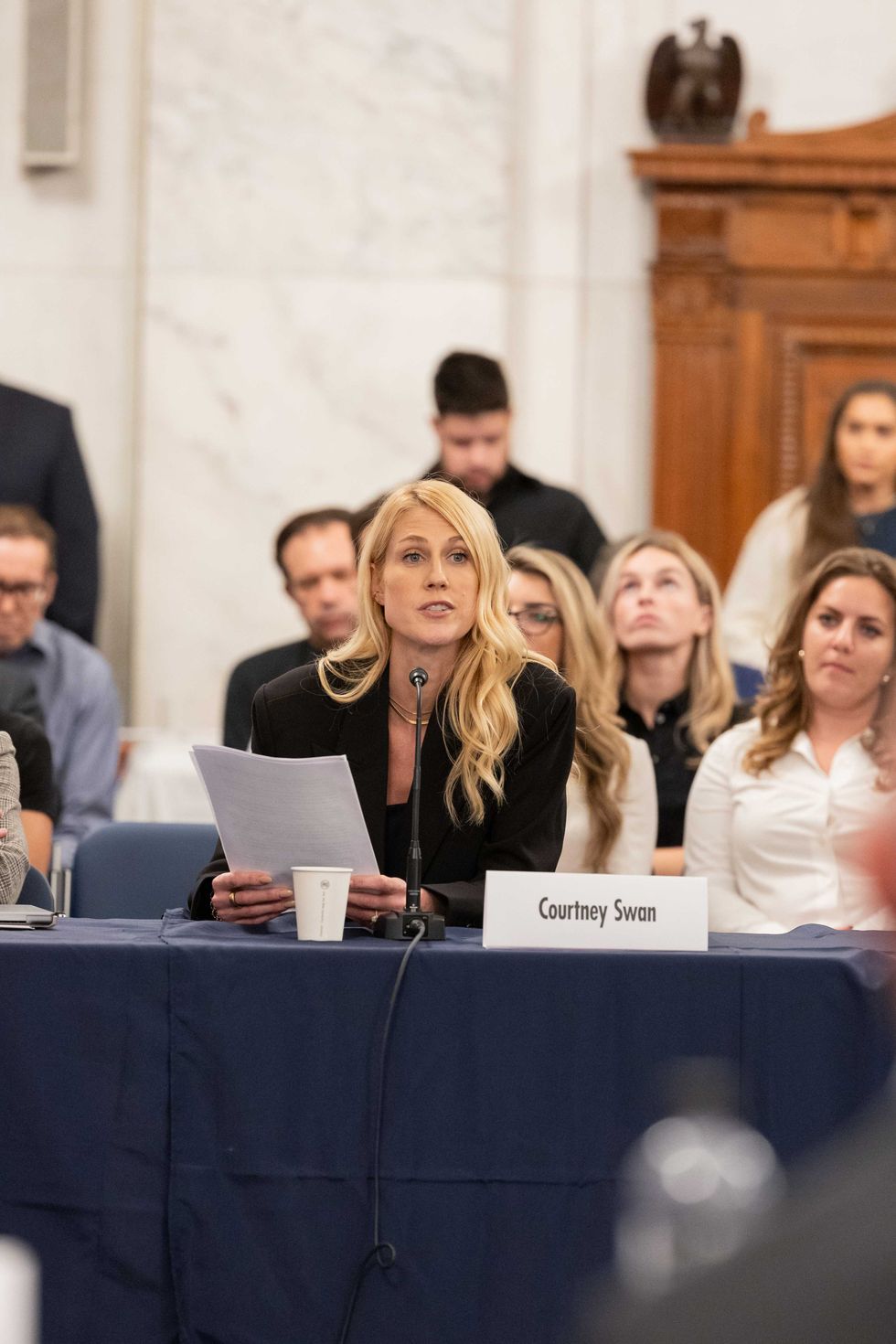
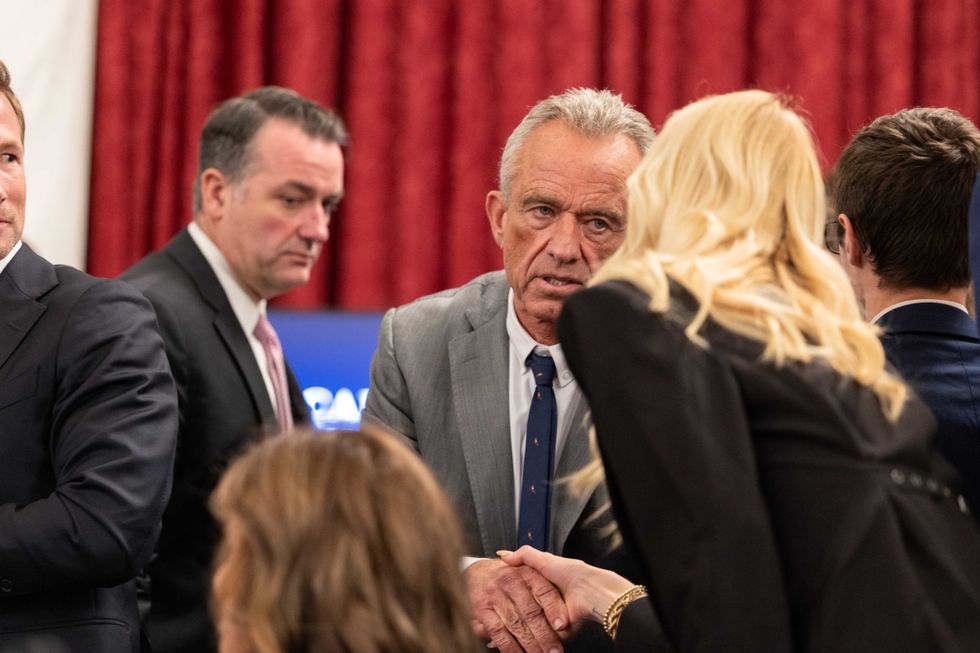
Today, Courtney is deep in the fight to change the way Americans eat. This commitment has led her to testify at Sen. Ron Johnson’s high-profile Senate roundtable on American health and nutrition, travel repeatedly to Washington, D.C., to meet with lawmakers and Environmental Protection Agency officials on pesticide and chemical policy, and become one of the most visible champions of RFK Jr. and the broader MAHA movement.
Her platform remains a rallying cry for everyday Americans to join the fight for real food, health freedom, and systemic reform.
Roundup Revulsion
One battle Courtney continues to make enemies in is the fight against glyphosate—the active chemical ingredient in the widely used weed killer, Roundup.
Despite its documented links to a range of serious health concerns—including non-Hodgkin lymphoma, neurological diseases, metabolic and organ damage, reproductive issues, and gut microbiome disruption—glyphosate remains fully legal in the U.S.
It’s also being actively shielded. In February 2026, President Trump issued an executive order invoking the Defense Production Act to secure domestic production of glyphosate, citing national and food security.
While Courtney confessed that she was infuriated by the move, she made it clear that this is not a Trump issue.
“The reality is the agrochemical companies have their tentacles so deep in our government that this has been a fight with every single president that we’ve had in office since Bush . . . It does not matter if it’s left or right,” she explained.
But Big Ag has long had plans to lock in even stronger protections—essentially the same kind of liability shield granted to vac cine manufacturers in 1986.
Bayer/Monsanto, the world’s largest producer of Roundup, is leading the charge to limit or block lawsuits over glyphosate-related health claims. After spending billions settling lawsuits since the groundbreaking 2018 Johnson v. Monsanto case—in which a California jury found that Roundup caused school groundskeeper Dewayne Johnson’s non-Hodgkin lymphoma and awarded him $289 million—Bayer/Monsanto has been on a mission to secure a blanket liability shield that will protect the company from future glyphosate-related lawsuits.
“They’re going to the federal government saying, ‘We can’t feed the world without glyphosate,’ and that Americans will starve if they don’t get protection,” Courtney said. “It’s total B.S.”
In 2025, Bayer/Monsanto and industry allies tried to sneak a pesticide liability shield provision into the Interior-Environment funding bill, but it was ultimately blocked thanks to people like Courtney and other MAHA voices.
But that did not slow their efforts. Last year, Bayer/Monsanto secured liability shields in Georgia, North Dakota, and Kentucky.
Their ultimate goal for federal protection is pending. The Supreme Court heard oral arguments in Monsanto v. Durnell on April 27 and is expected to issue its ruling by late June. The decision will determine whether plaintiffs can still sue the company in state courts for failing to adequately warn consumers about glyphosate’s cancer risks— even when using the EPA-approved label.
Genetically Modified Propaganda
Thankfully, there are ways Americans can reduce their glyphosate levels.
Because the chemical is prohibited in organic farming, Courtney’s number one tip is to eat organic whenever possible. Even though it’s not a foolproof way to eliminate glyphosate exposure—low-level contamination can still occur through drift, soil and water persistence, or cross-contamination—it remains our “best defense,” she says.
For those limited by budget or access, Courtney’s advice is to eat according to the Environmental Working Group’s “Dirty Dozen” and “Clean Fifteen” lists. Every year, following extensive testing, the EWG releases lists of the 12 conventionally grown fruits and vegetables with the high est levels of pesticide contamination and the 15 with the lowest pesticide residues, which are generally considered safer to buy non-organic.
Our second best defense is activating the body’s detoxification system. Part of Courtney’s glyphosate detox protocol includes regular sauna and exercise sessions that encourage sweating.
“Utilizing those detoxification pathways is a great way to get everything moving and out of your body,” she said.
MAHA Forever
As the war on glyphosate rages on, Courtney insists that our best defense is our unified voices. She pointed to Sen. Mike Lee’s 2025 proposal to sell off millions of acres of federal lands—national forests, wildlife refuges, and wilderness areas—as a powerful example of what collective pushback can accomplish. Lee’s plan sparked such intense bipartisan backlash that he was forced to drop it almost immediately.
“I’m hoping something similar to this will happen with glyphosate,” Courtney told me. “A lot of issues we tend to make political by pointing fingers, but this is affecting all of us. Your fellow human and who they voted for is not your enemy. Agrochemical companies are your enemy.”
The only way we move the needle on glyphosate is to “all band together and get loud,” she emphasized.
But even if the Supreme Court rules against Bayer/Monsanto and allows lawsuits to continue flooding in, Courtney knows the fight is still far from over. For her—and for many in the MAHA movement—the ultimate victory will only come when glyphosate is finally banned, giving Americans the right to buy food that hasn’t been poisoned.
Want to leave a tip?
We answer to you. Help keep our content free of advertisers and big tech censorship by leaving a tip today.