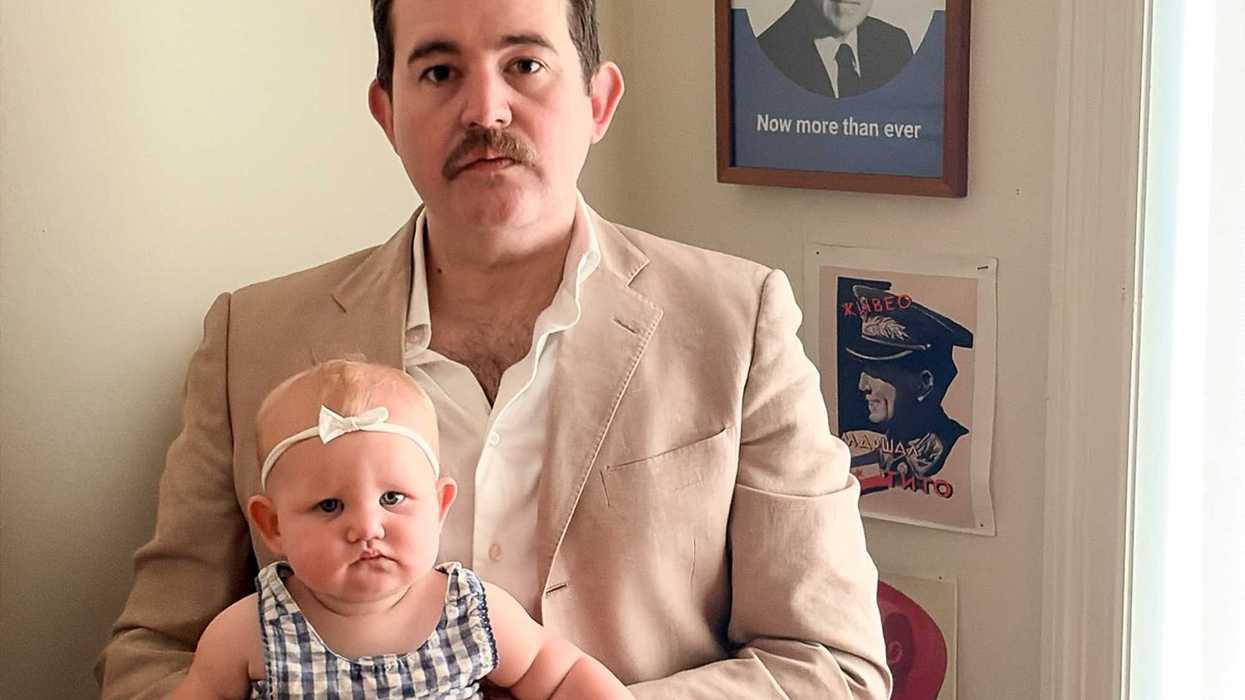
Nick Allen (right) has cultivated an impeccable vibe, allowing non-heterodox thinkers of all stripes to have a place of their own. Photos by Marcus Maddox
The first time I went to Sovereign House, I was late to the party in more ways than one. As I exited the East Broadway subway stop on the F train, I was hit by New York's hot, humid July night. I walked through Dimes Square—which had held sway in my mind long before I ever set foot in it—where Canal St. and Essex St. meet East Broadway. After some searching, I found number 185 and looked for a doorbell to ring. I heard a door open below me. Two bohemian-looking men came up from the building's downstairs area, lighting a cigarette as they reached the street. Right building, wrong door. "Excuse me," I said hesitantly, “is this Sovereign House?”
As I went down the stairs, I saw old boxes of beer thrown to the side. Maintenance, I assumed, was minimal. I opened the door and was immediately hit with a pungent smell. Hundreds of drinks spilled on a car pet which had seldom, if ever, been cleaned. The space was dimly lit. A telephone booth sat in a corner, dozens of stickers hastily pasted on it. Crypto, nu-magazines, Marxist jokes, Trump, and Pepe the Frog were all present—a testament to the variety of those who had passed through. To the right was a magazine shelf with every publication a dissident could want.
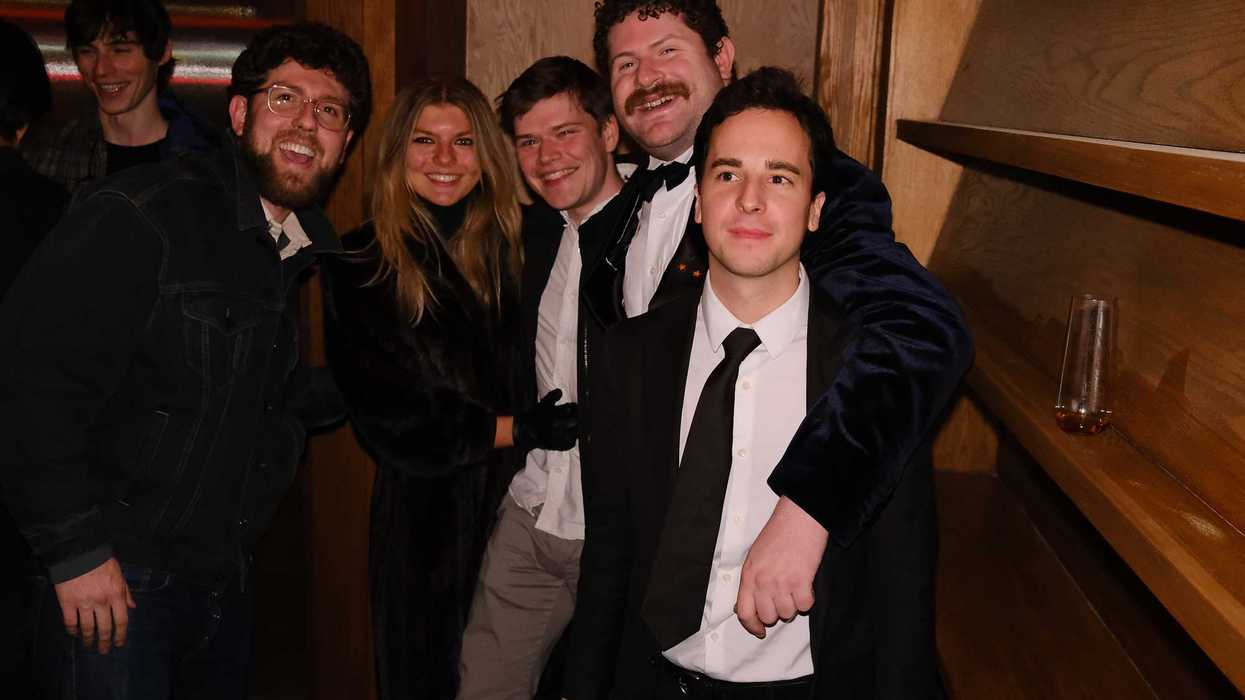
 The Reigning spot to conversate and mingle in New York City.Marcus Maddox
Downstairs, in a better-lit part of the space, there was a huge bookshelf with every book I'd seen discussed online for years, from Joe Allen's Dark Aeon and a signed copy of Curtis Yarvin's Unqualified Reservations to James Poulos’s Human Forever and Paglia's Sexual Personae. I was definitely in the right place, but it wouldn't remain the right place for long. Nick Allen, Sovereign House's proprietor and founder, had decided to close it and open a private members’ club nearby called Reign.
The club sits a few doors west of the old Sovereign House. A discreet sign with a barely visible logo can be seen from the street. Its unassuming façade does not invite walk-ins, which is very much on purpose. Stepping inside, one immediately recognizes that the seediness of “Sov” has been left behind. The tannic, dry smell of varnish and wood has replaced the odor of old alcohol. Next to a handsome glass reception desk, behind which sit National Park–style trinkets, there is a wall for magazines and publications. Downstairs, past a gargantuan buffalo head, is an event space reminiscent of Sovereign House's open floor.
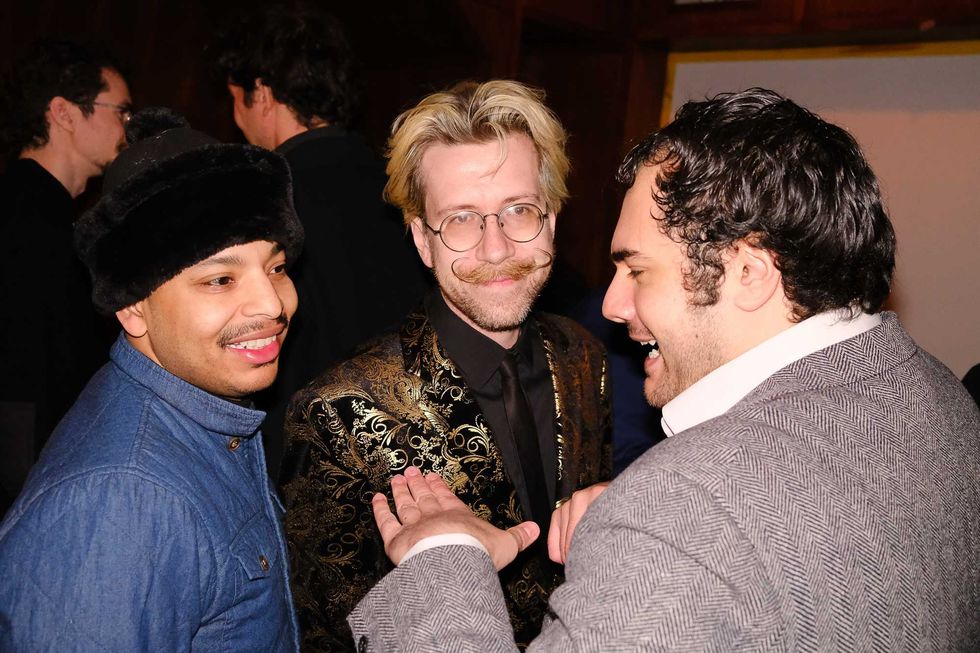 Mustache game is strong. Marcus Maddox
Behind the reception desk, you enter the members’ area. Past a library-style room where guests gather to talk, there is a luxuriously long, well-stocked bar with beautiful glassware. Further into the building, there is an unfinished dining room which promises to host magnificent guest dinners. Murals, which were painted by hand and depict Hieronymus Bosch–esque scenes of nature (reminiscent of a Leonora Carrington painting), stand out throughout the club. A private patio out back accommodates smokers.
Many people who helped build an important cultural movement now observe it from the outside, as it's evolved into something new and necessary.
A few days after moving to New York, I'd been invited to Sovereign House's 2024 Fourth of July celebration. I was anxious to see if the space lived up to the hype and was not disappointed. It did not seem to matter whether you were a current (or former) communist, a tech futurist, a “Trad” or “Lib” Catholic, or a classic, Ivy League-style patriot—people were busy creating and building the “new,” whatever that meant. Nick would “say yes to any group, artist, author, playwright or speaker that needed a venue for free to get their work, art, performance, magazine or ideas out and with an audience of good faith patrons that were genuinely curious.”
As an outsider, “Sov” seemed to be at the center of everything: the nucleus of a burgeoning political movement for cultural renewal that I just had to be a part of. Its denizens didn't make it difficult for me. Before I knew it, I was mixing up drinks behind the bar. The success Nick had in his goal of bringing together extroverted and high-openness people with a desire to form communities “IRL” was immediately evident.
My enthusiasm wasn't widely shared, however. Shortly after I arrived, I was dismayed to learn that the downtown scene was “dead”—or so I was informed. Many claimed that the initial bohemian energy that had fueled the creation of the cultural and political projects that had found a home in Dimes had dissipated long before 2024. What was left were the remnants. Soon, some assured me, we would see the people walk out the door, just as the vibe already had. I took these claims seriously at first. But, as I later learned, many Dimes regulars had a penchant for premature doomerism. Nick Dove described it recently for Vice:
Dimes Square [has been] proclaimed dead yet again. At this point, its wake has lasted almost four years. When I first moved to New York that same amount of time ago, people were already calling it done, telling me I missed the party . . . Sometimes it feels like the scene is as addicted to its self-implosion as it is its self-mythologization.
Although reports of the death of Dimes Square were greatly exaggerated—seeing as there wasn't a single event I attended at which the space wasn't packed—they were supported by the news of its upcoming closure and replacement. Nick, whom I barely knew at the time of my arrival in New York, would share his plans for the club with anyone who would listen, and although the denizens of Sovereign would nod in approval, they would whisper their concerns among themselves. The idea of a formalized private members’ club seemed to contradict the chaotic and effusive energy that had birthed the scene in the first place. The seediness of Sovereign House was part of its charm, a fountain of creative energy. What good would it do to shine a light on its dark corners, where coke was passed around and snorted, where men and women behaved inappropriately, and where conversations too radical even for the already-fringe regulars took place? For Reign to succeed, Dimes would seemingly need to be killed, resuscitated, and metamorphosed into something contrary to its nature.
Conceptually, Reign seemed like an unfeasible project, and among regulars, the anxiety over the impending closure of Sov was assuaged by the apparent insurmountability of logistical setbacks. Where would Nick Allen find the needed space? Could a members club—which would necessarily require member fees—ever be economically feasible when most Dimes Square regulars lacked standard, stable paychecks and had never paid a single dime in attending Sovereign House events? How much time would the construction take? Nick was not unaware of the impending difficulties.
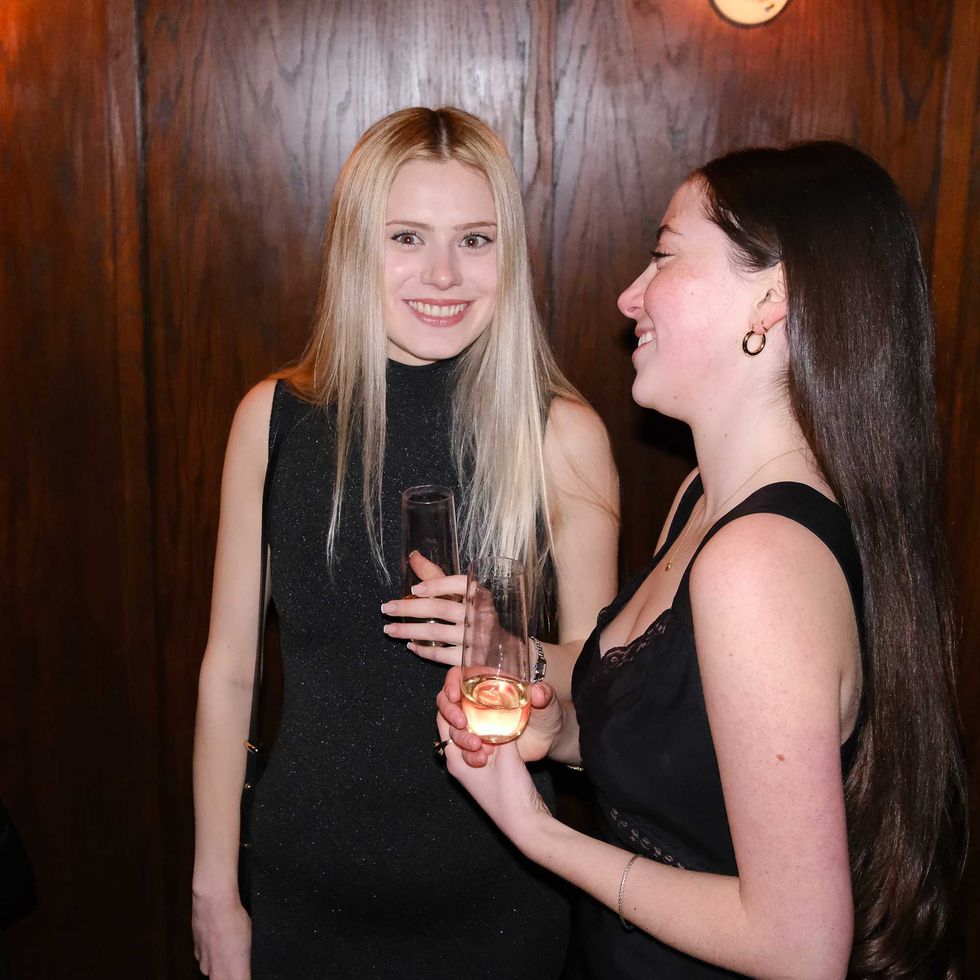 Cocktails and conversation flow equally. Marcus Maddox
“Building something from scratch is the hardest thing you can do because it is the closest thing to alchemy,” Nick told me. "That includes finding a lease, negotiating with a landlord, providing all the documentation to the landlord showing that you're a real person who's gonna take this on for decades, and that you can reliably pay rent for that time. You don't go to the building store or the retail space store and say, ‘I want that one.’” Nick later joked, “Going to Mars for Elon is easier than it is for me to open this.”
In fall 2025, however, amid the cries and doubt of naysayers, Sovereign House closed its doors for good, and Reign opened hers just a few months later.
Despite the skepticism, the club has been a huge success in its short lifetime. The project is working. It is home to a lit any of social gatherings (reading groups, discussion groups, and secretive debate societies) and has also hosted a variety of events since its opening, from events with the venture firm New Founding to magazine issue launches like American Affairs, to speaking events such as a recent one with Tablet editor Jacob Siegel. I've been to all of them. Each one drew a packed house.
The seediness of Sovereign House was part of its charm, a fountain of creative energy.
Brennie Pellegrini, who publishes Field Report, an independent, non-political magazine distributed free offline, with physical copies available only at launch events, held their launch in New York at Reign. When I asked him why he chose to hold his event there, he told me: “Being independent, it's up to generous acquaintances to distribute the magazine in different cities. Nick offered to host and introduce Field Report to his audience. He has already coalesced a curious audience. That's all the reason I needed.”
Reign is also, according to Nick, currently profitable. “We have paid members and cover all of it. Every year, not monthly. We've had enough revenue to cover the entire year. That's what I wanted. And that's a recurring revenue, which means I'm set for decades to come.”
Over the years, Sovereign House and, by extension, Reign have been misconstrued as exclusively right-wing spaces. The diversity of events and guests at both spaces can easily refute this claim, but at the time of Sovereign House's apogee, most peripheral figures in society, culture, and politics were widely considered right-wing. They were naturally drawn to the open-door policy and formed communities with open-minded people receptive to their ideas.
 Marcus Maddox
Many of these people were, surprisingly, disaffected leftists. As Laura K. Field writes in her recent book Furious Minds:
The heart of America's avant-garde horseshoe world came to be known as the Dimes Square scene in Lower Manhattan. This new scene . . . included writers, artists, film makers, and podcasters—most of whom, like the Red Scare duo, delighted in flouting progressive cultural norms and constraints. There was room here for MAGA Republicans and for cynical left-wing aesthetes, for 'canceled' heterodox thinkers, and even for radical Catholics . . . Like other parts of the New Right, the Dimes Square scene was soaked in contrarian irony and 'wink-wink' camaraderie. The general mood seemed to be one of cool nonchalance—but there was also a taste for titillating spectacle, and even LARPing.
Now, many of these people who found a home at Sovereign House look at Nick's current project with confusion, wondering why, when visiting the club's website, it reads, “A non-partisan members club and literary gallery in NYC.”
Nick explains that commercial spaces, such as restaurants, are not ideal for supporting a new generational community of those who'll shape the future, given that those spaces ultimately respond to market needs. Restaurants and bars are quick to kick you out once you stop paying. Something similar can be said of events hosted by think-tanks and publications, which are beholden to political and cultural priorities.
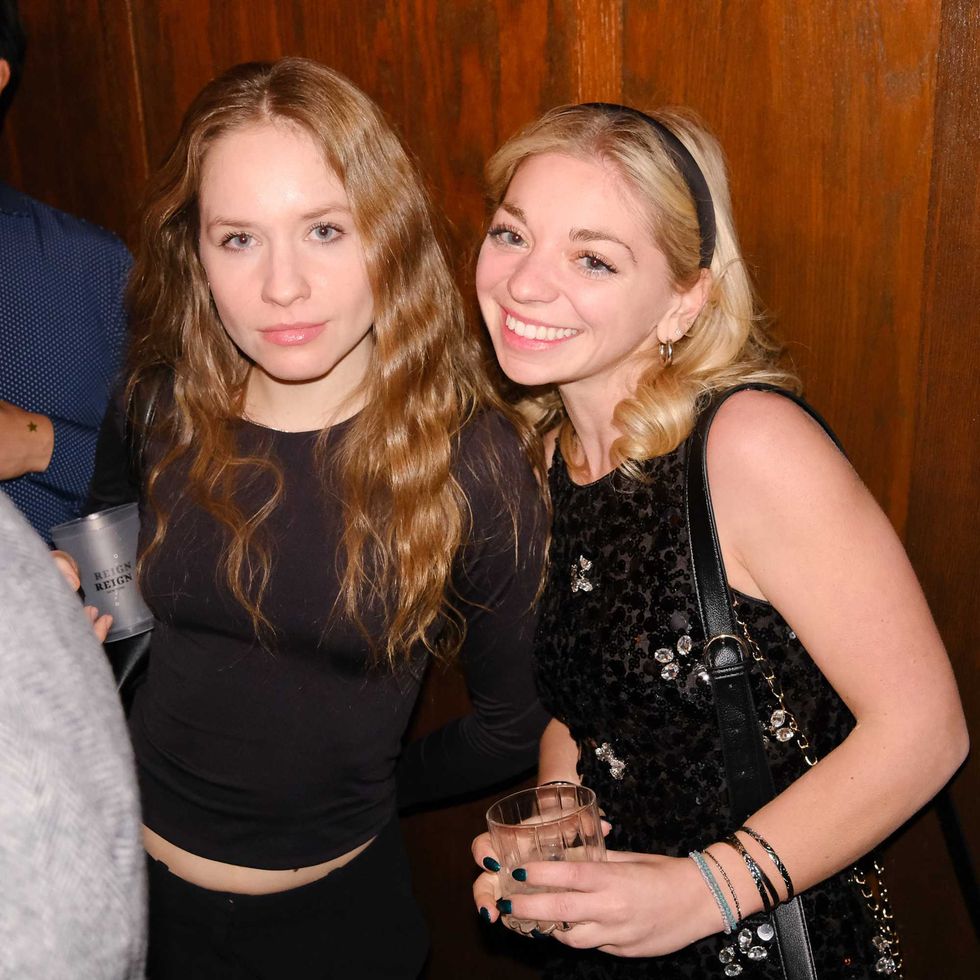 The party is still very much on in Dimes Square. Marcus Maddox
“If you are trying to articulate the discontent within your generation, you're trying to do it within these artistic mediums, you cannot do that by institutions or spaces that have been politically captured or captured by capital,” Nick tells me.
The previous version of Dimes Square itself became subject to the necessities of dissidence, of "outsidedness," looking for ideas that are ever further on the fringes. "So there was an experimental phase, meaning a transgressive art scene,” Nick said. “And then there is a directional phase where it's like, ‘Well, what are we building? What is our output? What are we actually trying to achieve as a group?’”
“A lot has been lost from the Sov days, but that is the nature of evolution. You lose the emergent energy that got you to the next phase,” Nick tells me. “We’ve gone from ‘zero gate’ to now gatekeeping. You get less spontaneity.”
Though it comes at a cost bemoaned by some, evolution also has its benefits: “But that’s also part of what is supposed to be lost because this is more directional. So, what is this direction? In many ways, forming a real community of people who are aware of generational dispossession and are willing to do something about it, to build the future for the better.”
 Marcus Maddox
And, because the cultural loss is generational rather than political, Nick calls this cultural phenomenon an “aligned dispossession,” a sense of loss that transcends the left and the right.
Coincidentally, it seems to Nick, the solution lies in that common ground, that shared sense of community and loss, which naturally leads to Sovereign House’s, and now Reign’s, aversion to partisan politics: “The culture war stuff that is promoted on the right and the left serves as a surrogate activity for success. And what you want is material success, meaning you want to have a family, you want to have a house, those are material things that give you meaning. Instead, it’s being replaced by winning a culture war.”
 Marcus Maddox
The process of finding those who will build the future must be careful and deliberate. Not every membership request is accepted. Joe, a Sovereign House regular and now Reign member, explained: “Nick is, from my perspective, ultimately an artist with space. His medium is cultivating a space. And part of the space that you cultivate is the kinds of people that are in it. Sov was a wild space. Now, he's cultivating Reign like you would cultivate a garden. He's a curator. It's more deliberate, more intentional.”
The community formed by this cultivation is not hypothetical. Joe's story of finding love within the Sov and Reign community was recently told by Emma Green in the New Yorker. When I asked Nick about the moment he knew he had to transition from one to the other, he replied, “I knew that Reign was needed at Joe and Darby's wedding. I saw that people were getting married and finding the love of their lives and going on to generations after them. And that was inspirational to me. And I said, ‘I need to keep this going for decades to come.’”
Although Nick has been insistent on the non-partisan status of Reign, in many ways, he anticipated—and is helping bring about—the next necessary steps for the American right in the era of MAGA politics. Just as with Dimes Square, the COVID pandemic brought about a resurgence of dissident political energy on the right in America writ large. Now this energy must be channeled into a formalized maturity. The success of Reign signals that young Americans are ready and eager to inhabit a new era of institutions, and that they are serious about building the change necessary for a brighter future.
 Marcus Maddox
There is a segment of scenesters who will continue to mourn “the last days of downtown.” Their sadness is, in a way, justifiable. Whatever its effects and motives were, something of import happened in Dimes Square in the early 2020s, and they were a part of it. Many people who helped build an important cultural movement now observe it from the outside, as it's evolved into something new and necessary. The elements that make a scene are as abstruse as they are ephemeral. What is not ephemeral, however, is real community—something that very much still exists in that corner of Manhattan.