Gavin McInnes
Costa Rica's main industry is ecotourism. This was actually discovered in the '50s by Olaf and Karen Wessberg, but they were as pushy as they were prescient and were quickly murdered for telling the locals what they could and couldn't do with their land.
I discovered a relatively uninhabited portion of this great land 40 years later. The town is called Montezuma, though locals call it MonteFUMA, COCA Rica, because everyone there is on drugs. We called it Camp Murderer because all the expats seem to be on the lam. At first glance, it’s a sleepy surf town. After buying a house and living there, I have come to the conclusion that exploration should be restricted to English-speaking Western countries.
 Gavin McInnes
I ran Vice Magazine in the ‘90s, and back then, the industry would die mid-summer and after Christmas, so we’d spend every July and January on the southern tip of Costa Rica’s Nicoya Peninsula, partying on the beach. Me and the guy I founded the magazine with were broke buddies when we first started going there and became rich enemies by the time we stopped. Lawyers had to help us divvy up our property there because we were no longer on speaking terms. We’re still not.
That’s the jungle. That’s Costa Rica. It is extremely beautiful and extremely hideous, with very little in between.
In the ‘90s, getting to Montezuma meant a cheap flight to San Jose, which is still one of the ugliest and most depressing cities in Central America. Every window has bars and the homeless people lying on the hot cement are barely human. The casinos seem to have more prostitutes than patrons, and doing a line of cocaine in front of a cop barely gets a response. You want to get out of there as soon as you land, but the buses are few and far between, and sometimes that means getting a seedy hotel for the night. A typical visit to a local bar involves an expat coming over to your table because he’s starved for American company and is sick of speaking broken Spanish. He’ll regale you with some stories about moving there but, usually after about five shots, he’ll mumble something like, “Why the fuck would a kid be outside in the middle of the street playing at three in the morning?” You slowly realize you’re talking to a drunk driver who accidentally hit a black kid one night and just kept driving.
On the bus the next day, you’re greeted with chickens and hot air as the driver goes so close to the edge of the mountainous terrain that you start apologizing to God. About halfway there, you get to a ferry in Puntarenas, which makes San Jose look like Zurich. Seagulls fight for garbage when the boats pull out, and I once saw a homeless man there fighting with them for food. He had brown, leathery skin that defied race. His beard and hair were in clumpy dreads, and all he wore was a loincloth. The seagulls were his enemies, his competitors, and his peers (none were friends). He was basically a seagull. Can you imagine?
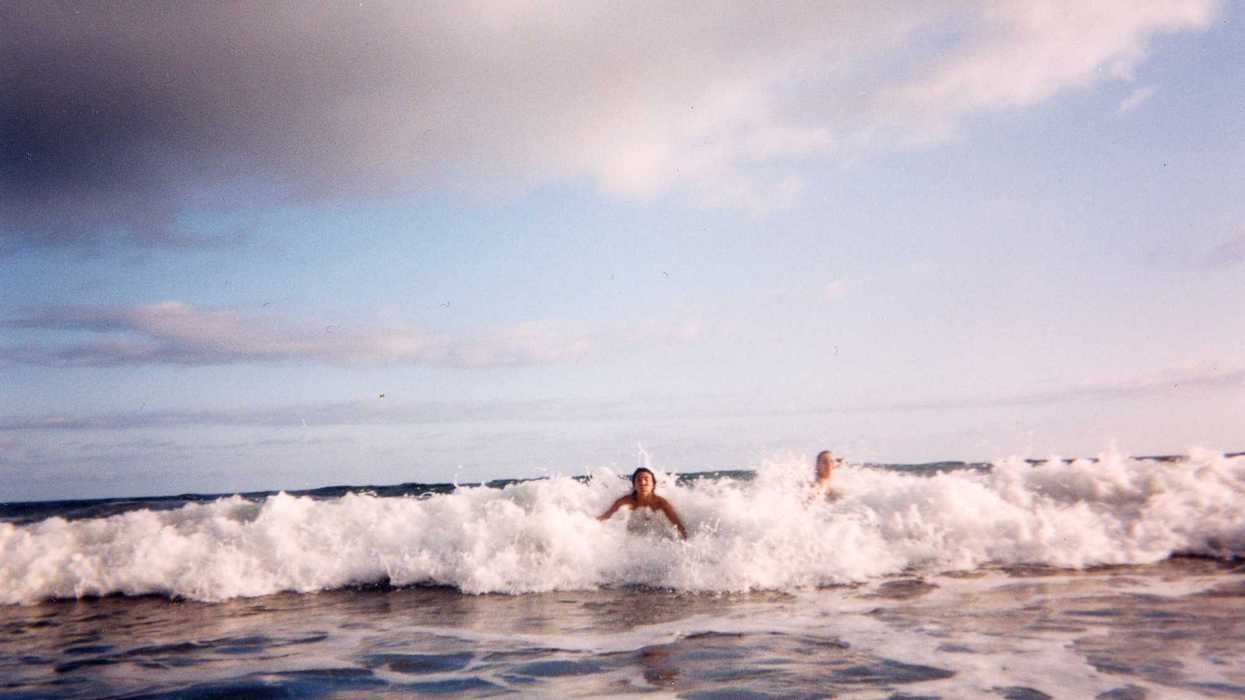
The ferry takes you across the Gulf of Nicoya to Tambor, and then it’s another treacherous bus ride to Montezuma. When the bus drops you off unceremoniously, you feel like someone turned the set of M.A.S.H. into a paradise. There is one bar and a few shops with a banana stand and some guy with a surfboard and a joint in his mouth asking for a light. There are small beaches on each side of the main drag, with a monolithic one 45 minutes through the jungle called Playa Grande (I met an old, nude German there who had been hiding out since the ‘40s—Nazi much?).
 Gavin McInnes
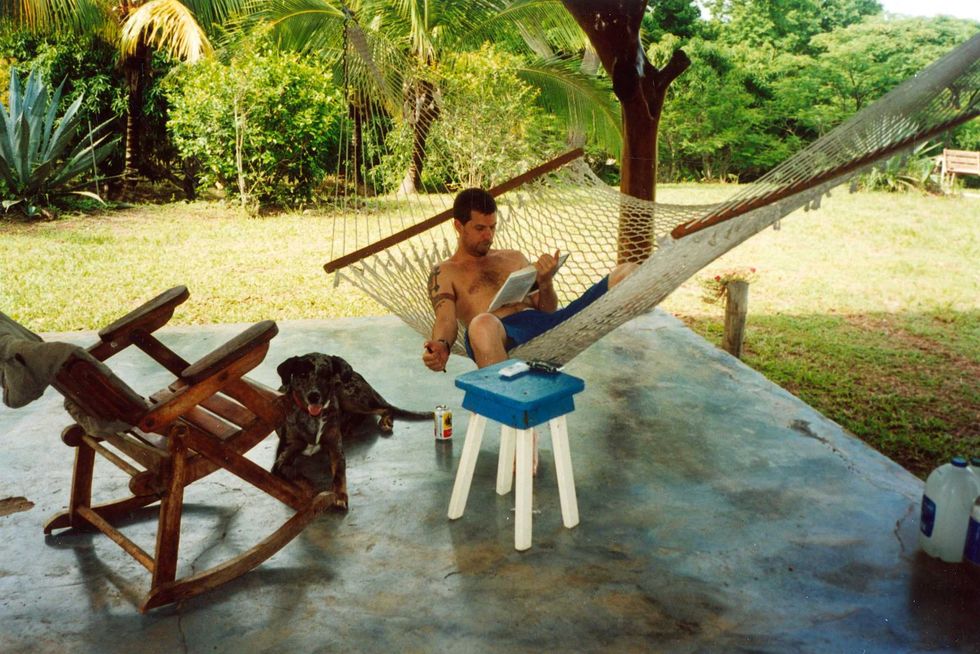
When we first got there, we couldn’t help but notice it was virtually all male. I just described the world of hurt and fear it takes to get there. Pretty girls are generally not cut out for that. So, it was me, my pal, some bizarre European drug addicts, and a bunch of surfers. We loved it. After we became rich, we would fly girls we had just met down there. Nothing seduces a woman like a free trip to the tropics.
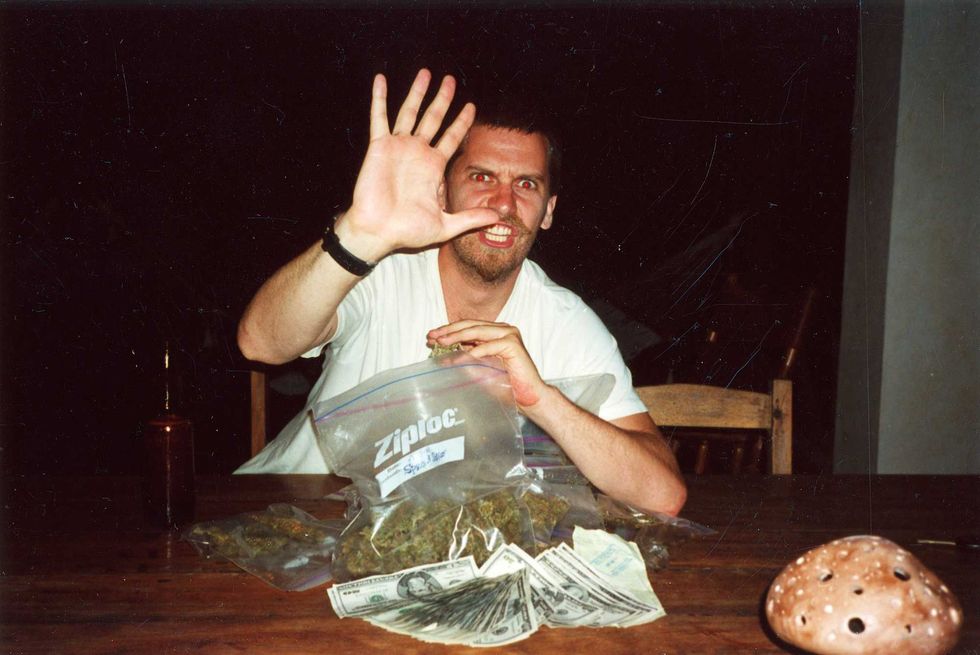
The first local we met there was a blonde kid named Jason, who was on the lam for marijuana grow houses. He was a very successful coke dealer who got out of it after a tip from the police and was only growing pot for fun. This was shortly after Reagan, however, and a pot charge could still get you 10 years, so he absconded. He was your typical blonde surfer with half his body tattooed and a demeanor that sound ed like pugilistic dementia. He’d take us to various spots where, instead of conquering the ocean, we’d die of exhaustion and crash into rocks. Surfing is not possible. You know how scientists say bumblebees defy physics by using such tiny wings to lift such big bodies? It’s the same with surfing. To get to the spot where the waves break, you have to use 100% of your upper body strength, so by the time you get there, you have dead spaghetti arms. I’ve surfed for hundreds of hours and am still considered one of the least good at it in world history. Your mom is probably better.
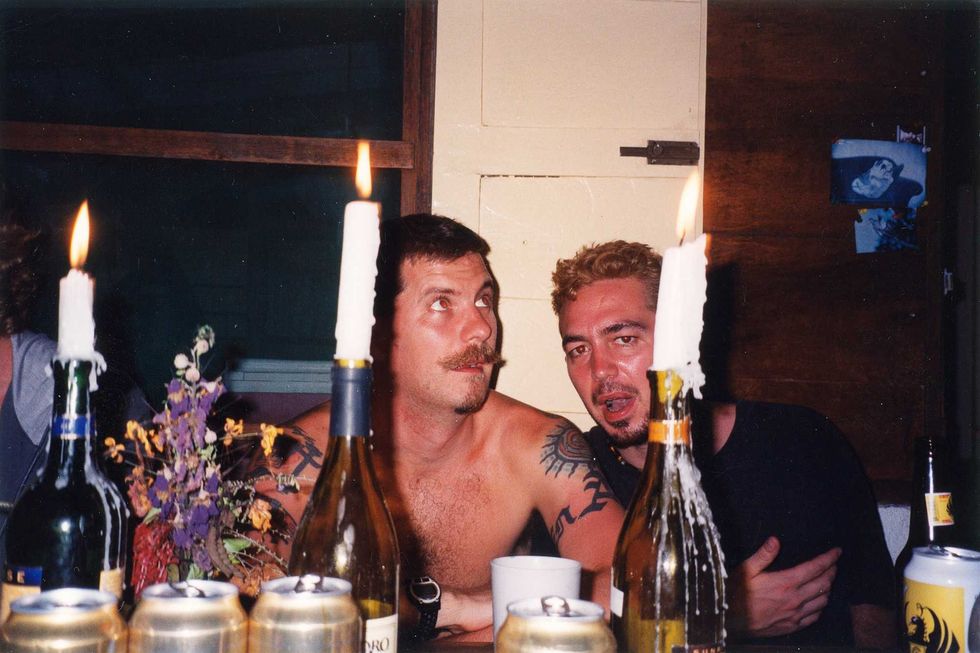 Endless local beers (and ready-to rumble gringas) posed a perpetual problem for the Yankee habitué, given the snooze-you-lose attitudes of the locals.Gavin McInnes
We quickly realized that getting laid and being surfers were not happening, so we focused on fuma, coca, and endless Imperials (the local beer). The expats who made this town their permanent home were not there to party, and they were a lot more ruthless than Karen and Olaf. Lenny Lacona is an old hippie who went there in the late ‘70s, selling soft drinks from a cooler on the beach. Soon, he had ramped up to a vegetarian health food store called the Sano Banano, and today he runs a widely popular beach resort called the Ylang Ylang. To thwart thieves, he has armed guards carrying Uzis who circle the property at night. Years before he could afford that, he caught a thief on his own and duct-taped the poor bastard to a hand cart before parading him down Main Street with a sign around his neck that said “Ladrón,” meaning “thief.” This hippie does not fuck around.
In the ‘90s, we had a budget of $10 a day and had to choose between eating and getting drunk. We usually chose the latter and would come back to New York City tanned, emaciated, and in desperate need of a detox. However, in the late ‘90s, our magazine got a million dollars of investment, and the next thing we knew, we were buying some old hippie’s house at the top of a mountain. He gave all the money to his guru because the teachings had “saved my life,” which annoyed me, but whatever. It’s none of my business what people do with their money. Jason, the surfer, looked after it when we weren’t there. You can’t let a local do that, or he’ll squat in it. Crime isn’t really frowned upon down there. If you leave your wallet when you go to the bathroom, your “friend” will steal it. If we didn’t lock the doors and the windows when we went out, they would loot our house. Which they did. They have a very you-snooze-you-lose mentality down there. We would regularly check the fences surrounding our property to see whether the neighbors had moved them inward. They’ll do that and then plant tomatoes on the land they stole from you, so if it ever goes to court, they just tell the judge they need those plants to live, and he won’t make them move the fence back.
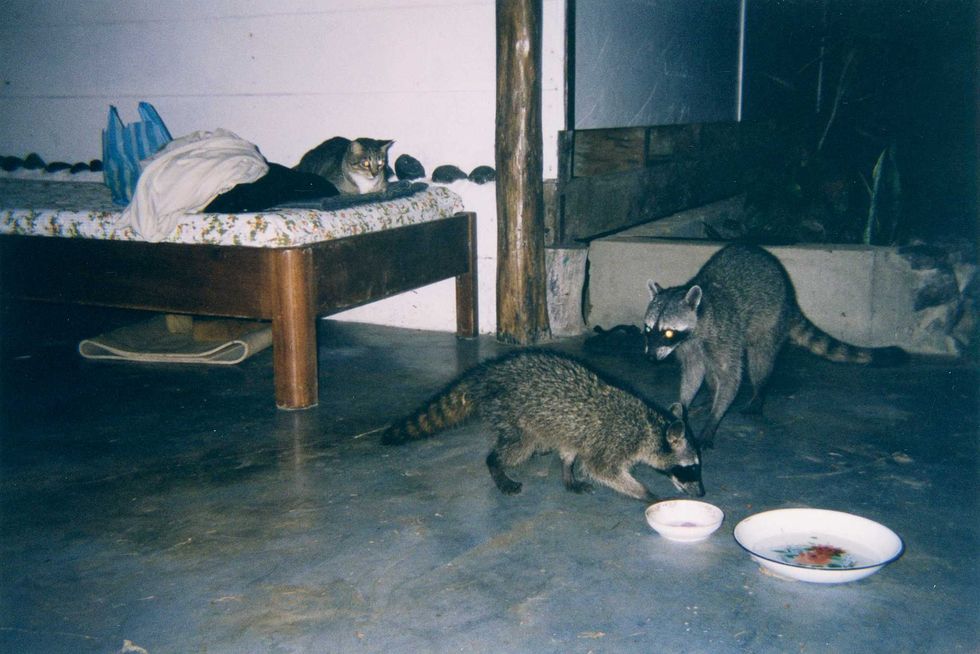
The wildlife there is a trip. Howler monkeys (the loudest mammal for its size in the world) roar all night like a monster is getting his teeth pulled. They will take the fruit right out of your hand. We had a very adversarial “seagull vs. homeless man” relationship with them. White-nosed Coati are funny-looking relatives of the raccoon that will slice you to shreds if you chase them off your garbage. Many dogs die from infected cuts after fighting them, but you need to have a house dog to chase away the monkeys (we had three die in my 10 years of going there—heartbreaking). You need to carry soap everywhere you go because it’s so organic and full of life down there that every little nick gets infected if not washed three times a day.
 Gavin McInnes
There are also scorpions in your shoes. Being stung by one feels like an invisible demon is driving a red-hot poker through your foot. Then, for the next 24 hours, your hands and feet have pins and needles, and your lips go numb. I didn’t go back after my first kid was born because the idea of a baby being subjected to that scared the crap out of me.
As cruel and unforgiving as the jungle is, it’s also stunning. There was a butterfly farm next door, and the sky was alive with hundreds of species of birds. My old pal Robert Dean (guitarist of the new wave band Japan) spent 12 hours lying in a swamp because it was rumored to house a keel-billed motmot, one of the rarest birds in the world. His hunch was correct, and he is now just as well known in birdwatching circles as he is in the music scene. Of course, beauty comes at a cost in the jungle, and spending that much time in the mud enabled a botfly to pierce his forehead and lay eggs in his skin. We eventually got the larvae to come out by suffocating it. You cover your skin with Vaseline, and it stops them from breathing through your pores. The black-haired grub that crawled out of his head was as hideous as the motmot is beautiful. That’s the jungle. That’s Costa Rica. It is extremely beautiful and extremely hideous, with very little in between.
 Gavin McInnes
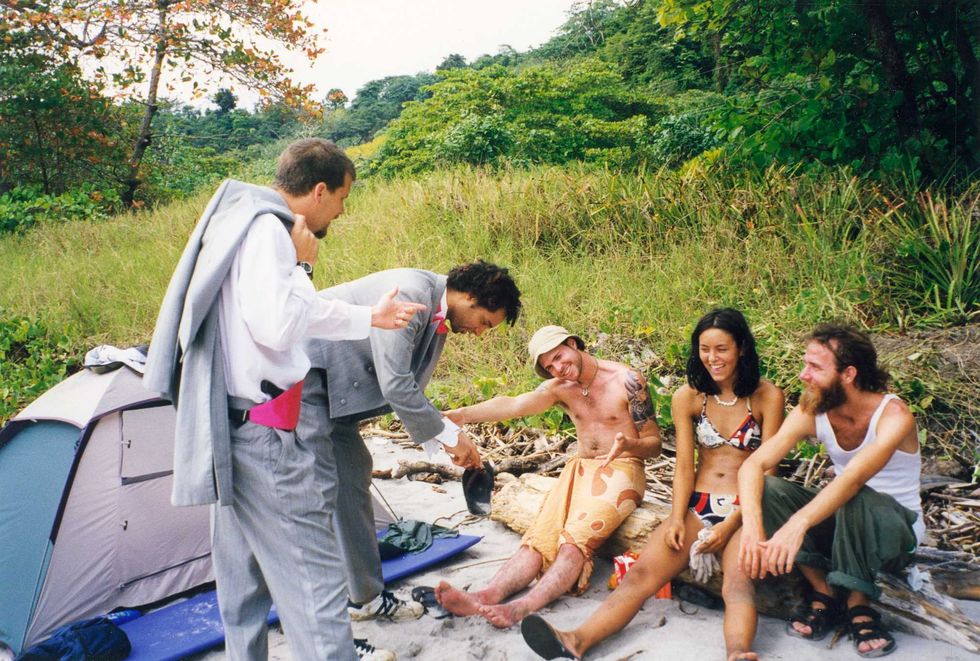
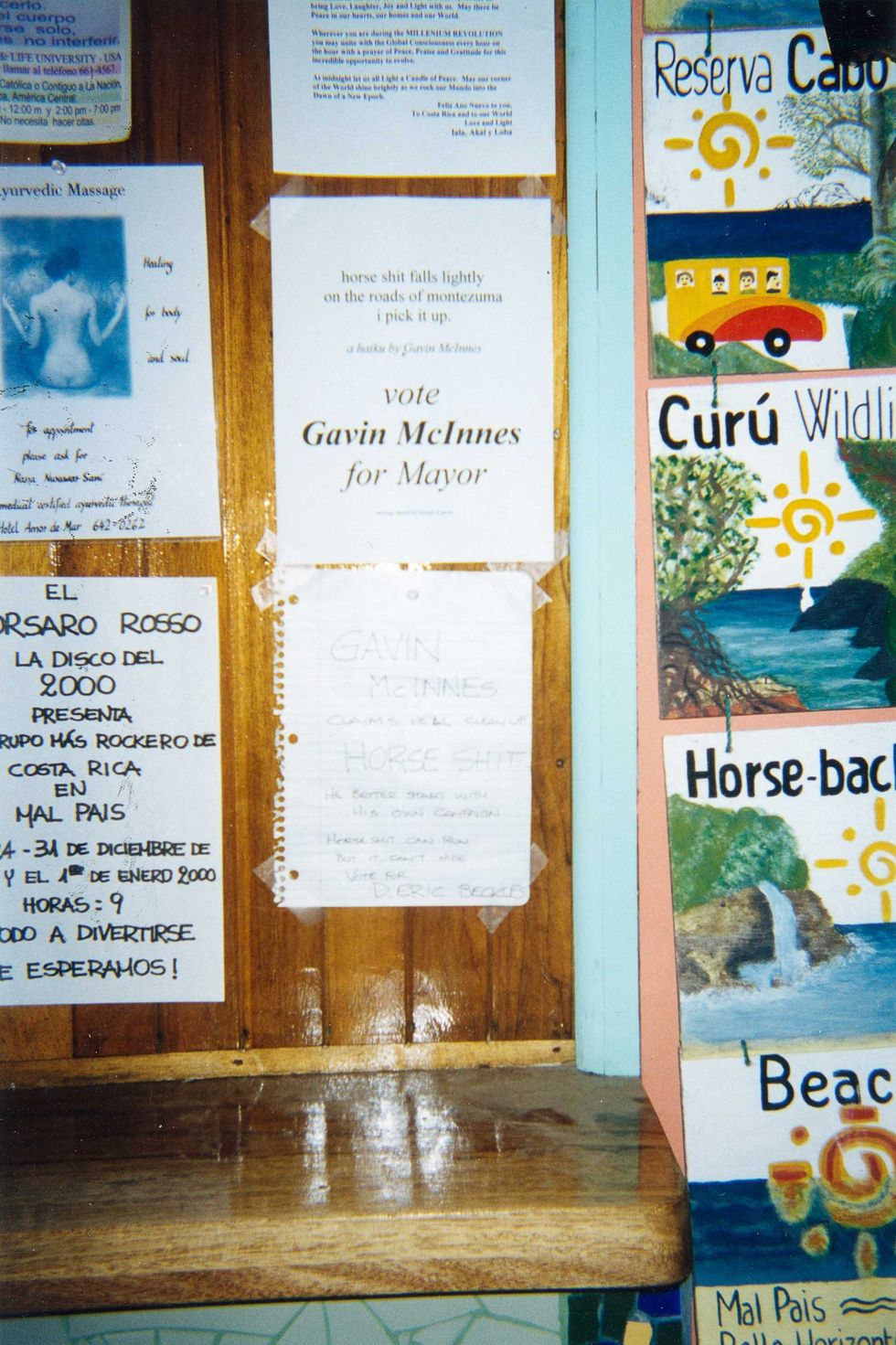
The town next to us is called Malpais, which means “bad country.” The conquistadors named it that because they thought it was evil. San Jose dumps all their trash right into the ocean, so, as you walk along their breathtaking beaches, it’s not unusual to find a used syringe, 37 pairs of flip-flops, 100 combs, and every shampoo bottle ever made. The horseshit was also a problem, especially in town. We were having so much fun, however, that even the garbage and the shit became part of the party. One year, I packed a fancy tuxedo and ran for mayor. My campaign was a haiku:
horse shit fall lightly
on the roads of montezuma
i pick it up
-Vote Gavin McInnes for mayor.
Unfortunately, my arch nemesis also packed a tuxedo, and his slogan was, “Gavin McInnes claims he’ll pick up horse shit in Montezuma. He better start with his own campaign.” Neither of us won. I don’t think they have a mayor.
During the rainy season, the roads are impassable and nothing is dry. It comes down so hard, you think God is mad at you. And the rivers roar so fast they look like they’re panicking. Even in your house, your towels are always wet and the newspaper feels soggy. The rain appears to be moving sideways across the lawn. Nobody goes out for days at a time, and when the Lord finally gives you a break, you wander down to the local pub like you’ve just survived a nuclear war. We used to laugh at how awkward we were all behaving after not seeing another human being for five days. It really messes with your social skills.
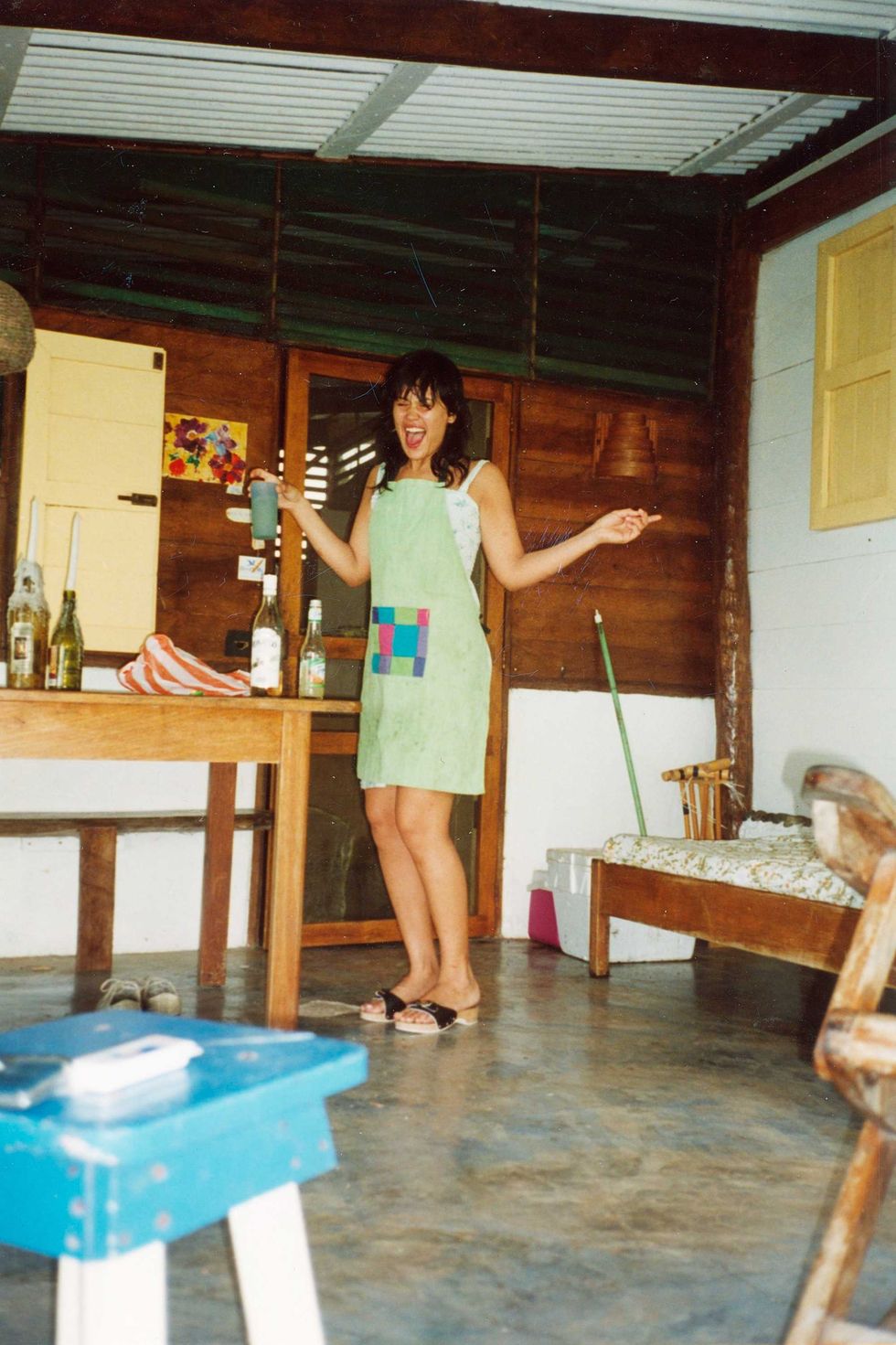
Throughout all this anarchy, we were having the time of our lives. We partied like it was 1999, especially when it was New Year’s Eve in 1999. We invited our extended families down that year, along with all our friends, and even many of our clients. We completely took over the town.
 Gavin McInnes
However, as the years went by and the dust began to settle, the dark side of settling this town began to appear darker. “Cocaine is a helluva drug,” as Rick James put it, and I was starting to see it take a demonic toll on the locals. There was a quaint Rastafarian who went from charming anecdotes for a free beer to living in a tent he had smeared with feces. The last time I saw him, he pointed a knife in my face and said, “Don’t f**k aroun’, Kebin! You f**k aroun’, you get abuse, seen?” Yes, I seen. River Phoenix’s dad, Juan, lived there at the time. I met Joaquin, Rain, and Summer once, but I was kind of a dick to them because it’s cool to ignore celebrities. There was a rumor that one of Juan’s grandkids got very sick and they had refused some kind of medicine because of their weird, hippie religion, and the boy died on the way to the hospital. As I said, the trip to San Jose is long and the thought of driving all night with a dead child in the car is the stuff of horror movies. Again, I can neither confirm nor deny this story. Drugs are bad. Weed kills your economic libido as a young man and cocaine is a highway to bad decisions. In adulthood, however, drugs are much worse. They permanently stunt your growth and send you back to your bad-decision youth.
At any rate, Montezuma is a wild place to visit when you’re young, but it’s no place to permanently live and it’s certainly not any place you’d want to raise a family. I sold my part of the house right after my first kid was born in 2006 and that was it for Montefuma. We did go back to Costa Rica a few years ago for a very sanitized and sober family trip in the Golfo de Papagayo, which is about 100 miles away from Bad Country. This included five-star hotels and uniformed waiters on the beach serving Piña Coladas with a smile. There was no cocaine or horseshit or syringes or old men being scared to death.
That is the way the jungle should be explored—from a distance.