© 2026 Blaze Media LLC. All rights reserved.
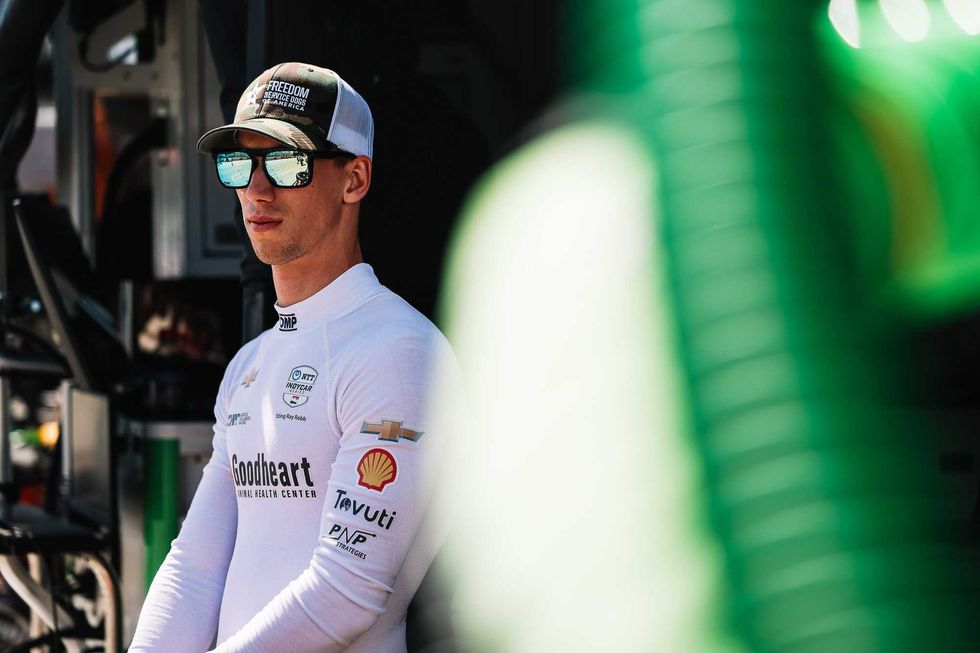
It was a fuel sensor that erased driver 77’s comeback in the America 250 Indianapolis 500. Sting Ray Robb—the Idahoan’s real, original name—started in the last row at position 31, then steadily worked his way up to 13th. That’s rough, because each car creates a turbulence tunnel for those behind. Robb also had to navigate around five crashes that eliminated top contenders, including former Indy 500 champions Will Power, Alexander Rossi, Josef Newgarden, and Ryan Hunter-Reay.
Robb, 24, took what should have been his last pit stop of the race around lap 150 of the total 200. But as the cars roared into the last laps, Robb’s fuel collector sensor went off. If he didn’t make another stop to replace it, he’d get a penalty, and the sensor would automatically throttle the car’s speed to 160mph.
That would make him crash bait, his mother and manager Kimmie Serrano said: “You’re a wreck looking for a place to hap pen at that point.” Robb was forced into the pit and finished 23rd.
“The intent was to go long and try to beat the rain” by lap 101, when the race could be called if predicted storms hit, Serrano said, but “mechanical had another challenge for us.”
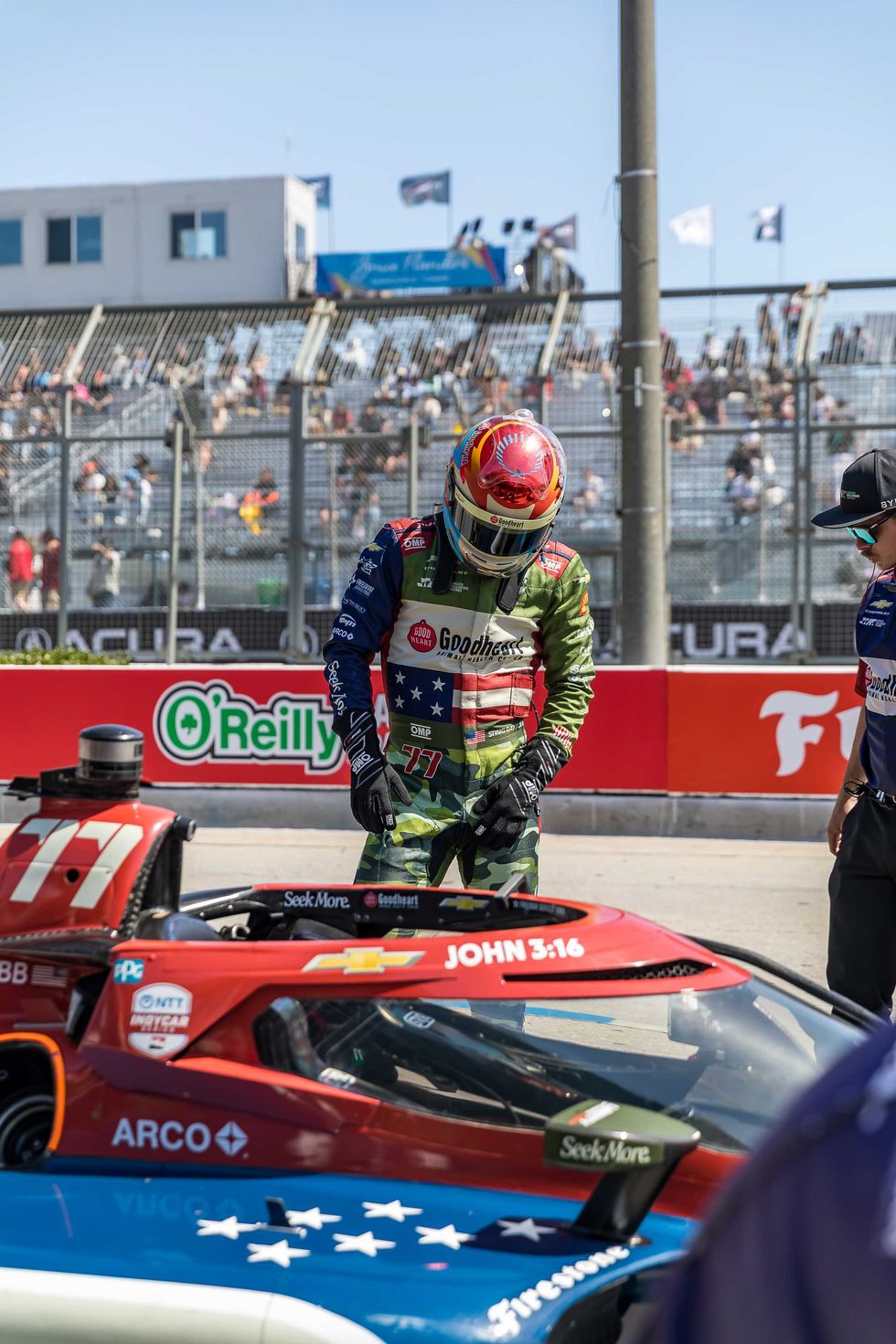
Watching Robb emerge from his car after more than three hours of breakneck driving, Molly, his wife of less than two years, looked upset. Serrano clapped as he stepped out of his red racecar imprinted with “John 3:16.” Molly and Kimmie had spent the race pacing behind the pit, listening to the chat ter between Robb, the pit, and his spotters through bright-green earpieces.
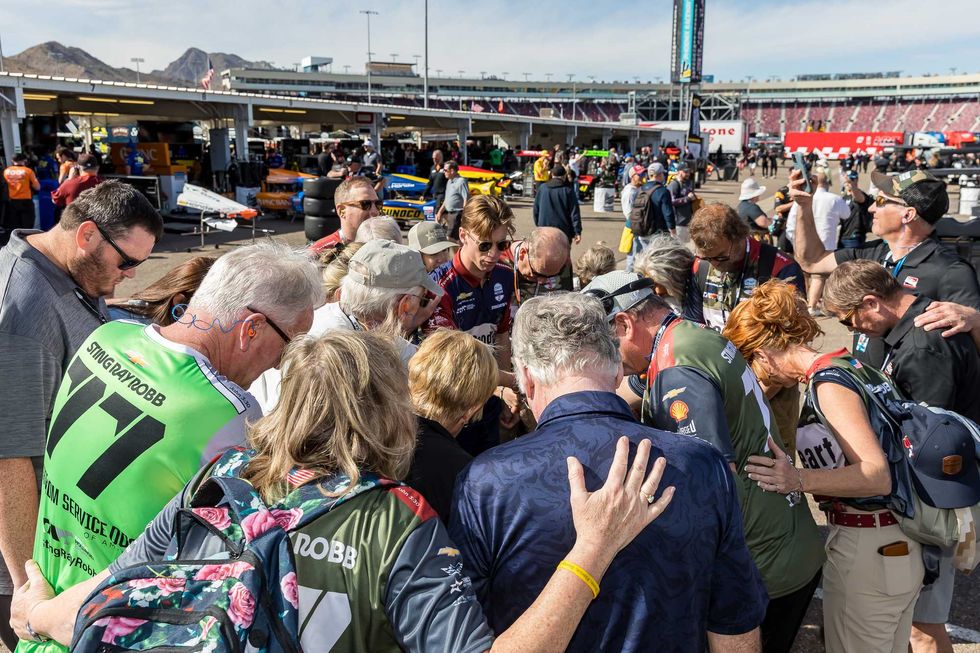 Faith and family have always been the cornerstones Sting Ray Robb has built his success on.
Unlike hometown favorite Ed Carpenter, who screamed the F-bomb when Japanese driver Takuma Sato edged him into the wall, Robb displayed no anger except with a rigid jaw and unsmiling face. Robb’s first act was to give upright Spartan handshakes to his mechanics, looking each in the face with a firm expression. Except for a petite female grease monkey with French-braided pigtails, the muscled male crew all wore 1970s-style mustaches they’d grown for the race in lighthearted solidarity.
Robb, whose blond mustache was invisible fifteen feet away, was not feeling lighthearted. Molly went up and kissed him as he sat on the track wall, and he put his arm around her waist. After a few moments, he reconnoitered with his mother and driving coach, the former F1 driver Adam Carroll. In that small circle, his frustration finally sur faced as they discussed what went wrong.
This was the umpteenth time car failures torched Robb’s aspirations for America’s 250th anniversary to become the year he lifted earlier success into the IndyCar level, perhaps the nation’s highest. In 2020, Robb won the Indy Pro 2000 Championship after winning seven races that year. That graduated him to the IndyCar series, where he placed second in 2022’s championship.
In 2024, Robb led the 500 for 23 laps, but ultimately placed 16th, beating this year’s winner, the Swede Felix Rosenqvist, by 11 places. This is Robb’s “make or break year,” his team says. His aspirations are running out of money.
Robb’s team believes his struggles grow out of conflicts that go back generations for the iconic American sport and which nearly killed it 30 years ago. It’s even big ger than that. The erasure of borders and consolidation of markets affects everything from citizenship to jobs to neighborhoods to sport. It all condenses around the world’s biggest single-day sporting spectacle in Indiana—a low-cost cornfield state with not a lot else going on that is a fabulous place to raise kids.
IndyCar Revival
In the year of America 250, the 500 sold out for its second-straight year and gave delighted fans the closest finish ever after a record 70 lead changes. The world’s biggest race seats some 400,000, due to a 2.5 mile track that could comfortably nest in its grassy belly “Churchill Downs, Yankee Stadium, the Rose Bowl, the Roman Colosseum, the White House, Liberty Island, the Taj Mahal, and Vatican City with room to spare,” says Visit Indiana.
A record-breaking seven million watched the race on Fox in 2025—nowhere near Super Bowl or World Cup levels but nipping at NBA Finals averages. Although slightly fewer watched the 500 this year amid nationwide storms, record numbers are watching the series, which typically comprises 18 races per season. This year, there’s an additional race: the Freedom 250 Grand Prix in D.C. at the end of August.
It’s a resurgence for a century-old sport that nearly collapsed in the late ‘90s and early 2000s. Its infamous 1996 split ended in 2008, when the IndyCar Series was formed, but the sport struggled to recover for decades. IndyCar still hasn’t regained the NASCAR-level fandom it previously surpassed.
The disagreement that caused the split, however, has never been resolved: high-dollar foreign teams displacing Americans on their own asphalt. Of the 33 drivers in this year’s Indy 500, 21 were foreign nationals. Famed former Indianapolis Motor Speedway owner Tony Hulman and former CEO Tony George advocated for more American drivers and less road racing. But these disagreements almost killed the series.
Car racing has always been international, with endless rivalries and intermarriages between U.S. and foreign teams. In the United States, the sport has also tradition ally featured rivalries between big-money teams that can simply buy engineering advances and homegrown teams that advance through grit and ingenuity.
“The top teams could spend millions,” longtime Indianapolis TV anchor Scott Sander recalled of the biggest factor driving the split. “Meanwhile, others were building cars in their garages. That just wasn’t sustainable.”
The World’s Biggest Sporting Venue
The remarriage between the home grown-American and big-money factions has kept IndyCar alive without resolving the underlying tension, Robb says: “If you want to see the best talent in the world succeed, they have to have a way to get there.”
Drivers who win the IndyNext championship, like he did, receive a scholarship to move up to IndyCar. But that scholarship barely funds three IndyCar races. Then drivers are left to generate enough funds to field the marketing, engineering, coaching, and tech team that help a top 1% driver shave off the last ten-hundredths of a percent to show he’s a world-class champion.
The highest-dollar teams can pay for extra employee training, simulations, and research, running tests on every variable they’re allowed to customize to see which combination of tweaks can shave off tenths of a second. Teams adjust those variables with every run.
“The best teams, they’ve got it down to such a science that they have calculators for almost everything that they can do,” Robb said. “And so wing angles, damper changes, everything affects another thing.”
The two biggest variables in open wheel stock car racing are the driver and tires, Robb said. So it’s the driver’s job to become one with his machine and translate its tiniest creaks into suggested engineering improvements by his team.
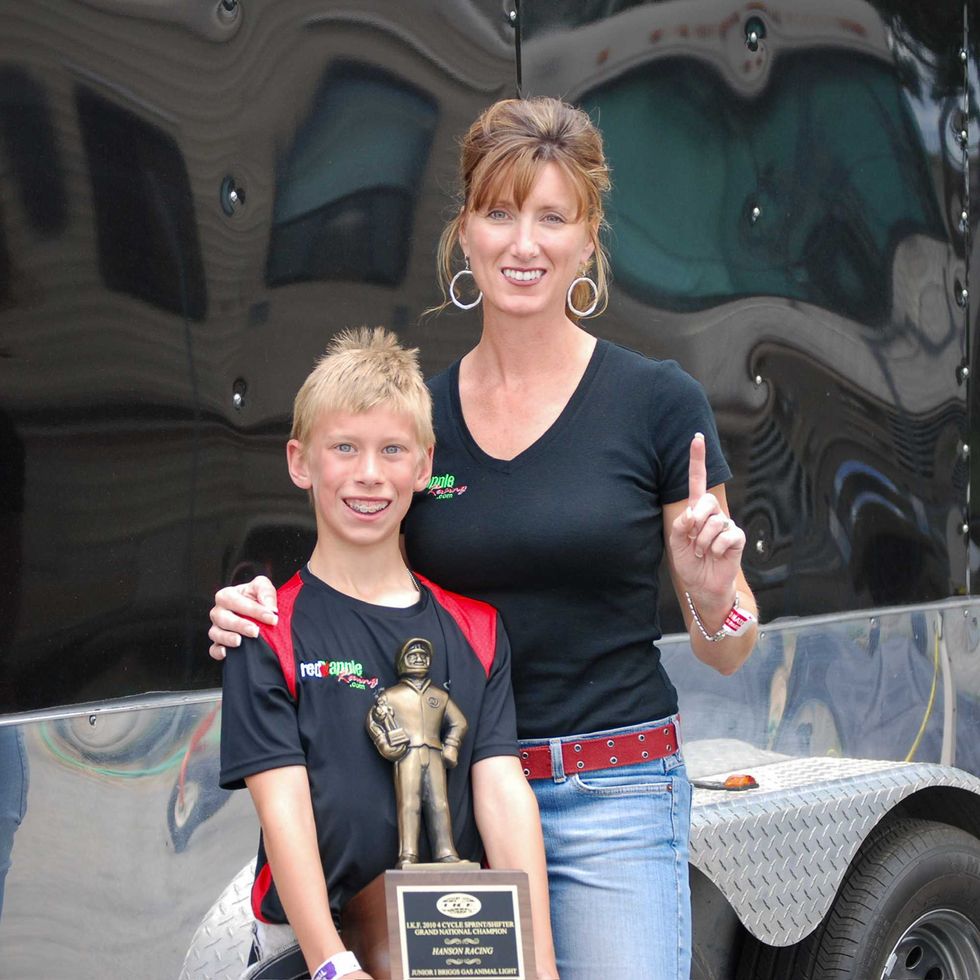 Robb and his mom, Kimmie Serrano, have been a winning team for years.
“As you’re trying to steer the car into a corner, you feel the G-load on your head and neck and your side and the seat of your pants,” Robb described flying on asphalt at 240 miles per hour. “And as you’re doing that, you can feel the front tire start to slide by feeling less weight in the steering wheel in your hands, or more weight if it’s the rear end trying to slide.
“It’s, ‘Okay, what’s going on with my hands? What’s the feeling that I have there? Is there a vibration that might be an out of balance tire? Is there sort of a dead zone, or is the car too quick to turn when I give this input in my hand?’”
All these inputs shift with outside temperature, humidity, road conditions, and track style. The same track is a different race every time, and the driver, team, and car who adapt the best win the most. It’s one of the things fans love about the sport.
“One degree temperature can change the whole dynamic on tire pressure settings,” Serrano noted. “They can drive through a cool spot on the track and it’s completely different than a thousand yards or a thousand feet that way.”
All this also requires not just driving ability, but oodles of money. Engines degrade fast when you max them out, and parts cost a ton. This favors drivers with either a wealthy family or high-level connections. Most IndyCar drivers are self-funded. But Robb’s family doesn’t have international business connections for whom $100,000 is small bills. His parents are just the former owners of an Idaho grocery store, and a small one at that, where Robb helped as a child bagging and returning carts, especially on sale days.
While his parents worked, a mother from church homeschooled Robb and a few other children in a mini private school that now would be called a “microschool.” Her husband was a diesel mechanic who worked from home and helped keep the kids in line so they could learn, Robb said.
"I got to see how her family interacted, and it was a Christian home,” he said, calling those years through sixth grade especially formative for his faith and desire for a lifelong marriage with Molly. “It gave me another life experience, another home experience outside my own home.”
RVs Versus Helicopters
Even though owning a small business can generate above-average wealth in the United States, lifting proprietors to what Angelo Codevilla described as America’s “country class,” such middle-class wealth barely fields a racing team that can compete with foreign billionaires. Robb notes his team, Juncos Hollinger Racing, has nearly 100 employees, and it’s a smaller team.
Today, he’s competing with drivers who commute to the track in helicopters and private planes. Tour bus RVs like the ones drivers live in onsite during race week are expensive, but they’re not helicopter expensive, and Robb’s family rents one for race week. Robb’s parents sold their grocery store, and his grandma her precious ‘67 Malibu, to fund his career. His family is betting on him with their money and lives.
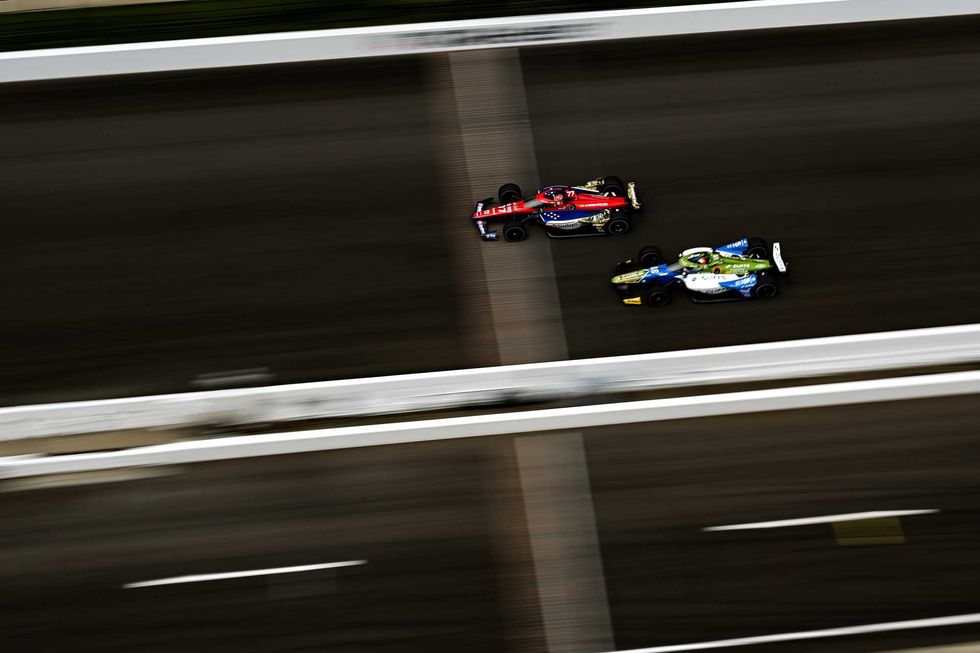 The raw speed of the machines is breathtaking.
Unlike many other competitors, Robb moved up from go-karts to open-wheel cars with his mom, dad, and granddad as his pit crew. Serrano—a slender woman, perhaps five feet, four inches tall—says she changed axles.
“We literally were building engines in the hotel rooms on the tables every night,” she said. Robb’s grandma added it was probably a motel, not a hotel: “It wasn’t a Marriott,” she said, laughing. T
he majority of a driver’s performance depends on his car, which depends on his engineers and mechanics, Robb said. So when a driver performs poorly, he can’t take it out on the team members essential to his success. He has to figure out how to raise their performance—which requires not only character and charisma but also a lot of money.
“It is probably the worst thing that you can do as a driver to ignore past mistakes, because if you don’t learn from those, you’re going to make them again,” he said.
A Good Man’s World
Eyes shine when you mention the Indy 500 to a man or boy. Nearly 90% of IndyCar fans are men, mostly white and in their 40s and older, although the Indianapolis audience boasted a much higher proportion of women. It’s the people group most targeted by leftist bigotry.
Racing is man ballet. Fans adore the sport’s blend of grounded rocket science and pure masculine joy. They love that they can walk right up to the pits and garages before the race and break off a piece of shredded tire as a memento.
The race caters to them with Blue Angels fighters pirouetting overhead, American flag fireworks, brass bands, public honors for military recruits, meat-stuffed food trucks, and plenty of beer. Racing is one way boys can still play when they become men. This is the good patriarchy: the self-restrained, hardworking, benevolent, tough, and fun-loving kind that creates order and cherishes excellence.
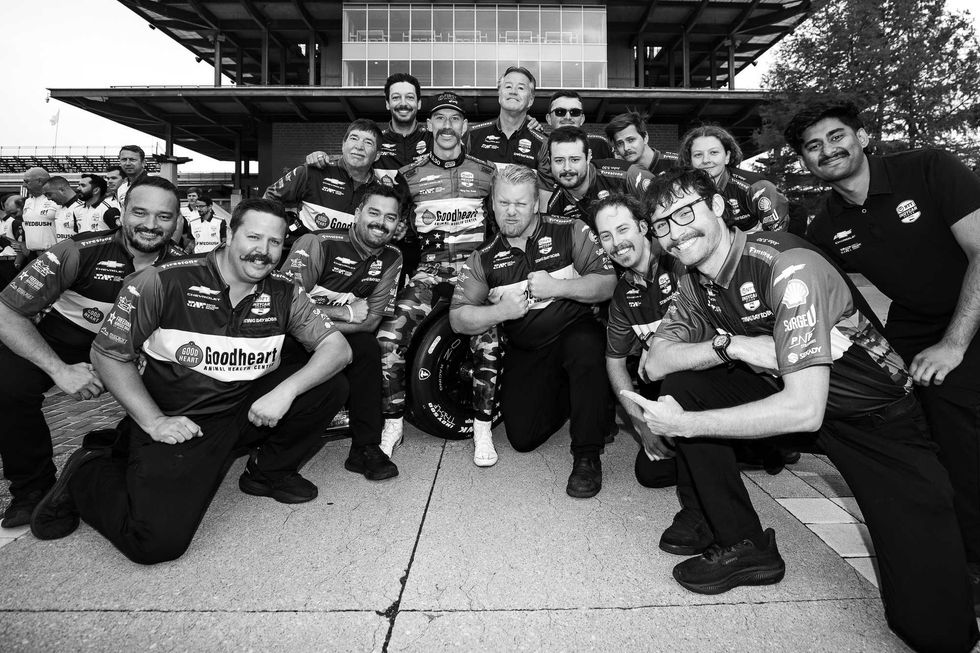 A driver is only as good as his team.
Roger Penske’s ownership has resulted in an incredibly clean and family-friendly venue, say longtime fans and the yellow-jacketed volunteers who are mostly genial retired white guys. In the 1980s and ‘90s, fans would burn cars and furniture right on the infield after the race, said Skip Voss, a retired mechanic who has camped at the race every year since 1980: “You could count on at least one big blaze each year.”
Voss loves the sport’s history of creativity and misses the days when just about anybody could try out just about any car he’d modified to see what went fastest. And he still loves the atmosphere so much he’s thinking about moving into the neighborhood west of the Speedway.
That neighborhood is populated with 1,500-square-foot, single-story postwar homes, where tens of thousands jam their cars four or five at a time onto pontoon-boat-sized front lawns. Its streets are nearly silent and clean not only during the race but within two hours afterward, when most have cleared their parking spots. It’s like stepping back in time to classic Midwestern decency, into a high-trust society largely lost to most Americans today.
At the 500, there’s not a hijab in sight. Even drunk attendees mostly behave outside of the track’s “snake pit” rocker venue, and shirtless men and pantsless women are there, but much rarer than on public beaches.
Those types largely populate the infield and “snake pit,” which Voss says was a genuinely dangerous, substance-filled zone in the ‘80s and ‘90s. Today, you can send your teen and expect him to return unharmed. Many other fans are dads and granddads, often with kids and wives in tow. Tickets are as low as $25, making it possible for normies to bring a family. Smart parents buy their tots colorful, gun-range-like headphones that dull the roar of engines and wind.
Headphones can’t dull the vibrations. Even on slower test days, the grounds ceaselessly jitter from engines ascending to 240 mph. Leaving the track feels like disembarking from an ocean-going boat—a ways away, you finally feel you’ve reached dry land again.
Living on a Prayer
Robb started racing at age five on a go-kart. Inspired by the Christian messages Tim Tebow wrote into his eye black, at age seven Robb covered the front of his kart with a colored duct tape cross. By middle school, he was racing at 90 miles an hour and competing 42 weekends a year.
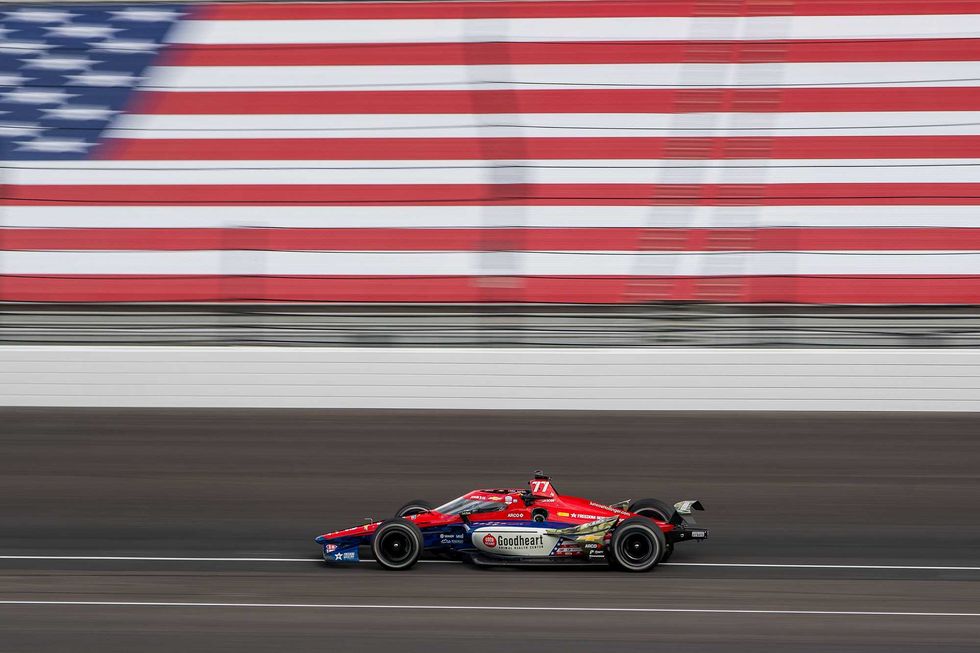 Patriotism and red-blooded American values are on display at every race.
Serrano tried to divert her only child from racing, but it didn’t take, she explained. The strawberry-blonde’s eyes twinkle as she describes how her son became obsessed with racing at age three while watching Travis Pastrana perform go-kart tricks on TV.
Serrano and her then-husband, Larry Robb, promised the persistent tyke a go-kart for his fifth birthday, expecting him to forget. He didn’t. They later tried to distract Sting Ray with sports, moving him from homeschool to public school in seventh grade. They tried basketball, golf, baseball, and tennis, Serrano said. That didn’t take, either.
So “his mission then became our mission,” she said. “We just live to race another day.” Perhaps this should have been less of a surprise for parents who named their son after a Corvette.
Want to leave a tip?
We answer to you. Help keep our content free of advertisers and big tech censorship by leaving a tip today.