© 2026 Blaze Media LLC. All rights reserved.
It’s one thing to have $20 trillion in debt, and our airports and roads are good— our airports are like from a third-world country. You land at LaGuardia, Newark, LAX, and you come in from Dubai and Qatar; you come in from China, you see these incredible airports—we’ve become a third-world country. — Donald J. Trump.
It’s hard to say that Trump, for all his regular hyperbole, was exaggerating much in this 2016 statement from the campaign trail. LaGuardia was clearly a national shame—a collection of low-ceilinged, dimly lit buildings at the edge of Astoria, Queens, some from as early as the 1960s, all in a state of total neglect; the terminals filled to the brim with rude employees and pissed off passengers; the traveler subject to endlessly delayed flights and overcrowded seating areas, delaminating faux leather; a maze of hardly navigable on-and-off ramps leading from these depressing terminals straight onto the congested Grand Central Parkway to take you past the Triboro Toll Booth and, perhaps an hour later, finally into Midtown Manhattan.
New Yorkers shrugged it off as, “Well, that’s just LaGuardia.” But to everyone else, it meant their gateway into the imperial city was this sad carcass of an airport, one that often felt more like a bus terminal than a regional hub for Delta and American Airlines.
Why elect a wrecking ball when everything seems so good?
LaGuardia was the representation of a faltering empire: an America whose “greatness,” insofar as it had any left, had been focused outward on the rest of the world, while the republic at home was being destroyed and forgotten. It might have also been the closest thing the city had in 2016 to the ailments ravaging much of the rest of the nation—those troubles regular citizens, or “Walmart Americans,” as the coastal elite might call them, had to deal with outside America’s few but highly impressive enclaves of global capital in New York, Miami, and Los Angeles. New York, at its worst, only hinted at this decay. A walk through parts of Harlem, even in the early hours of the morning, can be far more pleasant than one through the downtowns of many American cities at 3 p.m.
And while New York may have been serviced by the Acela—the closest thing we have to high-speed rail in this country—the station from which that train left was an overcapacity, underground misery chamber where your best bet at dining might have been the Sbarros or Auntie Anne’s, if you could manage to shimmy your way through hordes of New Jersey and Long Island-bound commuters lining up in the narrow passageways.
Civilizational Crossroads
In a weird kind of way, it was New York’s links to the rest of the country that were the very worst the city had to offer—the most depressing and soul-crushing, yes, the most American, in the sense that they were reflective of what travel—and human existence more broadly—looks like elsewhere in this country: bad architecture, bad food, bad vibes. But if you stepped outside of these travel hubs and into Manhattan, you’d see a whole different world, a distinctly—and unfortunately for America—un-American one. One in which there were local supermarkets, busy cafes, and happy people walking the streets; a life which was not merely driving from one’s suburban home to the mall to some fast-food place, perhaps over an interstate viaduct and past a ghost town of a city to do so.
Tucker Carlson, speaking in November 2023 on the American experience in the opening decades of the 21st century, said, “The message of box stores, and dollar stores, and DMV is: you mean nothing. We’re not gonna spend any time or any energy trying to elevate you or please your senses or build anything beautiful. It’s ugly on purpose to let you know that you mean nothing. You do not count. Shut up and obey. You’re an animal.”
Imagine a city, then, where there are few box stores, fewer dollar stores, few DMVs— if only because most New Yorkers don’t drive. (Manhattan, a borough of one million inhabitants, has only three DMVs: in FiDi, Midtown, and Harlem). Yes, as native New Yorkers will endlessly kvetch, all those little grocery stores are losing business to trans plants coming in and mindlessly shopping at Trader Joe’s, and young people aren’t going to their local cafes anymore but to Blank Street and Blue Bottle, where they can get points by using the app. But you know what? If I’m hungry at 2 a.m., I’m walking to my bodega. The Trader Joe’s always has a long line, and, in any case, closes at nine.
That monotone corporate culture does define, however, much—or all—of what there is to do in my hometown area of Hartford, CT. And it’s not even its heyday, a time when, yes, suburbs were still the suburbs, but they had good middle-class restaurants, upward mobility, and an actual social fabric. There is a reason, after all, that the suburbs came into existence and White Flight happened in the first place. When Trump married his first wife, Ivana, and made a name for himself by redeveloping the old Commodore Hotel into the Grand Hyatt, he bought a 5.8-acre estate in Greenwich, leaving a then-comparatively shabby and crime-ridden New York.
Greenwich in the 1980s was, to be clear, not your average American suburb; it hardly is today. But think of movies from that decade, what they showed us—The Breakfast Club. Ferris Bueller’s Day Off. Ordinary People, even. Could you imagine similar movies being created today in good faith, aside from homage to an America that once was and no longer is?
The mall I frequented as a child has been left with a musty Macy’s, a Barnes & Noble, stores selling God knows what useless miscellanea, and vape shops. The experience of being in the Hartford area is all but reduced to taking I-84 to a nicer farm called West fFarms frequenting West Hartford’s decent town center if you’re feeling adventurous, going to some movie theater off the interstate, or visiting a bowling alley on the Berlin Turnpike. If you’re a middle-aged man going through a crisis, you could also go to Hooters in Manchester, which is missing a few letters. Never mind, that just closed.
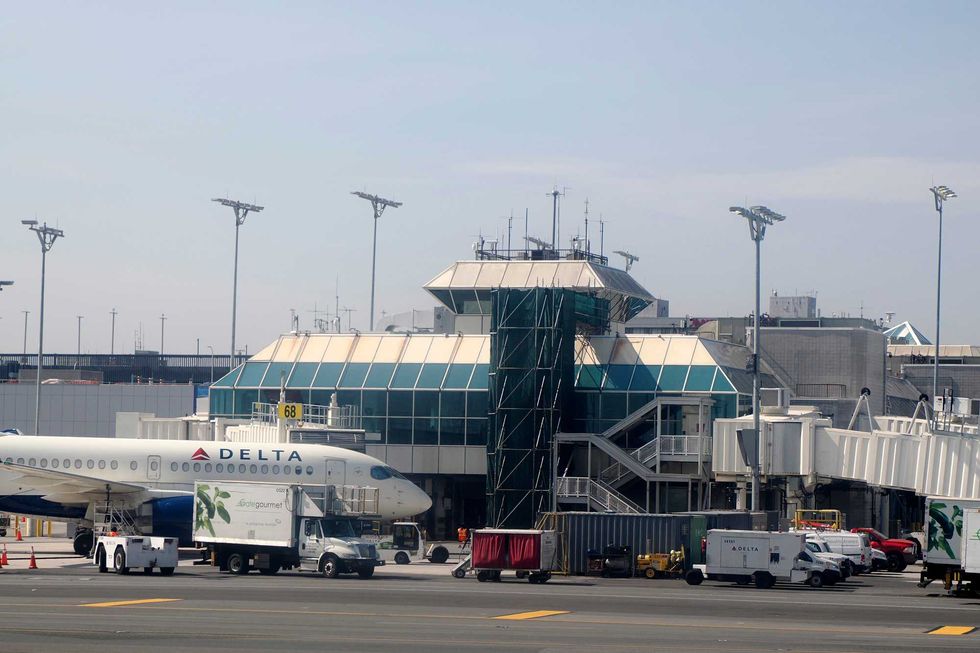
Today in New York, Amtrak services have left the old Penn Station for the new Moynihan Train Hall, a grand Beaux-Arts edifice (originally the post office, built in tandem with the even older Penn Station, which was demolished and brought underground for Madison Square Garden). Moynihan has a glass ceiling allowing for natural light, modern amenities, and trendy, if not excessively showy-for-a-train-station, dining options. LaGuardia’s sad excuse for airport terminals have been totally demolished, making way for impressive buildings fit for one’s entry to a city like New York.
Newark has a new Terminal A, and JFK has been a construction site for the past couple of years. Yes, the subway could still be better. The Metro-North could run faster. Some taxi drivers could speak better English and not tell me, as has happened on multiple occasions: “Oh, you are from Iran! Iran great Muslim country, like Bangladesh, brother Muslim . . . I like Iran, I only like America to make money.” Whatever. But back from a recent trip to Chicago, I’d never been happier to land in LaGuardia and take a cab over to my apartment on the Upper West Side. It’s hard to explain, but things just work here.
Worlds Apart
An SNL skit from March 2020—better times, not for LaGuardia but for SNL—shows Pete Davidson buying sushi from a LaGuardia travel retailer. The show’s host, John Mulaney, replies: “You’re sure you want to eat the sushi?” The notion that one might grab sushi from LaGuardia was, in a self-explanatory way, terrifying. Ten years on from Trump berating LaGuardia and six years after the SNL skit, the airport has gourmet markets and sit-down Japanese restaurants.
Perhaps it’s in a city as such that, in 2024 but also in 2016, residents didn’t understand why America needed to be made great again in the first place. Why elect a wrecking ball when everything seems so good? The problem—not that this hasn’t been said—is that across the U.S., communities have been neglected, factories have shut down, and mid-sized cities have been rendered ghost towns. The Middle American has been left with a crippling addiction to OxyContin, porn, and consumerist slop. Heck—not only Middle America. Drive a few hours from New York—certainly to Hartford but also to Albany, Allentown, or Trenton—and you’ll see a similar thing. Surely some New Yorkers read about these things; but few seem to understand it, or to empathize with their fellow citizens beyond just, “Well, the white working class is stupid and poor and that’s why they like Trump.”
Now, this isn’t to say Trump has made America great again, per se. Perhaps JD Vance was correct, in an earlier life, to characterize Trump as just another drug: “It enters minds, not through lungs or veins, but through eyes and ears.” Who knows what we will think a decade on, looking at the president’s legacy, which I think, more importantly, might be based more on what we ushered in than what he did himself.
Either way, for all of Trump’s flaws as president or as a man, he did point out the right things on the campaign trail. Trump represented the potential for something new, the expression of that naughty feeling: Hey, maybe things aren’t so great. No, no. It wasn’t that Hillary Clinton was secretly working on a Communist plot to overthrow the republic, as Fox-bingeing Boomercons might have it. It was Hillary who was telling you that things are so gosh darn good they ought not change.
But when you’re passing by The Mark on the Upper East Side, going to the Met Opera, and brunching at Balthazar—yeah, you agree with Hillary. Trump may not compute even if you live in the outer boroughs, which actually have things; Manhattan is a $3.00 ride away. (Though it should be said, Republican strongholds can be found in the outer-outer borough of Staten Island.) But especially for the rich Manhattanites who read The New Yorker and discuss it at dinner parties, the Pilates moms, the West Village girls whom you’re guaranteed to see at Sant Ambroeus on a Sunday, the men in and out of Lower East Side clubs and bars, the hot people running and cycling on the West Side Highway where they look on to Delta ads advertising “Euro summer”—yeah, no, America couldn’t be better.
Heck, there’s even rich, educated foreigners everywhere—really cool people who you couldn’t imagine “stealing your job.” You’re telling me Trump has a problem with the fact that you overhear French all the time in SoHo, and Hebrew on the Upper East Side, and “multiculturalism” from our illegal housecleaner? (Oh, wait, the latter might be an issue.) And drugs, why is that a problem? The chic downtown cannabis shops where you can spend $100 and sit outside and smoke at a table with your friends—no, we need to legalize all drugs! (Of course they’re saying this, privileged enough to be able to engage in this now-made-classy degeneracy.)
Multiple Personalities
Trump himself is a kid from the outer boroughs who came to Manhattan and flashed off his wealth in a way that violated all the rules and sensibilities of the WASPs and the Jews, Italians, and the Irish who had made themselves WASPs (Ralph Lifshitz became Ralph Lauren and his flagship is in a mansion on 72nd Street and Madison). But that’s why, more than anywhere else, it is also in New York that Trump cannot ever be perceived as a voice of working-class grievances. Stand outside his Columbus Circle hotel—which I pass anytime I go to my local Whole Foods (admittedly, I might be part of the commercialization problem)—look in, and you’ll see chandeliers in each and every room. This isn’t particularly tasteful design, to be certain, but they clearly aren’t rooms your average Rust Belt Trump supporter could afford.
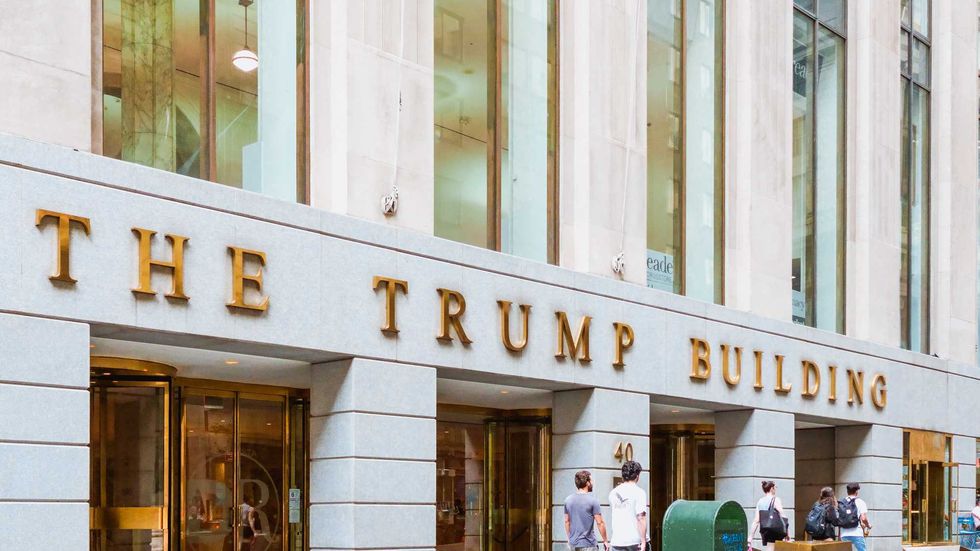 The Trump branded buildings serve as a reminder of the broader American zeitgeist
The acclaimed French chef Jean-Georges Vongerichten has a two-Michelin-star flagship on the bottom floor. Or go to Trump Tower on 5th Avenue, which has a Gucci store and Tiffany & Co.’s world flagship. Or the old Trump SoHo, now the 5-star Dominik hotel; Hudson Yards itself, the luxury lifestyle destination in part envisioned by the president; the many towers overlooking the place where the Henry Hudson Parkway descends from Riverside Park and runs street level, which all used to carry the “Trump” before they were removed (New Yorkers don’t like living in Trump towers). Entering Manhattan’s West Side from points north— Westchester, Upstate, Connecticut—it was as if Trump was welcoming you to the city.
Trump, in all the wealth he flaunted in New York, somehow understood better than all his counterparts what was happening outside New York.
In the middle of the COVID pandemic and the rhetoric that everyone is moving to Austin and Nashville and Miami, the comedian and lifelong New Yorker, Jerry Seinfeld, took to the pages of The New York Times to write an essay, “So You Think New York Is ‘Dead.’”
“Manhattan is an island off the coast of America. Are we part of the United States? Kind of.”
Precisely. And New York was, and will remain, a contradiction of MAGA. Because it is, in some sense, not America. And it must not be made great again.
“See you at the club,” Seinfeld concluded.
Want to leave a tip?
We answer to you. Help keep our content free of advertisers and big tech censorship by leaving a tip today.