O.W. Root
The computer chip has done marvelous things. It has made fortunes, collapsed distances, reorganized commerce, and put half the known world in our pockets. It has also done something grim to childhood. Brains are currently rotted, attention spans are eviscerated, and young, potentially bright children are transformed into the terrible product of modernity—colloquially known as iPad kids.
Every year, we seem to learn more about the horrors of screens for children, and the forecasts for the future can seem grim. And while it sounds gloomy, children are not doomed to brain rot. The future is not determined to be one of zapped attention spans and oversaturated, digitally induced irony. We all can make our own way, rule our own micro-kingdoms (read: cultivate families), and raise a generation in the old ways of the real world. Children are not doomed to become sleek little products of the glowing rectangle.
We can send them outside instead.
The more time kids spend outside in the living, breathing world, the more they will be like kids of the past in action, feeling, outlook, and the ineffable but very real thing I might call spiritual sensibility. The things that most profoundly alter our minds and hearts, making them gravely different from the more purely human past, are all products of the terribly addictive and all-too-menacing screen. Limiting, as much as we can, the negative effects of this modern technology is the simplest path to raising properly emotionally regulated humans who can read literature, enjoy art, and feel real feelings.
On one hand, there isn’t anything easier in the world. Kicking your kids out the back door and saying, “Have fun,” doesn’t require much brainpower. But it’s not so simple. There are new issues that arise when raising kids who spend more time in the dirt than in front of a screen.
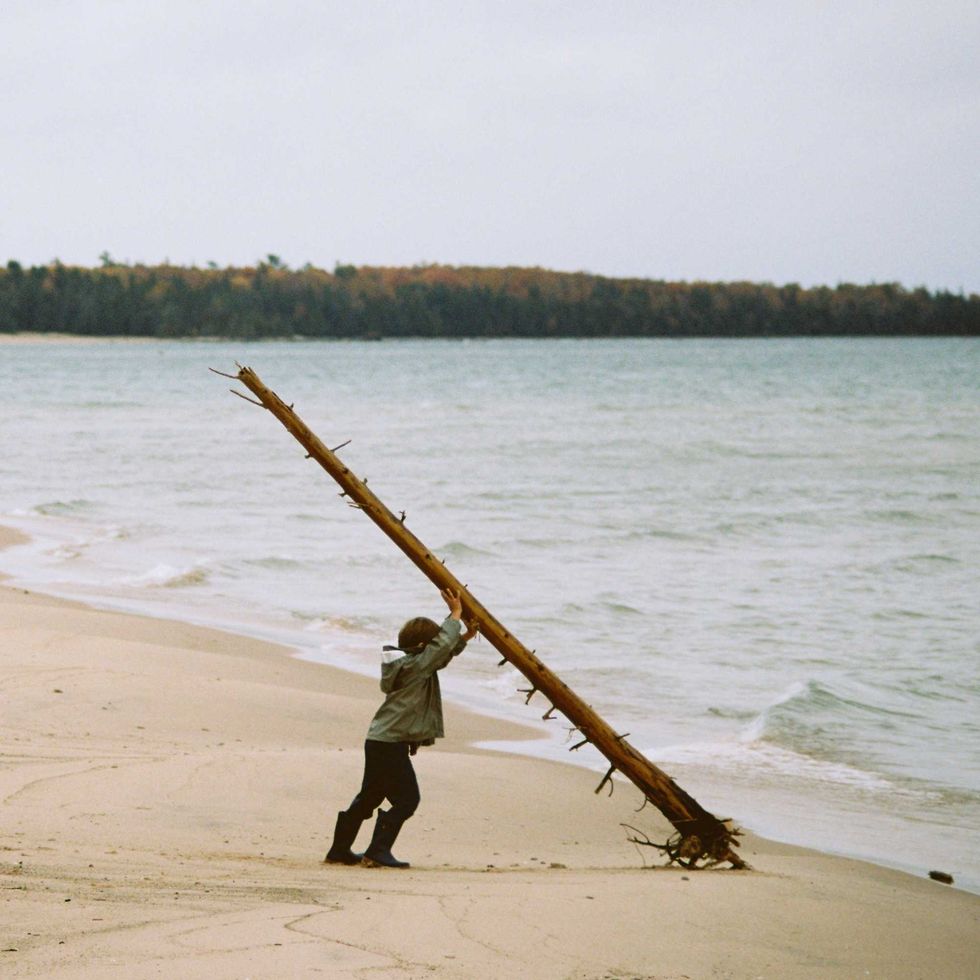 The screen can never surpass the beach.O.W. Root
Moms don’t really love mud tracked all over their floors. The weather is often volatile where we live. Stepping in those little puddles of half-melted slush and snow that somehow always seem to make their way into the living room isn’t exactly a joy for the father just trying to get a cup of coffee. Kids—even the most outdoorsy kids—will try to find some reason to come in and lollygag around if they have the chance. And lastly, there is perhaps no act more annoying for an already haggard and exhausted parent than helping kids with their boots, coats, and hats while simultaneously litigating some absurd dispute about who hit whom.
My grandmother always used to quote, “There’s no bad weather, only bad dressing,” to my mother. My mother then quoted it to me, and I now quote it to my kids as I shove them out the door in late November when it’s just starting to frost. Once you accept that there is a clothing solution to almost every weather problem, the world beyond the back door opens.
The summers are easy for pretty much everyone everywhere. The winters are harder, and especially so for us. We live in Northern Michigan where it feels like it’s winter half the year, and the winter is hard—very hard. Our kids are outfitted with rugged boots that keep them warm down to negative 25 degrees; their snow pants and jackets are just as hearty. They wear mittens that cinch around their wrists, and thick, puffy, oversized balaclavas from L.L. Bean that function as both hats and scarves. They look more like they are working at a research outpost in the Arctic Circle than like they are exploring outside after lunch.
This stuff costs money, often more than we want to spend. When it’s time to buy them all new boots, I’m not exactly thrilled at the credit card statement that month. I go on a two-mile walk with them just about every day of the year, even in the middle of horrifying February, and not once have they ever complained about being too cold. If they didn’t have the right gear, they would be stuck inside much more than we want. It’s a meaningful expense to buy the good stuff that really works and holds up. We can save their attention spans by getting them outside in the middle of winter, as long as they have the right winter gear.
While getting the kids outside in the rain presents its own set of challenges, the solution to the cold rain problem is impermeable rain gear. Our kids are outfitted with tall rubber boots, Reima hooded rain jackets, rain pants, and rain mittens. I wish we had had those when we were kids. Think overall-style snow pants, but thin and waterproof. Rain mittens are pretty funny, but just as practical. Hands get uncomfortable pretty quickly out in the cold rain, and if you want kids to get out there and play, they need to be able to keep their hands dry; otherwise, five minutes later, they are begging to come in. Adorned from head to toe with slick waterproof rubber, our kids look like they are working on a fishing vessel off the coast of Washington with the old captain from the Gorton’s fish stick box. But they are out there, and they stay out there.
The summer is easy, and with no clothing or weather concerns limiting the time spent outside, there is no reason kids shouldn’t be outdoors every waking moment. Ours certainly are. Five minutes after they wake up, they are outside, and they stay there until they take a shower right before bed.
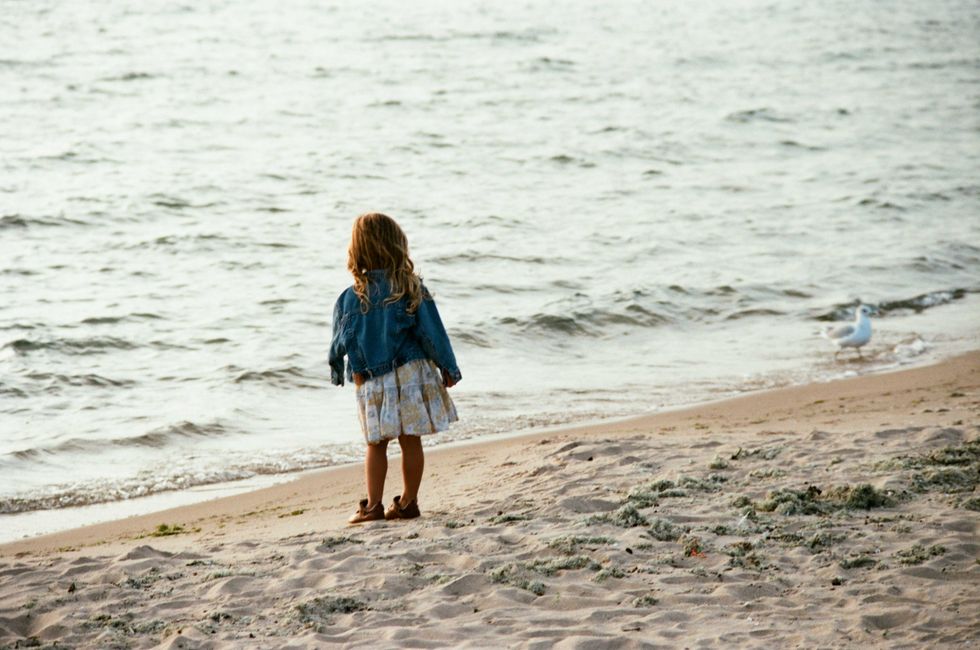 Sand. Dirt. Water. Bliss. O.W. Root
They read, color, paint, climb trees, play baseball, garden, lie, and get terribly dusty and dirty out there. They eat breakfast and lunch out there, and we finish the day with dinner together as a family as the sun sets. By the end of the day, their feet look like the feet of children who survived the Dust Bowl of the 1930s.
A big part of successfully raising kids outside is simply shifting your attitude and changing your mindset. If you start from the position that there is simply nothing to do inside, and no excuse to be inside, you get your kids outside a lot. We go to the beach just about every day in the summer. We throw some food and drinks in a cooler, and stay as long as we can. We go on hikes in nature reserves when it’s too cold to swim; we go sledding down dunes when the snow is piling up. Don’t overthink it; just go outside.
In some ways, a house is messier with outdoor kids. The mud. The snow. The door that’s always left open letting mosquitoes and flies wander into the kitchen. The messier car. If you want to live at the beach, you must accept sand; if you want to live at the beach with kids, you must accept a lot of sand. There are still thousands of golden granules from last summer laying on the floor under the backseats in our SUV. Snow is kicked all over the carpet on the way back from sledding and hiking. It’s so cold here that it doesn’t melt in the garage. Chunks of snow linger in the car all winter.
Making peace with all this natural chaos is part of the mindset change that comes with embracing an outdoor life for our children. There will be more dirt, more slush. We will need more gear, it will cost more money, and the kids will be so much more alive and present because of it.
The choice to move children away from the docility of life in front of the iPad and toward the blessed chaos of life in the real, natural world is about teaching children something we can’t necessarily communicate directly. It’s something we can’t test for, we can’t develop a curriculum around, and we can’t find online.
We can’t force it; we can only create the circumstances and let it happen. It’s about quietude, creativity, action; being in the world, not watching it; grabbing it with your hands. It’s about being able to open your eyes and ears to the wonder of our surroundings, not what’s on a screen in front of us. It’s about a logic of being that can only be learned, or rather absorbed, by spending time watching the clouds, listening to the breeze, crunching in the leaves, stopping and watching the little bugs that you’d never notice otherwise, and feeling the waves rock back and forth.