Gabriel Gigliotti
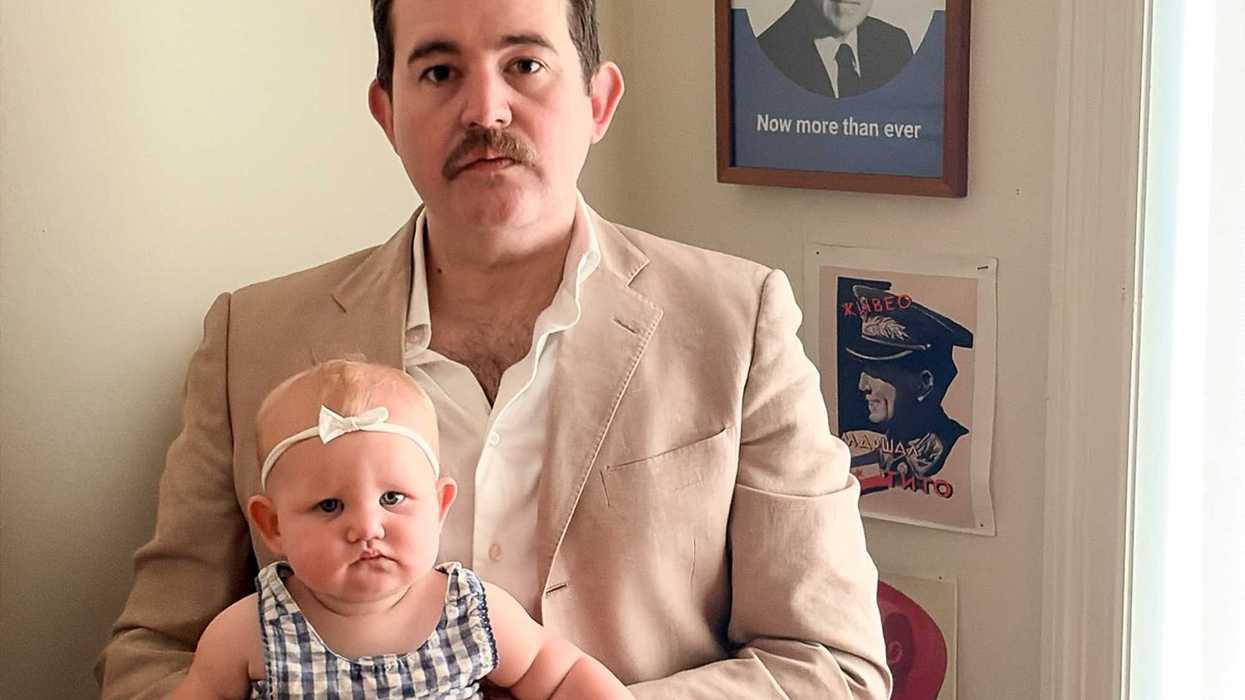
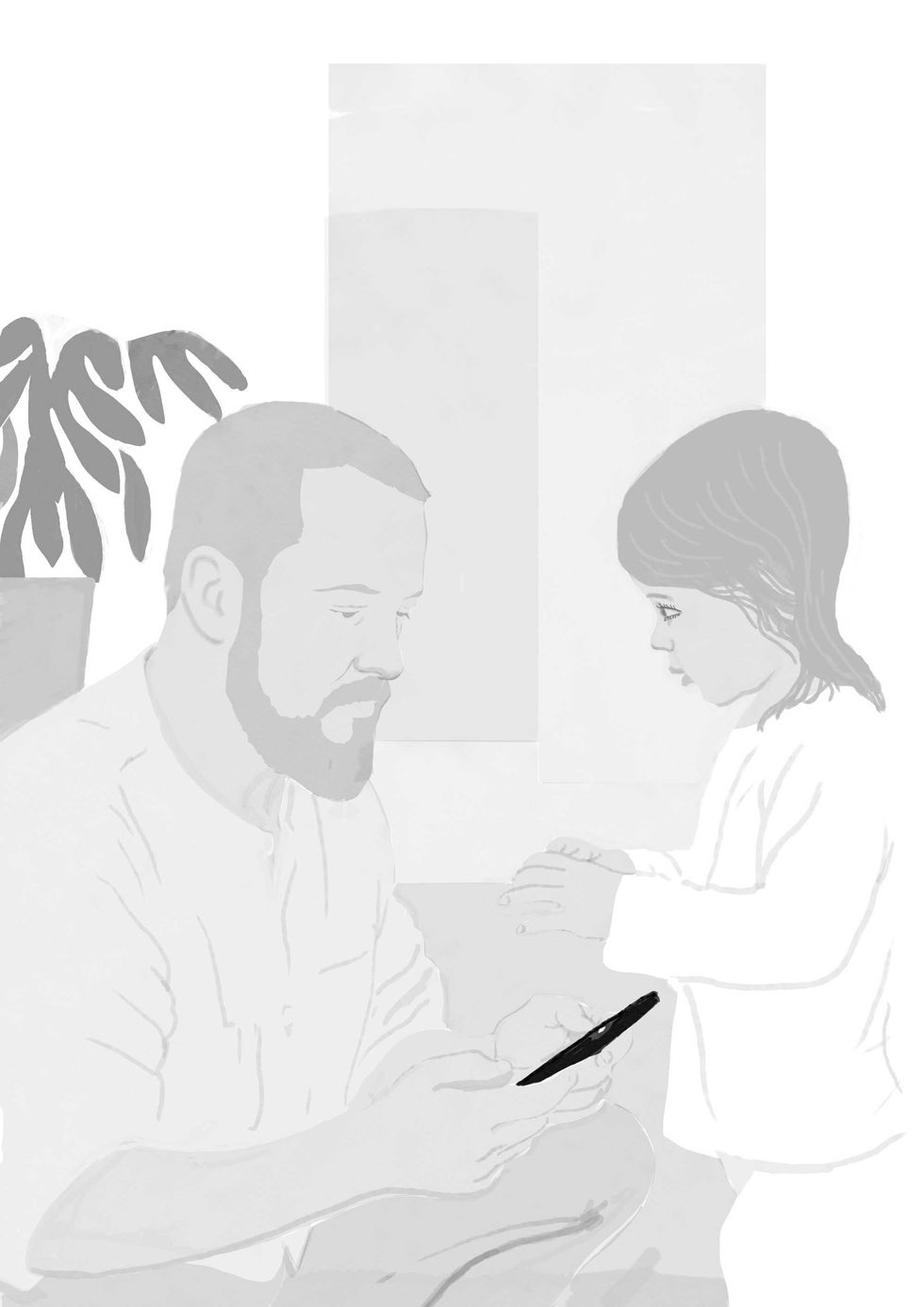
I looked up from my phone and saw my nine-month-old baby staring at me with melancholy in her perfect blue eyes. I realized I had spent the last 10 minutes reading through an X spat between two noxious internet personalities, completely engrossed and ignoring my child. She was trying to show me a stuffed bunny, and I was absent, staring down the abyss, reading disagreements between people who, if you met IRL, you’d likely try to slowly back away from. (Trust me, I’ve had the displeasure of meeting them both.)
I wanted to throw my phone in a lake. I knew I was hopelessly addicted to the screen, but something about that moment made me want to finally do something about it.
I could sense every moment where I was distracted and disconnected as the siren glow of the screen beckoned me away from the family in front of me. Every addiction arrives with a set of explanations. Mine sounded respectable. I’m a journalist. I need to monitor the situation. I should probably check my email. What if something important happened? What if somebody needed me? The phone turned every impulse into an obligation and every distraction into a task.
I decided I had to do something drastic to break the phone addiction.
The plan sounded simple.
It wasn’t
The first replacement I tried was a Light Phone II, a minimalist device designed for people who believe technology should occupy as little time and space in life as possible. The concept was admirable, but the execution was maddening. After a week of wrestling with its operating system, I admitted defeat and bought a TCL Flip 4 instead. It made calls, sent texts, checked the weather, and could pull up directions in an emergency. That was enough.
It’s surprising how many options there are for dumb phones. Gen Z has been at the forefront of this trend, and after being raised by Silicon Wolves, it makes a lot of sense. They want to take back control of their dopamine receptors and reconnect with the human. I recently read that the percentage of adults in America with smartphones had dropped from 90% to 85%. This small but not insignificant trend suggests that other people are insane enough to log off.
Friends began texting me as if I had joined a cult.
Fortunately, there are dozens of options at a variety of price points, from the just plain weird (think waterproof options and strange canary-yellow matrix-inspired cellphones) to the Nokia brick that they somehow still make. I decided to go with the TCL 4—a flip phone that can go online. The rationale was that I could at least have the weather and, in an emergency, Google directions if I ended up lost.
It would be nice to report that the transition was seamless and enlightening. Instead, it was frustrating, inconvenient, and occasionally ridiculous. Apple does not make it easy to leave its ecosystem. There were trips to the phone store, calls to customer support, eSIM transfers, SIM cards, and enough account settings to make me question whether I actually owned my phone at all.
The first crisis arrived within hours.
My text bubble turned green.
Friends began texting me as if I had joined a cult.
The green bubble was only the beginning. At one point, I discovered that some iPhone users simply couldn’t send me text messages. Friends started calling to ask why I wasn’t responding. After spending an evening combing through Reddit threads, I woke up in a cold panic, convinced that nobody could reach me. With my wife’s help, I finally got the carrier to force Apple to deliver messages correctly.
It felt less like changing phones and more like escaping a country. Living without a smartphone in 2026 is not impossible per se. Instead, it is death by a thousand inconveniences. Our society has been re-engineered around smartphones. Restaurants hand you QR codes instead of menus. Parking lots require apps. Airlines want you to download boarding passes. Every inconvenience arrives wrapped in the language of convenience.
The QR codes bothered me most.
I would sit there while some 20-something server disappeared into the kitchen to hunt down a paper menu for the village idiot. I never felt guilty. I hate QR codes. I want a physical menu. I want to hold it in my hands. If your restaurant requires me to download an app before I can order lunch, we have failed as a civilization.
What surprised me most was how much modern friendship now exists inside devices. Group chats became inaccessible. Photos disappeared into text chains I couldn’t open. Friends sent links I couldn’t view. Entire conversations happened somewhere beyond my reach. For a few weeks, I felt as though I’d left a party and was standing outside the window watching everyone else continue without me.
Travel proved even worse. I honestly don’t know how I would have managed without my wife carrying a smartphone. Airlines, hotels, ride shares, maps, reservations, confirmations—the entire system assumes permanent connectivity.
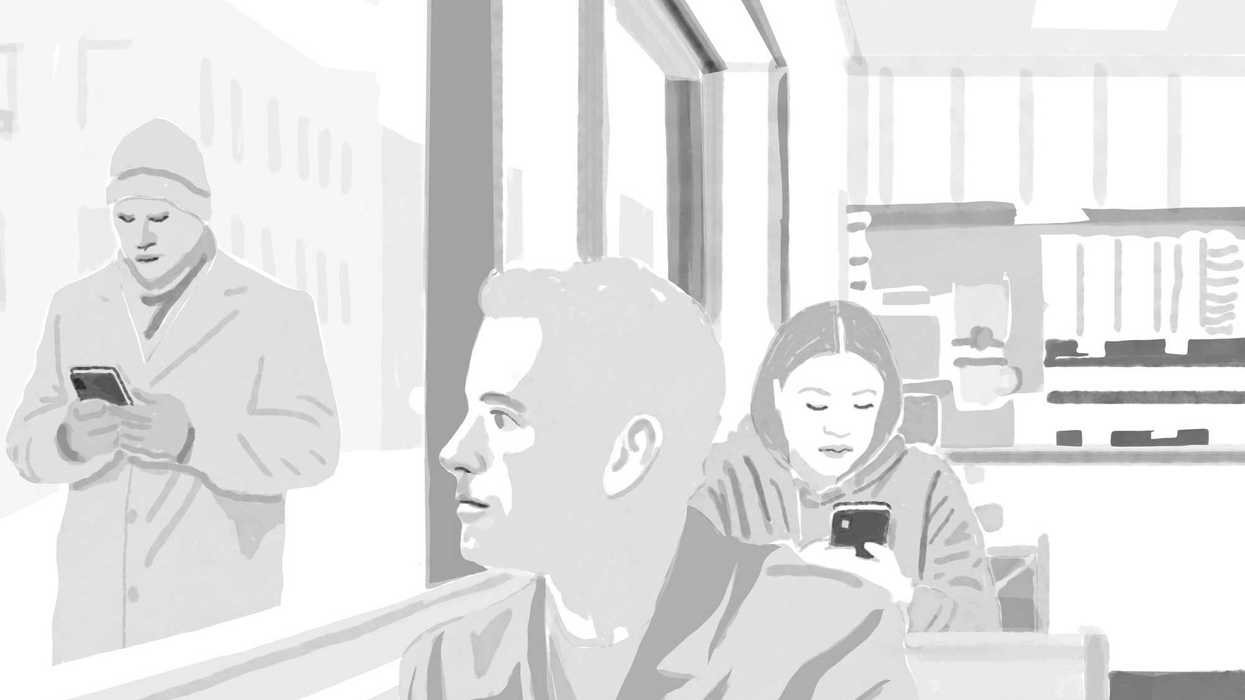
During a trip, I sat alone in a diner reading a book while waiting for breakfast. Looking around the dining room, I noticed every customer staring at a screen. Couples sat silently across from one another. Children stared at tablets. A man eating alone scrolled through videos between bites.
Nobody looked bored.
Nobody looked present, either.
You would think I’m counting down the days until I turn my iPhone back on and plug into the matrix; however, reverting now seems less appealing in light of the many treasures I have rediscovered without a smartphone in my pocket. What I have found from using a flip phone is a profound sense of peace and contentment that’s difficult to fully describe. I felt that I had stepped out of a mental fog. What surprised me was not how much I missed the smartphone. It was how little I did.
The first thing that returned was sleep.
For years, the last light I saw every evening was the glow of an iPhone screen. Like most people, I told myself I was checking one final email before bed. Then I would read a few headlines. Then maybe check X. Then maybe see what was happening in a group chat. Before long, 30 minutes had disappeared. Sometimes an hour. The smartphone had become the final voice in my head every night and the first voice I heard every morning. Reaching out from the false connection of the digital.
Without it, the evenings became strangely quiet.
At first, I found the silence uncomfortable. There is a reason people reach for their phones dozens of times a day. The device fills every empty space in modern life: standing in line, sitting on the couch, waiting for a friend, riding an elevator, or lying in bed. The smartphone is the universal answer to boredom. It removes every idle moment from existence.
Then something unexpected happened. I started falling asleep and not scrolling myself unconscious. I simply read for a while, turned off the light, and slept.
Real sleep.
The kind I remembered from childhood vacations and long summer days. The kind where you close your eyes and wake up eight hours later feeling as though your brain actually rested. It almost sounds too ridiculous to write—a 40-year-old man discovered sleep—yet there it was. The difference was impossible to ignore. I woke up clearer, more rested, and less anxious. It felt as though some low-grade background noise had finally been switched off. I started working out more, and I lost weight.
The second thing I regained was reading. I hadn’t realized how fragmented my attention had become until it began to heal. A book asks us for an hour of our time, and the phone asks for 10 seconds. The phone always seems to win.
For years, I had become the sort of reader who was perpetually “working through” several books at once. They accumulated on my nightstand faster than I could finish them. Ten pages before bed. A chapter on an airplane. Fifteen minutes on a Sunday afternoon before reaching for the phone and forgetting where I had left off. Without a smartphone sitting beside me, my reading habits changed. Not because I suddenly became more disciplined, but because the temptation simply wasn’t there.
The strange thing about the internet is that it creates the illusion of importance. Every notification feels urgent. Every argument feels like something you should probably know about. Somewhere, someone is always furious. Somewhere, some crisis is unfolding. Somewhere, some controversy demands your immediate attention.
Most of it disappears within 24 hours.
Books operate on a different timetable. They do not vibrate in your pocket. They simply wait for you to return. For the first time in years, I found myself spending entire evenings reading history. I would sit down after dinner, open a book, and suddenly realize two hours had passed. I read 180 pages on the history of Iran without looking up. I probably hadn’t done that since college (it’s probably not a coincidence that that was when I got my first smartphone). The experience felt almost foreign. Not because reading is unusual, but because uninterrupted attention has become unusual.
 Gabriel Gigliotti
That may be the smartphone’s most profound effect. It has not eliminated reading. It has eliminated concentration. A person can consume information all day and never think deeply about any of it. In fact, modern life encourages this. We graze endlessly across headlines, social media posts, videos, text messages, podcasts, and emails. We know a little about everything and very little about anything.
Books require something different. A good book asks you to surrender your attention. To enter another person’s mind and remain there for a while. To follow an argument from beginning to end. To sit with an idea long enough for it to become your own. That sort of sustained focus once felt normal. As George R.R. Martin wrote in A Dance with Dragons, “a reader lives a thousand lives before he dies . . . The man who never reads lives only one.” Which brings me to the strangest conclusion of the entire experiment.
We tend to think of luxury in terms of things money can buy. Expensive watches. Private clubs. First-class airline tickets. Vacation homes. Yet after a month with a flip phone, I became convinced that the rarest luxury in modern America is something far less expensive.
Attention.
An uninterrupted evening.
A quiet mind.
The ability to sit in a chair with a good book and remain there.
The opportunity to have dinner without checking your phone.
The experience of waking up without immediately consulting the internet for instructions on what to think about that day.
The smartphone may be one of the most successful consumer products ever created. It puts the world’s knowledge in our pockets. It makes communication instantaneous. It eliminates a thousand small inconveniences. It also occupies nearly every corner of life that had once belonged to something else.
Daydreaming. Reading. Thinking. Conversation. Boredom.
The small stretches of unstructured time where human beings have traditionally done their best thinking. We have spent years treating boredom as a problem to be solved. Maybe it wasn’t a problem at all. Maybe boredom was the doorway to curiosity. The quiet moments were, perhaps, the point.
I still haven’t decided whether I will return to a smartphone full-time. There are days when I miss the convenience. Traveling, no doubt, will remain a headache. Group chats will remain inaccessible. Every so often, I find myself needing directions and cursing my own experiment.
But I know this: the greatest thing I gained by logging off wasn’t better sleep. It wasn’t reading more books, although reconnecting with one of the greatest joys in life isn’t a bad thing. It wasn’t escaping the news cycle, because that is a bit impossible in my profession. It was recovering the ability to notice the people sitting beside me.
The journey began with my daughter trying to show me a stuffed bunny while I stared at my phone. That moment bothered me because I knew it wasn’t unique. The phone had not stolen my affection; it had stolen my attention. And attention, in the end, is how we express love.
One afternoon a few weeks later, my daughter crawled over carrying that same stuffed bunny. She held it up proudly and waited for my reaction.
This time I looked up.