Images courtesy Katie Pasitney
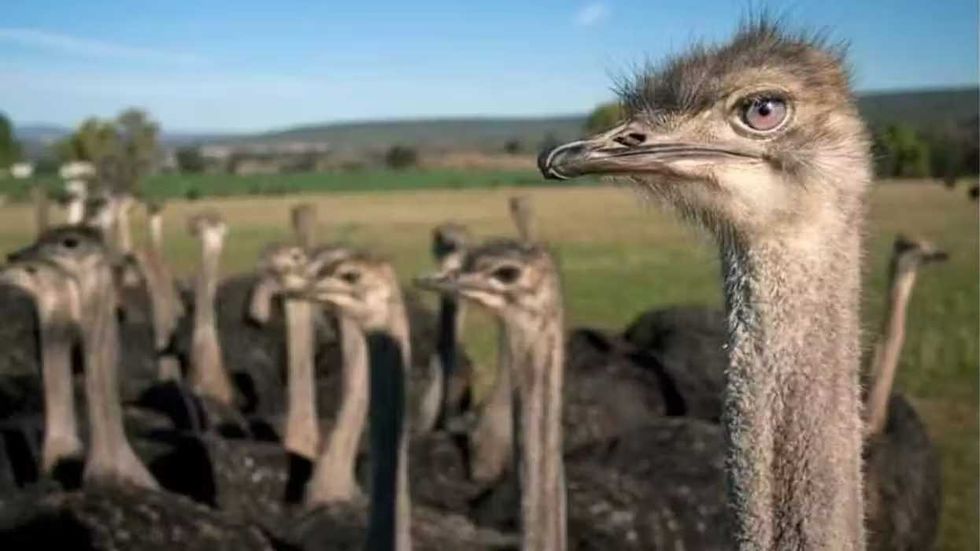
Eight months after federal officials destroyed more than 300 ostriches at Universal Ostrich Farms in Edgewood, British Columbia, the property remains under quarantine, with owners saying they still have no clear timeline for when they'll be allowed to reopen.
Katie Pasitney, daughter of farm co-owner Karen Espersen, says the Canadian Food Inspection Agency has prevented the family from cleaning up the property while citing an ongoing "fallow period," intended to allow any remaining H5N1 virus in the environment to naturally become inactive, as the reason the quarantine remains in place.
'They continue down this anti-science avenue, which is destroying the credibility of the CFIA internationally.'
The ongoing restrictions come months after the CFIA ordered the destruction of the farm's ostriches following an outbreak of H5N1 avian influenza. The owners fought the order through the courts, ultimately losing their final appeal when the Supreme Court of Canada declined to hear the case. The CFIA has maintained that culling infected poultry is required under Canada's disease-control protocols to limit the spread of highly pathogenic avian influenza.
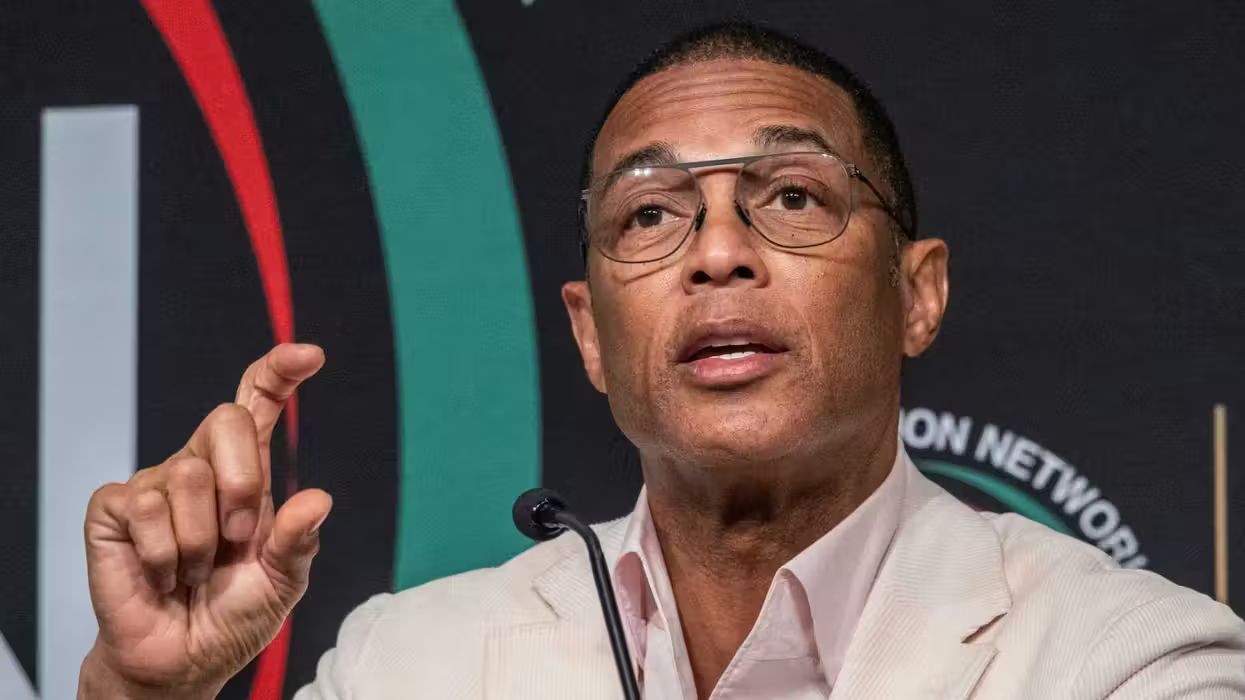
Pasitney recently joined former Agriculture Minister Gerry Ritz for an interview to discuss the continuing fallout from the cull and what she says are unanswered questions about the government's handling of the farm.
Following the cull, CBC news program "The Fifth Estate" approached Pasitney about participating in a documentary on the controversy surrounding Universal Ostrich Farms. She says she and her mother initially declined but ultimately agreed after producers indicated the program would proceed with or without them.
"We have nothing to hide," Pasitney says she thought at the time. "We have everything to show, and we're going to answer the hard questions."
It wasn't until the documentary aired that Pasitney learned the CBC had titled it "The Ostrich Con." She says the title immediately told her how the broadcaster had chosen to frame the story.
"The only con that was happening here was the Canadian Food Inspection Agency ... trying to blindfold the public, saying, 'This is a virus, this is a virus,'" she said. "We were not the con."
Pasitney says she was also disappointed that key portions of her interview did not appear in the finished program.
She says CBC reporter Mark Kelley asked whether she was embarrassed to seek support from Americans, including U.S. Health and Human Services Secretary Robert F. Kennedy Jr.
"I said, 'If our country would have listened, and we would have had any true leadership that would have taken the time to understand what we were trying to fight for, I wouldn't have had to go out of country,'" she said.
Her response, she says, did not make the final cut.
Pasitney says the most frustrating aspect of the ordeal is that the CFIA has not returned to conduct further testing while continuing to prevent the family from restoring the property.
"They have not been on our farm since [the cull]," she said. "There has been no more testing."
If the agency believes the virus remains a concern, she argues, it should be testing the soil, water, and surrounding environment rather than simply extending the quarantine.
Pasitney says the impact extends far beyond the financial loss of the birds.
"When your animals are destroyed and the damage is done, it doesn't just end in our fields, and it doesn't end in our barns, and it doesn't end in our pastures. It follows into our homes," she said, calling it "generational trauma."
She worries the episode has permanently damaged public confidence in government institutions.
"The generations that are watching this are learning not to trust our government," she said. "They're learning not to trust our RCMP."
RELATED: Massacre at Universal Ostrich Farms: Canada kills hundreds of birds despite no evidence of avian flu
 Universal Ostrich Farms
Ritz, who served as Canada's agriculture minister under former Prime Minister Stephen Harper from 2007 to 2015, said he finds the continuing quarantine difficult to justify.
"The whole mandate of CFIA is one based on science. It is to support food safety and trade corridors," he said.
He argued that the agency has moved well beyond that mission in its handling of Universal Ostrich Farms, later describing what he called the "egregious behavior" of CFIA "thugs."
"I can't, for the life of me, understand the powers that be allowing this to happen," he said. "We've got a rogue element within CFIA. There's still some really good people there."
Ritz said he knows current CFIA President Dr. Harpreet Kochhar from his time in government and pledged to contact him regarding the ongoing quarantine.
He also questioned the agency's use of a "fallow period" while simultaneously preventing the farm from cleaning the property.
"What you guys wanted to do was clean up ... and actually extend that containment," Ritz told Pasitney during the interview.
"They're not allowing you to do that. That, to me, is the ... antithesis of science."
Ritz also questioned the agency's public statements regarding the disposal of the birds.
"There's no containment," he said. "We saw that when they hauled the birds away. There was no containment. They sat in yards in Surrey and rotted on the spot. It was just heartbreaking to see that go on. And they continue down this anti-science avenue, which is destroying the credibility of CFIA internationally."
The CFIA did not respond to written questions asking when the quarantine will be lifted, what scientific criteria must be met before it ends, and why the agency did not remove spent cartridges, blood-soaked hay, and other debris that remained on the property following the cull.
For Pasitney, however, the central question remains unanswered.
Eight months after the cull, she says her family members are still waiting to learn when they will be allowed to begin putting the farm — and their lives — back together.