Andy Cross/Getty Images
No matter what kind of car we prefer, most American drivers can agree on one thing: We don't need another reason for vehicle ownership to become more expensive.
New vehicle prices remain painfully high. Used cars still cost more than they did just a few years ago. Insurance premiums continue to climb, and repair bills that once seemed unthinkable have become routine. For many families, keeping an older vehicle on the road isn't a preference anymore — it's a financial necessity.
An insurer may choose to repair rather than total a vehicle because recycled components make the economics work.
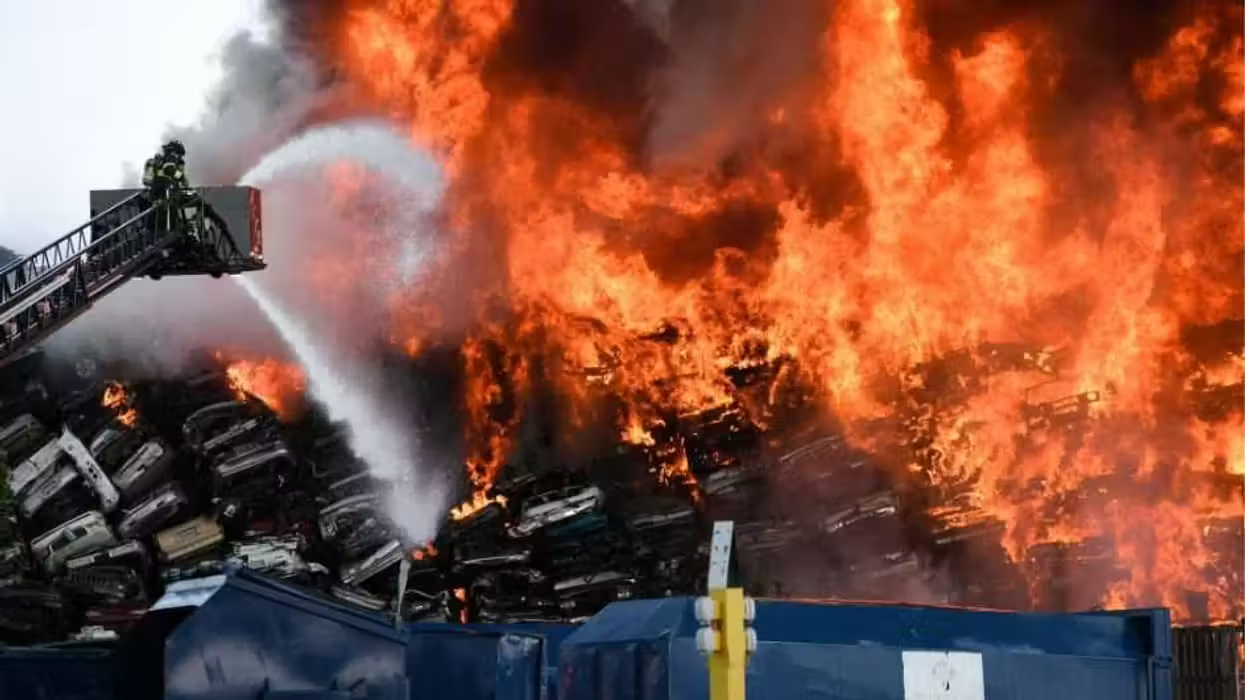
That's why a little-noticed trend deserves far more attention than it's getting: America's salvage yards are burning.
Most drivers never set foot in a salvage yard, but many have unknowingly benefited from one. Salvage yards provide recycled engines, transmissions, body panels, mirrors, wheels, electronic modules, and countless other components that offer affordable alternatives to buying new parts.
Without them, many repairs would cost significantly more.
That matters because modern vehicles have become dramatically more expensive to fix. A headlight is no longer just a bulb and a lens — it may include LED arrays, cameras, and sensors costing thousands of dollars to replace. Bumpers house radar systems. Side mirrors contain blind-spot monitoring equipment. Even relatively minor collisions can generate repair bills that shock vehicle owners.
For decades, the salvage industry has quietly helped offset those costs.
Most people think of a scrapyard as the final resting place for totaled vehicles. In reality, these facilities function as warehouses of reusable inventory. Every wrecked vehicle contains components that can help repair another one, extending the life of cars already on the road and giving consumers lower-cost alternatives to factory-new parts.
When a salvage yard loses thousands of vehicles and reusable components to a fire, the consequences extend far beyond the property itself. Repair shops lose inventory. Insurers lose salvage value. Consumers lose affordable options.
Eventually, those costs work their way through the system.
More expensive repairs contribute to higher insurance claims. Parts shortages can increase repair times and rental-car costs. And families trying to keep an aging vehicle running are left with fewer choices and bigger bills.
That's why these fires deserve more scrutiny than they typically receive.
Industry groups have reported a growing number of fires at recycling facilities in recent years, with lithium-ion batteries frequently cited as a contributing factor. Given the proliferation of batteries in electric vehicles, hybrids, e-bikes, power tools, and consumer electronics, those concerns are understandable. Damaged or improperly handled lithium-ion batteries can ignite and burn intensely.
But determining the actual cause of individual fires matters. Some incidents are quickly linked to batteries, while others remain under investigation or are ultimately attributed to different causes. Before broad conclusions are drawn, it's important that investigators establish the facts.
The larger issue is that automotive recyclers have become an increasingly important part of keeping transportation affordable.
Americans are holding onto their vehicles longer than ever because replacing them has become so expensive. That makes access to quality recycled parts more valuable than ever. A driver with a 12-year-old SUV may not need a brand-new factory transmission if a properly inspected recycled unit is available at a fraction of the cost. Likewise, an insurer may choose to repair rather than total a vehicle because recycled components make the economics work.
Remove enough inventory from the marketplace, and those calculations begin to change.
RELATED: 10 tactics to beat even the pushiest car salesman
 Mark Sullivan/Getty Images
This also intersects with the broader right-to-repair movement. Much of that debate centers on software access and diagnostic tools, but those issues address only part of the problem. Consumers also need access to reasonably priced replacement parts. Salvage yards provide competition in the marketplace and help prevent repair costs from becoming even more prohibitive.
Independent repair shops understand this better than anyone. Their ability to source quality recycled components often allows them to save customers thousands of dollars compared with using factory-new parts. If those options disappear, many repairs simply stop making financial sense.
The result is simple: Consumers either pay more or replace vehicles they otherwise could have kept on the road.
Insurance companies face similar challenges. Every totaled vehicle contains recoverable value through parts recycling and salvage sales. When that inventory is destroyed before it can be reused, that value disappears as well.
As vehicles become more technologically sophisticated and more expensive to repair, the automotive recycling industry becomes more — not less — important. Yet most people only notice it when dramatic images of smoke and flames appear on the evening news.
The next time headlines report another salvage-yard fire, look beyond the blaze itself. Ask what inventory was lost, how many future repairs depended on those parts, and what replacing them will ultimately cost.
Because in the automotive world, expenses rarely disappear. They get passed along.
And in the end, the people most likely to pay are the ones who can least afford another hit to their household budget: ordinary American drivers just trying to get a few more years out of their vehicles.