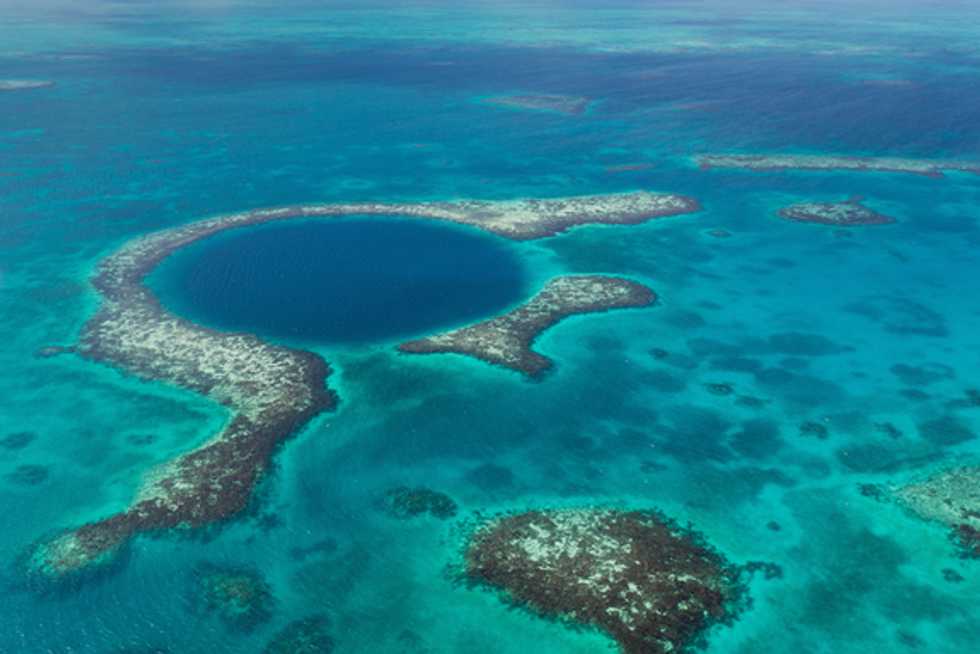
Credit: Tami Freed/Shutterstock.com
Around 900 A.D., the ancient civilization of the Maya collapsed — and it’s been a mystery that researchers have been trying to solve for centuries.
A group of researchers from Rice University and Louisiana State University believe the key to the mystery might be hidden in the “Great Blue Hole” in Belize, a massive sinkhole first popularized as a tourist spot by Jacques Cousteau in the 1970s.
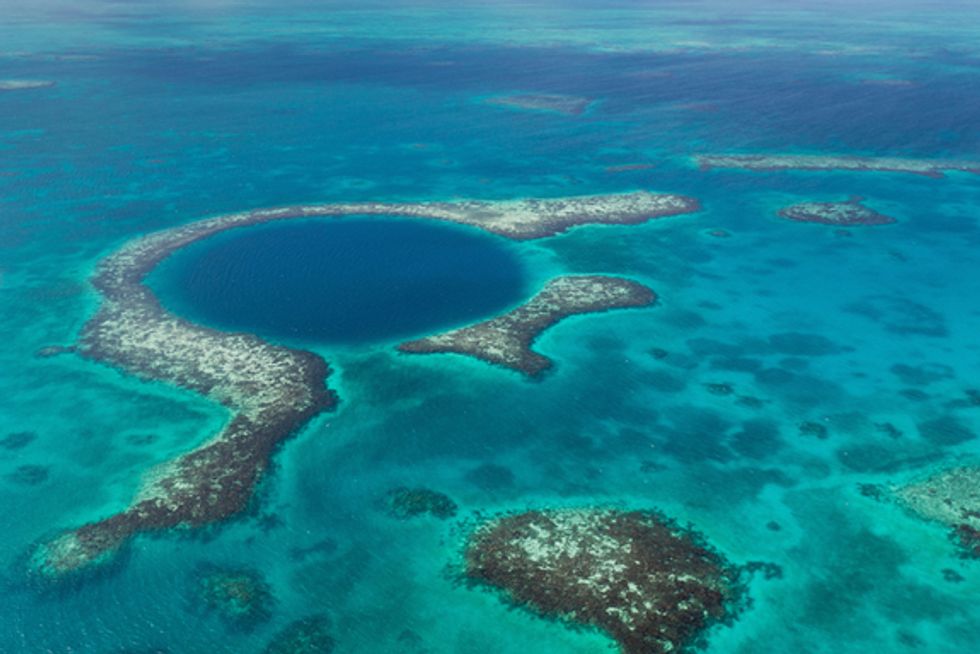 Credit: Tami Freed/Shutterstock.com
The Huffington Post has more information on what the researchers have discovered:
The researchers analyzed sediment samples from the Blue Hole, looking specifically at variations in color, grain size, and layer thickness. They also examined samples from the Belize Central Shelf Lagoon, a body of water attached to the mainland, noting differences in the samples' ratio of titanium to aluminum, which helps provide an estimate for rainfall levels.The analyses revealed low levels of precipitation and a drop in the frequency of tropical cyclones from 800 to 900 A.D. in the Yucatan peninsula--which suggests the region was hit by a major drought at the time, the researchers told The Huffington Post in an email.
The research also suggested that another major drought hit the region between 1000 and 1100 A.D., around when the Maya city of Chichen Itza is believed to have fallen.
The study’s co-author, Dr. André Droxler, told Live Science that it’s plausible that a major drought hit the region, sparking “famines and unrest.”
The Mayan population is believed to have hit roughly two million in 250 A.D., hundreds of years after the first settlements were established in 1800 B.C.