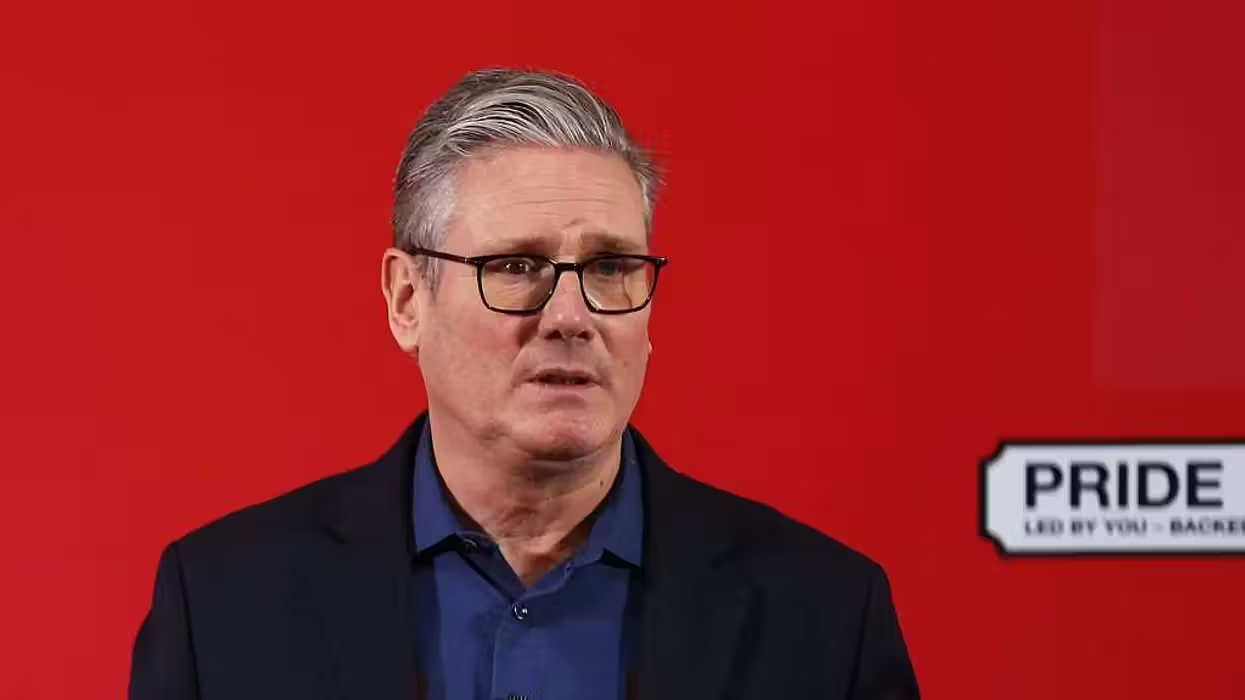
Photo by Peter Nicholls/Getty Images
British Prime Minister Keir Starmer is facing calls from lawmakers and critics to resign over his appointment of Peter Mandelson, a known associate and possible informant of sex offender Jeffrey Epstein, as the United Kingdom's ambassador to the United States.
While Starmer's right-hand man, Morgan McSweeney, resigned on Sunday over his involvement with Mandelson's appointment, the prime minister doesn't appear keen to meaningfully accept any responsibility himself — a reluctance now supported by many of his liberal allies in the British government.
Starmer appointed Mandelson — known in British political circles as the "Prince of Darkness" — as ambassador to the U.S. in December 2024, claiming he would "bring unrivaled experience to the role."
Starmer's choice was controversial at the time.
'The game's up, mate, and it's time you recognized it.'
After all, Mandelson had not only publicly described the recently re-elected Donald Trump as a "danger to the world" and "little short of a white nationalist and racist," but was an associate of Epstein long after Epstein pleaded to soliciting sex from girls as young as 14.
A source told the BBC that when Starmer made the decision, "The Epstein stuff in broad terms was definitely known and discussed in detail before his appointment."
RELATED: Why are so many people all of a sudden saying Epstein is alive?
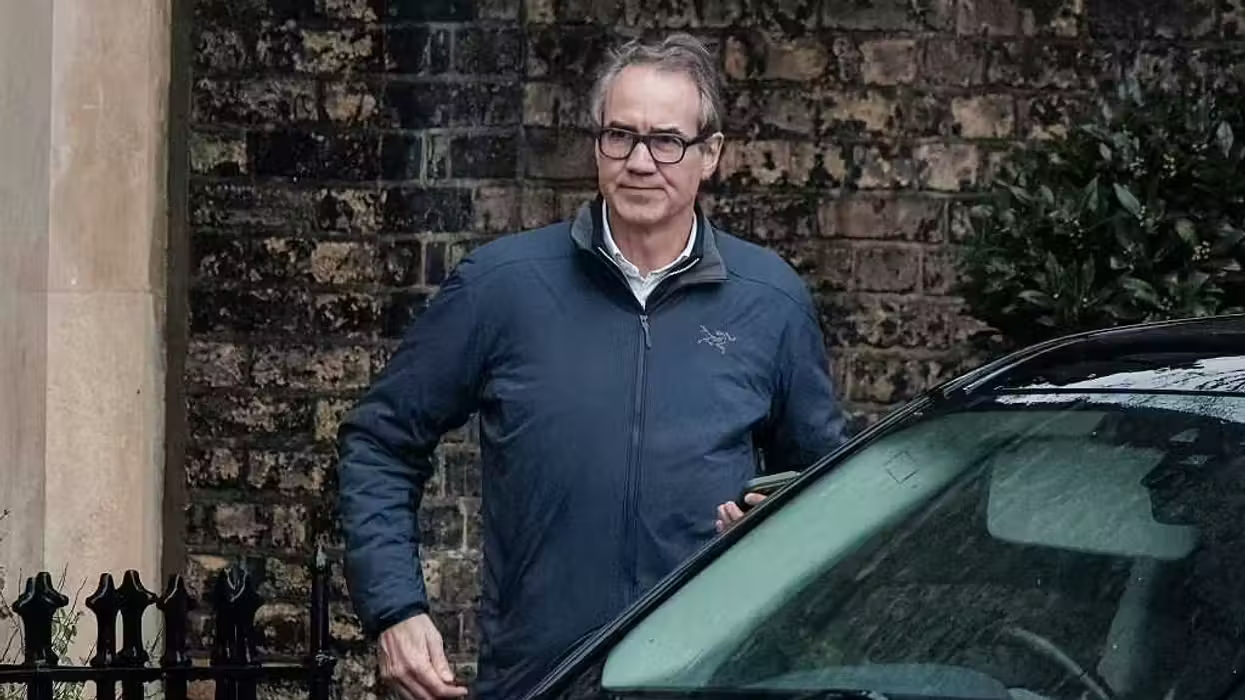 Peter Mandelson. Photo by Brook Mitchell/Getty Images
Emails released last year revealed that the Starmer pick was not only chummy with Epstein, but had grown close enough with the sex offender to apparently regard him as his "best pal."
The Foreign Office announced on Sept. 11 that Mandelson had been withdrawn as ambassador, noting that the "emails show that the depth and extent of Peter Mandelson’s relationship with Jeffrey Epstein is materially different from that known at the time of his appointment."
"In particular Peter Mandelson's suggestion that Jeffrey Epstein’s first conviction was wrongful and should be challenged is new information," added the Foreign Office.
Any hopes that Starmer's office may have had of putting the Mandelson appointment in the rearview mirror were dashed by the Department of Justice's latest release of the Epstein files, which contains emails showing that Mandelson was not only tight with Epstein but possibly furnished him with confidential government information.
The New York Times noted, for instance, that newly released emails appear to reveal that Mandelson provided Epstein with a confidential economic memorandum that had been sent to former Prime Minister Gordon Brown.
The documents also reportedly indicate that Epstein paid Mandelson $75,000 across three separate transactions in the early 2000s.
Mandelson announced earlier this month that he was leaving Starmer's Labour Party to spare it from "further embarrassment."
In a Feb. 1 letter to the party's general secretary, Mandelson claimed that he had no record or recollection of financial payments from Epstein; he regretted "ever having known Epstein"; and had dedicated his "life to the values and success of the Labour Party."
Mandelson is presently under investigation for possible misconduct in public office.
Days after his appointee left the Labour Party, Starmer gave a speech, stating, "Sorry that so many people with power failed you. Sorry for having believed Mandelson’s lies and appointed him."
After insinuating that he was deceived by Mandelson, Starmer suggested that he will remain in the role of prime minister to "ensure accountability is delivered."
Apparently, accountability for Starmer meant letting Chief of Staff Morgan McSweeney fall on his sword.
In a statement obtained by the Spectator concerning his resignation on Sunday, McSweeney wrote, "The decision to appoint Peter Mandelson was wrong. He has damaged our party, our country, and trust in politics itself."
McSweeney, an apparent protégé of Mandelson, claimed that he advised Starmer to make the appointment and that the "only honorable course is to step aside."
On Monday, Starmer's director of communications, Tim Allan, also quit "to allow a new No. 10 team to be built."
Neither resignation appears to have placated those in the British Parliament keen to see Starmer shoulder some blame.
Anas Sarwar, the leader of the Scottish Labour Party, said on Monday, "The leadership from Downing Street has to change," reported ITVX.
"We cannot allow the failures at the heart of Downing Street to mean the failures continue here in Scotland," continued Sarwar. "They promised they were going to be different, but too much has happened. It cannot continue."
Clive Lewis, a member of Starmer's party, suggested that upon reflection, it's clear the Labour Party is "ruined" and needs to be rebuilt without its current leadership.
Nigel Farage, leader of the Reform UK Party, told GB News, "It's over; it's done. The game's up, mate, and it's time you recognized it."
"He's lost legitimacy, he's lost authority, events have moved way beyond his control, and I'm afraid it's all down to his own grievous misjudgment," continued Farage. "But remember, even before the Peter Mandelson case, he was already the most unpopular prime minister in living memory."
On Monday, Starmer stated, "After having fought so hard for the chance to change our country, I’m not prepared to walk away from my mandate and my responsibility to my country, or to plunge us into chaos, as others have done," reported the Guardian.
Like Blaze News? Bypass the censors, sign up for our newsletters, and get stories like this direct to your inbox. Sign up here!