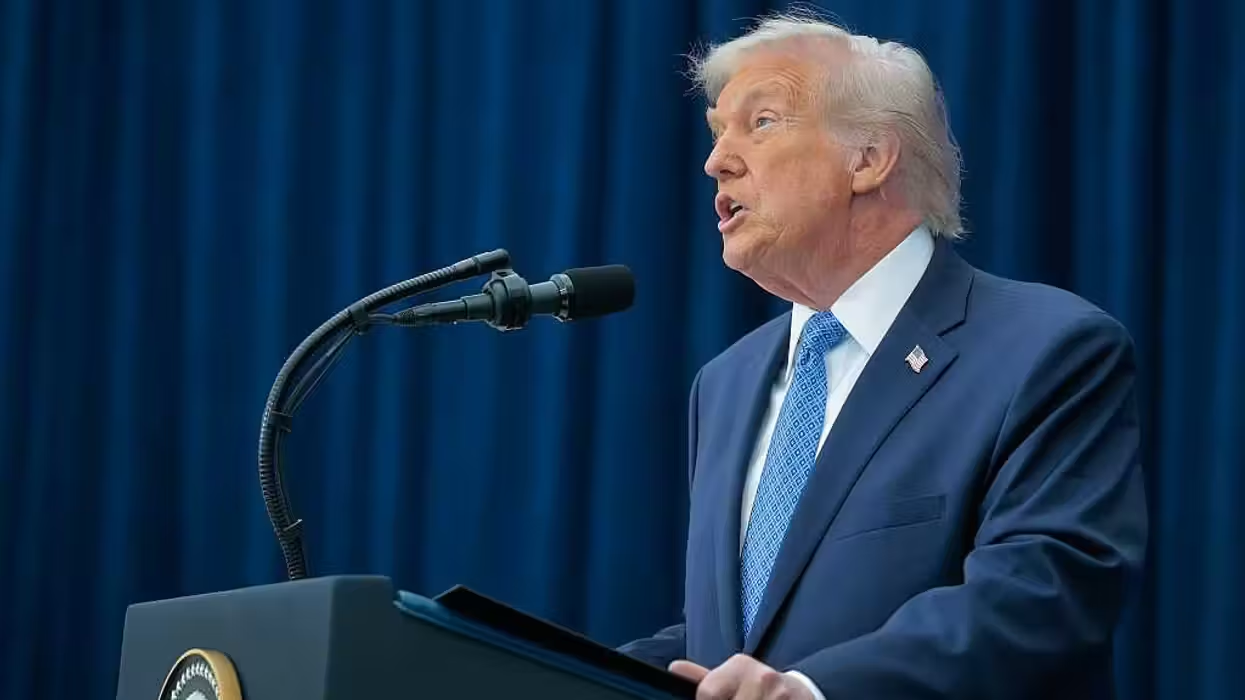
Photo by Chip Somodevilla/Getty Images
During President Trump’s first term, he signed the First Step Act — the most comprehensive criminal justice reform bill in decades — into law. He now has a chance to take a “second step” by rightsizing federal supervision of people on probation — an often overlooked public safety gap — with the introduction of the Safer Supervision Act.
I worked with the president and many bipartisan leaders to pass the First Step Act. I have also been on supervision and spend time with law enforcement leaders across the country. The Safe Supervision Act will empower our federal probation officers and judges to devote previous supervision resources to the people most likely to commit more crimes.
The Safer Supervision Act is the smart, responsible way to make our communities safer — and it is a great 'second step' for President Trump.
Currently the federal system for supervised release — the period of monitoring that follows incarceration — is structured in a way that actively undermines this goal. By overwhelming federal probation officers with low-risk individuals, the current system diverts attention and resources away from the true threats.
Due to the sprawling, largely automatic application of supervised release, our federal system currently monitors more than 110,000 individuals. This policy forces federal probation officers to spread their time dangerously thin.
When officers must dedicate precious time and limited resources to tracking individuals who have already demonstrated a low risk of re-offending, they are left with insufficient bandwidth to provide the oversight and intervention required by high-risk, violent offenders.
The bipartisan Safer Supervision Act is a targeted piece of legislation that corrects this dangerous imbalance. It is a genuine public safety bill that has earned the strong endorsement of the Federal Law Enforcement Officers Association, Major Cities Chiefs Association, and the National District Attorneys Association, among others. This bill’s promise is simple: More efficient use of law enforcement resources will reduce repeat crimes.
The core mechanism of the act is the restoration of individualized assessment. Under the current system, supervision is imposed in virtually every case. The Safer Supervision Act requires courts to conduct an individualized risk assessment before imposing supervision.
By reserving supervised release for cases that genuinely warrant it, this change moves toward a gold standard of effective supervision endorsed by professional associations such as the American Probation and Parole Association.
The strongest supervision model ensures that intensive supervision and rehabilitation efforts are directed to the highest-risk areas. The bill would allow federal law enforcement to operate as true risk managers, directing resources where they can have the most effect on those who pose the greatest public threat.
RELATED: Mexico has cartel armies. Blue America has cartel politics.
 Photo by HERIKA MARTINEZ/AFP via Getty Images
The bill helps break the cycle of recidivism by providing a strong incentive for successful rehabilitation. For low-risk individuals who have served their time and demonstrated good conduct, unnecessarily prolonged supervision terms become a counterproductive barrier. They inhibit successful re-entry by making it difficult to find stable employment and housing, which paradoxically increases the likelihood that the individual will re-offend.
The Safer Supervision Act establishes a process for early termination of supervision for individuals who have served half their term (or two-thirds for violent offenses) and have maintained good behavior. By giving people a clear finish line and rewarding sustained compliance, it dramatically increases the incentive for positive life changes. A successfully terminated supervision term means one less individual returning to crime, thereby enhancing the overall safety of their neighborhood.
Finally the act shows intelligence in addressing substance-use violations, treating them as opportunities for intervention rather than instant triggers for renewed incarceration. The bill creates an extremely narrow carve-out, giving judges discretion for minor offenses.
Under current law, mandatory re-imprisonment is required for these minor violations, often derailing successful rehabilitation and costing taxpayers significantly. The Safer Supervision Act empowers judges to prioritize treatment, counseling, and swift rehabilitation over immediate, expensive, and ineffective re-incarceration.
The support for the Safer Supervision Act is the most bipartisan coalition we have seen since the First Step Act. It is endorsed by police chiefs and prosecutors who understand the operational realities of crime and by fiscal conservatives demanding accountability for federal spending.
By adopting this bill, Congress can deliver a modern, evidence-based supervision system that ensures limited resources go to our highest-risk individuals, minimizes government waste, and delivers lasting public safety improvements.
The Safer Supervision Act is the smart, responsible way to make our communities safer — and it is a great “second step” for President Trump.


