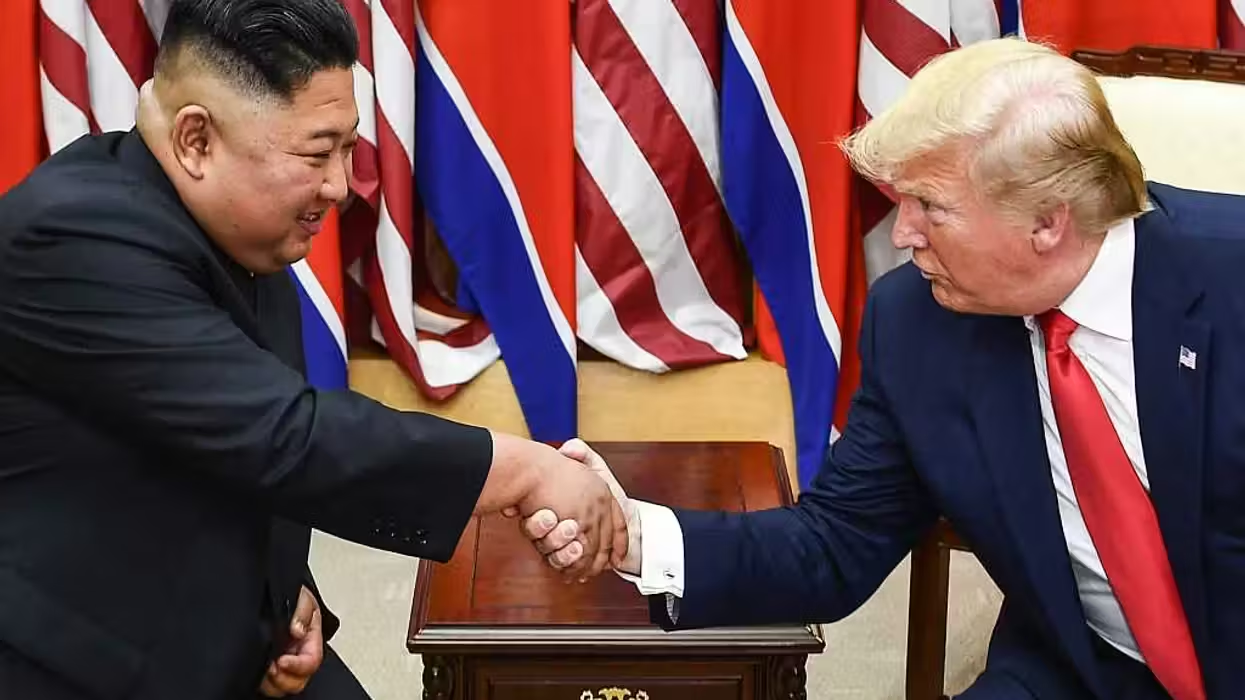
Brendan Smialowski/AFP/Getty Images
Jimmy Carter did more damage to American foreign policy in one weekend than most diplomats manage in a career.
In June 1994, President Bill Clinton sent Carter (no relation) to Pyongyang as a private citizen, with no authority to negotiate or speak for the U.S. government. Two days later, Carter cut a deal anyway. Then he called CNN before he called the White House. Clinton learned that his own North Korea policy had changed by watching television.
Fleitz has written the best kind of policy book: one grounded in the record, animated by firsthand knowledge, and confident enough to let readers reach the obvious conclusion.
That episode, recounted on page 34 of Frederick H. Fleitz’s new book, "North Korea, Nuclear Brinkmanship, and the Oval Office," makes up the best two pages in the book. It also contains the clearest explanation of why the book deserves attention.
Fleitz spent more than two decades inside the machinery of American national security policy — at the CIA, State Department, House Intelligence Committee, and National Security Council. He was in the room, or close enough to it, for much of what he describes. This is not a book assembled from newspaper clippings. Fleitz names names, places officials on opposing sides of consequential fights, and lets the record judge them.
The Carter episode establishes the pattern Fleitz traces across three decades. North Korea manufactures a crisis. Washington sends someone to talk. Pyongyang extracts a concession. The concession is celebrated as a “breakthrough.” North Korea breaks the agreement once the cameras leave. Then the cycle begins again.
Why did it continue under presidents of both parties? Because it worked.
Fleitz does not spare the Clinton administration. He describes the 1994 Agreed Framework — the deal Carter set in motion — as a bad bargain from the start. The administration called it a “framework” rather than an “agreement,” he argues, to avoid the Senate ratification a treaty would have required. Pyongyang received two light-water reactors and years of fuel oil. Washington received a promise to surrender spent fuel rods that never arrived.
The Bush years receive the same treatment. Fleitz recounts envoy Chris Hill dismissing intelligence about North Korea’s secret uranium-enrichment program. Dick Cheney later told journalist James Rosen that Hill was “deceitful, perfectly prepared to lie to the president.” Hill’s reply — "I’m not Richard Nixon" — is the kind of detail that makes an insider’s account worth reading.
RELATED: Nukes by the numbers: A problem we can’t wish away
 Kim Jae-Hwan/SOPA Images/LightRocket/Getty Images
Fleitz is writing about policy, but he understands that policy is made by people with ambitions, loyalties, grudges, and blind spots. His book is not a dry institutional history. It is a fight among real officials over real consequences.
The 2007 destruction of Syria’s North Korean-built reactor at al-Kibar receives similarly careful treatment. Fleitz reports that the Bush administration tried to keep Israel’s strike hidden from Congress — a detail that reveals as much about Washington’s instinct for secrecy as it does about North Korea’s proliferation network.
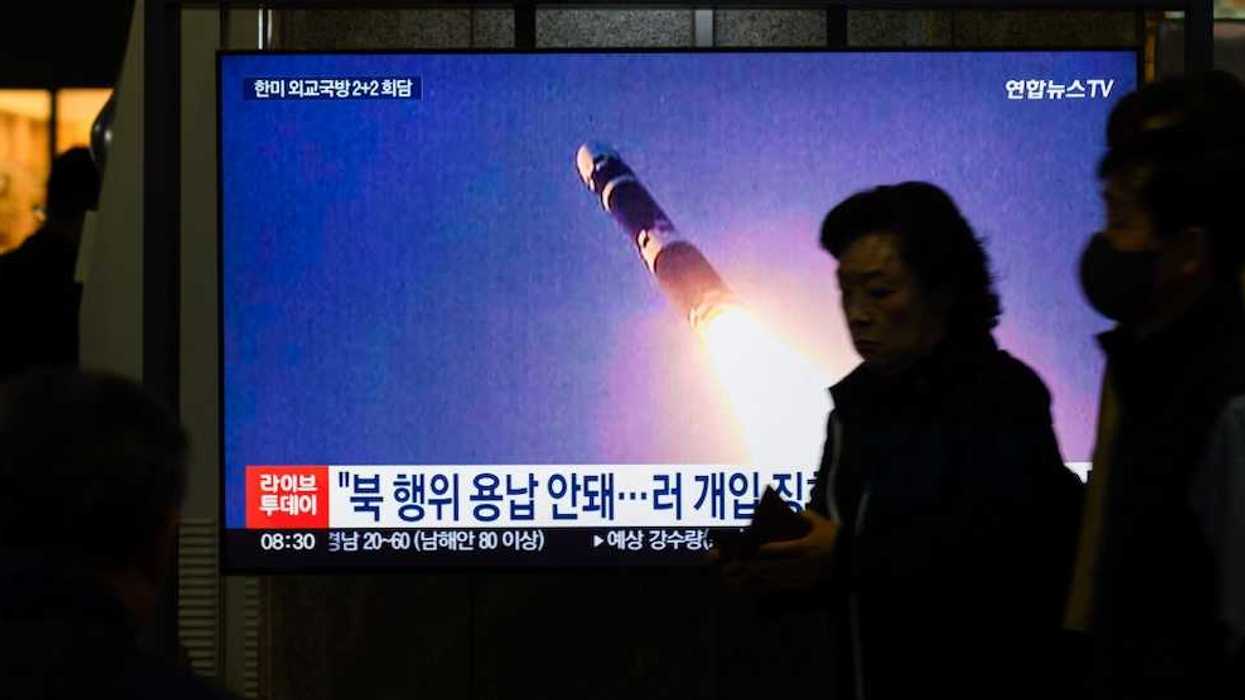
The Trump chapters give the book its greatest energy because Fleitz supports his case with numbers rather than adjectives. North Korea tested no missiles in 2018, only a handful of short-range missiles in 2019, and no intercontinental ballistic missiles until 2022. That year, under President Joe Biden, North Korea set a single-year record of roughly 165 missile launches.
Fleitz also details the February 2018 sanctions package, the toughest imposed on Pyongyang to that point, and Trump’s warning that "phase two" could become "very, very rough" if sanctions failed. Whatever one thinks of the rhetoric, it reads as the voice of a president wielding leverage rather than asking politely for cooperation.
Fleitz states his central conclusion plainly: North Korea respects strength and exploits weakness.
In his telling, every bad deal in the book was struck when an American president negotiated from a position of distraction, exhaustion, or political vulnerability: the 1994 Agreed Framework under Clinton, the near-deal at the end of George W. Bush’s second term, the Iran nuclear agreement under Barack Obama, and a reported secret arrangement with Iran under Biden.
The one moment Pyongyang backed off and came to the table, Fleitz argues, came in 2018, when the regime confronted a president threatening its destruction rather than pleading for another agreement.
RELATED: The future of warfare is not what you think
 STR/KCNA/KNS/AFP/Getty Images
That thesis will invite argument, as it should. Trump did not eliminate North Korea’s nuclear arsenal, and the regime remains dangerous. But Fleitz makes a persuasive case that pressure created negotiating space while accommodation repeatedly rewarded bad behavior.
The lesson extends beyond North Korea. China, Russia, North Korea, and Iran are drawing closer. Washington still faces the temptation to mistake talks for progress, signatures for compliance, and diplomatic activity for strategic success.
For that reason, "North Korea, Nuclear Brinkmanship, and the Oval Office" is not merely a history of failed negotiations. It is a warning about a pattern that American policymakers keep repeating.
Fleitz has written the best kind of policy book: one grounded in the record, animated by firsthand knowledge, and confident enough to let readers examine the evidence and reach the obvious conclusion. Weakness does not moderate regimes such as North Korea. It teaches them what they can take next.