Sian Roper
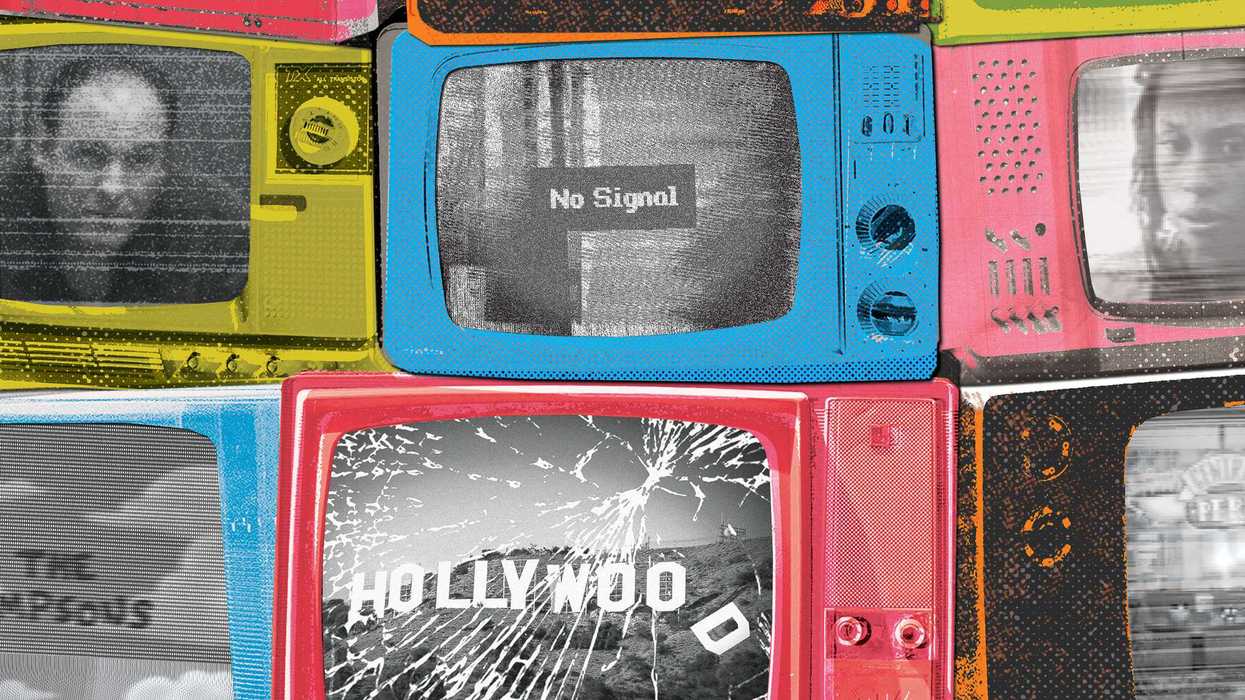
Is our taste for entertainment leaving Tinseltown behind?
2015 was the perfect year to be black in Los Angeles. Hollywood was in the midst of a black renaissance. The TV show Black-ish, which had somehow hired me as a writer, was hitting its stride, morphing from a typical family comedy to something that touched on cultural issues like gun ownership, the n-word, and police brutality. HBO had ordered Insecure, Issa Rae’s starring vehicle, to series. Showtime had done the same for The Chi, a show created by Lena Waithe. And Straight Outta Compton had become the highest-grossing music biopic of all time.
At Black-ish, I was a diversity hire: DEI before DEI was a slur. But even for people who weren’t black, 2015 was a great time to be in “the business.” It was Peak TV.
When people think of Hollywood, they think about the movies, but TV is a much bigger industry than film. And when a TV show is going well, it’s the best job in the world. Everyone’s getting rich, buying houses, and getting married, or, if the show is really successful, getting divorced. From 2011 to 2016, the number of scripted shows on broadcast, cable, and digital platforms increased by 71%. In 2002, there were 182 TV shows. In 2016, that number shot up to 455. In LA, a city where no one works, everyone was working. Fast-forward to 2026, and every week, there’s an article, X thread, or reel about the fall of LA. What happened?
First, Netflix.
For years, the goal of a scripted show on a broadcast network was to reach 100 episodes and syndicate to a cable channel. With 100 episodes, a show that aired once a week on broadcast could air five nights a week on cable. This is the engine that drives LA. When Netflix began offering studios money to license their old TV shows, the studios were thrilled. Before Netflix, the only way to monetize old shows was through syndication, which worked only for shows with triple-digit episode counts, or through the sale of “DVDs,” an ancient technology involving circular discs. Netflix offering money to license old episodes of TV shows was like someone offering to pay you for the lint under your bed. It was free money. But Netflix had discovered a gold mine, as few forces are as powerful as millennial nostalgia, and few things are as valuable as old episodes of The Office.
Netflix executives knew that, eventually, the studios and networks would create their own streaming platforms. It was too lucrative not to. And these platforms would need new content, something they couldn’t simply license because anyone they might license it from was starting a streaming company of their own. This is how we got Peak TV. Disney+, Peacock, Paramount+, HBO Max, Max, then HBO Max again, Apple TV, Amazon Prime, and more. And Peak TV meant Peak Hollywood Jobs.
Then Wall Street changed its mind.
For years, the only metric that mattered in streaming was subscriber growth. For streaming services, this meant low prices and an endless greenlighting of shows. Then Wall Street decided it wanted profits rather than growth, which meant higher prices and fewer shows. A similar situation happened with Uber. For years, Uber rides were cheap, subsidized by venture capital. Then, one day, the subsidy disappeared, and suddenly a ten-minute ride to the grocery store was thirty-four dollars. For streaming, the bill came due.
Then the strikes came.
In 2023, the Writers Guild of America and SAG-AFTRA both went on strike in what became the longest Hollywood work stoppage in decades. The WGA strike lasted 148 days. SAG went 118 days. Productions shut down. Schedules collapsed. Some shows that were in development never came back. Same for some people who were in the business.
Then the Palisades fire happened.
In January 2025, wildfires tore through Pacific Palisades and Altadena. Thousands of homes were destroyed, with entire neighborhoods gone overnight. The Palisades had been one of the most concentrated enclaves of entertainment industry professionals in the country. Many lost everything.
Then there was the longer, slower cultural change that began with COVID.
Pre-COVID Los Angeles was electric. From 2015 to 2020, it was normal to go to a hotspot like The Nice Guy, Delilah, or Craig’s, and see one actor from the hottest movie, two actors from your favorite show, and three artists from your Spotify Wrapped. You’d see these people not in a gawking way, but as part of the ambient texture of the city. You might even end up at their house for a party.
COVID ended that. The city shut down hard, and when it reopened, it wasn’t the same. Crime was up, the result of pandemic-induced antisocial behavior, people who’d gotten a taste of easy money and wanted more, and a general social decay. Celebrities had concrete reasons to be reclusive or leave the city altogether. A new generation of celebrities—streamers, YouTubers, and TikTokers—were never really LA-based to begin with. And these folks didn’t go out. They stayed home and streamed.
Restaurants didn’t come back, either. Rent, food, and labor, the three core costs of a restaurant, all went up after COVID, and that was before GLP-1’s put anorexia on easy mode.
There was also production migration as cities offered tax incentives to lure productions away from LA.
Finally, there’s AI. Someone can make a Pixar-level movie on a laptop in their bedroom. It’s possible that soon you won’t need actors, writers, or casting agents to make a show or movie.
I recently scheduled time to work with an editor I’ve known for years. He told me he’d have to push because of his day job. I asked what show he was working on. He said he was no longer editing full-time and was instead selling retirement solutions to the elderly.
We met up at his house, the same place he’d been a decade ago. I asked how long he’d had the house, and he said that the place belonged to his sister, who, unbeknownst to me until that moment, was a famous rock musician. A couple of weeks later, I returned to work on another project. There was another guy there, who the editor introduced to me as his “housemate.” The situation felt like an illustration of what had happened to the industry: a talented editor selling annuities out of his sister’s house (which he shared with a roommate), as the business he’d built a career in had stopped producing enough work to sustain him.
That said, Hollywood always survives. It survived the transition from silent films to talkies, from black-and-white to color, from theaters to television, from television to VHS, from VHS to DVD, and from DVD to streaming. Every time someone has declared the industry dead, or dying, it has adapted and come back. People will always want to be entertained. The Romans had gladiators. We have Timothée Chalamet.
But existing is an unglamorously low bar. Newspapers still exist. The question isn’t whether Hollywood survives. It’s whether a version of Hollywood that allows for a normal career and a thriving LA will reemerge.
But if this is the end, at least we had fun . . . we made things.

Damilare Sonoiki