Chicago Tribune/Getty Images
Imagine getting paid hundreds of thousands of dollars for a school bus you haven't even built.
That's how the Environmental Protection Agency's $5 billion Clean School Bus Program worked. Federal money went out before buses were delivered. Five years after Washington promised cleaner school transportation, hundreds of electric buses remain undelivered, and one manufacturer has gone bankrupt after receiving millions in federal funding.
Why was so much public money exposed to a manufacturer that ultimately could not fulfill all its obligations?
The money went out. The buses didn't always show up.
According to EPA figures reported by the New York Post in September, approximately 1,100 electric school buses had been delivered from the program's initial round of roughly 2,600 funded buses. Another 854 were reportedly delayed, and 140 were not expected to arrive at all.
Those figures do not cover every bus funded under the five-year program. But they raise serious questions about how Washington spent taxpayer money and whether the government did enough to ensure manufacturers could deliver what they promised.
Congress authorized the $5 billion Clean School Bus Program in 2021, allowing school districts and other eligible organizations to replace older buses with electric and other lower-emission models.
The Biden administration made electric buses a priority. By February 2026, approximately $2.7 billion in funding had been awarded under the program, with about 90% going toward electric buses, according to the EPA.
The program's rebate system allowed recipients to request payment after submitting purchase orders. The buses did not have to be delivered first. In some cases, manufacturers received federal money long before they completed production.
That arrangement created an obvious risk. What happens when a manufacturer takes the money but cannot deliver the buses?
Federal watchdogs had concerns about the program's oversight well before the latest delivery figures emerged. In a July 2024 report, the EPA's inspector general found weaknesses in the agency's procedures for selecting recipients. The agency had not adequately verified that applicants seeking electric buses had school districts with suitable local conditions to operate them.
In an April 2026 review, the inspector general identified additional problems with how the agency managed and accounted for program funds. EPA has completed or begun implementing corrective actions addressing those findings, according to the inspector general. But the delivery problems raise questions about whether those safeguards came soon enough.
These are basic safeguards when taxpayer money is involved. Before Washington commits hundreds of millions of dollars, it should know whether the equipment can be delivered, operated, and maintained.
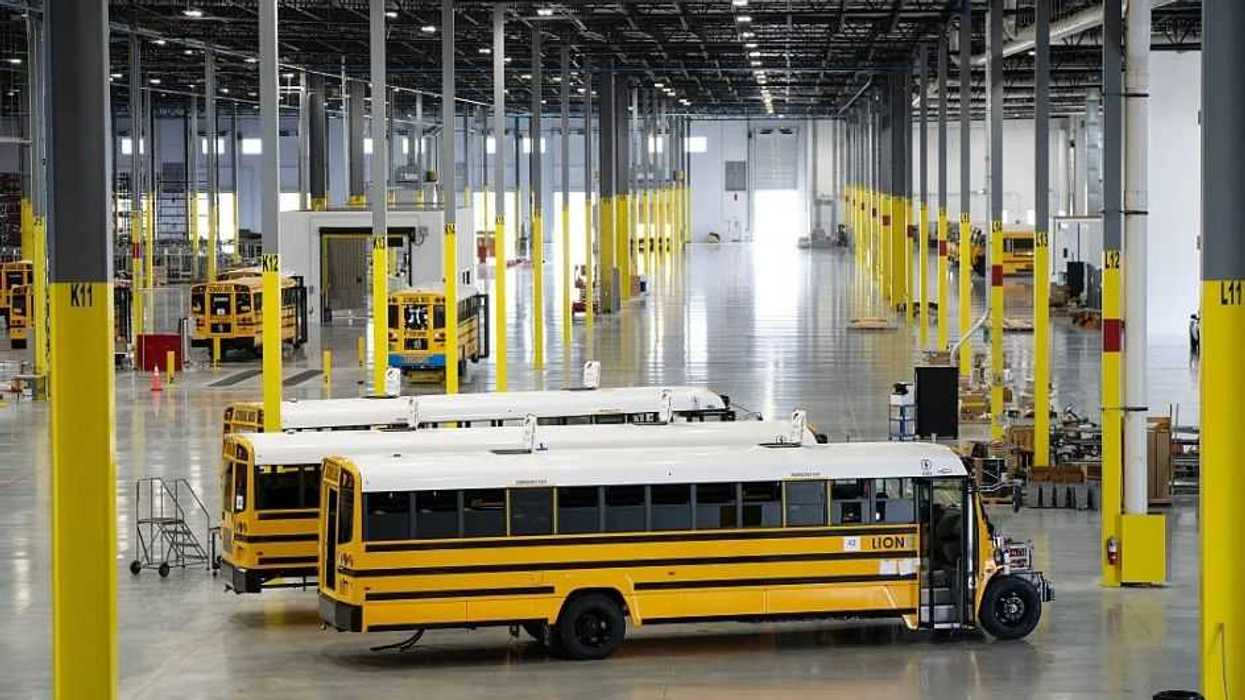
Consider Lion Electric, the Canadian manufacturer that entered creditor-protection proceedings in December 2024.
According to the EPA, Lion received approximately $160 million directly through the Clean School Bus Program. School districts also used their own federal awards to purchase Lion buses. Some buses remained undelivered, and others were not being adequately maintained.
Lion's own financial filings show how the system worked. The company received approximately $80 million in advance payments through the EPA's 2022 rebate program. As of September 2024, about $8.9 million of those payments remained on its books as deferred revenue because the associated buses had not yet been delivered. Lion's broader EPA-program deferred revenue, and liabilities totaled approximately $39 million.
The company also reported approximately $2.4 million in repayments during the first nine months of 2024. In October, it returned another $7.1 million to the EPA under its funding arrangements.
Two months later, Lion entered creditor protection.
In a report submitted to the Quebec court, Deloitte Restructuring identified deferred revenue from federal Clean School Bus grants among the company's unsecured liabilities.
That raised another problem for Washington: recovering money from a manufacturer that could no longer meet all its obligations. Unsecured creditors generally stand behind secured lenders when an insolvent company's assets are distributed.
In February 2026, the EPA acknowledged that some Lion buses remained undelivered and said it was evaluating its options in the bankruptcy proceedings. The agency did not disclose how much taxpayer money it had recovered or expected to recover. The financial filings establish that some money was repaid before bankruptcy, but they do not establish the government's final losses.
Why was so much public money exposed to a manufacturer that ultimately could not fulfill all its obligations?
School districts need more than a purchase order. They need buses that show up, operate reliably, and can be serviced for years. When a manufacturer collapses, questions about replacement parts, repairs, and warranty support become very real.
Electric school buses also come with a substantial upfront premium.
The Government Accountability Office reported in June 2025 that diesel school buses typically carried manufacturer-suggested prices between $98,000 and $154,000, compared with $300,000 to $440,000 for electric models. Charging equipment and electrical infrastructure can add to the cost.
Electric buses may save money on fuel and maintenance over time. They also eliminate tailpipe emissions, an important consideration for children riding to school. But the actual savings depend on how the buses are used, local electricity prices, charging infrastructure, and reliability.
A school district running short daily routes in a mild climate may find electric buses practical. Another district covering long rural routes in freezing temperatures may face different challenges.
These are decisions school transportation officials should make based on their actual operating needs, not a federal preference for one technology.
The GAO also found that EPA was not collecting complete information about some of the problems recipients encountered when putting new buses into service. Without that information, it becomes harder to determine whether the program is working as intended.
RELATED: KILL-SWITCH UPDATE: 5 years later, error-prone tech could still strand sober drivers
 Sunset Boulevard/Mark Wilson | Getty Images
On February 19, 2026, the Trump administration announced plans to overhaul the Clean School Bus Program, citing delivery failures, Lion Electric's bankruptcy, and concerns about how taxpayer money was spent.
That's a necessary discussion. But changing the program's priorities won't answer what happened to funds already distributed.
Taxpayers deserve a full accounting of which buses were ordered, which were delivered, which are operating, and what happened to the money spent on buses that never arrived.
Manufacturers receiving public funds should be able to demonstrate that they have the production capacity, financial stability, and service network to fulfill their contracts. And government agencies need enforceable safeguards when those promises fall apart.
This is not an argument that every electric school bus is a failure. Some districts are making them work. It is an argument against treating any technology as the predetermined winner before the costs, capabilities, and risks are understood.
School districts need reliable transportation for children, not expensive experiments that leave them waiting for buses.
If Washington is going to spend billions of taxpayer dollars, the buses ought to show up.