Greg Nash-Pool/Getty Images
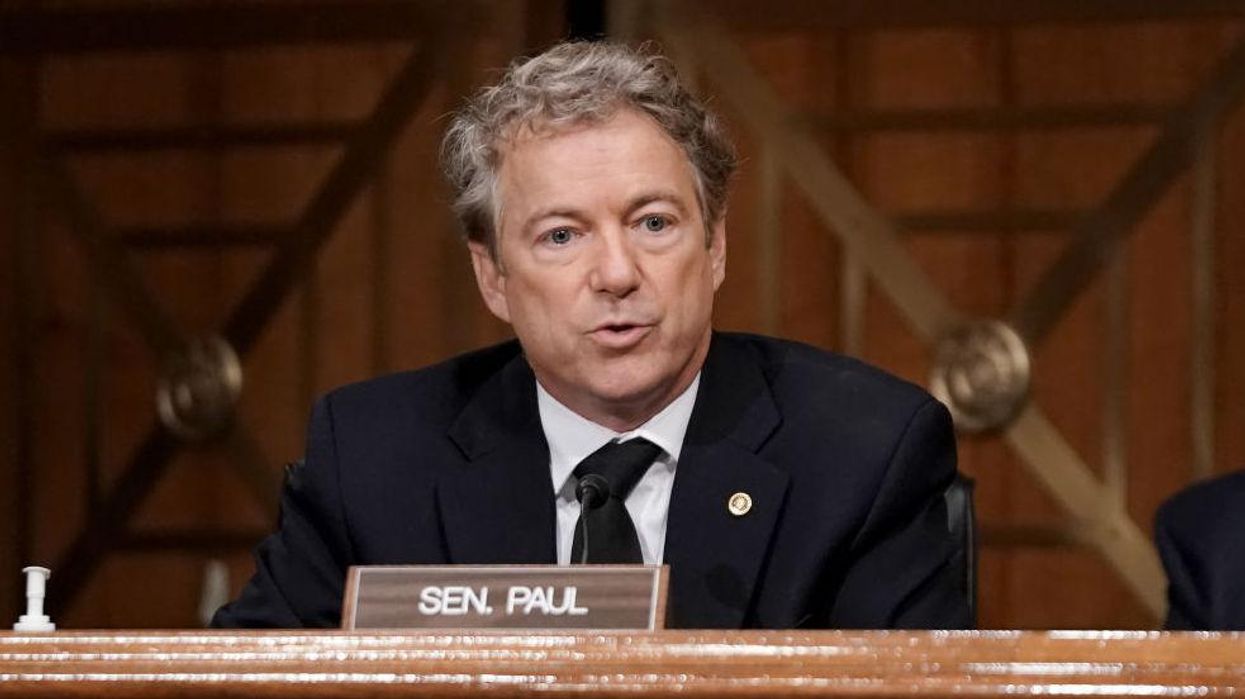
Sen. Rand Paul (R-Ky.) declared Sunday that he will not receive a COVID-19 vaccination, immediately triggering mockery online from critics who believe Paul's remarks are not responsible.
Speaking with radio host John Catsimatidis, Paul revealed he will not get vaccinated because he contracted COVID-19 last year, which theoretically gives him immunity from the virus.
"Until they show me evidence that people who have already had the infection are dying in large numbers, or being hospitalized or getting very sick, I just made my own personal decision that I'm not getting vaccinated because I've already had the disease and I have natural immunity," Paul said, the New York Post reported.
Paul later added that receiving a vaccine should be a personal decision, not one made for them by government agencies.
"In a free country, you would think people would honor the idea that each individual would get to make the medical decision, that it wouldn't be a big brother coming to tell me what I have to do," Paul said.
"Are they also going to tell me I can't have a cheeseburger for lunch? Are they going to tell me that I have to eat carrots only and cut my calories?" he continued. "All that would probably be good for me, but I don't think big brother ought to tell me to do it."
Paul earned an M.D. degree from Duke University's School of Medicine in 1988. He is a licensed ophthalmologist.
Paul's critics condemned him, mocked him, and some detractors even praised Paul's neighbor, who brutally attacked in 2017.
The Centers for Disease Control and Prevention recommends that people who tested positive still get vaccinated.
"Yes, you should be vaccinated regardless of whether you already had COVID-19," the agency says. "That's because experts do not yet know how long you are protected from getting sick again after recovering from COVID-19. Even if you have already recovered from COVID-19, it is possible—although rare—that you could be infected with the virus that causes COVID-19 again."